Most women know the word “menopause,” but many are surprised to learn it is not a single event. It is a three-stage biological transition that unfolds over years, sometimes a decade or more. And yet, most of what women hear is either vague (“your periods will stop eventually”) or alarming (“hot flashes, mood swings, weight gain”). Neither of those quite captures what is actually happening, or what you can actually do about it.
For more on this, read our guide on Menopause & Depression. If you are somewhere in your 40s, noticing that your body is not quite the same as it was, this guide is for you. Understanding the stages of menopause does not make them disappear, but it does something almost as useful: it tells you where you are, what is coming next, and what choices you have at each point in the journey.
The Three Stages of Menopause
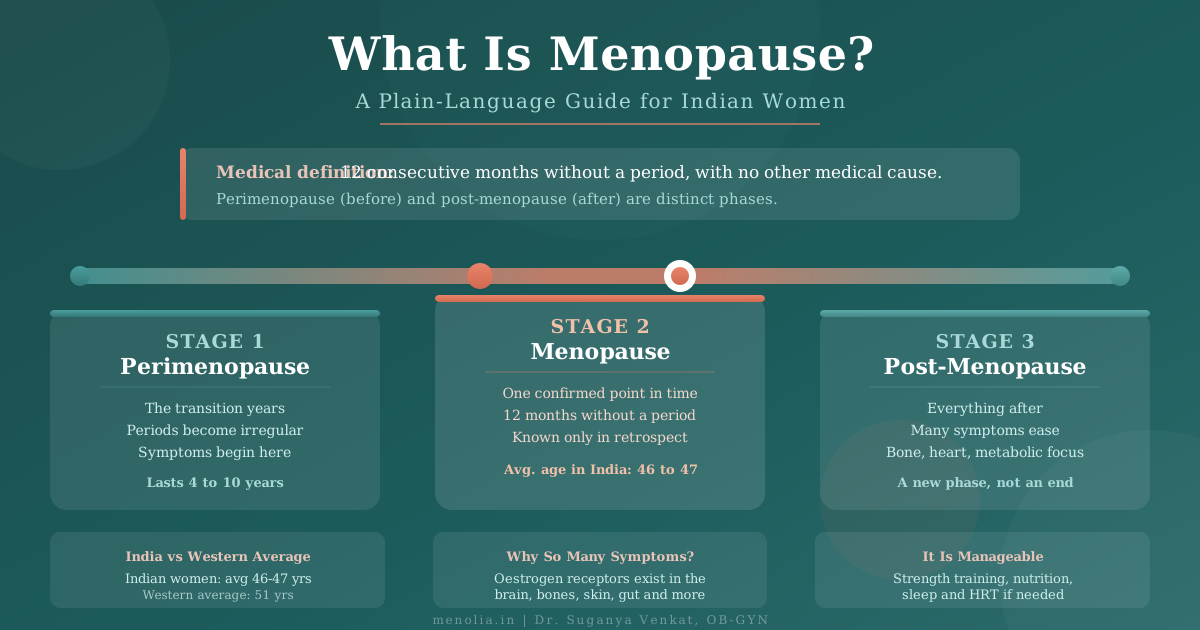
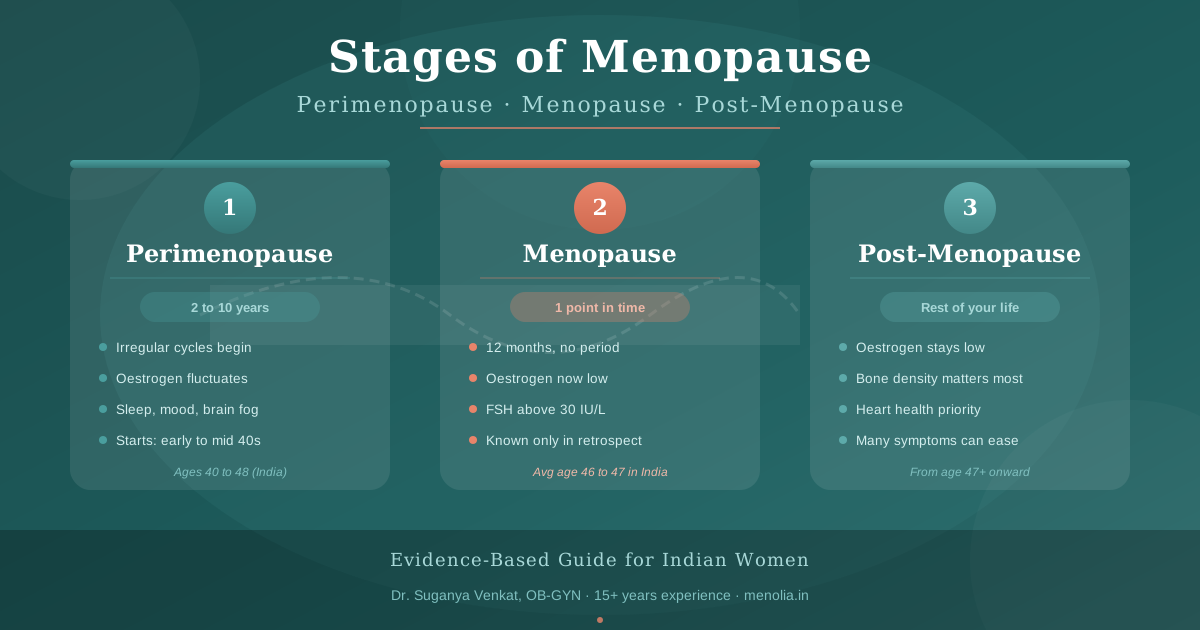
Clinicians use the STRAW+10 framework (Stages of Reproductive Aging Workshop, updated 2012) to define the hormonal and menstrual milestones of reproductive aging (Harlow et al., J Clin Endocrinol Metab, 2012). In practical terms, the transition breaks down into three stages.
Stage 1: Perimenopause. The transition phase, which can begin as early as age 40. Hormones start shifting, periods become irregular, and symptoms begin appearing. This stage has two substages, early and late, each with distinct characteristics.
Stage 2: Menopause. Technically, menopause is a single point in time: the day that marks 12 consecutive months without a period. It is only identified in retrospect. The average age at natural menopause in Indian women is approximately 46 to 47 years, according to large Indian studies (Ahuja, J Midlife Health, 2016), compared to around 51 in Western populations.
Stage 3: Post-menopause. Everything from that 12-month mark onward. The acute symptoms of the transition may ease for many women, but this stage brings its own health considerations, particularly for bone density, cardiovascular health, and metabolic function.
Each stage is distinct. Understanding what is happening in your body at each point is the foundation for making informed choices rather than simply reacting to symptoms.
Stage 1: Perimenopause
Perimenopause is the most variable and often the most confusing stage. It begins when the ovaries start producing oestrogen less predictably and ends when 12 full months have passed without a period.
How long does it last? On average, perimenopause lasts 4 to 8 years, though the range spans from 2 to 10 years. The SWAN study (Study of Women’s Health Across the Nation) found that vasomotor symptoms (hot flashes and night sweats) persist for a median of 7.4 years across the full menopausal transition (Avis et al., JAMA Internal Medicine, 2015). For many Indian women, perimenopause begins in the early to mid-40s.
What is happening hormonally? Oestrogen does not decline in a straight line. In early perimenopause, oestrogen levels can spike erratically before falling, which explains why symptoms come and go unpredictably. FSH (follicle-stimulating hormone) begins to rise as the brain signals the ovaries to work harder. In late perimenopause, oestrogen levels fall more consistently and FSH rises further.
Early perimenopause: what to watch for. The STRAW+10 criteria define early perimenopause by one key change: menstrual cycles that vary by more than 7 days compared to your normal pattern. If your cycles used to be reliably 28 to 30 days and are now ranging from 21 to 40 days, that is an early perimenopausal signal. You may also notice:
- Sleep becoming lighter or more disrupted
- Breast tenderness at unexpected times in your cycle
- Low mood or irritability that does not have an obvious cause
- Milder hot flashes or night sweats (some women, not all)
- Brain fog and memory slips (see our guide to menopause brain fog)
Late perimenopause: the hormonal crescendo. Late perimenopause begins when you have had at least two skipped periods with a gap of 60 days or more between them. This is when symptoms typically intensify. Hot flashes become more frequent, sleep disruption worsens, vaginal dryness may appear, and mood changes can feel more pronounced. For a full breakdown of all the symptoms that may appear during this stage, the guide to perimenopause symptoms covers each one in detail.
Can a blood test confirm perimenopause? Partially. Because oestrogen levels fluctuate so much in perimenopause, a single hormone reading can be misleading. FSH above 25 IU/L on two readings taken at least one month apart can support a diagnosis, but the clinical picture (your symptoms, your cycle changes, your age) carries more weight than any single test result. The guide to perimenopause testing explains this in full.
If you are in your early 40s and noticing these changes, you are not imagining it. It is not too early, it is not “just stress,” and it is not something to wait out. Early identification allows early action, which makes a genuine difference to how the next decade feels. Many women first notice perimenopause at 40 or 41. The post on signs of menopause at 40 was written specifically for this stage.
Stage 2: Menopause
As noted above, menopause itself is not a phase but a marker: 12 consecutive months without a period. You do not know you have reached it until those 12 months have passed. The day you realise your last period was exactly a year ago is, clinically, your menopause date.
For more on this, read our guide on Post-Menopause. What is happening hormonally? At menopause, the ovaries have largely ceased follicular activity. Oestrogen levels are now consistently low. FSH is typically above 30 IU/L. The ovaries continue producing small amounts of androgens (testosterone and androstenedione), which peripheral tissues convert to a weaker form of oestrogen called oestrone. This is the primary circulating oestrogen in post-menopausal life.
What does it feel like around menopause? For many women, the symptoms that built during late perimenopause peak around the time of the final period and in the months immediately following. Hot flashes may be at their most frequent. Sleep is often significantly disrupted. Mood can feel unstable. Some women describe a sense of grief or disorientation, not because something is wrong with them, but because a chapter of their life has genuinely closed, and that deserves acknowledgment.
For more on this, read our guide on Perimenopause Mood Changes. The Indian context: earlier than you may expect. A cross-sectional study published in the Journal of Midlife Health (Ahuja, 2016) found that the mean age of natural menopause in Indian women is approximately 46.2 years, with significant variation by region, urban versus rural setting, and nutritional status. This is 4 to 5 years earlier than the Western average of 51. If you are 44 or 45 and have not had a period for nearly a year, you may be closer to menopause than you realise, and it is worth discussing with your gynaecologist.
Premature menopause (before age 40) and early menopause (40 to 44) are distinct from typical menopause and carry specific health implications. A detailed guide is available: Premature Menopause: Causes, Signs & What to Do.
Stage 3: Post-Menopause
Post-menopause begins the day after your 12-month mark and continues for the rest of your life. This is the longest stage by far.
What happens to symptoms? For some women, the acute symptoms of the transition (hot flashes, night sweats, mood swings) ease significantly in post-menopause. For others, vasomotor symptoms persist for years. The SWAN data found that women who entered the transition with more severe symptoms tended to experience them for longer into post-menopause. There is no way to predict which pattern you will follow, but both are normal.
The health priorities shift in post-menopause. With consistently low oestrogen levels, three systems deserve particular attention.
Bone density. Oestrogen plays a direct role in maintaining bone density. In the years immediately following menopause, bone loss accelerates: some studies suggest women can lose up to 20% of their bone density in the 5 to 7 years after menopause (Siris et al., Osteoporos Int, 2001). Weight-bearing exercise, calcium-rich Indian foods (ragi, til, small fish, dahi, dark leafy greens), and adequate vitamin D all matter significantly here. The guide to menopause and bone health covers this in full.
Cardiovascular health. Before menopause, oestrogen has a protective effect on cardiovascular function. After menopause, LDL cholesterol tends to rise, HDL may fall, and blood pressure can increase. This does not mean post-menopausal women are fated to heart disease. It means that the lifestyle habits that protect the heart (movement, sleep, stress management, diet) become more important, not less (Manson et al., N Engl J Med, 2003). Our post on menopause and blood pressure covers the specific oestrogen-BP relationship.
Metabolic changes. Insulin sensitivity tends to decrease after menopause, and weight, especially abdominal weight, accumulates more easily. Anti-inflammatory eating patterns with whole grains (bajra, ragi, brown rice), legumes (dal, rajma, chana), and fermented foods (dahi, idli, kanji) support metabolic health during this phase. The menopause diet guide has specific, India-relevant food guidance for this stage.
Genitourinary changes. The genitourinary syndrome of menopause (GSM) includes vaginal dryness, urinary urgency, and increased susceptibility to UTIs. These tend to persist and often worsen gradually in post-menopause without intervention. They are common and treatable. If you are noticing recurrent infections or discomfort, our post on menopause and UTIs explains what is happening and what options exist.
Ready to Understand Your Own Stage?
If reading through the stages above left you wondering “which one am I in?”, that is a completely normal response, because the stages overlap and the experience is individual. A conversation with a clinician who understands the full picture makes a significant difference.
Dr. Suganya Venkat, OB-GYN with 15+ years of clinical experience, offers personalised perimenopause and menopause consultations. Rather than generic reassurance, she can review your symptoms, your cycle history, and any test results to give you a clear picture of where you are in your transition and what choices you have.
To start a conversation: WhatsApp Dr. Suganya
How to Track Which Stage You Are In
The best way to know where you are is to combine three types of information.
1. Your cycle history. When did your periods first become irregular? How long have you gone between cycles? Have you had any gaps longer than 60 days? A simple period-tracking app or even a notebook log tells your clinician far more than memory alone.
2. Your symptom pattern. Hot flashes, sleep disruption, mood changes, brain fog, joint pain, weight gain around the abdomen. When did each one start? How have they changed over time?
3. Hormonal markers. FSH and oestradiol on at least two readings, taken about a month apart, give context. AMH (anti-Mullerian hormone) is increasingly used to estimate remaining ovarian reserve in perimenopause. Thyroid function (TSH, free T4) is worth checking because thyroid changes during menopause can mimic or amplify perimenopausal symptoms.
None of these three is sufficient alone. Together, they give a reliable picture.
What to Do at Each Stage
In perimenopause:
- Track your cycle and symptoms. This data is genuinely useful to your doctor.
- Prioritise sleep. Disrupted sleep amplifies every other symptom. The guide to menopause sleep problems has evidence-based approaches.
- Begin or maintain weight-bearing exercise. This is the time to invest in bone density before it becomes a concern. Exercise during menopause has the evidence breakdown.
- Eat to support stable blood sugar. Refined carbohydrates and skipped meals drive hormonal instability further. Three regular meals anchored around protein, healthy fats, and fibre from whole grains (jowar, ragi, bajra) help considerably.
- Talk to a gynaecologist who understands the perimenopausal transition, not just “wait and see.”
At and after menopause:
- Get a bone density scan (DEXA) if you have not already. This gives a baseline to track from.
- Review your cardiovascular risk factors with your physician (blood pressure, lipid profile, blood sugar).
- Continue the lifestyle habits above: they work as well in post-menopause as in perimenopause, and their long-term effects on health are well-supported by evidence.
- Do not assume that symptoms will just improve with time. For some they do; for others they do not. Support is available at every stage. For evidence-based supplement options, the guide to menopause supplements is a useful starting point.
FAQ: Stages of Menopause
How do I know if I am in perimenopause or post-menopause?
If you are still having periods, even irregular ones, you are in perimenopause. Post-menopause begins only after 12 consecutive months without any period. If you are unsure, a combination of your cycle history and blood tests (FSH, oestradiol) reviewed by a gynaecologist will clarify your stage.
Can symptoms overlap between stages?
Yes, substantially. Hot flashes, sleep disruption, and mood changes can begin in early perimenopause and persist well into post-menopause for some women. The stages describe biological milestones, not symptom boundaries. Your experience will not switch off cleanly at any single point.
Is the average menopause age in India really younger than in the West?
Yes. Large Indian studies put the average age of natural menopause at around 46 to 47 years (Ahuja, J Midlife Health, 2016), compared to approximately 51 in Western European and North American populations. The reasons are not fully understood but likely involve nutritional factors, parity, socioeconomic variables, and possibly genetic differences. The earlier onset makes awareness and early lifestyle support especially important for Indian women.
Does everyone go through all three stages?
Women who have a surgical menopause (bilateral oophorectomy) move directly from pre-menopause to post-menopause without a gradual perimenopausal transition. This typically produces more abrupt and often more intense symptoms. Women who have a hysterectomy without removing the ovaries will not have periods as a marker, but hormonal changes will still occur in line with their natural timeline.
How long do hot flashes typically last?
This varies more than most people expect. The SWAN study found that, across the full transition, the median total duration of moderate to severe vasomotor symptoms was 7.4 years (Avis et al., 2015). Women who began having symptoms earlier in the perimenopausal transition tended to experience them for longer overall. That said, many women find symptoms manageable, particularly with lifestyle and, where appropriate, medical support.
Can perimenopause start at 38 or 39?
The STRAW+10 criteria define perimenopause as beginning when menstrual cycles first become irregular. For most women this happens between 42 and 48, but it can begin earlier. If you are under 40 and noticing significant menstrual or hormonal changes, it is worth speaking with a gynaecologist. Premature ovarian insufficiency (POI) is distinct from typical perimenopause and has different implications.
Do I need treatment for each stage?
Not necessarily. Many women move through the perimenopausal transition with lifestyle support alone and do not require medical intervention. Others benefit from targeted support, whether for specific symptoms or for longer-term health protection (bone, cardiovascular). The decision is individual. The most useful thing you can do is have an informed conversation with a gynaecologist who has time to understand your specific situation, not a 5-minute “it is all normal” reassurance.
You Do Not Have to Navigate This Alone
The menopause transition is not a medical emergency, but it is also not something you should have to figure out by guessing. The more clearly you understand what stage you are in and what is driving your symptoms, the better placed you are to make choices that genuinely work for you.
Dr. Suganya Venkat, OB-GYN (DNB OB-GYN, GKNM Coimbatore; MD Pathology, CMC Vellore; MBBS with 5 Gold Medals, SRMC), sees women at every stage of the menopausal transition. Consultations are personal, evidence-based, and oriented toward practical support rather than generic advice.
Message Dr. Suganya directly on WhatsApp: wa.me/919940270499
She and the Menolia team are here, and they are ready to help you understand exactly where you are and what comes next.
For more on this, read our guide on Signs That Perimenopause Is Ending.