Most women learn the word “menopause” long before they understand what it actually means. It gets mentioned in passing, sometimes with a knowing look, sometimes with a sigh. By the time a woman starts noticing changes in her body, she often has a jumble of half-information: it’s when your periods stop, it means you’re getting old, the hot flashes are the worst part.
None of that is wrong, exactly. But none of it is complete.
This guide explains what menopause actually is, what the three stages mean, when it happens for Indian women, and what you can realistically expect and do about it.
Menopause: The Simple Definition
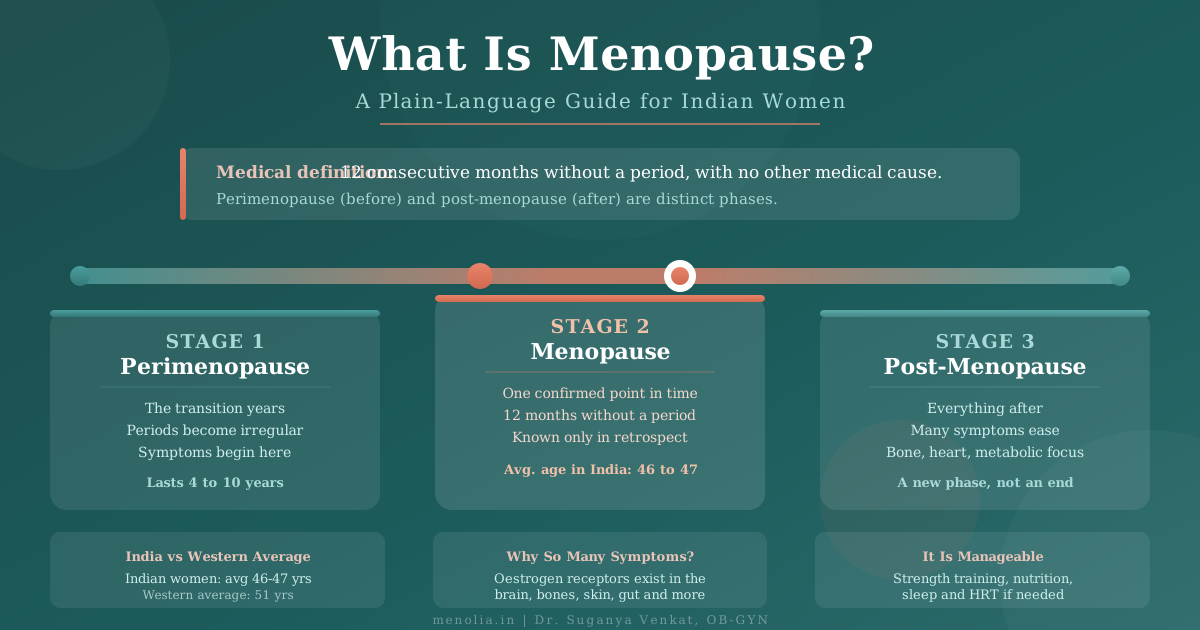
Menopause is a specific biological milestone. It is defined as 12 consecutive months without a menstrual period, with no other medical reason for the absence.
That’s it. Just one day, technically.
The day that marks the end of 12 full period-free months is the menopause. Everything in the years before that point is called perimenopause. Everything after is post-menopause. So when women say “I’m going through menopause,” they usually mean perimenopause, which is the years-long transition leading up to that milestone.
Understanding this distinction matters because it tells you where you are. The symptoms most women associate with menopause (hot flashes, sleep disruption, mood changes) are almost entirely perimenopause symptoms. Many women find that once they’ve actually crossed the menopause threshold, things begin to settle.
When Does Menopause Happen in India?
Indian women reach menopause at an average age of 46 to 47 years, based on data from the Indian Menopause Society (Palacios et al., Climacteric, 2010; Dasgupta et al., J Obstet Gynaecol India, 2014). This is 4 to 5 years earlier than the Western average of around 51.
The reasons aren’t fully established, but contributing factors likely include genetic variation, nutritional status, and reproductive history. Higher parity (more pregnancies) and earlier menarche are associated with earlier menopause in some Indian studies.
Perimenopause typically begins 4 to 10 years before this point. Many Indian women start noticing changes in their late 30s or early 40s. If your periods are becoming unpredictable at 42, that can be a normal perimenopausal shift, not something going wrong.
Menopause before age 40 is called premature ovarian insufficiency (POI). It’s a distinct clinical situation with its own causes and management pathway. If this applies to you, our detailed guide on premature menopause covers what to expect and what steps to take.
The Three Stages
Most women find it easier to understand menopause once they see the full timeline.
Stage 1: Perimenopause. This is the transition, and it’s the longest stage. It begins when the ovaries start producing oestrogen less consistently. Cycles may become irregular, the interval between periods may shorten or lengthen, and new symptoms appear. Perimenopause can last anywhere from 2 to 10 years, with an average of around 4 to 7 years.
Hormones don’t decline in a straight line during perimenopause. Oestrogen can surge unpredictably before falling, which explains why symptoms come and go. One month can feel entirely normal, the next can bring night sweats and irritability. This unpredictability is one of the most confusing things women describe.
For a detailed breakdown of each substage and what the STRAW+10 clinical framework says about them, read our complete guide to the stages of menopause.
Stage 2: Menopause itself. As mentioned above, this is a single point in time, not a phase you’re “in.” You can only confirm it in retrospect: 12 months have passed since your last period. At this moment, ovarian oestrogen production has effectively ceased. Average age in India: 46 to 47.
Stage 3: Post-menopause. Everything from the menopause point onward. For many women, vasomotor symptoms (hot flashes, night sweats) ease off over the following years, though for some they continue longer. The health focus in post-menopause shifts toward bone density, cardiovascular health, and metabolic function, all of which are affected by the longer-term absence of oestrogen.
What’s Actually Happening in the Body
Menopause happens because the ovaries run out of viable egg-containing follicles. Women are born with roughly 1 to 2 million follicles. By the mid-30s to 40s, the pool has shrunk significantly, and the remaining follicles are less responsive to hormonal signals.
As ovulation becomes more erratic, progesterone output falls (progesterone is produced after ovulation). As the follicle pool depletes further, oestrogen output becomes less consistent. The brain responds by raising FSH (follicle-stimulating hormone) and LH (luteinising hormone), pushing harder on a system that can no longer respond as it once did. This is why FSH levels in a blood test are one of the markers used to assess menopausal status.
The wide-ranging symptoms of perimenopause and menopause, from hot flashes to joint discomfort to brain fog, are mostly downstream effects of this oestrogen fluctuation and eventual decline. Oestrogen has receptors throughout the body: in the brain, bones, cardiovascular system, skin, urinary tract, and gut. Its reduction doesn’t produce a single effect. It produces dozens.
Not sure whether what you’re experiencing is perimenopause? Dr. Suganya’s team can help you make sense of it. Message us on WhatsApp and we’ll help you figure out where you are in the journey.
Common Symptoms (Including the Ones Nobody Mentions)
Most women have heard of hot flashes and irregular periods. What catches many women off guard are the symptoms that feel less obviously hormonal.
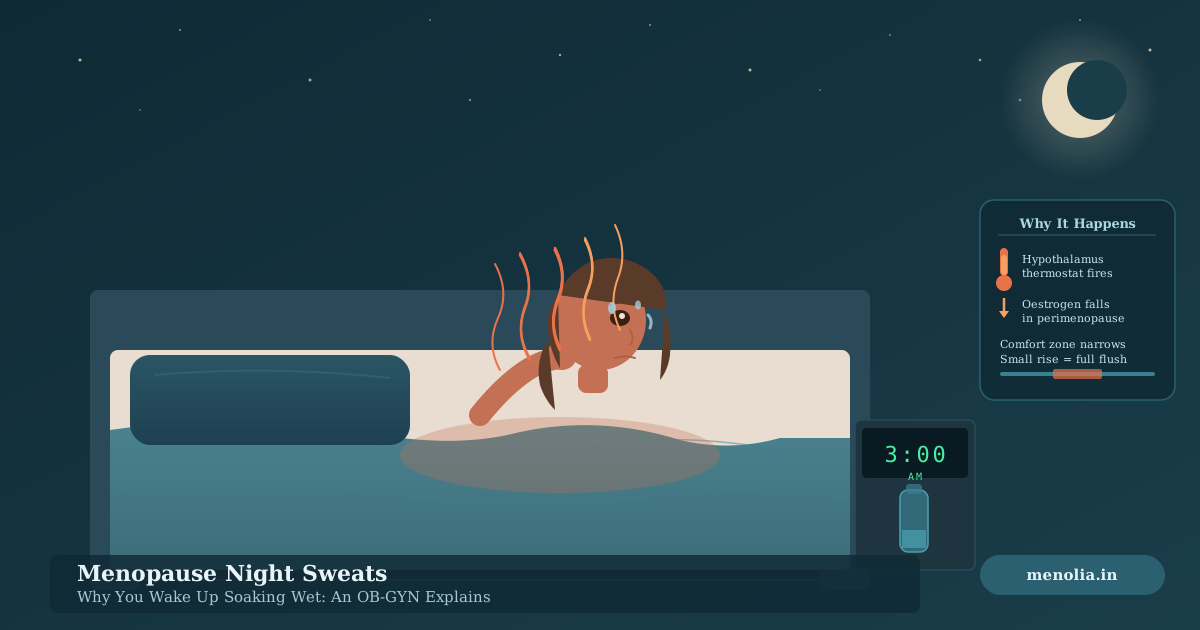
Vasomotor symptoms. Hot flashes and night sweats are the most widely recognised. A hot flash is a sudden sensation of heat, often starting in the chest and spreading to the face and neck, lasting 2 to 4 minutes on average. They’re caused by the hypothalamus misfiring its temperature-regulation signals in response to oestrogen fluctuation.
Mood and cognitive changes. Irritability, low mood, difficulty concentrating, and what women often describe as brain fog are common perimenopausal experiences. These are real physiological effects, not simply reactions to disrupted sleep. Oestrogen directly affects serotonin, dopamine, and GABA pathways in the brain.
Sleep. Night sweats disrupt sleep directly, but oestrogen loss also affects sleep architecture on its own. Many women report lighter sleep and more frequent waking even on nights without sweating episodes.
Joint and muscle changes. Oestrogen has anti-inflammatory properties. As it falls, joint discomfort becomes more common, particularly in the fingers, hips, and knees. Many women see an orthopedic specialist for this without anyone connecting it to hormones.
Urogenital changes. The tissue of the vagina and urinary tract contains oestrogen receptors too. Without adequate oestrogen, this tissue can become drier and thinner, leading to discomfort, recurrent UTIs, and changes in bladder sensation. This is called genitourinary syndrome of menopause (GSM) and is more common than most women realise.
Skin and hair. Collagen synthesis decreases as oestrogen falls, making skin drier and less elastic. Hair thinning and density changes are also common, often noticed over months rather than suddenly.
Many of these symptoms are under-discussed because women don’t connect them to hormones and see specialists across different fields without anyone joining the dots. Having a clear picture of what menopause actually is can make a real difference in how you respond to what your body is telling you.
What You Can Do
Menopause is not a medical emergency. It is a life stage that can be managed well with the right approach. Here’s what the evidence supports.
Strength training. This is the most evidence-backed intervention for women in perimenopause and post-menopause. It protects bone density, preserves muscle mass, improves insulin sensitivity, and has a measurable positive effect on mood. Aim for at least two sessions per week with compound movements.
Sleep hygiene. Address sleep disruption directly, not just as a side effect of hot flashes. Consistent sleep and wake times, a cool sleep environment (cotton or linen bedding helps), limiting screens before bed, and avoiding alcohol (which fragments sleep architecture after it wears off) all make a real difference.
India-relevant nutrition. Ragi is among the richest Indian sources of calcium and supports bone health directly. Haldi (turmeric) has anti-inflammatory properties relevant to joint symptoms. Dahi provides protein and probiotics that support gut health, which becomes more relevant as oestrogen falls. Til (sesame seeds) offer calcium, iron, and sesamin, a plant compound with mild oestrogenic activity. Focusing on whole foods and reducing ultra-processed foods improves insulin sensitivity and reduces inflammation.
Stress and cortisol management. High cortisol compounds many perimenopausal symptoms, particularly belly fat accumulation, sleep disruption, and anxiety. Pranayama (Anulom Vilom, Bhramari) for 10 to 15 minutes daily has evidence for cortisol regulation. Adequate sleep creates a reinforcing cycle: managing cortisol helps you sleep better, and sleeping better helps you manage cortisol.
Hormone therapy (HRT/MHT). If symptoms are significantly affecting quality of life, hormone therapy is a conversation worth having with your OB-GYN. It’s not right for every woman (individual medical history matters, particularly for breast cancer and cardiovascular risk), but current evidence from updated Women’s Health Initiative analyses (Manson et al., JAMA, 2017) and more recent meta-analyses shows that MHT started within 10 years of menopause, or before age 60, is associated with benefits that often outweigh risks for healthy, recently postmenopausal women. The “HRT is dangerous” framing from older studies applied to a specific older formulation in older women. The clinical conversation has shifted considerably since then.
If you’d like to read about women who worked through these transitions with support, the stories on Menolia show what this can look like in real life.
Ready to talk through what you’re experiencing? Message Dr. Suganya on WhatsApp. She works with women in perimenopause, at menopause, and through post-menopause, and the conversation starts with understanding where you are.
FAQ
What is the definition of menopause?
Menopause is defined as 12 consecutive months without a menstrual period, with no other cause for the absence such as pregnancy, illness, or medication. It marks the permanent end of ovarian oestrogen production and the end of natural reproductive capacity. In India, the average age at natural menopause is 46 to 47 years.
What is the difference between perimenopause and menopause?
Perimenopause is the transition phase leading up to menopause. It begins when ovarian hormone production becomes irregular (often years before periods stop) and ends when 12 months have passed without a period. Menopause itself is that specific confirmed point in time. Most symptoms, including hot flashes, mood changes, and sleep disruption, occur during perimenopause, not after.
How will I know when menopause has started?
You confirm menopause in retrospect. When 12 full months have passed without a period and no other cause explains the absence, the date of your last period was the start of menopause. During perimenopause, you may notice irregular periods, new symptoms like hot flashes and sleep disruption, and mood changes. A blood test checking FSH and oestradiol levels, read alongside your symptoms, can help clarify where you are in the transition.
Does menopause mean I can no longer get pregnant?
Post-menopause, yes. Once 12 months have passed without a period, ovarian function has ceased and natural pregnancy is not possible. During perimenopause, however, pregnancy remains possible, even if cycles are irregular. Women in perimenopause who don’t want to conceive should continue using contraception until they’ve been period-free for 12 months (if under 50) or 6 months (if over 50), as per standard clinical guidance.
How long do menopause symptoms last?
This varies considerably. The SWAN study (Study of Women’s Health Across the Nation) found that vasomotor symptoms persist for a median of 7.4 years across the full menopausal transition (Avis et al., JAMA Internal Medicine, 2015). For some women, significant symptoms last 2 to 3 years and then ease. For others, they continue well into post-menopause. Duration and severity depend on when symptoms started in relation to the final period, body mass index, smoking status, and stress levels.
For more on this, read our guide on Post-Menopause.
Is menopause different for Indian women?
Yes, in a few important ways. Indian women tend to reach menopause earlier, at around 46 to 47 versus 51 in Western populations. Research also suggests that vasomotor symptom experience varies across ethnicities, with South Asian women sometimes reporting different symptom profiles. Cultural context matters too: in many Indian families, menopause is not openly discussed, meaning women often go through significant hormonal changes without adequate information or a support system.
What is premature menopause?
Menopause before age 40 is called premature ovarian insufficiency (POI) or premature menopause. It affects around 1 to 2% of women and has specific causes, including genetic conditions, autoimmune conditions, and prior cancer treatments. POI has its own clinical management pathway, distinct from natural menopause, and typically warrants hormone therapy given the longer duration without oestrogen. See our dedicated guide on premature menopause for the full picture.