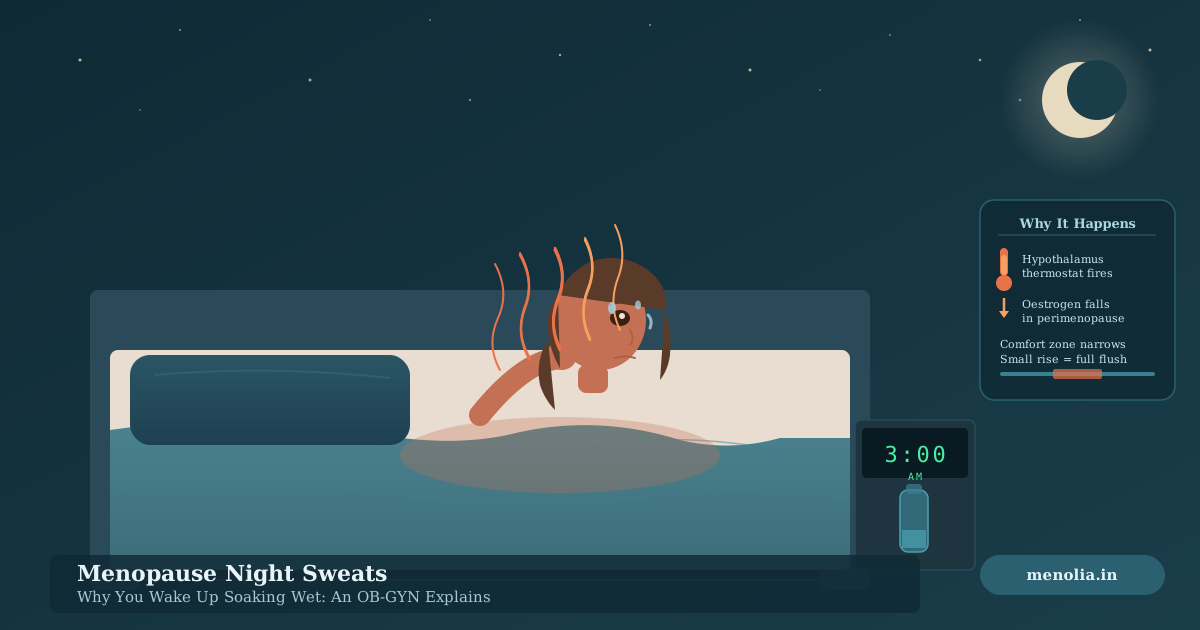
It is 3 AM. You wake up with your heart beating fast, your nightclothes damp, the sheets uncomfortably warm around you. You peel back the blanket and lie still, waiting for the heat to pass. Sometimes it takes two minutes. Sometimes twenty. By the time you cool down enough to sleep again, an hour has gone.
If this is your night, you are not imagining it. And you are not alone.
Night sweats are one of the most disruptive symptoms of the menopausal transition. Up to 75% of women going through perimenopause experience vasomotor symptoms (North American Menopause Society, 2023 Position Statement). Night sweats are distinct from daytime hot flashes: they follow different patterns, they occur in a different physiological context, and they respond to slightly different approaches.
This guide explains what is actually happening in your body when you wake up soaking wet, why it happens at night specifically, and what practical steps can reduce how often it occurs.
What Night Sweats Actually Are
Night sweats are nocturnal vasomotor events. “Vasomotor” refers to blood vessels and the nerves that control them. During a night sweat, your brain signals the blood vessels near your skin to dilate suddenly, flooding the skin surface with blood to release heat. Sweat glands activate to speed up cooling. The result: a wave of warmth that spreads from your chest upward, your skin becoming damp or outright soaked, followed by a chill as the sweat evaporates.
The whole sequence takes only a few minutes. It can feel much longer at 3 AM.
The part most women find confusing: your bedroom may be perfectly cool. The trigger is not external heat. It comes from inside.
Why It Happens: The Thermostat Theory
Your hypothalamus is the brain region that functions as your body’s thermostat. It constantly monitors core temperature and makes adjustments: dilating blood vessels to release heat when you are too warm, constricting them when you need to conserve it.
Oestrogen plays a key role in keeping this thermostat well-calibrated. It widens what researchers call the “thermoneutral zone”: the temperature range within which your body does not feel the need to react. When oestrogen is plentiful, your body tolerates small temperature fluctuations without triggering a sweat response.
As oestrogen declines during perimenopause, this zone narrows significantly. The hypothalamus becomes hypersensitive to small rises in core body temperature. What used to be a comfortable warmth now registers as overheating. The response is immediate and disproportionate: a full vasomotor flush (Freedman, R.R., 2014, Menopause).
This explains why the same woman who never noticed feeling warm in her 30s can now wake up drenched from what seems like nothing. The trigger does not have to be significant. The thermostat is set on a hair-trigger.
Why Night Specifically?
Several things make night sweats more likely during sleep than during comparable temperature changes in the daytime.
Core temperature naturally rises before sleep. Your body produces a gentle warming signal as part of normal sleep preparation, which helps transition you from waking to deep sleep. In perimenopause, even this gentle internal warmth can be enough to cross the narrowed thermoneutral threshold.
Cortisol is at its lowest. During the night, stress hormone levels drop to their daily minimum. This shift can make the hypothalamus more reactive to hormonal fluctuations.
You cannot make environmental adjustments while asleep. In the daytime, you might open a window, sip cold water, or step into a cooler space. At night, the response runs its full course before you are awake enough to intervene.
Sleep stages alter thermoregulation. REM sleep involves reduced thermoregulatory control, which allows body temperature to drift. When it drifts too high for the sensitised system, a compensatory flush is triggered.
How Night Sweats Differ From Hot Flashes
The two symptoms share the same underlying mechanism (vasomotor instability from oestrogen decline) but they are not identical experiences. Understanding the difference helps you manage each one more effectively.
Our guide to what hot flashes are and what causes them covers the daytime experience in detail. Night sweats differ in a few important ways.
Trigger source. Hot flashes are often set off by identifiable external factors: a warm room, a hot drink, a spicy meal, stress, or alcohol. Night sweats happen during sleep, when most of those triggers are absent. The internal temperature drift of sleep itself is the more common driver.
Recovery environment. With a daytime hot flash, you can take action immediately: remove a layer, step into a cooler space, drink cold water. With a night sweat, you wake mid-event. By the time you are conscious enough to respond, the flush may already be subsiding, leaving you damp and chilled.
Sleep disruption. This is where night sweats cause the most lasting harm. A single episode takes only minutes, but waking at 3 AM costs sleep time, reduces sleep quality, and fragments the deeper sleep stages your brain needs for memory consolidation and mood regulation. Women who experience frequent night sweats often report brain fog, irritability, and daytime fatigue. That is not coincidence. Our guide to menopause and sleep problems covers the full picture of what happens to sleep during the menopausal transition.
When they improve. Night sweats tend to be most intense during perimenopause and often reduce in frequency after menopause, once hormone levels settle at a new baseline. Individual timelines vary considerably.
What Makes Night Sweats Worse
Certain factors make the narrowed thermoneutral zone even more unstable. Reducing these can lower the frequency of episodes meaningfully, even before any other treatment.
Alcohol in the evening. Alcohol causes peripheral vasodilation (blood vessels near the skin expand) and disrupts sleep architecture, particularly REM sleep. Both make night sweats more likely and more intense. Even one or two drinks a few hours before bed can make a measurable difference.
Spicy food at dinner. Capsaicin, the compound that gives chillies their heat, activates the same heat-sensing receptors the hypothalamus uses. In a sensitised system, an evening meal with hot spices can raise the risk of a night sweat in the hours that follow.
A warm sleep environment. A bedroom that is too warm, heavy quilts, or synthetic fabrics that trap heat all reduce the buffer between your body temperature and the threshold that triggers a flush.
Stress and elevated cortisol. Emotional stress in the evening keeps cortisol elevated later into the night. This narrows the thermoneutral zone further and can make flushes more frequent. Managing the evening wind-down is not a luxury in perimenopause. It is a direct intervention in night sweat frequency.
Caffeine late in the day. The stimulant effects of caffeine persist for 5 to 6 hours in most people. A cup of tea or filter coffee at 4 PM may still be activating your nervous system at 10 PM, making the thermoregulatory system more reactive.
Night sweats disrupting your sleep regularly? Dr. Suganya can assess what is driving them and suggest approaches specific to your situation. Message us on WhatsApp to start the conversation.
What Actually Helps: A Practical Guide for Indian Women
Managing night sweats is about reducing the frequency and severity of episodes, not expecting them to stop overnight. The following approaches have genuine evidence behind them or strong clinical rationale.
Your Sleep Environment
The most direct intervention is keeping your bedroom cool. A room temperature between 18 and 20 degrees Celsius is often cited as optimal for sleep quality. In Indian summers, this may require an AC on a low setting, a ceiling fan, or a table fan directed at the bed.
Bedding choices matter. Cotton sheets breathe significantly better than synthetic blends. If you share a bed with a partner who prefers warmth, consider separate duvets rather than a shared quilt. This is practical and worth trying.
Nightwear. Loose cotton or bamboo-fabric nightwear that wicks moisture away from the skin reduces how long you feel damp after an episode. Avoid tight-fitting synthetic fabric.
Keep cold water nearby. A small bottle of water on the bedside table gives you something to reach for mid-episode. Sipping cold water can shorten recovery time.
Evening Routine
Avoid alcohol and very spicy meals within 2 to 3 hours of bedtime. This is one of the highest-impact changes you can make. In Indian cooking, evening meals often include significant spice. A lighter, milder dinner on nights when you want to sleep better is worth trying.
Dinner choices that may help. Foods rich in phytoestrogens (plant compounds with a mild oestrogen-like effect in the body) appear to modestly reduce vasomotor symptom frequency in some research. Indian foods naturally high in phytoestrogens include methi (fenugreek seeds), dahi (yogurt), til (sesame seeds), and alsi (flaxseeds). Including these in your evening meal, rather than a heavily spiced rich curry, may work in your favour.
A cool shower before bed lowers core body temperature, creating a buffer before sleep. Many women find this reliable in the hotter months.
Managing the evening mindset. If you spend the hour before bed reading stressful news, worrying about the next day, or in an emotionally charged conversation, your nervous system is activated when it should be winding down. Even 10 to 15 minutes of quiet: reading something calm, light stretching, or a few minutes of slow breathing, can reduce cortisol enough to matter.
The menopause self-care daily routine has a fuller breakdown of an evening wind-down that works well for women in the perimenopausal transition.
Exercise and Movement
Regular physical activity helps the body regulate temperature more efficiently and reduces overall stress. Our guide to exercise during menopause covers which forms have the strongest evidence. Walking 30 minutes a day, strength training twice a week, or a consistent yoga practice all produce measurable benefits over time.
One practical note: avoid vigorous exercise within 2 to 3 hours of bedtime. Intense workouts raise core body temperature and cortisol, both of which work against you when you are trying to sleep.
Yoga and pranayama, particularly Anulom Vilom and Bhramari breathing, have been shown to reduce self-reported menopausal symptoms including vasomotor events in several studies. They require no equipment and can be done in 10 to 15 minutes before bed.
Nutrition Notes for Indian Women
Ragi (finger millet) is high in calcium and has a low glycaemic index, which keeps blood sugar stable through the night. Blood sugar dips during sleep can independently trigger nighttime waking. Ragi-based evening foods (ragi roti, ragi dosa, ragi porridge) are worth including regularly.
Haldi (turmeric) has well-documented anti-inflammatory properties. Haldi milk, a warm drink with turmeric and a pinch of black pepper, is a traditional evening option that many women find settling. The direct evidence for turmeric’s effect on vasomotor symptoms is limited, but its general anti-inflammatory benefit is well-supported in the literature.
Dahi (yogurt) is a natural source of calcium and probiotics. Some research suggests gut microbiome health is connected to oestrogen metabolism, and dahi supports both.
When Medical Options Come In
If the approaches above reduce but do not adequately manage night sweats, there are medical options worth discussing with your doctor. Hormone replacement therapy (HRT) is the most effective treatment for vasomotor symptoms and is prescribed based on a detailed assessment of individual health history. Our guide to perimenopause treatment: what actually helps covers the full landscape of both lifestyle and medical approaches.
Non-hormonal prescription options including SSRIs at low doses, gabapentin, and clonidine are sometimes used for women who cannot take or prefer not to take HRT. These require a thorough doctor’s assessment. Do not stop or start any prescription medication based on what you read online. Discuss your specific situation with your OB-GYN or GP.
When to Mention It to a Doctor
Most night sweats in women aged 40 to 55 are menopausal in origin. However, night sweats can occasionally point to other conditions, and it is worth mentioning them to a doctor if:
- They are drenching (you need to change clothes or sheets multiple times per night)
- They are accompanied by fever, significant unintended weight loss, or swollen lymph nodes
- You are below 40 years old (this warrants an evaluation for premature ovarian insufficiency or another underlying cause)
- They persist after your periods have stopped completely, particularly if combined with new symptoms
For most women, the conversation with a doctor is reassuring and productive. It is worth having.
If night sweats are affecting your sleep consistently, you do not have to simply wait it out. Message Dr. Suganya on WhatsApp. A short conversation can help clarify whether this is straightforward perimenopause or worth investigating further.
FAQ
Why do I only sweat at night and not during the day?
Night sweats and daytime hot flashes come from the same mechanism (oestrogen-related hypothalamic hypersensitivity) but the body’s thermoregulatory environment changes during sleep. Core temperature naturally rises as part of sleep preparation, cortisol is at its lowest, and you cannot make environmental adjustments while asleep. All of this makes the nighttime window more prone to triggering a flush response, even in women whose daytime hot flashes are mild or infrequent.
How long do night sweats last during menopause?
Duration varies. For most women, night sweats are most frequent during perimenopause (the 4 to 10 years before the last period) and reduce in frequency after menopause, once hormone levels settle at a new baseline. Some women find them fully resolved within a year of their last period. Others experience them for longer. A 2015 SWAN study (Study of Women’s Health Across the Nation) found that median duration of vasomotor symptoms is around 7 years, with symptoms beginning before the final period and continuing for some years after. Individual variation is large.
Is it normal to need to change my clothes or sheets every night?
Frequent, drenching night sweats that require changing clothing or bedding are worth mentioning to a doctor. They are not unusual in perimenopause, but their severity and impact on sleep make them worth assessing rather than simply tolerating.
Can I take anything before bed to help?
Low-dose melatonin (0.5 to 1 mg) may help with the sleep disruption that night sweats cause, though it does not reduce the sweats themselves. A cool shower before bed, cold water on the bedside table, and avoiding alcohol and spicy food in the evening are all practical strategies. For more significant night sweats, a conversation with your doctor about HRT or non-hormonal options is worth having.
Does what I eat make a difference?
Yes, modestly. Alcohol and spicy food in the evening are established triggers. Foods high in phytoestrogens (dahi, til, alsi, methi) may reduce vasomotor symptom frequency over time, based on studies including data from Asian women. Blood sugar stability through the night also matters: ragi-based evening meals keep glucose levels steadier, reducing one source of nighttime waking that can happen alongside (or be confused with) night sweats.
Will HRT stop night sweats?
HRT is the most effective treatment for vasomotor symptoms including night sweats. In women for whom it is appropriate, assessed individually based on health history, age, and personal preferences, it typically reduces night sweats significantly, often within a few weeks. Whether HRT is suitable for you is a decision to make with your OB-GYN based on your personal situation.
I am 43 with regular periods. Can I have night sweats?
Yes. Perimenopause often begins in the early to mid-40s, sometimes in the late 30s, and night sweats can appear well before periods become irregular. If you are 43 with regular periods and significant night sweats, it is worth mentioning to your doctor. Perimenopausal hormone fluctuations can be discussed in clinical context even without an irregular cycle. Your experience does not have to wait for an irregular period to be taken seriously.