You Are Taking Care of Everyone Except Yourself
If you are a woman between 45 and 55 in India right now, you are probably doing this: managing a household, caring for aging parents, supporting teenagers or young adults, and showing up at work or business, all while quietly navigating hot flashes, broken sleep, and a body that feels different from the one you knew.
Self-care has become a word that mostly means spa days and expensive routines. That is not what this post is about.
This post is about something more specific: the daily habits that support your nervous system, hormones, joints, and mental clarity during menopause. Some of them take five minutes. Most of them cost nothing. All of them are grounded in how your body actually works in this phase.
The goal is not a perfect routine. The goal is a reliable one.
Why Menopause Changes What Your Body Needs
Before 45, your body had relatively stable oestrogen levels to help regulate inflammation, sleep, mood, joint lubrication, and bone density. Oestrogen was doing a quiet but enormous amount of work in the background.
When oestrogen falls, those regulatory functions need to be supported in other ways, through sleep hygiene, food choices, movement, and stress reduction. These are not optional extras. They are what fill the functional gap that oestrogen used to cover.
This is why the habits you could ignore in your 30s now have a measurable effect. The good news: the same is true on the upside. Small, consistent habits produce results in this phase that they simply did not produce before.
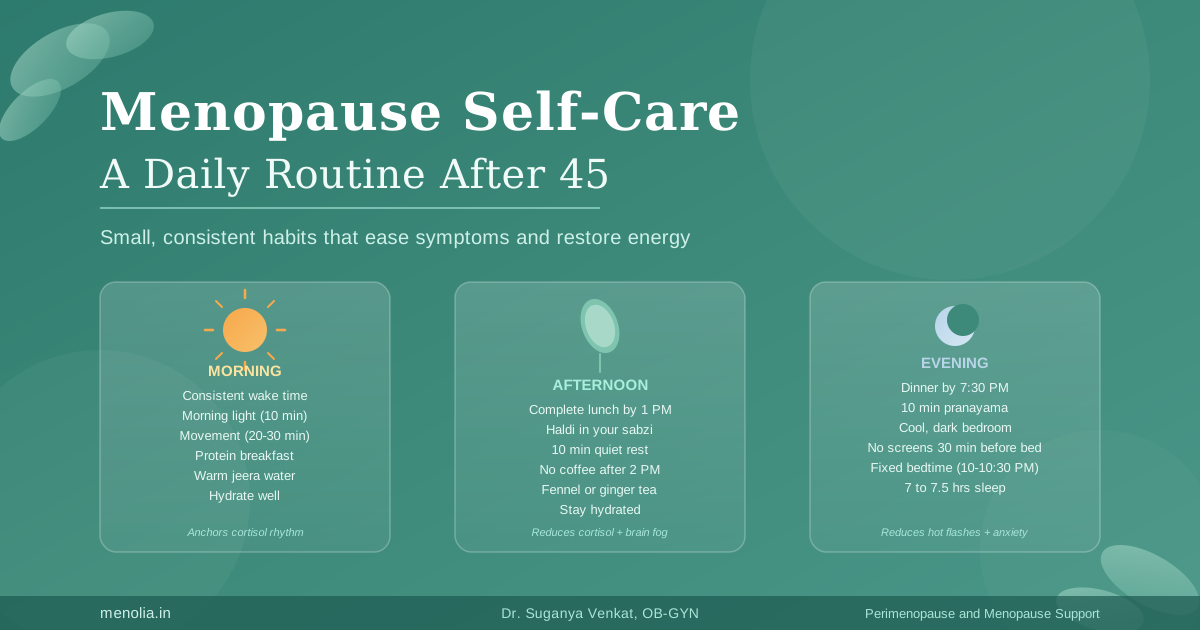
Your Morning Routine (The First 60 Minutes)
Wake up at a consistent time
Your cortisol rhythm is your master clock. After menopause, cortisol becomes more erratic, partly because oestrogen no longer moderates it. A consistent wake time anchors the cortisol curve, pulling the daily cortisol peak to morning (where it gives you energy and focus) rather than allowing it to rise and fall randomly through the day.
You do not need to wake at 5 AM. You need to wake at the same time every day, including weekends, within a 30-minute window.
Get 10 minutes of morning light
Within 30 minutes of waking, step outside or sit near a window with direct natural light. No sunglasses.
Morning light hits specific photoreceptors in your eyes (melanopsin-containing cells) and signals the brain to anchor the circadian rhythm. This improves sleep quality at night, stabilises mood across the day, and helps regulate cortisol timing. In a single habit that takes 10 minutes and costs nothing, you address three of the most common menopause complaints: poor sleep, mood fluctuations, and low energy.
If you live in Tamil Nadu or anywhere in South India, you have this available almost every day of the year. Use it.
Warm water before anything else
Before coffee or tea, drink one glass of warm water. You can add a few jeera (cumin) seeds steeped overnight, which supports digestion and reduces the morning bloating that many women in this phase notice. Ginger added to morning warm water helps with nausea (more common in perimenopause than most women realise) and has mild anti-inflammatory properties.
This is not a detox ritual. It is a gentle way to start gut motility after the overnight fast, when digestion is naturally slower.
A short movement practice (20 to 30 minutes)
This is the single most evidence-backed intervention for menopause symptoms. The full details are in the exercise guide for menopause, but in terms of a daily routine: you do not need a gym session every morning.
What matters is consistency over intensity. Options that work:
- A 20-minute brisk walk outdoors (combines movement with light exposure, reduces cortisol, supports bone density through weight-bearing impact)
- A short yoga sequence (20 to 30 minutes of targeted menopause yoga significantly reduces hot flash frequency over 8 weeks, per research reviewed in the yoga guide)
- Strength movements at home (body-weight squats, wall push-ups, resistance band work): 3 days per week is the target for bone density and visceral fat reduction
Rotate between these depending on the day and your energy. On high-fatigue days, a 20-minute walk is not underperforming. It is the right intervention.
A protein-forward breakfast
After overnight fasting, your blood sugar is at its lowest point. If you skip breakfast or eat only refined carbohydrates (plain white bread, only fruit, just chai), blood sugar spikes and crashes within an hour, which elevates cortisol and worsens brain fog for the next three to four hours.
Protein at breakfast stabilises this. Practical Indian options that work:
- Idli with sambar (protein from dal in sambar + some from idli fermentation)
- Moong dal cheela (quick to make, high protein, easily customisable)
- Eggs in any form with one roti or small rice portion
- Dahi (yoghurt) with ragi porridge (calcium + probiotics + low-GI carbohydrate in one bowl)
This is covered in more depth in the menopause diet guide.
Your Afternoon Check-In (2 to 4 PM)
Do not skip lunch
This is the most skipped meal for Indian women who are managing households, offices, or businesses. Skipping lunch creates a 6 to 8 hour fasting window that elevates cortisol, triggers stronger sugar cravings in the evening, and worsens sleep quality that night.
A complete lunch does not require elaborate preparation. Dal, rice or roti, sabzi, and a small serving of dahi covers protein, fibre, calcium, and probiotics in a single meal. Add haldi (turmeric) to the sabzi or dal, as curcumin’s anti-inflammatory properties are most absorbed when combined with fat and eaten warm.
A 10-minute wind-down after lunch
In the 10 minutes after lunch, sit quietly, not scrolling a phone. A brief non-sleep rest (lying down with eyes closed but not sleeping) measurably reduces afternoon cortisol and has been shown to improve cognitive performance in the following hours. This is distinct from an afternoon nap, which disrupts nighttime sleep. Ten minutes of quiet lying down is restorative without fragmenting your overnight sleep.
If this feels indulgent, reframe it: cortisol reduction is directly connected to visceral fat management, mood regulation, and hot flash frequency. Ten minutes is the investment.
Hydration through the afternoon
Dehydration worsens brain fog, joint pain, and fatigue, all of which are already elevated in menopause. Oestrogen helps the body retain fluid; as oestrogen falls, dehydration happens faster.
Target 2 to 2.5 litres of water through the day. Herbal teas count: jeera water, fennel (saunf) tea, and ginger tea are all relevant. Avoid coffee after 2 PM: caffeine has a half-life of 5 to 7 hours, which means a cup of coffee at 3 PM is still at half-strength in your bloodstream at 8 to 10 PM, directly delaying sleep onset and suppressing deep sleep in the first half of the night.
WhatsApp consultation with Dr. Suganya’s team
If you find that even with consistent daily habits your symptoms are not improving, or you are unsure which changes to prioritise first, Dr. Suganya’s team can help you put together a personalised plan based on your specific pattern of symptoms.
Start a conversation on WhatsApp →
Your Evening Routine (The Most Important 90 Minutes)
Eat dinner by 7:30 PM
Late dinners are strongly associated with poor sleep quality in menopausal women, independent of what you eat. The mechanism involves the circadian regulation of digestion: your gut slows significantly after 8 PM, and an undigested dinner raises core body temperature at night.
Hot flashes already raise core body temperature. A late, heavy dinner compounds this. Women who eat dinner by 7:30 PM consistently report fewer night sweats and better sleep quality, not because of the food content but because of the timing.
This is one of the highest-leverage changes in a menopause routine with almost no cost. The meal itself does not need to be light. Just earlier.
10 minutes of pranayama before bed
Anulom vilom (alternate nostril breathing) for 10 minutes measurably activates the parasympathetic nervous system, reduces heart rate, and lowers cortisol. This is not general relaxation advice. The physiological mechanism is documented in the menopause yoga guide.
For women who experience sleep-onset anxiety (the late-night racing thoughts that are common in perimenopause), pranayama before bed is often more effective than any supplement.
Practice: 4-count inhale through the left nostril, hold for 4, exhale through the right nostril for 4 to 8 counts. Repeat on the other side. 10 minutes of this activates the vagus nerve and shifts the nervous system out of sympathetic dominance.
Keep your bedroom cool and dark
Oestrogen’s fall removes a thermoregulatory buffer that previously prevented your core temperature from spiking at night. Small changes to the sleep environment make a measurable difference: a room temperature of 18 to 20 degrees Celsius, blackout curtains or an eye mask, and no screens for 30 minutes before bed.
The menopause sleep guide covers this in full, including specific interventions for night sweats and the 3 AM wake-up pattern.
A fixed bedtime
Pair your consistent wake time with a consistent bedtime. The combination anchors your circadian rhythm from both ends. 10 PM to 10:30 PM is the target for most women in this phase, allowing for 7 to 7.5 hours of sleep before a 5:30 to 6:00 AM wake time.
Poor sleep is not just about fatigue. Chronic sleep under 6 hours in menopausal women is directly associated with elevated visceral fat, increased cardiovascular risk, worsened insulin resistance, and lower pain tolerance (which amplifies joint pain and headaches). Sleep is the anchor habit that everything else depends on.
Weekly Practices (Not Daily, But Consistent)
The daily routine above is a 7-day structure. Alongside it, three weekly practices significantly amplify the results:
Social connection (2 to 3 times per week)
Isolation worsens menopause symptoms through its effect on cortisol and the immune-inflammatory system. A conversation with a friend or family member, a walk with a neighbour, or a group activity (a yoga class, a community group) reduces inflammatory markers over time.
Many Indian women in this phase quietly withdraw from social life because they do not feel like themselves. The withdrawal makes the feeling worse. Connection is not a luxury. It is physiologically protective.
One longer movement session per week (45 to 60 minutes)
Beyond the daily 20 to 30 minute morning movement, one longer session per week, specifically targeting strength training or a full yoga session, produces the bone density and muscle mass benefits that shorter sessions cannot fully deliver. See the exercise during menopause guide for specific options by fitness level.
A check-in with yourself
Once a week, ask: what symptoms are getting better, what is getting worse, and what did I skip this week? Not as a judgement, but as data. The purpose is to notice whether the routine is working and adjust, rather than continuing a habit that is no longer serving you.
What Self-Care in Menopause Is Not
Before closing, it is worth naming a few things that often get marketed as self-care but have limited or no evidence in this phase:
Extreme fasting: Protocols designed for younger men’s metabolic physiology do not transfer directly to menopausal women. Extended fasting raises cortisol, which accelerates visceral fat accumulation and worsens mood in women whose adrenal function is already under strain. The menopause intermittent fasting question is addressed in the belly fat guide if this is something you are considering.
Over-exercising when exhausted: Exercising through severe fatigue raises cortisol and increases inflammatory markers. If you are in a fatigue phase (common in perimenopause, covered in the menopause fatigue guide), gentler movement is not laziness. It is the appropriate intervention.
Comparing your timeline to someone else’s: The duration and intensity of perimenopause varies enormously between women. Your experience is not a failure relative to a friend who transitioned quickly or easily. A personalised approach, based on your own symptom pattern, is more effective than any generic protocol.
Your Menopause Self-Care Summary
| Time | Habit | Why It Matters |
|---|---|---|
| Wake up | Consistent time (same daily) | Anchors cortisol rhythm |
| Morning | 10 min light exposure | Circadian + mood regulation |
| Morning | 20-30 min movement | Bone, mood, metabolism |
| Breakfast | Protein-forward meal | Stable blood sugar all morning |
| Lunch | Complete meal by 1 PM | Avoids cortisol spike from skipping |
| Post-lunch | 10 min quiet rest | Cortisol reduction |
| Afternoon | Hydrate, avoid coffee after 2 PM | Brain fog, joint pain, sleep quality |
| Dinner | By 7:30 PM | Sleep quality, night sweats |
| Evening | 10 min pranayama | Nervous system, sleep onset |
| Bedtime | Cool dark room, consistent time | Deep sleep, hot flash reduction |
Frequently Asked Questions
Q: I cannot do all of this. Where do I start?
Start with two habits: a consistent wake time and morning light exposure. These two changes, without anything else, improve sleep quality, cortisol regulation, and energy over two to four weeks. Once those feel stable, add a morning movement practice. Build from there. The goal is sustainability, not completeness.
Q: Will these habits help with hot flashes specifically?
Yes, indirectly. Morning light exposure, consistent sleep timing, 10 minutes of pranayama, and avoiding coffee after 2 PM are each independently associated with reduced hot flash frequency and severity. The hot flashes guide covers the mechanism in detail, including specific dietary triggers.
Q: Can I do this alongside medication prescribed by my doctor?
These habits work alongside any treatment your doctor has prescribed. Nothing in this routine is contraindicated with standard medications. If you are on HRT or other medication, these habits complement the treatment rather than replacing it. Always follow your doctor’s guidance for medication.
Q: How long before I notice a difference?
Sleep quality and morning energy typically improve within one to two weeks of consistent morning light and a fixed wake time. Symptom changes (reduced brain fog, fewer hot flashes, improved mood) typically become noticeable at four to six weeks of consistent practice. Joint pain and fatigue patterns respond more slowly, over eight to twelve weeks of consistent movement and diet changes.
Q: I am caring for aging parents and barely have time for myself. How do I actually make this work?
The habits in this routine are designed for this exact situation. Morning light takes 10 minutes, pranayama takes 10 minutes, and eating dinner by 7:30 PM costs no additional time (it is a timing shift, not an extra task). The caregiving burden many Indian women in this phase carry is real. The framing here is not “add more to your plate.” It is “change the timing and order of what you are already doing.”
Q: My doctor says my symptoms are normal and to just manage them. Is that true?
Menopause symptoms are common, yes. That does not mean you have to manage them without support. If symptoms are significantly affecting your sleep, mood, or daily functioning, that is worth a detailed conversation with a doctor who specialises in this phase. You deserve more than “it’s normal.”
Ready to put together a routine that fits your specific symptoms and schedule?
Book a WhatsApp consultation with Dr. Suganya’s team →
Dr. Suganya Venkat, OB-GYN with 15+ years of clinical experience. DNB OB-GYN (GKNM, Coimbatore) · MD Pathology (CMC Vellore) · MBBS with 5 Gold Medals (SRMC).