You have been reading about intermittent fasting everywhere. Your colleague lost weight on it. Your daughter’s fitness group swears by it. You are wondering whether it might help with the weight that has settled around your middle since perimenopause began, or with the energy levels that feel less predictable than they used to be.
This is a reasonable question, and it deserves a real answer, not a blanket “yes” or a blanket “no.”
Intermittent fasting affects menopausal women differently from younger adults, differently from men, and differently from what most popular IF content describes. The hormonal context of menopause changes how your body responds to extended periods without food in ways that matter. Some of those changes work in your favour. Some work against you.
This post covers both sides, with the evidence, so you can make an informed decision about whether to try it, how, and what to watch for.
What Intermittent Fasting Actually Means
Intermittent fasting is not a specific diet. It is a timing approach: you eat within a defined window and fast outside it. The most common protocols are:
16:8: Fast for 16 hours, eat within an 8-hour window. For example, first meal at 10 am, last meal by 6 pm.
5:2: Eat normally for five days, then significantly restrict calories (500 to 600 kcal) on two non-consecutive days per week.
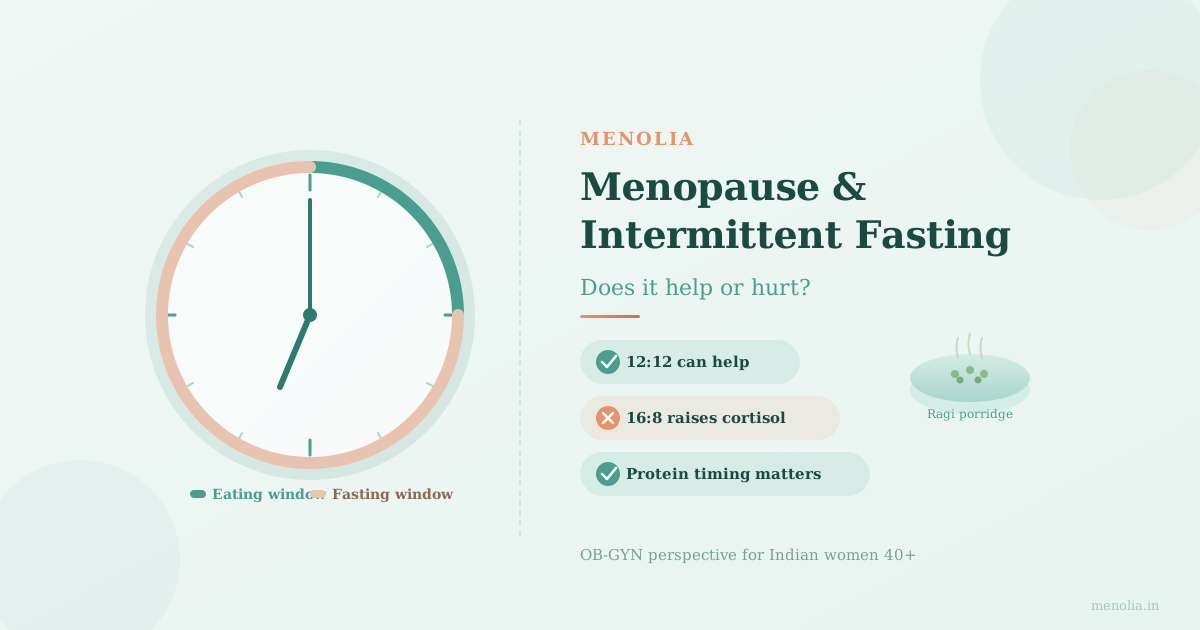
12:12: Fast for 12 hours overnight. Dinner at 7 pm, breakfast at 7 am. This is the gentlest version and, notably, is how many Indian families have always eaten.
The proposed benefits of IF come from two mechanisms. First, giving your digestive system a break may improve insulin sensitivity (how well your cells respond to insulin signals). Second, after a certain fasting duration, your body shifts toward using stored fat for energy. These are real metabolic effects. The question for menopausal women is whether the tradeoffs are manageable.
Why Menopause Changes the Equation
During perimenopause and menopause, four hormonal shifts interact with IF in ways that are not always beneficial:
Oestrogen decline and cortisol sensitivity. Oestrogen has a regulatory effect on cortisol, the primary stress hormone. As oestrogen falls, cortisol tends to run higher and is more reactive. Extended fasting is a physical stressor, and the body responds to it by raising cortisol. In younger women with stable oestrogen, this cortisol spike is modest and self-limiting. In menopausal women, the spike can be steeper, last longer, and produce effects you may notice directly: increased hot flash frequency, disrupted sleep, irritability, and difficulty winding down in the evening.
Muscle mass loss risk. After 45, women begin losing muscle mass at an accelerated rate (a process called sarcopenia), driven partly by declining oestrogen and partly by a reduced anabolic response to protein. Extended fasting periods can worsen this if total protein intake is not carefully maintained. Losing muscle is metabolically costly: less muscle means a slower resting metabolic rate, which makes weight management harder over time, not easier.
Insulin resistance. Menopause increases insulin resistance independently of weight gain. This means blood sugar regulation is already under strain. Some IF protocols genuinely help insulin sensitivity. But if fasting is too extended or poorly timed, blood sugar can swing more dramatically, causing the shakiness, brain fog, and intense sugar cravings that many menopausal women find derail their eating entirely by late afternoon.
Sleep disruption. Many women in perimenopause already have compromised sleep from night sweats and other hormonal causes. If the eating window closes too early (say, 4 pm for a 16:8 protocol), hunger during the night can add another layer of wakefulness. Poor sleep raises cortisol the following day, which in turn worsens the symptoms you were trying to improve.
When Intermittent Fasting Can Help During Menopause
This is not a one-sided story. For some women in the menopause transition, IF is genuinely useful. The conditions under which it tends to help are specific.
If your sleep is reasonably stable. Women who are not experiencing significant night sweats or sleep disruption are better positioned to tolerate the cortisol effects of fasting without compounding the problem.
If you are not under high work or caregiving stress. Many Indian women in their 40s and 50s are managing aging parents, adult children, professional responsibilities, and household demands simultaneously. This is a baseline cortisol load that IF adds to. If your daily stress is already high, adding a physiological stressor through extended fasting often worsens rather than improves how you feel.
If you can maintain adequate protein. If your eating window is structured to include 1.2 to 1.6 grams of protein per kilogram of body weight per day, with sources spread across meals, the muscle-preservation problem is much more manageable. Dal, paneer, curd, eggs, and fish are practical sources in an Indian context.
If the protocol is gentle. A 14:10 or 12:12 window (rather than 16:8 or OMAD) gives the metabolic benefits with far fewer of the cortisol, sleep, and muscle-loss tradeoffs.
The research picture supports this nuance. A 2018 study published in Cell Metabolism found that early time-restricted eating (eating earlier in the day, finishing by 3 pm) significantly improved insulin sensitivity, blood pressure, and appetite-regulating hormones even without caloric restriction. Importantly, this study was conducted in men and did not include menopausal women, which matters because the cortisol and oestrogen picture is different. A 2022 review in Maturitas (a journal focused on menopause and midlife women’s health) found that while IF showed some benefit for metabolic markers in midlife women, the evidence was insufficient to recommend specific protocols, and cortisol dysregulation was flagged as the primary concern requiring further study.
The honest answer is: the evidence in menopausal women specifically is still emerging. What we know from physiology and from clinical observation suggests that gentler protocols with adequate protein, earlier eating windows, and close attention to sleep and stress are more likely to benefit than 16:8 or 5:2 in this life stage.
When Intermittent Fasting Is Likely to Backfire
Certain combinations of factors make extended fasting more harmful than helpful during menopause.
Frequent or severe hot flashes. Hot flashes are themselves a stress response, activating the sympathetic nervous system. Adding extended fasting on top of this increases the total sympathetic load and can increase hot flash frequency and intensity in some women. If your hot flashes are already disrupting daily life, this is not the time to add another trigger.
Significant sleep disruption. If you are routinely waking between 2 and 4 am (a pattern many perimenopausal women recognise), an early dinner that creates a long overnight fast will compound the problem. Hunger at 3 am is an additional reason to lie awake, and the blood sugar dip makes resettling to sleep harder.
Existing bone density concerns. If you have been told your bone density is borderline or low, restricting calories through fasting without very careful nutritional monitoring can worsen calcium and vitamin D intake at a time when bone protection matters. This is worth discussing with your doctor before starting.
History of disordered eating. The restriction-focus of IF can be psychologically difficult for women who have a history of complicated relationships with food. The all-or-nothing structure of fasting windows can trigger unhelpful patterns. If this applies to you, the approach is worth discussing with your doctor or a mental health professional before trying.
If you are considering intermittent fasting as part of your menopause management, Dr. Suganya Venkat’s clinic in Coimbatore can help you assess whether it suits your specific hormonal picture. WhatsApp 91 99402 70499 to ask a question or book a consultation.
The Indian Alternative That Already Works
Here is what is useful to notice: the traditional Indian eating pattern, in many households, already resembles a gentle 12-hour fast. Dinner between 7 and 8 pm. Morning chai followed by a proper breakfast at 7 or 8 am. No snacking after dinner. This is a 12:12 window, and it is supported by the evidence as a metabolically beneficial pattern for menopausal women.
The difference between this traditional rhythm and the aggressive IF protocols that dominate social media is significant. A 12:12 window does not create the cortisol spike, the muscle-loss risk, or the sleep-disruption problem. It gives the gut and metabolic system a meaningful rest. It supports insulin sensitivity. And it fits naturally into the social structure of Indian family mealtimes.
If you want to try IF and are not sure where to start, start here: eat dinner by 7:30 pm and do not eat again until 7:30 am. Do this consistently for four to six weeks and pay attention to how you feel. Energy, sleep quality, hot flash frequency, and hunger patterns are the signals to watch.
What breaks the fast matters too. Starting the day with a ragi porridge (high calcium, low glycaemic index, filling) or dahi with fruit rather than biscuits or refined grain snacks keeps blood sugar stable through the morning. This is more useful for weight and energy management during menopause than any particular fasting window.
If you want to extend to a 14:10 window (eating from 8 am to 6 pm), do so after the 12:12 feels comfortable. Pushing to 16:8 should only be considered if you are sleeping well, stress is manageable, and protein intake is adequate. It is not the right starting point for most menopausal women.
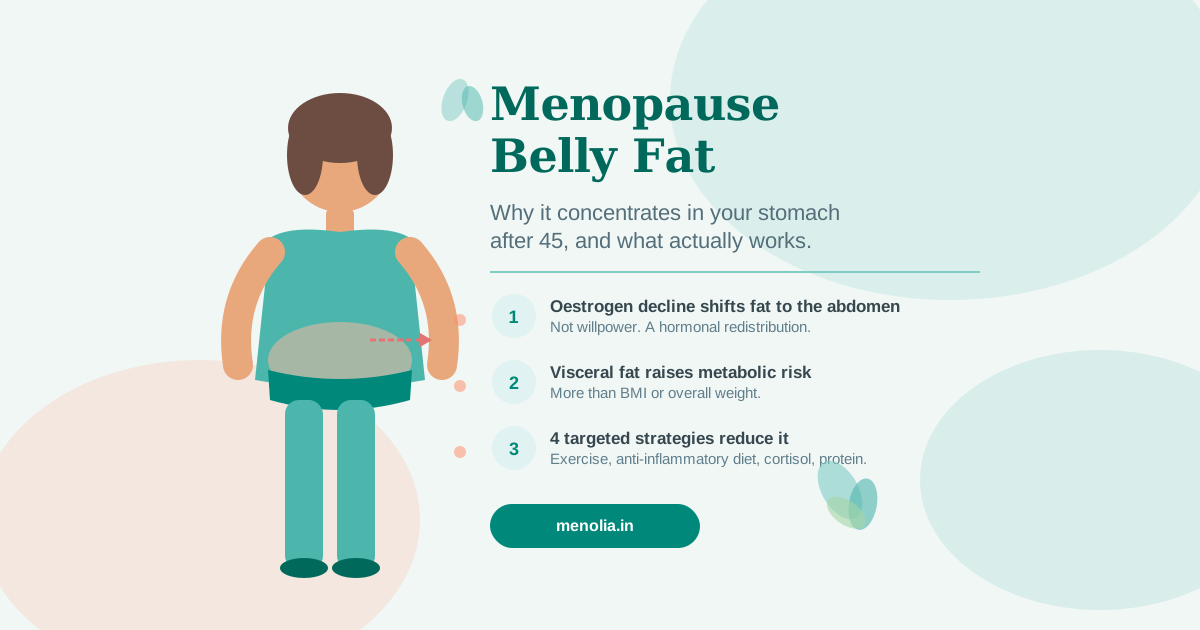
For more on the specific dietary approaches that support weight management and hormonal balance during menopause, the menopause belly fat guide covers the nutritional and exercise levers in detail.
💜 When festival fasting meets a structured plan. Lalitha, 60, with rheumatoid arthritis, fasted for Diwali two weeks into her program with us. Our nutritionist designed fasting-compatible recipes that respected the pooja tradition and her joint condition. She finished the day with stable energy instead of exhaustion. Read Lalitha’s full story →
What to Eat When You Break the Fast
The composition of meals within your eating window matters as much as the timing. During menopause, these principles are particularly relevant:
Protein first. Starting meals with a protein source (dal, eggs, curd, paneer) before carbohydrates blunts the blood sugar response and supports muscle preservation. Even adding a small bowl of dahi at the beginning of a meal changes the metabolic response.
Fibre from Indian sources. Ragi, dal, sabzi, and curd-rice all contain the fermentable fibre that feeds gut bacteria. Gut health and oestrogen metabolism are connected through a pathway called the estrobolome. Supporting the gut through food is a practical lever.
Calcium-rich foods at most meals. Oestrogen’s protective effect on bone is lost during menopause. Ragi, sesame seeds (til), dark leafy greens, and dahi provide calcium in forms that integrate naturally into Indian cooking.
Limit refined carbohydrates in the evening. White rice, maida, and sugar eaten close to bedtime create blood sugar spikes that worsen night waking and increase next-morning cortisol. Shifting refined carbohydrates to midday and replacing them with vegetables and protein in the evening is a manageable change with measurable sleep benefits.
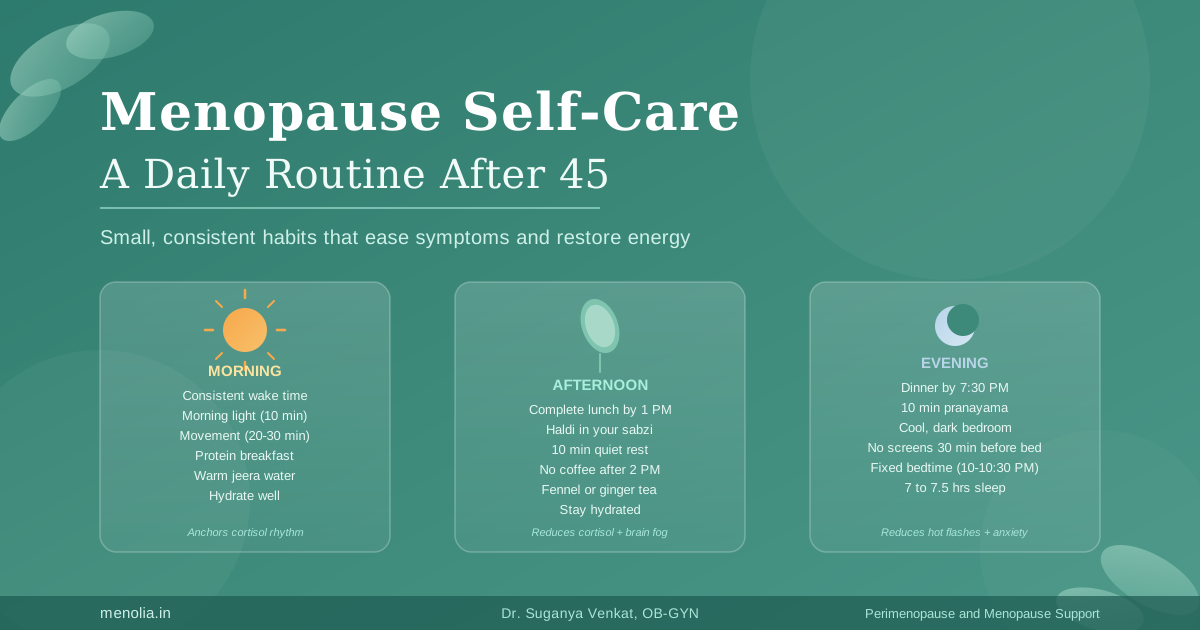
For a structured daily eating approach, the Menolia self-care routine includes meal timing guidance that integrates these principles into a practical daily framework.
Exercise and IF: How They Interact During Menopause
One reason IF works well for some younger women is that they combine it with exercise, which amplifies the insulin-sensitising effect. During menopause, this combination requires more care.
Exercising in a fasted state is more stressful on the body than exercising after eating. If you are doing strength training (which is the most important exercise type for bone and muscle preservation in menopause), training fasted can compromise the intensity you are able to sustain and the recovery that follows. Eating a small protein-containing meal or snack before strength training, even if it shortens the fasting window, is worth it for muscle preservation.
Low-intensity walking in a fasted state (morning walk before breakfast) is well-tolerated by most women and has cardiovascular and blood sugar benefits without the cortisol-raising effect of fasted high-intensity exercise. This is a practical combination for Indian women who already incorporate morning walks into their routine.
For the full picture on exercise during menopause, the exercise during menopause guide covers the research on strength training, cardio, and yoga specifically.
Frequently Asked Questions
Is intermittent fasting safe during perimenopause? It can be, with the right approach. A gentle 12:12 or 14:10 protocol is generally safe for most perimenopausal women who are otherwise healthy. More aggressive protocols (16:8, 5:2, OMAD) carry higher risk of cortisol dysregulation and muscle loss in this life stage and need careful monitoring. If you have any existing health conditions, discuss with your doctor before starting.
Can intermittent fasting stop menopause weight gain? IF can support weight management, but it is not a fix for the hormonal drivers of menopause weight gain. Falling oestrogen, rising cortisol, and declining muscle mass all contribute to the weight shift that happens around perimenopause. IF addresses the insulin-sensitivity component but does not directly address the others. Combined with adequate protein and strength training, it is one useful tool, not a complete solution.
Will intermittent fasting make my hot flashes worse? For some women, extended fasting increases hot flash frequency by adding to the cortisol and sympathetic nervous system load. This is individual. If you try IF and notice more frequent or intense hot flashes within the first two weeks, reducing the fasting window or stopping is the right call.
What is the best time to eat if I am trying intermittent fasting in menopause? Earlier eating windows are better supported by the evidence for metabolic benefit. Finishing the last meal by 6 to 7 pm and eating breakfast by 7 to 8 am gives a 12 to 13 hour overnight fast that aligns with the body’s circadian rhythm and avoids late-night blood sugar disruption. This works well within a traditional Indian household schedule.
Can I do intermittent fasting if I am on menopause medication? This depends entirely on the medication. Some medications must be taken with food. Others have different absorption profiles depending on whether the stomach is empty. Do not adjust medication timing without discussing it with your doctor first.
I tried 16:8 and felt terrible. Does that mean IF is not for me? Not necessarily. Many menopausal women who struggle with 16:8 do much better on 12:12 or 14:10. The 16-hour window is often too long for this life stage. Feeling irritable, having worse hot flashes, or sleeping poorly are signals to reduce the fasting window, not to push through.
How long before I see results from intermittent fasting during menopause? Metabolic changes (improved insulin sensitivity, more stable energy) are often noticed within two to four weeks of consistent 12:12 or 14:10 eating. Weight changes take longer (six to twelve weeks) and depend heavily on what is eaten within the window and whether strength training is included. Expecting dramatic short-term weight loss from IF alone is likely to be disappointing.
What This Means in Practice
The question is not “should I do intermittent fasting during menopause?” The better question is “which version of IF, if any, suits my situation right now?”
For most Indian women in perimenopause or menopause:
A consistent 12-hour overnight fast is the most accessible, evidence-supported, and sustainable starting point. It is culturally compatible, does not require skipping a full morning meal, and carries the lowest risk of the cortisol, muscle, and sleep problems that more aggressive protocols introduce.
If your sleep is stable, your stress is manageable, and you want to experiment with extending to 14:10, that is a reasonable next step with attention to protein intake and how you feel.
16:8 or more aggressive protocols deserve careful thought and ideally a clinical conversation before starting, particularly if you have significant hot flashes, sleep disruption, or any concerns about bone density.
The goal of any dietary approach during menopause is to support your body through a transition, not to impose a protocol designed for a different hormonal reality. Eating in rhythm with your body’s natural signals, with nourishing Indian foods and adequate protein, goes further than any strict fasting window.
Dr. Suganya Venkat’s clinic in Coimbatore supports women through all aspects of the menopause transition, including personalised nutrition and lifestyle guidance. WhatsApp 91 99402 70499 to book a consultation or ask a question directly.
For a broader overview of what to expect from your body during menopause, the menopause weight gain guide and the menopause sleep solutions guide cover the most common concerns alongside this one.