It arrives without warning. A wave of heat moves up through your chest to your face. Your skin flushes. Sweat appears along your hairline or the back of your neck. Your heart rate picks up. Then, just as suddenly, it passes, and you’re left feeling cold and a little shaken.
If this is a regular part of your day (or night), you are not alone, and you are not imagining it. Hot flashes are one of the most well-documented, physiologically understood experiences of the menopause transition. There is a clear biological explanation for what is happening to your body, and there are real strategies that help.
This article covers exactly what a hot flash is, what causes it at the hormonal and neurological level, what makes them worse, and what the evidence says about reducing them.
What Exactly Is a Hot Flash?
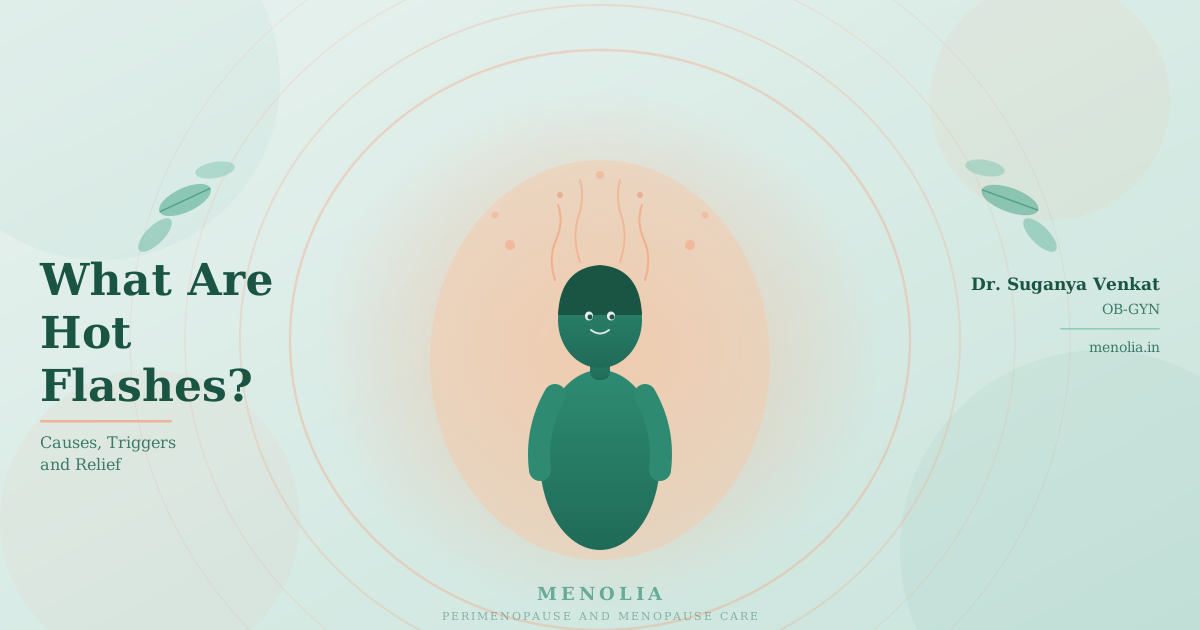
A hot flash, also called a hot flush (both terms mean the same thing), is a sudden sensation of intense warmth that spreads across your upper body, typically your chest, neck, and face. It is a vasomotor symptom, meaning it involves the blood vessels.
During a hot flash, the blood vessels near the skin’s surface rapidly dilate, increasing blood flow to the skin. This causes the visible redness (flushing), the sensation of heat, and the sweating that follows. When the episode ends, your body temperature drops slightly below normal, which is why you often feel chilly or shivery afterwards.
A typical hot flash lasts between 1 and 5 minutes, though some women experience shorter episodes and others longer. The sensation ranges from mild warmth to an overwhelming wave of heat. Night-time hot flashes (commonly called night sweats) are the same physiological event occurring while you are asleep, which is why they disturb sleep so significantly.
Hot flashes that are severe, very frequent, or significantly disrupting sleep and daily life are sometimes described as moderate to severe vasomotor symptoms in clinical settings. The distinction matters because this is the threshold at which most guidelines recommend discussing treatment.
What Causes Hot Flashes? The Physiology
The short answer is declining oestrogen. The longer answer is more interesting, and understanding it helps you see why the management strategies that work actually work.
Your hypothalamus, a small region at the base of the brain, acts as your body’s thermostat. It constantly monitors your core body temperature and triggers responses (sweating, shivering, changes in blood flow) to keep you within a stable temperature range. This range is called the thermoneutral zone.
When oestrogen is present at normal premenopausal levels, this thermoneutral zone is fairly wide. Small fluctuations in body temperature do not trigger a dramatic response.
As oestrogen declines during perimenopause, the thermoneutral zone narrows significantly. Robert Freedman’s laboratory measured this directly: postmenopausal women with hot flashes had a thermoregulatory “null zone” of essentially zero degrees between the sweating and shivering thresholds, against about 0.4 degrees C in symptom-free women (Freedman and Krell, American Journal of Obstetrics and Gynecology, 1999, PMID 10411797; mechanisms reviewed in Freedman, Journal of Steroid Biochemistry and Molecular Biology, 2014, PMID 24012626). A tiny rise in core body temperature, even fractions of a degree, is enough to trip the alarm. The hypothalamus then initiates an emergency cooling response: dilating blood vessels, pushing blood to the skin surface, and triggering sweating.
In women without hot flashes, that same small temperature shift goes unnoticed. The difference is not the size of the stimulus; it is how sensitively the brain is tuned.
A secondary factor involves norepinephrine. Freedman’s 2014 review describes elevated central sympathetic activation, acting through alpha-2 adrenergic receptors, as one of the factors that narrows the thermoneutral zone, and notes that oestrogen depletion explains the narrowing only in part (Freedman, 2014, PMID 24012626). Oestrogen’s own effect is measurable: in a controlled study, oestradiol treatment raised the core-temperature threshold at which sweating begins in postmenopausal women with hot flashes (Freedman and Blacker, Fertility and Sterility, 2002, PMID 11872200).
This is why therapies that target serotonin and norepinephrine (certain antidepressants prescribed off-label for hot flashes) can reduce their frequency. It also explains why stress, which raises norepinephrine, is such a consistent trigger.
How Common Are They, and How Long Do They Last?
Hot flashes affect the majority of women during the menopause transition, in most surveys between two-thirds and four-fifths. They are the most commonly reported menopausal symptom globally. Indian women are not exempt, and because the Indian Menopause Society’s pan-India survey put the average age of menopause here at 46.2 years, several years earlier than Western cohorts (Ahuja, Journal of Mid-life Health, 2016, PMID 27721640), many women meet their first hot flash in their mid-forties, when neither they nor their families are expecting it.
The Study of Women’s Health Across the Nation (SWAN), a large longitudinal study published in JAMA Internal Medicine (Avis et al., 2015), found that the median total duration of frequent hot flash symptoms was 7.4 years (PMID 25686030). Women whose hot flashes began while they were still premenopausal or in early perimenopause had the longest course, a median of more than 11.8 years, while women whose symptoms began after their final period had the shortest. We look at what that means for you in how long do hot flashes last?.
For many women, symptoms are most intense in the two to three years around the final menstrual period, and gradually become less frequent after that. However, a meaningful proportion of women continue to experience hot flashes well into their post-menopause years.
The clinical implication is that hot flashes are not a brief inconvenience. They are a multiyear experience for most women, and managing them actively, rather than waiting for them to pass, makes both physical and practical sense.
Common Triggers: What Makes Them Worse
While oestrogen decline creates the underlying vulnerability, certain factors can reliably trigger individual episodes. Identifying your personal triggers is one of the most effective and immediate things you can do.
Caffeine. Caffeine is one of the most commonly self-reported triggers, though trial evidence is limited. Many women find that their morning chai or afternoon coffee reliably brings on a flash. You do not necessarily need to eliminate caffeine, but shifting your intake to before midday and switching to a smaller cup can reduce frequency.
Alcohol. Alcohol causes peripheral vasodilation (the same mechanism as a hot flash) and disrupts the body’s temperature regulation. Even one or two drinks can trigger episodes in susceptible women. If you notice a pattern, an honest reduction is more effective than avoidance advice you will not follow. How alcohol affects menopause symptoms covers the full picture, from sleep to bone health.
Spicy food. Capsaicin, the compound that gives chillies their heat, directly stimulates thermosensory neurons. For women already on a hair-trigger thermostat, spicy food is a direct provocation. This is not about cutting out all Indian food. It is about reducing the chilli heat while keeping the flavour spices (jeera, dhania, elaichi, haldi) that are actually beneficial.
Stress and emotional intensity. Acute stress raises norepinephrine levels, which, as discussed above, narrows the thermoneutral zone further. Women consistently report that stressful situations, arguments, or periods of anxiety are among their most reliable triggers. Stress is the trigger women underestimate most, and it is the one worth working on first.
Warm environments. An overheated room, a hot shower, being in direct sunlight, or wearing too many layers can all push your core temperature above the narrowed threshold. Practical temperature management at home and at work makes a measurable difference.
Tight or synthetic clothing. Clothing that traps heat prevents normal thermoregulation and can tip you over the threshold. Natural fibres (cotton, linen, light silk) that allow airflow and moisture wicking help.
Smoking. Research consistently shows that women who smoke experience more frequent and severe hot flashes. Nicotine affects oestrogen metabolism and increases norepinephrine activity.
Rapid movement from cold to warm. Stepping from an air-conditioned office into summer heat can trigger a flash in some women. This is the thermostat responding to a sudden external change.
Keeping a simple trigger diary for one to two weeks, noting time, what you were doing, what you ate or drank, and the weather or room temperature, gives you actionable data specific to your physiology.
💚 Want personalised support for managing hot flashes? Dr. Suganya works with women across India to identify their specific patterns and create a practical management plan. Start a conversation on WhatsApp
Evidence-Based Relief: What the Research Supports
Managing hot flashes effectively usually involves a combination of approaches. Here is what the evidence supports.
Cooling Strategies (Immediate Relief)
Lowering your body temperature directly reduces the trigger threshold. Keep a small battery-operated fan at your desk or bedside. Wear layers you can remove quickly. Use a cooling towel or spray mist. Keep your bedroom cooler than you think you need at night: a fan directed at the bed, cotton bedding, and a lower AC setting if you have one.
For night sweats specifically, moisture-wicking cotton bedding, a lower-tog duvet, and having a cold glass of water on your bedside table all help. These are not glamorous interventions, but they work.
Regular Exercise
Honesty about the evidence first: the Cochrane review of exercise for vasomotor symptoms found the evidence insufficient to show whether exercise directly treats hot flashes (Daley et al., Cochrane Review, 2014, PMID 25431132). I recommend it anyway, for a different reason. Exercise improves sleep quality, reduces stress, supports healthy weight, and reduces anxiety, all of which reduce the impact of hot flashes even if they do not change the count.
For Indian women, yoga (specifically restorative and breathing-focused styles rather than hot yoga) is a practical option. If you want the detail on which kinds of movement help, read Exercise During Menopause: What Actually Helps.
Stress Management
Because the neurological pathway for hot flashes involves norepinephrine, any practice that reduces sympathetic nervous system activation can help. Deep diaphragmatic breathing (slow belly breathing for 15 minutes daily) has been studied specifically for hot flash reduction. In a small randomised trial of 33 women, eight sessions of paced-respiration training significantly reduced objectively monitored hot flush frequency, compared with muscle relaxation or a biofeedback placebo (Freedman and Woodward, American Journal of Obstetrics and Gynecology, 1992, PMID 1497048).
Pranayama practices (anuloma viloma, bhramari) fit naturally into an Indian wellness context and work through the same parasympathetic activation mechanism.
Structured relaxation before bed also reduces the sleep disruption caused by night sweats by lowering your baseline arousal level.
Dietary Approaches
Some foods, especially soy and flaxseed, contain phytoestrogens, and small trials suggest they may modestly reduce hot flash frequency for some women; the evidence is mixed and the effect, where it exists, is smaller than hormone therapy. Ragi and dahi earn their place in a menopause diet for bone and gut health rather than for hot flashes specifically. This is covered in detail in 9 Indian Foods That Fight Hot Flashes Naturally, which is worth reading alongside this article.
The key dietary principle is consistency. These foods work over weeks, not days. A Mediterranean-style Indian diet, whole grains (ragi, jowar, bajra), legumes, dahi, seasonal vegetables, and minimal refined sugar, is the best overall pattern for vasomotor symptom reduction.
Maintaining a Healthy Weight
Adipose (fat) tissue produces a form of oestrogen called oestrone. Paradoxically, in postmenopausal women, higher body fat is associated with more frequent and severe hot flashes (not fewer); one leading explanation is that excess body fat insulates the body and impairs heat dissipation. Women with a healthy weight and more lean muscle mass generally report fewer and shorter episodes.
This is not about appearance. It is about thermal physiology. Maintaining muscle through resistance exercise is directly protective.
Medical Options (If Lifestyle Is Not Enough)
If lifestyle and dietary changes are not providing adequate relief, there are effective medical treatments available. Hormone therapy (HRT) is the most effective pharmacological treatment for vasomotor symptoms and is appropriate for many women. Non-hormonal prescription options include certain antidepressants (SNRIs like venlafaxine and SSRIs like paroxetine) that specifically target the norepinephrine and serotonin pathways involved in hot flashes.
Whether these are right for you depends on your medical history, symptom severity, and personal preferences. This is a decision to make with your gynaecologist, not one to make based on what a neighbour or relative found helpful. Our guides to hot flash treatment options, from lifestyle to HRT and to HRT in India give you a clear overview if you want to understand the options before your consultation.
When to Talk to Your Doctor
Hot flashes, even frequent ones, are not a medical emergency. But they are worth discussing with your doctor when:
- You are experiencing seven or more episodes per day
- Night sweats are consistently disrupting your sleep, leading to fatigue or mood changes
- Hot flashes are affecting your ability to work, exercise, or socialise
- You have a personal or family history of breast cancer, blood clots, or cardiovascular disease (this affects which treatment options are appropriate for you)
- The symptoms began suddenly or before the age of 40 (this warrants investigation for causes beyond typical perimenopause)
- Hot flashes come with unexplained weight loss, night sweats that soak the bed without any daytime flashes, or a new lump (these are rarely menopause; we cover the distinction in are hot flashes a sign of cancer?)
Your gynaecologist is your partner in this, not the last resort. The sooner you describe your symptoms accurately, the sooner you have options.
FAQ
What is the difference between a hot flash and a hot flush?
They are the same thing. “Hot flash” is the American English term, and “hot flush” is used in British English and widely in Indian medical writing. Both describe the same sudden sensation of intense warmth spreading across the upper body.
At what age do hot flashes usually start?
For most women, hot flashes begin during perimenopause, typically in the mid-forties in India, where the average age of menopause is about 46 (Ahuja, 2016, PMID 27721640). Women who experience early menopause (before age 45) or premature ovarian insufficiency may experience hot flashes earlier. Some women notice their first hot flashes several years before their periods stop.
How many hot flashes per day is considered normal?
There is a wide normal range. Some women experience one to two mild episodes per day; others experience ten or more. “Normal” is less useful than “manageable.” If hot flashes are interrupting your work, sleep, or daily life, that is the threshold at which active management is worth pursuing, regardless of frequency count.
Do hot flashes always mean I am in menopause?
Not always. Perimenopause begins several years before the final menstrual period, and hot flashes can start during this phase when oestrogen levels are still fluctuating rather than consistently low. Hot flashes can also occasionally be caused by thyroid conditions, certain medications, or anxiety disorders. If you are under 45 or have other unexplained symptoms, a blood test to check FSH, LH, oestrogen, and thyroid function is reasonable.
Can I track which triggers are mine specifically?
Yes, and this is one of the most useful practical steps. Keep a simple diary for two weeks. Note the time of each episode, what you had eaten or drunk in the previous hour, your stress level, the room temperature, and what you were doing. Patterns emerge quickly. Most women find two or three personal triggers that account for the majority of their episodes.
Are night sweats the same as hot flashes?
Yes. Night sweats are hot flashes occurring during sleep. The physiological mechanism is identical. The practical difference is that night sweats disrupt the sleep cycle, leading to sleep fragmentation, daytime fatigue, and mood changes that go beyond the flash itself. This is why menopause sleep problems often worsen during the period of peak vasomotor symptoms.
Will hot flashes go away on their own?
For most women, yes, eventually. The SWAN study (Avis et al., 2015) found that frequent hot flashes lasted a median of 7.4 years. Some women have shorter courses; others longer. The experience gradually diminishes in the post-menopause years for the majority. Active management is about reducing the impact during the years they are most disruptive, not just waiting them out.
💚 Every woman’s hot flash pattern is different. Dr. Suganya offers personalised consultations to understand your specific triggers, symptom severity, and the approach that fits your lifestyle and health history. WhatsApp her directly to get started.
Dr. Suganya Venkat, OB-GYN with 15+ years of clinical experience. DNB OB-GYN (GKNM, Coimbatore) · MD Pathology (CMC Vellore) · MBBS with 5 Gold Medals (SRMC).
Related reading: 9 Indian Foods That Fight Hot Flashes Naturally | Perimenopause Symptoms: Complete Guide | Exercise During Menopause: What Actually Helps | Menopause Sleep Problems: What Actually Helps