Your parting looks the same. But somehow it looks wider. Your ponytail feels the same but takes fewer wraps of the elastic. The front hairline looks thinner. Not in a dramatic way. In a quiet, gradual, unsettling way that makes you stare at old photos and wonder when it started.
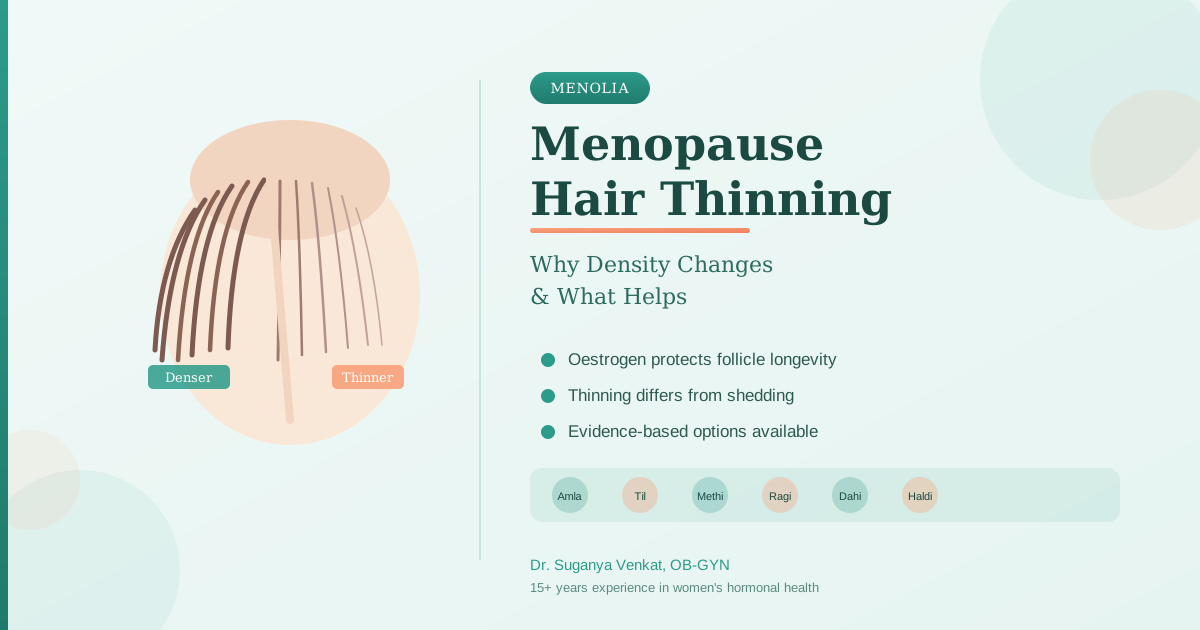
This is not the same as finding more hair on the brush in the morning (though that can happen too). This is a slow shift in density: the hair you have growing back finer and shorter than it was before, a cumulative reduction in fullness that takes months to become visible and years to accumulate.
If you are in your 40s or 50s, this is one of menopause’s quieter changes. It is common, it is hormonal, and there are real things you can do about it. This post focuses specifically on the density loss aspect of hair change during menopause: why it happens, what makes it worse, and what the evidence actually shows works.
If what you are noticing is primarily more hair falling out (visibly more on the brush, in the shower, or in your hand after styling), the menopause hair loss guide covers that presentation in detail. The two can overlap, but they have different primary drivers and different responses to treatment.
What Is Happening in the Hair Follicle
To understand density loss, it helps to understand how each hair follicle works.
Every follicle produces hair in a cycle with three phases:
- Anagen (growth phase): the active period when hair is produced. Lasts 2 to 7 years. The longer the anagen phase, the longer the hair grows.
- Catagen (transition phase): a brief resting transition lasting 2 to 3 weeks.
- Telogen (shedding phase): the follicle rests and the hair is eventually shed, lasting about 3 months before the cycle restarts.
Oestrogen and progesterone both have receptors in scalp follicles. One of oestrogen’s roles is to extend the anagen phase, keeping follicles in active production longer. When oestrogen levels decline during perimenopause and menopause, this protective effect is lost. Follicles spend more time in the resting phase and less time actively growing.
At the same time, as oestrogen falls, the relative balance between oestrogen and androgens shifts. Even in women with entirely normal androgen levels, the ratio changes. Scalp follicles in the frontal and crown areas contain androgen receptors. When androgen activity goes unchecked by oestrogen, these follicles begin to miniaturise: each successive growth cycle produces a thinner, shorter hair than the cycle before. Over months and years, this cumulative miniaturisation reduces visible hair density.
This process is called androgenetic alopecia (female pattern hair loss), and menopause is one of the most common triggers in women over 40. Research published in the Journal of the American Academy of Dermatology found that up to 40 percent of women show clinically significant hair thinning by age 60, with a sharp increase in the perimenopausal years (Birch et al., 2002).
The key point: this is not the same as acute shedding. In thinning, individual hairs grow back finer and shorter, so there may be no obvious increase in hair fall, but the scalp gradually becomes more visible and overall volume shrinks. This is why many women with significant density loss say, “I am not losing much hair, but my hair looks so much thinner.” Both observations are accurate.
Thinning vs Shedding: How to Tell the Difference
Understanding which pattern you are primarily dealing with helps you choose the right approach.
Thinning (density loss, follicle miniaturisation):
- Parting looks wider or scalp is more visible
- Ponytail is thinner in diameter
- Overall volume has reduced gradually over months to years
- Hair feels finer and lighter
- No dramatic increase in fallen hairs
- Frontal hairline or crown area affected first
Shedding (increased hair fall):
- Noticeable increase in hair on the brush, pillow, or shower drain
- May come in waves or feel sudden
- Diffuse rather than localised to parting or crown
- Often triggered by a specific stressor: illness, surgery, emotional shock, rapid weight loss, or thyroid changes
Both can occur simultaneously. The hair loss guide covers the shedding pattern and its triggers in more detail. This post focuses on density loss and miniaturisation.
What Makes Thinning Worse
The hormonal shift is the primary driver, but several common deficiencies amplify it. These are worth identifying because they are correctable.
Iron deficiency. Iron is essential for DNA synthesis in rapidly dividing follicle cells. Deficiency, even subclinical (where haemoglobin is normal but ferritin is low), is associated with increased hair thinning in women (Rushton et al., 2002, Clinical and Experimental Dermatology). Ferritin below 70 micrograms per litre is linked to hair loss even with a normal full blood count. Many Indian women are iron-deficient, and the irregular or heavy periods that can accompany perimenopause may accelerate this depletion before periods stop entirely.
Vitamin D deficiency. Vitamin D receptors are present in hair follicles. Deficiency is associated with alopecia areata and may worsen androgenetic thinning (Rasheed et al., 2013, Skin Pharmacology and Physiology). Vitamin D deficiency is extremely common among Indian women at all ages.
Protein insufficiency. Hair is almost entirely keratin, a structural protein. If dietary protein intake is inadequate, the body prioritises essential functions and follicle production suffers. This is particularly relevant for women on traditional vegetarian diets where protein quality and quantity may be lower than required.
Thyroid dysfunction. Both hypothyroidism and hyperthyroidism cause hair thinning, and thyroid disorders become significantly more common during and after menopause. If hair thinning is accompanied by fatigue, weight changes, or temperature sensitivity, a thyroid check is warranted. The thyroid and menopause guide covers this overlap in detail.
Chronic stress and elevated cortisol. High cortisol shifts follicles into the resting phase prematurely. During perimenopause, when the HPA axis is already under greater demands, chronic stress adds a further load the scalp registers directly.
Indian Foods That Support Hair Follicle Health
Before considering any supplement or medical treatment, addressing dietary foundations is the first step. Several Indian food staples directly support the nutritional requirements for follicle health.
Amla (Indian gooseberry). Amla is one of the richest food sources of vitamin C available in India, with roughly 600 mg per 100 g. Vitamin C is a cofactor in collagen synthesis around the follicle sheath, and it improves non-haem iron absorption when eaten alongside iron-rich foods. Amla chutney, amla murabba, or fresh amla a few times weekly is a practical inclusion.
Sesame seeds (til / gingelly). A 30 g serving of sesame seeds provides approximately 4 mg of iron, 280 mg of calcium, and meaningful amounts of zinc. Zinc is directly involved in follicle health and hair protein synthesis. Til ladoo in winter, sesame chutney, or til mixed into curd are easy additions.
Methi (fenugreek seeds). Methi contains lecithin, iron, and proteins. Traditional use involves soaking seeds overnight and applying the paste to the scalp, but eating soaked methi as part of a morning routine, or using it in dals and rotis, also contributes to overall follicle nutrition. Methi paranthas or methi dal are everyday options.
Ragi (finger millet). Ragi is a good source of calcium and iron in a bioavailable form, along with plant protein. Replacing white rice with ragi mudde or ragi dosa twice a week adds meaningful micronutrients without supplementation for mild deficiency.
Dahi (curd). Dahi provides protein, B12, and biotin. Including a bowl of dahi with lunch adds the amino acids the follicle needs and supports digestive health that improves nutrient absorption overall.
Curry leaves. Used in virtually every South Indian dish, curry leaves provide iron, vitamin C, and antioxidants with traditional use in hair health. The simplest step is to eat them rather than discard them from tempering.
Haldi (turmeric). The anti-inflammatory effects of curcumin reduce the scalp inflammation that can accompany androgenetic thinning. One teaspoon in everyday cooking is sufficient.
One important note on what these foods cannot do: they cannot reverse established follicle miniaturisation. They reduce the nutritional burden that accelerates thinning and support the follicles that are still producing healthy hair. Medical options are needed once miniaturisation is well established.
If your hair density has been visibly reducing over the past year or more, a targeted assessment with blood tests and a clinical review can tell you exactly what is driving it and what the right intervention is for your stage.
Dr. Suganya has 15 years of experience in women’s hormonal health and regularly helps women understand hair changes during menopause. A ₹399 consultation can clarify which factors are driving your thinning and where to start.
Evidence-Based Options for Density Loss
Once the dietary foundations are addressed, the following options have the strongest evidence for menopause-related hair density loss.
Address Nutritional Deficiencies First
Before spending money on any hair treatment, a blood panel makes sense. Ask for: serum ferritin (specifically ferritin, not just haemoglobin), 25-OH vitamin D, TSH, and a full blood count. Correcting iron deficiency to a ferritin above 70 micrograms per litre, or vitamin D to the optimal range, can produce meaningful improvement in hair density within 3 to 6 months. This is the highest-return intervention for most women.
Your doctor can order these alongside other assessments. Supplementing without knowing your baseline risks overshooting on vitamin D or iron, both of which cause problems at excessive levels.
Topical Minoxidil 2%
Topical minoxidil is the only treatment FDA-approved specifically for female pattern hair loss. It works by extending the anagen phase and increasing follicle size. Studies using 2% minoxidil in women show statistically significant improvement in hair density and a reduction in shedding compared to placebo (Price et al., 2000, Journal of the American Academy of Dermatology). Results typically require 6 to 12 months of consistent use, and the benefit is maintained only with continued application.
In India, 2% minoxidil solution is available over the counter. The 5% formulation is more commonly associated with facial hair as a side effect in women; the 2% is the standard recommendation. Apply to the scalp, not the hair shaft. It does not address the underlying hormonal driver, but it is an effective tool for slowing and partially reversing density loss while other factors are being addressed.
PRP (Platelet-Rich Plasma)
PRP therapy uses concentrated growth factors from your own blood, injected into the scalp to stimulate follicle activity. A systematic review in Aesthetic Surgery Journal (2019) found statistically significant improvements in hair count and thickness after PRP treatment. Multiple sessions (typically 3 to 4 initially, then maintenance) are required. This is a clinic-based treatment a dermatologist or trichologist can discuss based on your degree of thinning.
Menopausal Hormone Therapy (MHT)
For women already considering MHT for other menopause symptoms, one of the additional benefits is a potential slowing of hair thinning. Restoring oestrogen reduces the androgen sensitivity imbalance in follicles. The evidence for hair specifically is observational rather than from large randomised trials, but women on oestrogen therapy consistently show less progressive thinning than those not using it. This is a decision made in context of your full symptom picture and medical history. The perimenopause symptoms guide provides a broader framework for that conversation.
For a full review of evidence-based approaches to menopause symptom management, the supplements guide covers what is worth considering and what is not.
What Probably Does Not Help Much
Biotin supplements in people who are not biotin-deficient, and keratin-loading hair products, do not address underlying follicle miniaturisation. Fancy shampoos may improve the appearance of existing hair but do not change the growth cycle. Expensive serums with minimal clinical evidence should be assessed against the options above before investing in them.
Practical Takeaways
- Hair density loss during menopause is driven by oestrogen’s declining effect on follicle longevity and by a relative increase in androgen sensitivity in scalp follicles. This is a slow, cumulative process, distinct from acute shedding.
- Thinning is visible in a wider parting, thinner ponytail, and reduced overall volume, even without an obvious increase in fallen hair.
- Nutritional deficiencies (iron/ferritin, vitamin D, protein) amplify hormonal thinning and are often the fastest-return area to address. A blood panel first is more useful than starting supplements blindly.
- Indian foods: amla for vitamin C and iron absorption, sesame seeds (til) for iron and zinc, methi (fenugreek) for follicle nutrition, ragi for iron and calcium, dahi for protein, curry leaves as an everyday staple.
- Topical minoxidil 2% has the strongest evidence for female pattern hair loss and is available over the counter in India.
- Results from any intervention take 3 to 6 months to appear. Starting early, before thinning becomes significant, produces better outcomes.
Frequently Asked Questions
Is hair thinning during menopause permanent?
Not necessarily. Thinning driven primarily by nutritional deficiencies can partially reverse once those deficiencies are corrected. Thinning from follicle miniaturisation can be slowed and, with treatment such as minoxidil, PRP, or hormonal support, partially reversed. Established miniaturisation does not fully reverse in most cases. The earlier you address it, the better the outcome is likely to be.
What is the difference between hair thinning and hair shedding during menopause?
Hair thinning is a gradual reduction in the density and calibre of individual hairs, caused by follicle miniaturisation over months and years. You notice a wider parting, a thinner ponytail, and less volume, but not necessarily more hair on the brush. Shedding is an increase in fallen hairs, often more acute and diffuse, and usually triggered by a stressor such as illness, thyroid changes, or emotional shock. The menopause hair loss guide covers the shedding pattern in detail.
Which blood tests should I ask for if I am concerned about hair thinning?
A useful starting panel includes: serum ferritin (ask specifically for ferritin, not just haemoglobin, as ferritin below 70 micrograms per litre causes hair loss even with normal haemoglobin), 25-OH vitamin D, TSH with free T3 and T4, and a full blood count. These can typically be ordered alongside your regular menopause-related blood work. Correcting identified deficiencies is often the simplest and most effective first step.
Does topical minoxidil work for menopause-related hair thinning?
Yes, 2% topical minoxidil has good evidence for female pattern hair loss, which is the type of thinning most common during menopause. It works by extending the growth phase and increasing follicle size. Daily application for 6 to 12 months is required before density improvement is visible, and the benefit requires continued use. It does not address the hormonal root cause but meaningfully slows the thinning process and is well tolerated by most women.
Can hormone therapy help with hair density?
There is evidence that MHT can slow the progression of hair thinning in women who use it for menopause symptoms. By restoring oestrogen, MHT reduces the relative androgen sensitivity imbalance in scalp follicles. Hair density is not typically the primary reason to start MHT, but for women considering it for other symptoms such as hot flashes, sleep disruption, or bone health, it is a reasonable secondary consideration to raise with your doctor.
How long before I see any improvement from treating hair thinning?
Hair growth is slow. Even with the right intervention, changes in density are not typically visible for 3 to 6 months, and 9 to 12 months is a more realistic window for assessing whether a treatment is working. This is one reason why starting early, as soon as you notice thinning rather than waiting until the change is significant, produces better outcomes. Tracking your parting width with a photo every 3 months provides a more objective measure than day-to-day perception.
The shift in your hair density is real. It is one of menopause’s quieter changes, and for many women it affects confidence in ways that are hard to put into words. Understanding the biology, addressing the nutritional foundations, and choosing the right tools for your stage of thinning gives you a clear path forward.
When you are ready to talk through your specific situation with a doctor who understands this transition, Dr. Suganya is here.