You noticed a small smear of brownish discharge on your underwear. Your period ended two weeks ago and it is not due for another ten days. You checked the next morning, and it was still there: faint, brownish, puzzling.
If you are in your 40s, here is the most likely explanation: your hormones are in transition, and what you are seeing is spotting, light breakthrough bleeding that is part of how perimenopause shows up in your body.
This post explains why perimenopause causes spotting, what brown spotting specifically means, which patterns are normal and which ones need a doctor’s review, and what you can do to support your body through this transition. We will also separate spotting from the heavier, flooding-type bleeding covered in detail in Abnormal and Heavy Bleeding in Perimenopause, because the two are different situations with different causes.
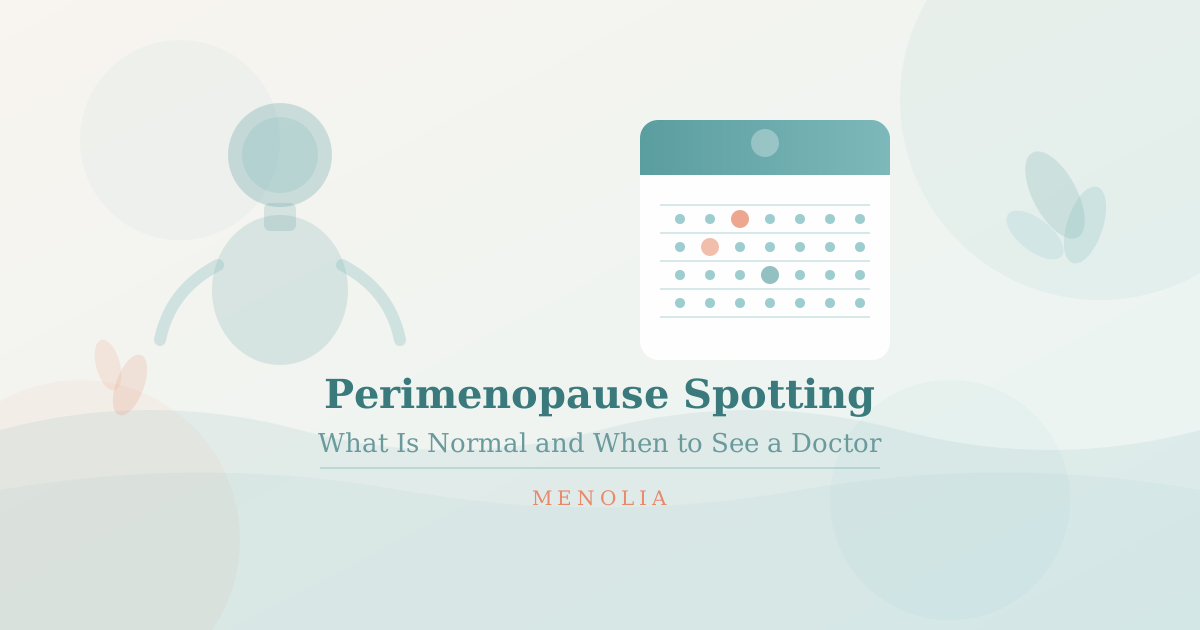
What Is Perimenopause Spotting?
Spotting is light vaginal bleeding that is too light to need a full pad: sometimes appearing as a smear of blood or brownish discharge in your underwear. It is distinct from a regular period, which involves sustained flow. And it is distinct from heavy bleeding or flooding.
In perimenopause, spotting most commonly occurs:
- Between your regular periods (intermenstrual spotting)
- In place of what would normally be a full period
- As a brownish discharge after a period you thought had ended
Each of these patterns has an underlying explanation rooted in shifting hormone levels, and none automatically means something serious is happening. But some patterns are worth investigating, and knowing the difference is what this post is designed to help with.
Why Perimenopause Causes Spotting
To understand spotting, a brief look at how a normal cycle produces a period is useful, because perimenopause disrupts this sequence in specific ways.
In a regular cycle, oestrogen rises first, stimulating the uterine lining (endometrium) to thicken. Midway through the cycle, a luteinising hormone (LH) surge triggers ovulation. After ovulation, the follicle that released the egg becomes the corpus luteum, which produces progesterone. Progesterone stabilises the lining and eventually signals it to shed cleanly at the end of the cycle.
Perimenopause disrupts this sequence because ovulation becomes inconsistent. Some cycles, you ovulate normally. Others, you do not. These are called anovulatory cycles.
Without ovulation, there is no corpus luteum. Without a corpus luteum, there is no progesterone surge.
What happens instead:
- Oestrogen continues stimulating the uterine lining to thicken.
- Without progesterone to stabilise it, the lining becomes fragile and uneven.
- Small sections of the lining begin to break off and shed intermittently, without the organised shedding of a full period.
- This produces light, unpredictable spotting.
This is the core mechanism behind most perimenopausal spotting. It is not a sign that something has gone wrong. It is a direct consequence of irregular ovulation, which is a normal part of the perimenopause transition. If you have been tracking your cycles and noticing they are becoming less predictable, reading about perimenopause symptoms more broadly will help you see how this fits the bigger picture.
Why Is Perimenopause Spotting Often Brown?
Brown spotting is simply older blood. When bleeding is very light and slow, blood takes longer to travel from the uterus through the cervix and out of the body. During that slow transit, the haemoglobin in red blood cells oxidises, which turns it from red to brown. The darker the colour, the longer the transit.
This is why spotting noticed in your underwear, especially a day or two after your period ends, is often brown rather than red. It is the tail end of your period: blood that moved slowly and oxidised in transit. On its own, this is not a cause for concern.
Fresh red spotting between periods is more likely to be a recent bleed. It is still often explainable by anovulatory cycles, but it warrants more attention, particularly if it is persistent or accompanied by other symptoms.
Perimenopause Spotting: Patterns That Are Normal
The following patterns are common in perimenopause and, in the absence of other red flags, fall within the expected range of the hormonal transition:
Brownish spotting at the end of a period. This is slow-moving old blood clearing the uterus after the main flow has ended. Most women in perimenopause experience this at some point.
Light midcycle spotting, once or twice. Occasional spotting midway through the cycle can be a sign that ovulation occurred. A small, brief oestrogen dip after the LH surge can cause the lining to spot lightly. Ovulatory spotting is normal, even outside of perimenopause.
A very light period in place of a normal one. In anovulatory cycles, the shedding of the lining is incomplete and uncoordinated. The result can be a very light bleed rather than a full period.
Irregular intervals between periods with occasional spotting in between. The hallmark of perimenopause is cycle irregularity. Spotting between unpredictably timed cycles is a common part of this.
These patterns are most likely to be benign when you are between 40 and 55, they appeared alongside other perimenopause symptoms such as mood changes, sleep shifts, or hot flashes, and the spotting is light, infrequent, and not accompanied by pain.
When Perimenopause Spotting Needs a Doctor’s Review
While spotting is often benign in perimenopause, certain patterns need medical evaluation because they can indicate conditions that require diagnosis and treatment. Here is what to look for:
Spotting that occurs after sexual intercourse. Post-coital bleeding can indicate cervical erosion, a cervical polyp, or, rarely, cervical pathology. This is one of the most important patterns to investigate promptly, and it is not explained by perimenopause alone.
Spotting accompanied by pelvic pain or pressure. This combination can indicate fibroids, endometriosis, or a uterine polyp. Perimenopause does not itself cause pelvic pain.
Spotting that has been persistent for more than three weeks. Occasional spotting is expected. Spotting that continues daily or near-daily for several weeks needs evaluation.
Spotting accompanied by an unusual discharge or odour. This can indicate infection, which needs diagnosis and treatment independent of perimenopause.
Any vaginal bleeding that occurs after 12 consecutive months without a period. Once you have gone 12 months without a period, you are medically post-menopausal. Any vaginal bleeding after that point is called post-menopausal bleeding and must be evaluated. It is frequently benign (atrophic endometrium, polyp) but needs investigation to rule out endometrial hyperplasia or endometrial cancer.
Spotting that is becoming progressively heavier over weeks or months. If what starts as spotting is trending toward heavier bleeding, a structural cause such as a fibroid or polyp needs to be ruled out.
One important point: having these symptoms does not mean something serious is wrong. Most women who present with these patterns receive benign diagnoses. But these are the situations where an evaluation is the right next step, because the clinical picture needs more than reassurance.
Talk to Dr. Suganya on WhatsApp →
Conditions That Can Mimic Perimenopause Spotting
Sometimes, spotting in women in their 40s is not caused by perimenopause at all. Conditions that can produce similar light bleeding include:
Uterine polyps. Small, benign growths on the inner wall of the uterus or on the cervix. They are extremely common in the 40s and 50s, often asymptomatic, and can cause light intermenstrual spotting. They are diagnosed by ultrasound or hysteroscopy and are easily removed.
Submucosal fibroids. Fibroids located just beneath the endometrial lining can cause spotting by disrupting the surface of the lining. These are diagnosed by ultrasound.
Cervical polyps. Small, benign polyps on the cervix can bleed lightly, especially after intercourse. They are diagnosed on pelvic examination.
Thyroid dysfunction. Both hypothyroidism and hyperthyroidism can disrupt menstrual patterns. Women in their 40s with thyroid symptoms alongside irregular bleeding benefit from a TSH check. Thyroid changes during menopause covers the overlap in more detail.
Cervical infection. Chlamydia, for example, can cause cervicitis that leads to post-coital or intermenstrual spotting. It is worth raising with your doctor, particularly for women who have had a new partner.
Medications. Certain medications, including anticoagulants and some antidepressants, can affect menstrual bleeding patterns.
This is why a proper evaluation matters when spotting is persistent, patterned, or accompanied by other symptoms. A pelvic exam, ultrasound, and relevant blood tests (including TSH and, in some cases, hormone levels) can clarify what is driving the spotting and rule out conditions that need treatment.
What to Track Before Your Doctor’s Appointment
If you are going to see a doctor about spotting, tracking the pattern beforehand makes the appointment significantly more productive. A simple symptom diary helps:
- Date and duration: Note when spotting started and how long each episode lasted.
- Colour and amount: Brown or red? A smear, light flow, or enough to require a pad?
- Timing within the cycle: Midcycle, at the end of a period, or between periods?
- Associated symptoms: Pelvic pain, post-coital bleeding, discharge changes, fever?
- Your last normal period: When was it? Was the flow heavier or lighter than usual?
Even two or three weeks of notes gives your doctor useful context. In perimenopause, where cycle variability is so high, a single description rarely tells the full story.
Supporting Your Body Through the Perimenopause Transition
If your spotting is consistent with normal perimenopause (irregular cycles, anovulatory pattern, no red flags), the focus shifts to supporting the hormonal transition through lifestyle. The evidence base for lifestyle interventions in perimenopause is clear and consistent.
Stabilise blood sugar. Anovulatory cycles are worsened by insulin spikes, which create hormonal cascades that interfere further with ovulation and progesterone production. Eating complex carbohydrates rather than refined ones, adding protein and fat at each meal, and reducing refined sugar reduces this effect. South Indian staples such as ragi, dal, sambar, and dahi provide a strong foundation for blood sugar stability throughout the day.
Reduce inflammatory burden. Chronic inflammation worsens hormonal fluctuations. Haldi (turmeric) used daily in cooking, along with a diet built around lentils, green vegetables, and whole grains, reduces the pro-inflammatory load that makes the perimenopause transition harder. The anti-inflammatory effect of a traditional South Indian thali is genuinely meaningful in this context.
Support sleep. Poor sleep raises cortisol, which competes with progesterone for receptor sites and can worsen the progesterone deficiency that underlies anovulatory spotting. Managing sleep quality is not separate from managing perimenopause symptoms: it is central to it. Menopause Sleep Problems: What Actually Helps covers evidence-based approaches in detail.
Regular movement. Weight-bearing exercise: walking, yoga, resistance training: supports oestrogen metabolism and reduces visceral fat, which itself acts as an oestrogen-producing tissue and can amplify hormonal imbalances. Exercise during menopause is one of the most consistent evidence-backed interventions across all perimenopause symptoms, including irregular bleeding.
Manage stress actively. Chronic psychological stress elevates cortisol, which suppresses the hypothalamic-pituitary-ovarian axis and reduces the signal for ovulation. This worsens anovulatory cycles. Stress management is part of the clinical picture in perimenopause, not a soft add-on.
Frequently Asked Questions
Is brown spotting in perimenopause normal?
Yes, in most cases. Brown spotting is older blood that has oxidised during slow transit through the cervix. In perimenopause, anovulatory cycles cause the uterine lining to shed unevenly and slowly, producing brownish spotting rather than a clean, organised period. Occasional brown spotting is very common during this transition.
Can perimenopause cause daily spotting?
Occasional spotting is normal; daily spotting continuing for weeks at a time is not. Persistent spotting that continues for more than two to three weeks should be evaluated by a doctor to rule out structural causes such as polyps or fibroids.
What is the difference between perimenopause spotting and implantation bleeding?
Both can appear as light brownish spotting, which is why the distinction can be confusing. Implantation bleeding occurs 6 to 12 days after conception, is very brief (one to two days), and appears alongside other early pregnancy signs. If pregnancy is possible, a urine pregnancy test will clarify. Perimenopause spotting tends to occur in a context of cycle irregularity and other hormonal transition symptoms.
For more on this, read our guide on Perimenopause Symptoms. Does perimenopause spotting mean my period is coming?
Not necessarily. Some spotting in perimenopause is followed by a period, and some is an isolated anovulatory event without a subsequent full flow. There is no reliable way to predict which it is without tracking your full cycle pattern over several months.
Should I be worried if I have spotting during sex?
Post-coital spotting (spotting triggered by sexual intercourse) is one pattern that warrants medical evaluation, regardless of where you are in the perimenopause transition. It can indicate cervical changes that need assessment and is not explained by perimenopause alone.
How long does perimenopause spotting last?
The perimenopause transition typically lasts 2 to 10 years. Irregular bleeding and spotting is a feature of this entire transition, not just one phase. For most women, it becomes less frequent as they approach their final period and resolves in post-menopause.
Is spotting a sign that I am close to menopause?
Spotting can be an early or mid-transition sign. Increased cycle irregularity (including very light periods or spotting in place of full periods) often increases in the later stages of perimenopause. But irregular bleeding alone cannot tell you when your final period will be. Only 12 consecutive months without a period confirms menopause. Signs that perimenopause is ending covers the markers to watch for in that final phase.
If the spotting pattern you are experiencing does not match the reassuring picture in this post, or if you have any of the red flags described above, the most productive next step is a direct conversation with a doctor who understands perimenopause.
Start a conversation on WhatsApp →
Understanding the pattern, knowing the red flags, and supporting your body through the transition is exactly the kind of clarity that makes a long hormonal transition manageable. You are not imagining what you see. You are not overreacting by wanting an explanation. And you now have one.