Your eyes have been bothering you for months. They feel gritty in the morning. They water when you walk into the wind. They sting at your laptop screen by afternoon. You visited an ophthalmologist, got a prescription for lubricating drops, and were told it is dry eye syndrome.
What you were probably not told is why it started now, at 45 or 48 or 52, after decades of perfectly comfortable eyes.
The answer, in almost every case for women in this age group, is oestrogen.
Dry eye syndrome is one of the least-discussed symptoms of the menopause transition, and yet research consistently shows it affects a substantial proportion of women going through perimenopause and menopause. Women in this age group are diagnosed with dry eye syndrome at significantly higher rates than younger women or men of any age. The timing is not coincidental. The mechanism is direct and well-documented.
This post explains why it happens, what you can do about it, and when you need to see a specialist about it.
How Oestrogen Keeps Your Eyes Comfortable
To understand what changes during menopause, it helps to understand what is working in your favour beforehand.
Your tear film has three distinct layers, each produced by a different set of glands and each serving a different function.
The lipid (oil) layer is the outermost layer. It is produced by the meibomian glands, a row of small glands embedded in your upper and lower eyelids. The oil layer sits on top of your tears and slows evaporation. Without it, the aqueous layer of your tear film would evaporate within seconds of each blink. Quality of this layer determines how long your eyes stay comfortable between blinks.
The aqueous (water) layer is the middle and thickest layer. It is produced by the lacrimal glands located above and outside each eye. This layer contains water, electrolytes, and proteins, including antimicrobial proteins that protect the eye surface. Volume of this layer determines whether your eyes feel adequately lubricated.
The mucin layer is the innermost layer, produced by goblet cells on the surface of your eye. It anchors the aqueous layer to the cornea. Without it, the watery layer would not spread evenly and would bead up rather than coat the eye uniformly.
Here is where oestrogen enters the picture: oestrogen receptors are present in all three of the glands responsible for these layers. The lacrimal glands have oestrogen receptors. The meibomian glands have oestrogen receptors. The goblet cells on the eye surface have oestrogen receptors.
This means oestrogen is actively involved in regulating tear production across all three layers. It supports lacrimal gland output, influences the quality of meibomian gland secretions, and helps maintain goblet cell density on the eye surface. When oestrogen levels are stable during the reproductive years, the tear film works well. Most women never think about their eyes at all.
What Happens When Oestrogen Falls
When oestrogen begins declining in perimenopause and continues falling through menopause, each component of the tear film is affected.
Meibomian gland function changes. The oil layer becomes less stable as oestrogen falls. Research shows that meibomian gland secretion quality deteriorates in peri- and post-menopausal women. When the oil layer thins or becomes irregular, tear evaporation accelerates. You blink, the tear film forms, and then it breaks down too quickly before the next blink. This is called increased tear evaporation, and it is the most common type of dry eye syndrome in menopausal women. The eyes feel dry and irritated not because there is no fluid, but because the fluid evaporates too fast.
Lacrimal gland output decreases. The total volume of tears produced tends to decline as oestrogen falls. Lacrimal gland cells are sensitive to oestrogen signalling, and reduced stimulation leads to reduced aqueous production. This layer of dry eye (reduced production rather than increased evaporation) is less common as the primary cause in menopause but often coexists with the evaporative type.
Goblet cell density reduces. The cells that produce the mucin layer, which holds the tear film against the eye surface, are sensitive to hormonal change. A reduction in goblet cells means the tear film distributes less evenly. This contributes to the gritty, foreign-body sensation that many women describe: the sensation of something in the eye when there is nothing there.
Androgens fall too. It is worth knowing that testosterone and other androgens, which also decline during menopause, play a significant role in meibomian gland function. Some researchers consider androgen decline more directly responsible for meibomian gland dysfunction than oestrogen decline. During menopause, both hormones fall, and both contribute to the changes you feel in your eyes.
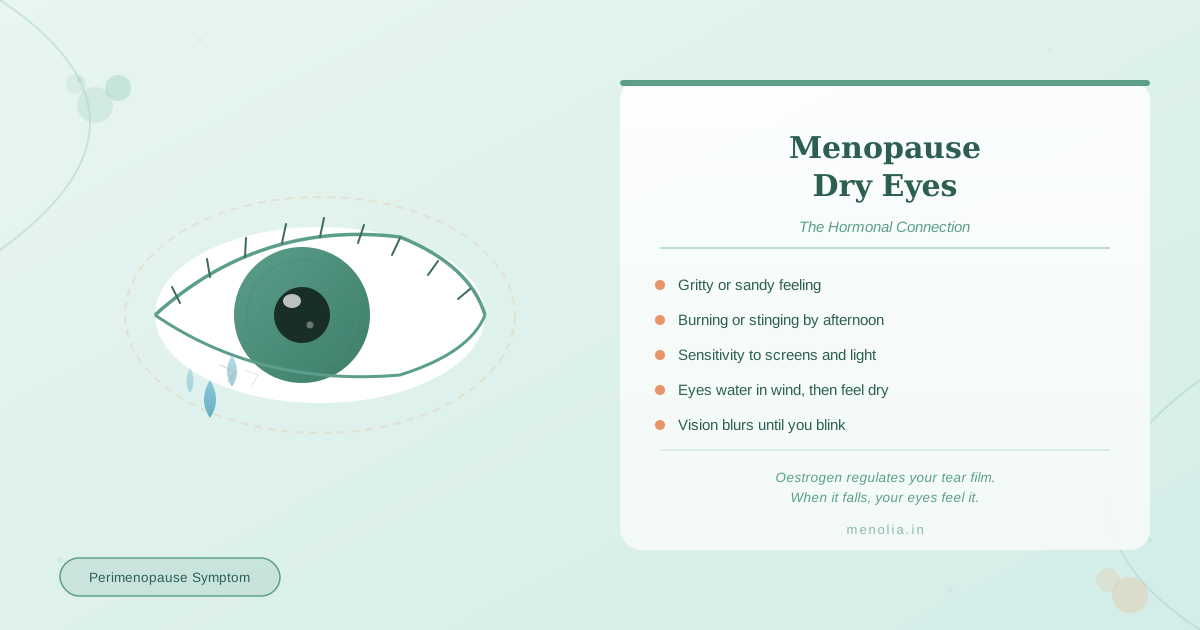
The result is a symptom pattern that is distinctive and often confusing because it does not always present as simple dryness. Watery eyes can be dry eyes: when the tear film breaks down from poor oil coverage, the eye surface becomes irritated and triggers a reflex tearing response. You produce watery tears in excess but they are poorly constituted and offer no relief. Women who notice their eyes water more than they used to may actually be experiencing dry eye syndrome presenting paradoxically.
Symptoms: What Menopause-Related Dry Eye Actually Feels Like
The symptoms women describe most commonly include:
- A gritty or sandy sensation, as if something is in the eye
- Burning or stinging, often worse later in the day
- Sensitivity to light, particularly bright sunlight or screens
- Eyes that water in wind or air conditioning, then feel dry immediately after
- Blurred vision that improves briefly after blinking
- Redness, particularly toward the end of the day
- Difficulty wearing contact lenses, or contact lenses becoming uncomfortable after wearing them for years
Symptoms are typically worse in the afternoon and evening, after screen use, in air-conditioned environments, or on dry or windy days. Many women notice their symptoms intensified during the same period that other menopausal changes began, which is the key clue connecting the symptom to its cause.
If you recognise several of the above, the hormonal connection is the most likely explanation for why it started when it did.
Understanding why your eyes changed is the first step. If you want to discuss this alongside your other menopause symptoms, Dr. Suganya Venkat’s clinic in Coimbatore is available. WhatsApp 91 99402 70499 to ask directly.
What Actually Helps: Practical Steps
Managing dry eye in menopause is not complicated, but it does require consistency. The goal is to support the tear film externally while also addressing the systemic factors that have changed.
For more on this, read our guide on Menopause & Cholesterol.
Lubricating Eye Drops
Over-the-counter lubricating drops (artificial tears) are the foundation of dry eye management. For menopause-related dry eye, choose drops that are:
- Preservative-free, especially if you are using them more than four times a day. Preservatives in regular drops can further irritate an already-sensitive eye surface with frequent use.
- Gel-based or viscous drops for nighttime use, or if your symptoms are severe during the day. These last longer but can cause brief blurring, so most women use them at bedtime and lighter drops during the day.
- Designed for evaporative dry eye if your primary symptom is rapid tear film break-up. These drops contain lipid components that help reconstitute the oil layer.
Your ophthalmologist can advise on the right formulation based on which layer of your tear film is most affected. This is worth asking about specifically.
Omega-3 Fatty Acids
This is one of the most consistently studied dietary interventions for meibomian gland function. Omega-3 fatty acids, particularly EPA (eicosapentaenoic acid) and DHA (docosahexaenoic acid), support the quality of meibomian gland secretions and reduce the inflammatory processes that worsen dry eye.
Practical Indian sources:
- Flaxseeds (alsi): One to two tablespoons of ground flaxseed added to chutneys, dahi, or roti dough daily. Flaxseed provides alpha-linolenic acid (ALA), a plant-based omega-3 that the body converts to EPA and DHA, though the conversion is limited.
- Walnuts (akhrot): A small handful daily. Among the best plant-based omega-3 sources available in Indian kitchens.
- Fatty fish: If you eat fish, sardines (mathi) and mackerel (bangda) are rich in EPA and DHA, the most bioavailable forms. These are widely available in coastal Indian markets and significantly more effective than plant-based sources for direct tissue uptake.
- Fish oil or algae-based omega-3 supplements: For women who do not eat fish, algae-derived DHA supplements are the closest vegetarian alternative to marine omega-3s. The menopause supplements guide covers how to choose supplements with genuine evidence.
Changes from omega-3 supplementation typically take 8 to 12 weeks to show measurable effect, so consistency over months rather than a brief trial is necessary to assess benefit.
Warm Compresses
Applying a warm compress to closed eyes for 5 to 10 minutes once or twice daily softens the secretions in the meibomian glands, improving their function. A clean cloth soaked in warm water works. This is particularly helpful if your dry eye is primarily evaporative (the most common type in menopause). It is simple, free, and has clinical evidence behind it.
Screen and Environmental Adjustments
During prolonged screen use, the blink rate drops from a normal 15 to 20 blinks per minute to around 5 to 7. Each time you blink, the tear film is refreshed. Fewer blinks mean faster tear film breakdown.
Practical adjustments:
- The 20-20-20 rule: every 20 minutes, look at something 20 feet away for 20 seconds. This allows a full blinking sequence and brief rest.
- Reduce screen brightness and use an anti-glare setting where possible.
- Position screens slightly below eye level. An upward gaze increases the exposed eye surface area, accelerating evaporation.
- Use a humidifier in air-conditioned rooms. Air conditioning reduces ambient humidity significantly, and dry air is a direct worsening factor for evaporative dry eye.
- Wear wrap-around glasses or sunglasses outdoors to reduce direct wind and sun exposure to the eye surface.
Hydration
Systemic dehydration worsens tear volume. This sounds straightforward, but many women in menopause find themselves drinking less water than they realise, particularly those managing hot flashes at night who may be waking dehydrated. Aiming for 2 to 2.5 litres of fluids daily supports lacrimal gland output and general mucous membrane health. The menopause self-care daily routine has a full hydration-first morning section that women have found practical to build into their day.
Haldi and Anti-Inflammatory Foods
Inflammation at the eye surface is a component of dry eye syndrome in menopause. The tear film becomes less stable partly because of inflammatory signalling affecting the lacrimal glands and meibomian glands. Curcumin, the active compound in haldi (turmeric), reduces systemic inflammatory signalling. While haldi is not a substitute for lubricating drops, including it daily as haldi doodh (turmeric milk), in dal, or in curries is a worthwhile habit alongside other management steps.
When to See a Specialist
Most menopause-related dry eye is manageable with the steps above. But some situations warrant a visit to an ophthalmologist or optometrist:
- Symptoms severe enough to affect daily function, including driving, reading, or screen work
- Symptoms that have not improved after 4 to 6 weeks of consistent lubricating drop use
- Vision changes, including persistent blurring that does not clear with blinking
- Eye pain, rather than discomfort or irritation
- Redness that is not resolving or is worsening
- Contact lens intolerance that develops suddenly, particularly if you have worn lenses comfortably for years
An ophthalmologist can assess which layer of the tear film is affected through tests including the Schirmer test (measures tear volume) and tear break-up time (measures tear film stability). This guides whether you need aqueous augmentation (more volume) or lipid support (better oil coverage). They can also rule out other conditions, including blepharitis or Sjogren’s syndrome, which can present similarly and require different management.
The key message is: going to your ophthalmologist with the context that this started during perimenopause or menopause is useful clinical information. Many women do not mention it because they do not know it is relevant. It is.
Dr. Suganya Venkat’s clinic supports women through all aspects of the menopause transition, including symptoms like dry eyes that are often seen in isolation when their hormonal cause is the missing piece. WhatsApp 91 99402 70499 to book a consultation.
What to Do This Week
If you are experiencing dry, gritty, or irritated eyes and are between 40 and 55:
- Start preservative-free lubricating drops, two to four times daily as needed
- Add one omega-3 source daily: ground flaxseed in dahi, walnuts as a snack, or fatty fish if you eat it
- Do a warm compress for 5 to 10 minutes each morning, particularly if you notice worse symptoms early in the day
- Apply the 20-20-20 screen rule at work or during extended screen sessions
- Check the humidity in your bedroom and office. If you have AC running consistently, a desktop humidifier is worth trying.
- Drink 2 to 2.5 litres of fluids daily. Include haldi doodh in the evening.
- If symptoms persist beyond 4 to 6 weeks of consistent management, see an ophthalmologist and mention when the symptoms started relative to your menopause transition
Frequently Asked Questions
Can menopause actually cause dry eyes?
Yes. Oestrogen receptors are present in the lacrimal glands, meibomian glands, and the goblet cells of the eye surface. All three structures that produce and maintain the tear film are sensitive to oestrogen. When oestrogen falls during perimenopause and menopause, tear film quality and volume are affected. This is the most common reason why women who have had comfortable eyes for decades develop dry eye symptoms in their late 40s and 50s.
Why do my eyes water if they are dry?
Watery eyes can be a symptom of dry eye syndrome. When the tear film breaks down quickly because of poor oil coverage from the meibomian glands, the eye surface becomes irritated. The lacrimal glands respond by producing a surge of reflex tears. These tears are watery and poorly constituted, so they offer no lasting relief and overflow rather than coat the eye surface. The underlying problem is still inadequate tear film stability, not excess tearing.
Does screen time make menopause dry eyes worse?
Yes, significantly. During focused screen use, the blink rate drops from 15 to 20 blinks per minute to around 5 to 7. Each blink refreshes the tear film. Fewer blinks mean faster tear film breakdown, which worsens any underlying dry eye. Screen use is manageable with the 20-20-20 rule and screen positioning adjustments, but it is worth understanding that screens exacerbate an already-changed tear film, they do not cause the hormonal change.
How long does it take for omega-3s to help dry eyes?
Omega-3 fatty acids take 8 to 12 weeks of consistent daily intake to show measurable improvement in meibomian gland function and tear film stability. This is a systemic dietary change that works over time, not a quick fix. Starting now and continuing consistently gives you the best read of whether it is helping by the 3-month mark. Fish oil or algae-based DHA supplements are more bioavailable than plant-based sources such as flaxseed, though flaxseed has the added benefit of soluble fibre.
Are lubricating eye drops safe to use long-term?
Preservative-free lubricating drops are safe for long-term daily use. The preservatives in standard preserved drops can cause irritation and toxicity to the eye surface with very frequent use (more than four times daily), which is why preservative-free formulations are recommended if you are using drops regularly. Gel drops used at bedtime are also safe long-term and are often more comfortable for women with persistent overnight symptoms.
Will this get better on its own, or is it permanent?
Dry eye in menopause tends to persist as a manageable chronic condition rather than resolving on its own, because the hormonal change that caused it is permanent. However, it is very manageable with consistent treatment. Most women find that lubricating drops, omega-3s, warm compresses, and environmental adjustments together produce a significant reduction in symptoms within 6 to 12 weeks. The goal is control and comfort, not a cure, which is achievable for most women.
Can this be related to other menopause symptoms I am experiencing?
Yes. The same oestrogen decline that affects the tear film also affects the skin, vaginal tissue, and other mucous membranes. Women experiencing dry eyes in menopause often also notice dry skin, vaginal dryness, or increased sensitivity in other areas. These are related expressions of the same underlying hormonal shift. The menopause itchy skin guide and the menopause skin care guide cover the skin side of this picture in detail.
Your Eyes Have Not Failed You
Dry, gritty, irritated eyes that started in your 40s or 50s are not a random inconvenience. They are a predictable consequence of a hormonal shift that affects the glands responsible for keeping your eyes comfortable.
Understanding that this is hormonal, not ophthalmological in origin, changes the approach. You still need lubricating drops. But you also have real dietary and lifestyle steps that work with the underlying mechanism. Combined consistently, they make a measurable difference.
If your eye symptoms are part of a broader picture of perimenopause or menopause changes, and you would benefit from a conversation about how it all fits together, that is exactly what Dr. Suganya Venkat’s clinic is for.
WhatsApp 91 99402 70499 to book a consultation or ask a question directly.