The Itch That Has No Obvious Cause
You have checked for rashes. You have used your usual soap, the same washing powder, eaten the same food you always eat. But your skin still itches, often at night, sometimes intensely, and sometimes in places you did not expect: the shins, the upper arms, the scalp, and occasionally the private area.
Your dermatologist says your skin looks fine. Your primary care doctor suggests it is just dryness. You have tried a new moisturiser. It helped a little, but not enough.
If you are between 40 and 55, this kind of unexplained itch is one of the least discussed symptoms of menopause. It does not feature prominently on most symptom lists. Women rarely bring it up with their doctors. And because it is invisible, it rarely gets taken seriously.
This post explains what is actually happening in your skin, why the itch arrives at this specific stage of life, what the different types of menopause-related itch are, and what the evidence says about what helps.
Why Menopause Changes How Your Skin Feels
Your skin has oestrogen receptors throughout its layers. Before menopause, oestrogen was doing quiet but continuous work in your skin cells: stimulating collagen production, regulating the skin barrier, controlling moisture retention, and moderating inflammatory signals including the ones that drive itch.
When oestrogen levels begin to fall during perimenopause and drop sharply after your final period, several things happen simultaneously in the skin.
Collagen production slows. The dermis (the deeper structural layer of skin) can lose up to 30% of its collagen in the first five years after menopause. This is covered in full in the menopause skin changes guide. Thinner skin loses water faster. Dry skin is itchy skin.
Hyaluronic acid declines. Oestrogen stimulates the production of hyaluronic acid in skin cells. When oestrogen drops, hyaluronic acid levels fall. The skin loses its ability to hold water in the outer layers. This is what creates the tight, papery feel that many women in their late 40s describe.
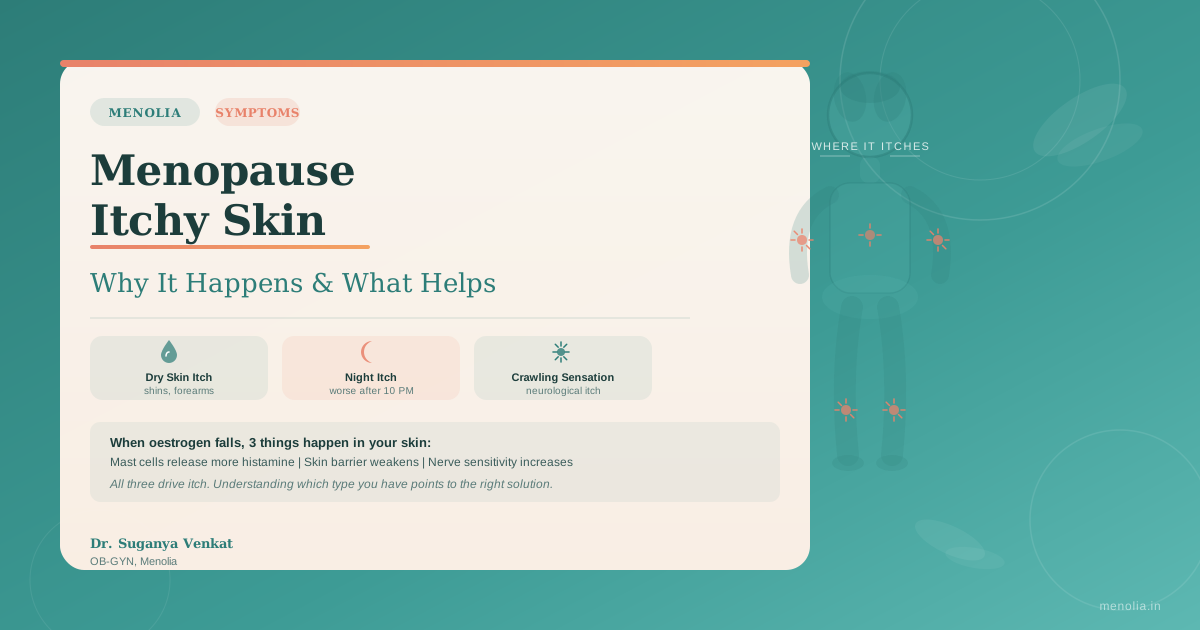
Mast cell activity changes. Oestrogen has a suppressive effect on mast cells, which are immune cells distributed throughout the skin. Mast cells release histamine when they activate, and histamine is one of the primary chemical signals for itch. When oestrogen drops, mast cells become more reactive, releasing more histamine for the same stimulus. This is why skin that tolerated wool, synthetic fabrics, or certain soaps without complaint for decades suddenly feels intensely irritated by all of them after 45.
The skin barrier weakens. A healthy skin barrier regulates what gets in and what stays in. When oestrogen falls, the lipid content of the barrier decreases, making it more permeable. Water escapes more easily (transepidermal water loss), and external irritants penetrate more readily. This creates a self-reinforcing cycle: barrier disruption leads to dryness, dryness leads to itch, scratching disrupts the barrier further.
Three Types of Menopause Itch
Not all menopause-related itch is the same, and knowing which type you have points to different solutions.
1. General Pruritus (Dry Skin Itch)
This is the most common type. It feels like the itch you would expect from dry skin: concentrated on the shins, forearms, upper back, and abdomen. It is worse in winter, worse after hot showers, and worse when air conditioning has been running for hours.
This type is directly caused by collagen loss, reduced hyaluronic acid, and barrier disruption. It responds well to moisturising strategies and dietary changes.
2. Formication (The Crawling Skin Sensation)
This is the type that confuses women most, partly because it does not feel like a classic itch and partly because it can be frightening when you do not know what it is.
Formication describes a feeling of insects crawling on or under the skin, or a tingling, pricking sensation with no visible cause. It is neurological, not primarily a skin problem.
Oestrogen has direct effects on the nervous system. It modulates the sensitivity of sensory nerves in the skin, including the nerves that process itch, temperature, and touch. When oestrogen levels fluctuate rapidly during perimenopause, these nerves can misfire, producing the crawling or tingling sensation.
Formication is more common during perimenopause, when oestrogen is fluctuating, than after menopause, when levels have stabilised at a lower baseline. It tends to come and go rather than being constant, and it is often worse at the same time as hot flashes. The guide to hot flashes explains the hormonal fluctuation mechanism in detail.
3. Feminine Itch (Vulvovaginal Itching)
This type is common but rarely discussed because many women feel embarrassed to mention it. Oestrogen supports the health of the vulval and vaginal tissues, maintaining their thickness, moisture, and the natural bacterial environment that prevents irritation and infection.
When oestrogen falls, vaginal and vulval tissues thin and dry out. The vaginal pH rises, becoming more alkaline. These changes create an environment where irritation, itching, and recurring mild infections are more likely. Women often assume they have a yeast infection, use over-the-counter treatments repeatedly, and notice the itch keeps returning.
This type requires different management from the skin itch described above. Treatments applied to vaginal or vulval tissue need to be designed for that specific purpose, and this is a situation where a conversation with your doctor matters. There are targeted options available, including topical oestrogen preparations, that work differently from oral HRT and may be appropriate even for women who are not candidates for systemic therapy.
The broader picture of vaginal and vulval changes during menopause is covered in the guide to vaginal dryness during menopause.
Why the Itch Is Worse at Night
Many women notice that menopause-related itch becomes much more intense between 10 PM and 3 AM. Several factors converge at night.
Cortisol drops. Cortisol, the body’s primary anti-inflammatory hormone, follows a diurnal rhythm: it peaks in the morning and falls to its lowest point around midnight to 2 AM. Cortisol has genuine itch-suppressive properties. At night, when cortisol is at its lowest, the inflammatory threshold for itch is reduced, meaning less stimulation is needed to trigger the sensation.
Body heat increases. Bedding, warm rooms, and the hot flashes that many women experience in the early hours all increase skin temperature. Warmth increases blood flow to the skin and lowers the itch threshold. If you have noticed that the itch is worse during or immediately after a hot flash, this is exactly why.
Distraction disappears. During the day, competing sensory inputs, activity, and mental engagement suppress the central processing of itch signals. At night, when there is nothing else to focus on, the brain processes the same signals with greater intensity.
Skin loses moisture while you sleep. Even without heat, transepidermal water loss accelerates slightly during sleep. By 3 AM, skin that started the night mildly dry has had several hours of continued moisture loss without any replacement.
Addressing night itch specifically means managing these converging factors: applying moisturiser before bed rather than only after morning washing, keeping the bedroom cool, wearing cotton or other natural fibres to sleep, and addressing hot flash frequency if that is co-occurring.
Connect With Dr. Suganya’s Team
If you are dealing with persistent itching that is disrupting sleep or daily life, or you are unsure whether what you are experiencing is menopause-related or something else, Dr. Suganya’s team can help you identify what is driving it and put together the right approach.
Start a conversation on WhatsApp
What Actually Helps
Moisturising the Right Way
The single most effective intervention for dry-skin itch is consistent moisturising, but timing and product choice matter considerably.
Apply within 3 minutes of bathing. This is when the skin’s outer layer has absorbed water and is most receptive to locking it in. A moisturiser applied 20 minutes after your bath is considerably less effective than one applied immediately.
Fragrance-free is essential. Many Indian moisturisers and body lotions contain jasmine, rose, or sandalwood fragrance. During menopause, when the skin barrier is compromised and mast cells are more reactive, these fragrances are a common trigger for itching, even if they never caused problems before. Switch to fragrance-free options specifically.
Coconut oil (nariyal tel) as a base moisturiser. Cold-pressed coconut oil is a well-studied traditional moisturiser with published evidence for reducing transepidermal water loss and improving skin barrier function in dry skin conditions. Applied to damp skin immediately after bathing, it is one of the most effective and affordable options available. Warm a small amount in your palms, apply it broadly, and follow with a fragrance-free lotion on top if needed for extra protection.
Urea-based creams for severe dryness. When dry skin is severe enough that basic moisturising is not sufficient, urea-based creams (available without prescription in Indian pharmacies, typically at 10% concentration) are more effective because urea draws water into the skin layers rather than just sealing the surface.
Avoid hot showers. Hot water strips the lipid barrier more aggressively than warm water. Switching to warm (not hot) showers of no more than 10 minutes is one of the most impactful single changes for menopause-related dry skin itch.
Diet and Internal Support
What you eat affects how well your skin barrier functions and how readily it retains moisture.
Omega-3 fatty acids. Omega-3s are building blocks for the lipid component of the skin barrier. Practical sources that are culturally familiar for Indian women include: flaxseeds (alsi), which can be ground and added to dahi or roti dough; til (sesame seeds), which can be added to chutneys, stir-fries, or laddoos; walnuts; and fish (mackerel, sardines) for those who eat non-vegetarian.
Vitamin E. Vitamin E is a lipid-soluble antioxidant that protects skin cell membranes from oxidative damage. Dietary sources relevant to an Indian diet include peanuts (groundnuts), sunflower seeds (surajmukhi beej), and almonds (badam). A small handful of mixed nuts daily provides a practical contribution.
Hydration. Oestrogen helps the body retain fluid. When it falls, dehydration happens faster, and the skin is among the first places this shows. Two to two and a half litres of fluid daily, including water, jeera water, and herbal teas such as saunf (fennel) tea, supports the skin’s moisture content from within.
Moderate sugar and refined carbohydrates. Spikes in blood sugar trigger inflammatory signalling in skin cells. This does not mean eliminating rice or rotis. It means moderating portions of refined maida products and sugary foods, pairing carbohydrates with protein and fat to slow absorption, and choosing ragi over maida where practical.
Managing Formication Specifically
For the crawling or tingling sensation type of itch, moisturising has limited effect because the problem is neurological rather than a skin barrier issue.
Cold compresses applied to the itchy area for 5 to 10 minutes can provide temporary relief by changing the sensory signal (cold sensation displaces the itch signal in the same nerve pathway).
Avoiding triggers is important. Common triggers for formication during perimenopause include significant stress, disrupted sleep, alcohol, and caffeine after 2 PM. These worsen the nervous system dysregulation that underlies the crawling sensation.
Regular exercise, particularly activities that combine movement with breathing such as yoga, has the strongest evidence for reducing formication over time. The mechanism involves oestrogen-independent regulation of the nervous system through stress hormone reduction and improved sleep architecture. The exercise during menopause guide covers practical options by fitness level.
Clothing and Fabric Choices
Wool, synthetic fabrics, and tight elastic bands against the skin are common itch triggers in menopausal women whose mast cell reactivity has increased. Switching to cotton, bamboo, or silk against the skin (particularly for nightwear) is a simple change that reduces overnight itch significantly.
Loose-fitting cotton nightwear in a cool bedroom is the standard recommendation for managing both formication and night itch. This single change also benefits sleep quality, hot flash severity, and night sweats.
When to See a Doctor
Most menopause-related itch improves substantially with the measures above. There are specific situations where medical evaluation is appropriate.
See a doctor if:
- The itch is localised to one area and not improving with moisturising
- There is visible skin change: redness, rash, scaling, or thickened patches
- The itch is severe enough to break sleep regularly for more than two weeks
- You have feminine itch that keeps returning after standard treatments
- You notice itch alongside new joint pain, fatigue, or changes in thyroid symptoms (thyroid conditions become more common after menopause and can present with itch; more on this in the thyroid and menopause guide)
For feminine itch specifically: recurring vulvovaginal symptoms in menopause are common and very treatable, but they do need direct evaluation. Topical oestrogen preparations applied only to the vulval and vaginal area can be highly effective, have minimal systemic absorption, and are distinct from systemic HRT in terms of their risk profile. Your doctor can advise on what is appropriate for your situation.
Quick Reference: Matching Your Itch to a Solution
| Type of Itch | Where It Appears | What Helps Most |
|---|---|---|
| Dry skin itch | Shins, forearms, back | Fragrance-free moisturiser, coconut oil, warm showers |
| Formication (crawling) | Arms, legs, anywhere | Cold compress, cotton clothing, stress reduction, yoga |
| Night itch | Anywhere, worse at night | Bedtime moisturising, cool bedroom, cotton nightwear |
| Feminine itch | Vulva, vaginal area | Doctor evaluation, vulval moisturiser, possible topical oestrogen |
Frequently Asked Questions
Q: Is itchy skin definitely a menopause symptom, or could it be something else?
Itchy skin is a recognised but underreported menopause symptom, directly linked to falling oestrogen levels. That said, other conditions can also cause itch: thyroid disorders (more common after menopause), iron deficiency, certain medications, and skin conditions such as eczema or psoriasis. If your itch started around the time of perimenopause and has no other obvious cause, menopause is likely a contributing factor. If it is severe, localised, or accompanied by visible skin changes, medical evaluation to rule out other causes is worthwhile.
Q: Why does my skin suddenly react to soap, fabrics, and products that never bothered me before?
This is one of the most consistent things women report after 45, and it happens for two reasons. First, the skin barrier becomes more permeable as oestrogen falls, allowing irritants to penetrate more easily. Second, mast cells in the skin become more reactive as oestrogen’s suppressive effect on them decreases. Products your skin tolerated easily before can now trigger genuine itch reactions. Switching to fragrance-free, hypoallergenic products reduces this significantly.
Q: Does drinking more water actually help with itchy skin?
Yes, but it is one part of a larger picture. Dehydration worsens transepidermal water loss, which contributes to dry skin itch. Adequate hydration (2 to 2.5 litres daily) helps the skin maintain its moisture content. However, drinking water alone is not sufficient if the skin barrier is compromised. The combination of adequate hydration plus a barrier-supporting moisturiser applied after bathing is more effective than either alone.
Q: I have tried moisturising and it is not enough. What else can I do?
If standard moisturising is not providing relief, the next step depends on the type of itch. For very dry skin, urea-based creams (10%) are significantly more effective than standard moisturisers. For itch that feels crawling or neurological (formication), cold compresses, cotton clothing, and reducing stress triggers are more relevant than moisturiser. For feminine itch, topical vulval moisturisers designed specifically for that area are distinct from regular skin moisturisers and more appropriate. If none of these are providing relief, a consultation with a doctor who understands menopause physiology is the right next step.
Q: Can the itching during menopause affect sleep?
Yes, and this is one of the most functionally disruptive aspects of menopausal itch. Night itch can wake women multiple times and prevent sleep onset. The same habits that reduce overall sleep disruption in menopause, keeping the bedroom cool, wearing cotton nightwear, applying moisturiser before bed, and managing hot flash frequency, also reduce overnight itch considerably. The full approach to menopause-related sleep disruption is covered in the menopause sleep guide.
Q: My doctor says my skin looks fine. Should I still be concerned?
Menopause-related itch often has no visible skin abnormality because the mechanism is internal (barrier disruption, mast cell reactivity, nerve sensitivity) rather than a visible rash or lesion. A clean-looking skin examination is reassuring but does not rule out a hormonally driven itch. If the itch is significantly affecting your quality of life or sleep, saying so directly to your doctor and asking specifically about menopause as a contributing factor will give you a more productive consultation. You deserve more than “it’s just dry skin.”
Ready to discuss your symptoms and find out what is specifically driving them?
Connect with Dr. Suganya’s team on WhatsApp
Dr. Suganya Venkat, OB-GYN with 15+ years of clinical experience. DNB OB-GYN (GKNM, Coimbatore) · MD Pathology (CMC Vellore) · MBBS with 5 Gold Medals (SRMC).