You’re washing your hair and the drain catches a clump that looks too large to be normal. You brush your hair and the brush is full. Your parting looks wider than it used to. Your ponytail feels thinner.
You tell yourself it’s nothing. Maybe it’s the shampoo. Maybe it’s stress. But it’s been months now, and it’s getting worse.
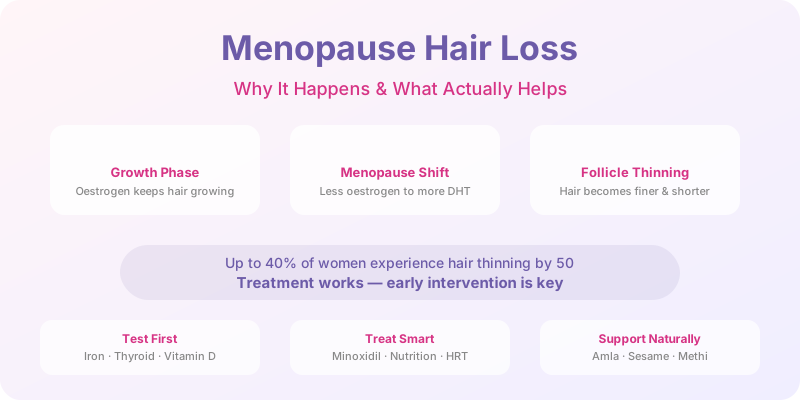
If you’re going through menopause and this sounds familiar, you’re not imagining it. In a UK dermatology clinic sample of 377 women, 6% of those under 50 had female pattern hair loss, rising to 38% of women aged 70 and over (Birch MP et al., Br J Dermatol, 2001, PMID 11251562). The hormonal shifts of menopause, which typically begin in the early 40s for Indian women, are often the point at which hair loss tips from subtle to noticeable.
Hair loss during menopause is common, it’s distressing, and it’s under-discussed. Let’s change that.
Why Menopause Causes Hair Loss
Your hair has a growth cycle with three phases:
- Anagen (growth phase): lasts 2-7 years. The longer this phase, the longer your hair grows.
- Catagen (transition phase): lasts about 2 weeks. The follicle shrinks.
- Telogen (resting/shedding phase): lasts about 3 months. The hair falls out, and the cycle restarts.
At any given time, about 85-90% of your hair is in the growth phase. The problem during menopause is that the balance shifts: more hair enters the resting phase, less stays in the growth phase, and the growth phase itself gets shorter.
The Oestrogen Connection
Oestrogen matters to hair. Hair follicles carry their own high-affinity oestrogen receptors, and oestrogen alters follicle growth and cycling by binding to them (Ohnemus U et al., Endocr Rev, 2006, PMID 16877675).
When oestrogen declines during perimenopause and menopause:
- The growth phase shortens, individual hairs don’t grow as long before they fall out
- Hair follicles gradually produce thinner, finer strands
- Overall hair density decreases
This is why many women notice that their hair doesn’t grow as long as it used to, even before they notice thinning.
The Androgen Effect
While oestrogen falls, your androgen levels (testosterone and its derivative DHT, dihydrotestosterone) don’t decline as steeply. This creates a relative androgen excess: not because androgens increase, but because the oestrogen that was balancing them is no longer there.
DHT is a central driver in follicles that are genetically sensitive to it. It binds to receptors on those follicles and causes them to miniaturise: each cycle produces a thinner, shorter, less pigmented hair until eventually the follicle produces only a tiny vellus hair (peach fuzz) or stops producing visible hair altogether. In scalp biopsies from 42 women with female pattern hair loss, vellus follicle counts rose with severity up to grade 4 and then fell at grade 5, while the terminal-to-vellus ratio fell and then levelled off, a pattern the authors read as miniaturisation progressing all the way to loss of the follicle (Messenger AG & Sinclair R, Br J Dermatol, 2006, PMID 17034520).
This process is called Female Pattern Hair Loss (FPHL) and it follows a characteristic pattern: thinning across the top and crown of the scalp while the frontal hairline is largely preserved. This is different from male pattern baldness, which starts at the temples.
Why Some Women Are Affected More Than Others
Genetics play the largest role. If your mother or grandmother experienced hair thinning during menopause, you’re more likely to as well. The sensitivity of your hair follicles to DHT is genetically determined, two women with identical hormone levels can have very different degrees of hair loss.
Other factors that amplify menopause-related hair loss include:
- Thyroid dysfunction: hypothyroidism and hyperthyroidism both cause hair loss, and thyroid disorders become more common during menopause
- Iron deficiency: extremely common in Indian women due to diet and heavy perimenopausal bleeding. The evidence linking iron status to hair loss is genuinely mixed: some studies suggest a relationship with androgenetic alopecia and telogen effluvium, others do not, and a review of this literature concluded there is insufficient evidence to recommend screening every woman with hair loss for iron deficiency (Trost LB et al., J Am Acad Dermatol, 2006, PMID 16635664)
- Vitamin D deficiency: vitamin D deficiency runs at 70-100% in India’s general population (Ritu G & Gupta A, Nutrients, 2014, PMID 24566435)
- Stress: chronic stress triggers telogen effluvium (a temporary but dramatic increase in hair shedding, poor sleep during menopause is a key source of this cortisol elevation)
- Rapid weight loss: crash dieting in an attempt to manage menopause weight gain can trigger significant hair loss
Types of Hair Loss During Menopause
Not all menopause-related hair loss is the same. Knowing which type you have matters because the treatment differs.
1. Female Pattern Hair Loss (FPHL)
- The most common type during menopause
- Gradual thinning across the top of the scalp
- Widening part line
- Hair gets finer over time
- Hairline at the forehead usually stays intact
- Progressive: it won’t reverse without treatment
2. Telogen Effluvium
- Excessive shedding: losing noticeably more hair than usual (100+ hairs/day)
- Typically triggered by a specific event: hormonal shift, surgery, severe stress, nutritional deficiency, medication change
- Diffuse thinning, not patterned
- Usually temporary: resolves 3-6 months after the trigger is addressed
3. Frontal Fibrosing Alopecia
- A less common but increasingly recognised condition in postmenopausal women
- Progressive recession of the frontal hairline and thinning of eyebrows
- May involve scarring of hair follicles
- Needs dermatologist evaluation and specialised treatment
📞 Noticing Hair Changes During Menopause?
Hair loss during menopause often has multiple contributors, hormonal, nutritional, and thyroid-related. Dr. Suganya’s menopause program investigates all the drivers and creates a personalised plan to support your hair health alongside your overall wellbeing.
Talk to Dr. Suganya on WhatsApp →
What to Get Tested First
Before starting any treatment, these tests help identify treatable causes:
| Test | Why It Matters | Target Values |
|---|---|---|
| Ferritin | Iron stores. The iron and hair-loss literature is mixed, so results are read alongside your symptoms, not in isolation (Trost LB et al., J Am Acad Dermatol, 2006, PMID 16635664) | Interpreted with your doctor, not against a fixed hair-specific cut-off |
| Thyroid panel (TSH, Free T4, Free T3) | Thyroid dysfunction mimics hormonal hair loss | Interpreted with your doctor against your lab’s reference range and your symptoms |
| Vitamin D (25-OH) | Vitamin D status is worth knowing in Indian women given how common deficiency is (Ritu G & Gupta A, Nutrients, 2014, PMID 24566435) | Interpreted with your doctor against your lab’s reference range |
| Vitamin B12 | Common deficiency in Indian vegetarian diets | Interpreted with your doctor against your lab’s reference range |
| CBC (Complete Blood Count) | Rules out anaemia | Interpreted with your doctor against your lab’s reference range |
| DHEA-S, Testosterone | Androgen levels, if excess is suspected | Based on lab reference ranges |
If a result sits right at the bottom of the reference range and your symptoms fit, that is worth a conversation with your doctor rather than a one-word “normal”.
Evidence-Based Treatments That Work
1. Topical Minoxidil
Topical minoxidil is FDA-approved for female pattern hair loss in women. Women’s Rogaine 5% minoxidil topical aerosol was approved by the FDA for the nonprescription treatment of female pattern hair loss on the top of the scalp (FDA approval letter, NDA 021812/S-009, 2014); the 2% solution is the older, long-established strength. It works by extending the anagen phase, increasing blood flow to follicles, and gradually converting miniaturised hairs back to thicker terminal hairs.
What to know:
- Available as liquid or foam, in 2% and 5% strengths. Which one suits you is worth discussing with your doctor
- Results take 3-6 months to appear, this requires patience
- Initial increased shedding in the first 4-8 weeks is normal (older hairs falling to make way for new growth)
- Must be used continuously, stopping leads to gradual return of thinning
- Available over the counter in India
Evidence: In a 48-week randomised placebo-controlled trial in 381 women aged 18 to 49 with female pattern hair loss, both 5% and 2% minoxidil beat placebo on hair count and on the investigator’s assessment. For the 2% solution, the women’s own assessment of hair growth was not significantly different from placebo, and 5% beat 2% on that patient-rated measure, though with more itching, local irritation and unwanted hair growth (Lucky AW et al., J Am Acad Dermatol, 2004, PMID 15034503). That trial enrolled women aged 18 to 49, so it is a reasonable but not a direct read-across to women in and after the menopause transition.
2. Correct Nutritional Deficiencies
This alone can dramatically improve hair shedding if deficiencies are present:
- Iron supplementation if your doctor confirms iron deficiency and identifies its cause. A review of iron and hair loss found insufficient evidence to recommend iron supplementation for hair loss in women who are iron-deficient but not anaemic, and called this a clinical judgement (Trost LB et al., J Am Acad Dermatol, 2006, PMID 16635664)
- Vitamin D3: 1000-2000 IU daily for maintenance, higher doses under medical supervision for deficiency
- Vitamin B12: sublingual supplements or injections if levels are low (common in vegetarians)
- Biotin: a review of the biotin literature found that every reported case of benefit was in someone with an underlying cause of poor hair or nail growth, and that there is a lack of sufficient evidence for supplementation in healthy people (Patel DP et al., Skin Appendage Disord, 2017, PMID 28879195)
- Zinc: 15-30mg daily if deficient (zinc deficiency causes telogen effluvium)
3. HRT (Hormone Replacement Therapy)
For women already on or considering HRT for other menopause symptoms, the hormonal support can benefit hair:
- Oestrogen replacement helps maintain the hair growth phase
- However, the progestogen component matters, some synthetic progestogens have androgenic activity that can worsen hair loss
- Micronised progesterone (body-identical) is preferred over androgenic progestogens for women concerned about hair
- HRT alone is usually not sufficient for significant FPHL, it may slow progression but typically won’t reverse established thinning
4. Anti-Androgen Therapy
For women with significant FPHL and elevated androgens, anti-androgen medications may be prescribed:
- Spironolactone (50-200mg daily), blocks androgen receptors at the hair follicle. Takes 6-12 months for visible results. Must be prescribed and monitored by a doctor. Not suitable during potential childbearing years (which is less of a concern during menopause).
- Finasteride (off-label for women), blocks DHT production. The evidence in postmenopausal women is not encouraging: in a one-year randomised placebo-controlled trial in 137 postmenopausal women with androgenetic alopecia, finasteride 1 mg a day did not increase hair growth or slow the progression of thinning compared with placebo (Price VH et al., J Am Acad Dermatol, 2000, PMID 11050579). Any use in women is a specialist decision.
5. Low-Level Laser Therapy (LLLT)
FDA-cleared devices (laser combs, helmets) that stimulate hair follicle activity:
- In a double-blind randomised trial, 47 women with androgenetic alopecia were assigned to an active 655 nm laser/LED helmet or a sham device, used at home every other day for 16 weeks. Forty-two completed the study (24 active, 18 sham), and hair counts increased more in the active group than the sham group (Lanzafame RJ et al., Lasers Surg Med, 2014, PMID 25124964). The device was tested on its own, not alongside minoxidil
- Requires consistent use (3x/week for months)
- Home devices available in India (₹5,000-30,000 range)
Indian Kitchen Supports: What Traditional Remedies Can (and Can’t) Do
Several traditional Indian ingredients have genuine evidence for supporting hair health. They work best alongside medical treatment, not as replacements.
What Has Some Evidence
Amla (Indian Gooseberry): Rich in vitamin C (supports iron absorption and collagen synthesis) and tannins. In a laboratory screen of 17 Thai plants traditionally used for hair, Phyllanthus emblica (amla) was the second most potent inhibitor of 5-alpha reductase, the enzyme that converts testosterone to DHT, tested on rat liver enzyme with hair growth assessed in mice (Kumar N et al., J Ethnopharmacol, 2012, PMID 22178180). That is an enzyme and animal study, not a trial in women. Eat fresh, dried, or as murabba.
Curry leaves (Kadi patta): Rich in iron, beta-carotene, and antioxidants. Regularly used in South Indian cooking. While specific hair growth studies are limited, the nutritional profile supports follicle health. Add to dals, rasam, and chutneys.
Sesame seeds (Til): Excellent source of zinc, iron, and omega-6 fatty acids, all important for hair growth. Black sesame seeds are particularly valued in Ayurvedic traditions. Add to chutney, sprinkle on salads, or make til laddu.
Coconut oil scalp massage: The most-cited study here is small and not in women: nine healthy men did 4 minutes of standardised scalp massage a day for 24 weeks, and hair thickness increased (Koyama T et al., Eplasty, 2016, PMID 26904154). Nine men is not a basis for promising anything to a woman going through menopause. Warm coconut oil massage has been an Indian tradition for generations and remains a pleasant one.
Methi (Fenugreek): Contains phytoestrogens and nicotinic acid, which may support hair follicle health. Soak methi seeds overnight, grind to paste, and apply as a hair mask, or add soaked seeds to your morning dosa batter.
What Doesn’t Work (Despite Claims)
- Onion juice: popular on social media, but evidence is limited to one small study on alopecia areata (autoimmune hair loss), which is a completely different condition from menopausal hair loss
- “Hair growth” oils with mixed ingredients: most commercial hair oils have no clinical evidence for reversing hair loss. They may condition existing hair and feel nice, but they won’t regrow lost hair
- Rice water rinses: anecdotal, no clinical evidence for reversing thinning
- Biotin shampoos: biotin works when ingested (if deficient), not when applied topically
💜 Your Hair Is Part of Your Wellbeing
Hair loss during menopause is deeply personal, it affects how you see yourself. At Menolia, Dr. Suganya addresses hair thinning as part of the whole menopause picture: hormonal changes, nutritional gaps, thyroid function, and stress. Because isolated treatments rarely work when the root causes aren’t addressed together.
Start a WhatsApp Conversation →
Styling Tips While You Recover
Hair treatments take months to show results. In the meantime, these styling strategies help:
- Volumising cuts: A layered cut creates the appearance of more volume. Avoid single-length cuts that make thinning more visible
- Part placement: If your centre part looks wide, try a side part, it immediately disguises thinning at the crown
- Colour: Highlights or lowlights add dimension and the perception of thickness. Avoid single-process dark colour on thinning hair, it makes the scalp more visible
- Avoid tight hairstyles: Tight ponytails, braids, and buns cause traction alopecia, additional hair loss from pulling. Use soft scrunchies instead of tight elastics
- Heat protection: Already-thinning hair is more fragile. Minimise flat iron and blow dryer use, or always use heat protection
- Scalp-friendly products: Switch to sulphate-free shampoos. Harsh sulphates strip natural oils and can irritate the scalp
Frequently Asked Questions
Is it normal to lose hair during menopause?
Yes. Female pattern hair loss becomes much more common with age. In a sample of 377 women attending a UK dermatology clinic, 6% of those under 50 had it, rising to 38% of women aged 70 and over (Birch MP et al., Br J Dermatol, 2001, PMID 11251562). It’s driven primarily by declining oestrogen and the relative increase in androgens, which cause hair follicles to produce thinner, shorter hairs. While common, it’s not something you have to simply accept, treatments are available.
Will my hair grow back after menopause?
It depends on the type and cause. Telogen effluvium (stress or deficiency-related shedding) is usually reversible once the trigger is addressed. Female pattern hair loss (the most common type during menopause) is progressive, it won’t reverse on its own, but treatments like minoxidil can improve density and slow further thinning. The earlier you start treatment, the better the results.
What’s the best treatment for menopausal hair loss?
A combination approach works best: correct nutritional deficiencies (iron, vitamin D, B12), consider topical minoxidil if you have female pattern thinning, address thyroid issues if present, and consider whether HRT (with micronised progesterone) is appropriate for your overall menopause management. Treating hair loss in isolation without addressing the underlying hormonal and nutritional picture rarely gives lasting results.
Can HRT help with hair loss?
HRT can help slow hair thinning by providing the oestrogen that supports the hair growth cycle. However, the type of progestogen matters, synthetic progestogens with androgenic activity can worsen hair loss, while micronised (body-identical) progesterone is preferred. HRT alone may not reverse established female pattern hair loss, but it’s a valuable part of a comprehensive approach.
Should I take biotin supplements for hair loss?
A review of the published biotin literature found 18 reported cases of benefit, and in every one the person had an underlying cause of poor hair or nail growth. The authors concluded there is a lack of sufficient evidence for supplementation in healthy individuals (Patel DP et al., Skin Appendage Disord, 2017, PMID 28879195). So it is not the first thing to reach for. Talk to your doctor about what your own results actually show before adding a supplement.
How long before I see results from treatment?
Hair grows slowly, about 1 cm per month. With minoxidil, expect initial shedding in weeks 4-8 (normal and temporary), early improvement at 3-4 months, and meaningful results at 6-12 months. Nutritional correction may show results sooner, reduced shedding within 2-3 months if deficiency was the main driver. Consistency is essential; intermittent treatment doesn’t work.
Related Reading
- Menopause Supplements: What’s Evidence-Based, which supplements have evidence for menopause symptoms
- Menopause Skin Care: Why Your Skin Changes, oestrogen’s role in skin changes
- Thyroid Changes During Menopause, how thyroid dysfunction contributes to hair and other symptoms
- Menopause Diet: What to Eat After 45, nutrition strategies for the menopause transition
- Menopause Facial Hair, why facial hair changes after 45
- Menopause Skin Dryness & Collagen Loss, oestrogen’s role in skin and collagen
- Menopause & Memory Loss, brain fog and memory during the transition
- Menopause & Blood Pressure, how oestrogen decline affects blood pressure