You are in the middle of a sentence and the word has gone. Not a complicated word. A name you have known for twenty years, or a common noun you use every week. You stand at the kitchen counter, hand on the fridge handle, certain you came in for something, unable to remember what. Your daughter asks you something and you call her by your sister’s name. You put your phone on top of the refrigerator.
And in the quiet moment after each one of these, the thought arrives: is this how it starts?
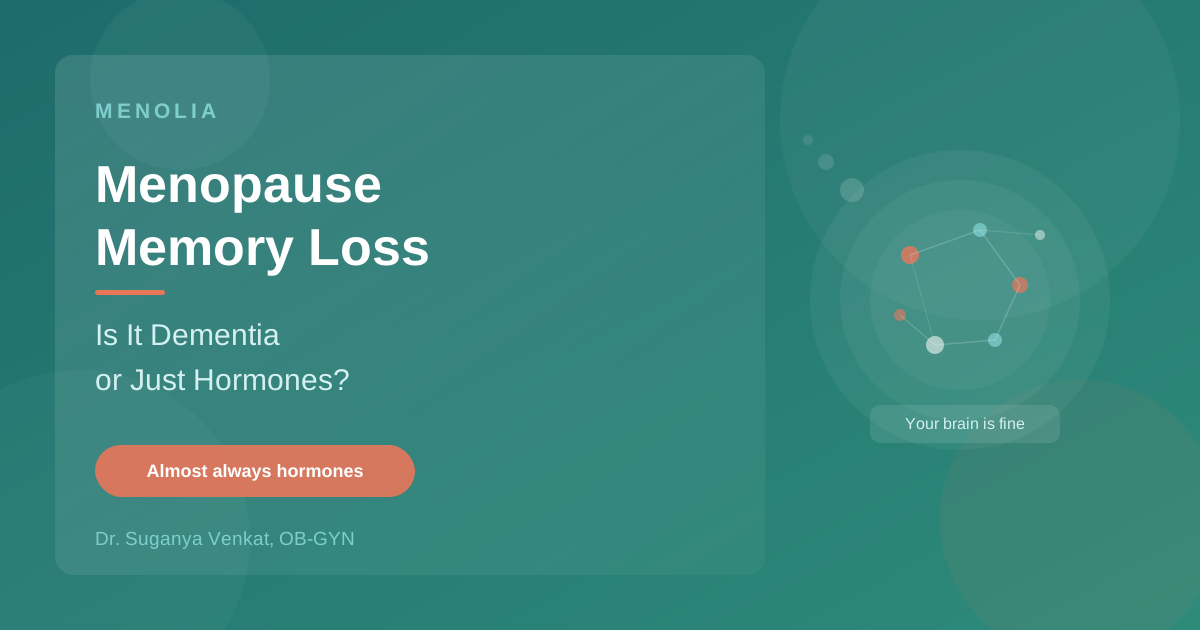
If you are in your forties or early fifties and this is happening to you, I want to answer that question directly: for the vast majority of women at this life stage, what feels like alarming memory loss is a well-documented, largely reversible effect of hormonal transition. It is not dementia. It is not Alzheimer’s. It is perimenopause, affecting your brain the same way it affects your sleep, your temperature regulation, and your mood.
This post explains why it happens, how it differs from dementia, when to take it more seriously, and what you can do to feel sharper during the transition.
Why Oestrogen Matters for Your Brain
Most people think of oestrogen as a reproductive hormone. In the body, it is far more than that. Oestrogen receptors are found throughout the brain, including in the hippocampus, the region responsible for forming and retrieving short-term memories (Woolley CS and McEwen BS, Journal of Neuroscience, 1993).
When oestrogen levels are stable, it supports several cognitive processes at once. It promotes the formation and maintenance of synaptic connections in the hippocampus. It modulates acetylcholine, a neurotransmitter critical for attention, learning, and memory consolidation. It also acts as a mild anti-inflammatory agent in the brain, reducing the kind of low-grade neuroinflammation that, over time, can impair neuronal function.
During perimenopause, oestrogen does not simply decline in a straight line. It fluctuates: rising unpredictably, then falling, then rising again, before eventually settling at a lower post-menopausal baseline. These fluctuations are harder for the brain to adapt to than a gradual, consistent decline. The hippocampus, which is particularly sensitive to oestrogen, responds to each fluctuation, and the cumulative effect shows up as the kind of inconsistent, unreliable memory access that women describe so vividly in clinic.
A landmark study tracking 2,362 women through the menopause transition (the SWAN Memory Study, Greendale GA et al., Menopause, 2010) found that perceptual speed and verbal memory did decline during perimenopause, as measured by standardised cognitive tests. Critically, these scores stabilised and often improved in the post-menopause phase, once oestrogen settled at its new lower level. The cognitive effects were real, measurable, and for most women, time-limited.
This is the most important sentence in this article: the worst period for hormonal memory symptoms is the transition itself, not the years after it.
How Hormonal Memory Loss Differs from Dementia
This is the question that matters most to the women who contact me about this symptom. I want to address it as clearly as I can, because the distinction is clinically useful and genuinely reassuring.
Dementia is a progressive, irreversible deterioration across multiple cognitive domains simultaneously: memory, language, visuospatial ability, executive function, and personality. It does not plateau. It does not improve after a good night of sleep. It does not fluctuate meaningfully with stress levels or hormonal phases. It progresses.
Hormonal memory loss during perimenopause is selective and fluctuating. It primarily affects the retrieval of specific categories of information, most commonly proper nouns (names, titles, place names), the retrieval of specific words in conversation (tip-of-the-tongue experiences), and prospective memory (remembering to do something you had planned). The underlying knowledge base is intact. You know who your colleague is. You know what you came into the room for, approximately. You remember the film from last week; you just cannot retrieve the lead actress’s name.
The pattern in clinic that reassures me this is hormonal rather than neurodegenerative includes several features:
The lapses involve retrieval, not retention. The information was encoded; you are having trouble getting it back. When it returns, often a few minutes later or when something jogs it, the memory is complete and accurate.
Symptoms fluctuate meaningfully. On weeks with better sleep, lower stress levels, and regular physical activity, they are noticeably less intrusive. This fluctuation does not happen with dementia.
Your ability to learn new information is largely intact. If you read something carefully and revisit it the next day, you can recall it reasonably well.
The timing corresponds to other perimenopausal changes. The memory difficulties arrived alongside irregular periods, sleep disruption, or changes in mood regulation, not as an isolated symptom years before or after.
There is no personality change. Family members and close friends have not noticed changes in your behaviour, judgment, or emotional responses that they find concerning.
When to take memory changes more seriously: If you are experiencing significant disruption to daily functioning, repeatedly asking the same questions in a single conversation, becoming confused about where you are in familiar surroundings, missing appointments or obligations you would ordinarily manage automatically, if a family member noticed changes before you did, or if symptoms are rapidly worsening rather than fluctuating, these warrant evaluation by a neurologist, not reassurance from a general guide. Always raise any concern with your doctor. The vast majority of my patients presenting with perimenopausal memory concerns fall firmly in the hormonal category, but it is appropriate to be evaluated if you are not certain.
Share your symptoms with Dr. Suganya on WhatsApp and get a personalised assessment
Sleep Deprivation Multiplies the Problem
One reason hormonal memory changes feel so severe during perimenopause is that they rarely arrive alone. Night sweats, heightened arousal, and fragmented sleep architecture travel with the same hormonal disruption. And disrupted sleep compounds cognitive impairment significantly.
During slow-wave and REM sleep, the brain consolidates the day’s experiences into retrievable memories and clears metabolic waste products through the glymphatic system (Xie L et al., Science, 2013). When sleep is fragmented by night sweats, early waking, or the shallow architecture that accompanies lower progesterone levels, this consolidation is incomplete. The memory difficulties that would be mild on adequate sleep become noticeably worse.
This is practically important: improving sleep quality is one of the most direct interventions available for cognitive symptoms, and it does not require medication to achieve. Our complete guide to menopause sleep problems covers evidence-based approaches in detail. The foundation is consistent sleep and wake timing, a cool sleeping environment (fan, light cotton bedding, 18 to 20 degrees if possible), avoiding screens and heavy meals in the two hours before bed, and a brief wind-down routine that signals the nervous system to settle.
For women whose night sweats are severe enough to wake them multiple times per night, addressing the night sweats directly (through lifestyle triggers, dietary changes, and where appropriate, a clinical consultation) often produces the most significant improvement in cognitive symptoms.
Stress, Cortisol, and the Hippocampus
The perimenopause years for most Indian women coincide with a period of peak life complexity. Ageing parents requiring increasing care, children in high-stakes academic phases, professional responsibilities, and the management of a household, often with minimal support. This context amplifies the hormonal picture.
Chronically elevated cortisol (the body’s primary stress hormone) suppresses hippocampal function and interferes with memory consolidation (Sapolsky RM, Archives of General Psychiatry, 2000). In younger women, the regulatory feedback between oestrogen and cortisol keeps this effect brief. During perimenopause, that regulatory buffer is less reliable, and stress has a more direct and lasting effect on cognitive performance.
This is why the practical stress-reduction strategies that might have felt optional before are genuinely important during this phase. Nadi shodhana (alternate nostril breathing), practised for five to ten minutes before bed or during a stressful moment, has documented effects on cortisol modulation. Yoga nidra, a guided body-scan relaxation practised lying down, produces parasympathetic activation that measurably reduces cortisol. Even twenty minutes of low-intensity walking, which may feel like it adds little value on a busy day, reduces circulating cortisol and supports hippocampal blood flow.
What You Eat Can Support Cognitive Health
Several nutrients play a direct supporting role in brain function during the hormonal transition. The Indian kitchen is well-positioned to provide most of them.
Haldi (turmeric): Curcumin, the active compound in turmeric, has well-documented anti-inflammatory effects at the neurological level (Mishra S and Palanivelu K, Annals of Indian Academy of Neurology, 2008). Low-grade neuroinflammation is one mechanism through which both oestrogen decline and chronic stress impair hippocampal function. Haldi in cooking, particularly with a fat source such as ghee or til (sesame) which improves curcumin absorption, supports this pathway daily.
Badam (almonds): Almonds are rich in vitamin E, which has a documented association with cognitive protection in observational research. Ten to twelve almonds daily, soaked overnight to improve digestibility, is a sustainable and accessible habit.
Rajma and chana dal: These legumes provide folate, which supports methylation pathways involved in neurotransmitter synthesis. Folate deficiency has been associated with cognitive decline in observational studies. Both are staple ingredients in most Indian kitchens and do not require any change in routine.
Dahi and fermented foods: The relationship between gut microbiome diversity and cognitive function is an active area of research, and traditional Indian fermented foods (dahi, idli, kanji, home-made pickles) support microbiome health consistently. This is the gut-brain axis in practical terms.
Alsi (flaxseed), ground: Alsi is one of the most accessible Indian sources of plant-based omega-3 fatty acids. One tablespoon of ground alsi added to curd, roti dough, or a cooked dish provides alpha-linolenic acid, which is a precursor to the longer-chain omega-3 fats associated with neuronal membrane health.
Anar (pomegranate): Pomegranate contains ellagic acid and punicalagins with antioxidant and anti-inflammatory properties relevant to brain aging. Seasonal fresh anar or a small glass of fresh juice (not bottled, which has added sugar) is worth including when available.
Exercise Is the Most Effective Cognitive Intervention Available
Of all the lifestyle interventions with evidence for cognitive benefit during menopause, aerobic exercise has the strongest and most consistent research base. Exercise increases brain-derived neurotrophic factor (BDNF), a protein that supports the growth and maintenance of neurons, particularly in the hippocampus (Cotman CW and Berchtold NC, Trends in Neurosciences, 2002). Higher BDNF levels are directly associated with better memory performance.
You do not need a structured gym programme. Four to five brisk 30-minute walks per week, combined with two sessions of resistance or bodyweight exercise, produces measurable effects on memory and processing speed within 8 to 12 weeks in the research literature. For Indian women who find outdoor walking impractical during summer months or monsoon, a flight of stairs at home, a set of basic bodyweight exercises, or a 30-minute yoga session with weight-bearing elements achieves the same physiological effect.
Our guide to strength training for women over 45 has a practical framework for building this habit without a gym, including modifications for women with joint discomfort.
Keep Using Your Mind
The brain responds to demand. Women who report the most distressing cognitive symptoms during perimenopause are often those who have reduced cognitively demanding activities, reading, learning new skills, creative work, precisely because the lapses make these activities feel frustrating or embarrassing. That response is understandable, but it reinforces the problem.
Maintaining mentally demanding habits during the transition keeps neural pathways active and engaged. Reading material outside your usual genre, learning a new skill (a recipe, a language, a craft), varying your usual routes and routines, and solving word problems or puzzles all activate neuroplasticity in ways that buffer the hormonal effect. The goal is not performance. The goal is demand.
If any of the above changes feel difficult to sustain, this is also worth addressing with your doctor. Low oestrogen affects mood, motivation, and energy in ways that make even straightforward habits harder to maintain, and recognising the hormonal contribution removes some of the self-blame that otherwise compounds the difficulty.
When to Bring This to a Doctor
The vast majority of perimenopausal memory complaints are hormonal in origin and respond to the lifestyle measures described in this article, often significantly within four to eight weeks. But a clinical assessment is warranted in several situations: if symptoms are affecting your work or professional relationships, if they are worsening rapidly rather than fluctuating, if family members have noticed changes in your behaviour or judgment, or if you are worried enough that the uncertainty itself is reducing your quality of life.
An OB-GYN familiar with perimenopause can evaluate whether your symptom pattern fits the expected hormonal picture, check thyroid function (hypothyroidism produces a very similar cognitive profile and is more common in women over 40), and discuss whether any additional support is appropriate. You do not need to manage uncertainty alone.
Frequently Asked Questions
Is it normal to experience memory loss during menopause?
Yes. Cognitive changes, particularly word-finding difficulties, name retrieval lapses, and the experience of forgetting why you entered a room, are common and documented during the perimenopause transition. They are caused by fluctuating oestrogen affecting the hippocampus and neurotransmitter systems. For most women, these symptoms are most intense during perimenopause itself and stabilise once the transition is complete.
How can I tell if my memory loss is hormonal or something more serious like dementia?
Hormonal memory loss typically involves retrieval difficulties (you remember things eventually, often soon after), fluctuates with sleep and stress, and corresponds to the timing of other perimenopause symptoms. Dementia involves progressive, multi-domain decline across memory, personality, language, and orientation, and does not fluctuate. If you notice rapid progression, confusion about familiar surroundings, or family members expressing concern about your behaviour, a neurological assessment is appropriate.
At what age does menopause-related memory loss typically begin?
Cognitive symptoms usually begin during perimenopause, which for Indian women typically starts in the early to mid-forties. The average age of natural menopause in India is approximately 46 to 47 years (Ahuja M, J Midlife Health 2016, PMID 27721640), meaning perimenopause begins for many women around 43 to 44. Symptoms peak during the transition itself, not before or after.
Does memory improve after menopause is complete?
For most women, yes. The SWAN Memory Study (Greendale GA et al., Menopause, 2010) found that verbal memory, which declined during perimenopause in standardised testing, stabilised or improved in the post-menopause phase once oestrogen settled at a consistent lower baseline. The transition period is the most symptomatic for most women.
Which Indian foods support brain health during menopause?
Haldi with ghee or til (curcumin for neuroinflammation), badam (vitamin E), rajma and chana dal (folate for neurotransmitter pathways), dahi and fermented foods (gut-brain axis), ground alsi (plant omega-3), and seasonal anar (polyphenols) are the most evidence-relevant foods for cognitive health during this transition. They support rather than replace a broader lifestyle approach.
For more on this, read our guide on Menopause Brain Fog. Can yoga or pranayama actually help with memory problems?
Yes, through cortisol regulation. Chronically elevated cortisol suppresses hippocampal function. Nadi shodhana (alternate nostril breathing) and yoga nidra have documented effects on the parasympathetic nervous system that measurably reduce cortisol levels. The effect on memory is indirect but real, particularly for women whose cognitive symptoms worsen during high-stress periods, which is most women.
Should I see a doctor about memory changes during menopause?
If the symptoms are affecting your confidence, your work, or your daily life, yes. A clinical assessment helps clarify whether your pattern fits the typical hormonal picture and whether additional workup (thyroid function in particular, since hypothyroidism produces a very similar cognitive profile and is more common in women over 40) is warranted. You do not need to manage the uncertainty or the anxiety about what it might mean on your own.