You have walked every morning for years. You eat carefully. You do not smoke. And yet your doctor mentioned at your last visit that your bone density is dropping, or your waist is holding weight it never used to, or your energy has been lower than it should be.
Walking is genuinely good for you. But there is something that walking does not do: load your skeleton and muscles in a way that forces your body to build more of both. That stimulus is strength training, and if you are in your 40s or 50s, it is the single intervention most consistently supported by research for protecting your body through the menopause transition.
This post is not about becoming an athlete. It is about what happens to muscle and bone when oestrogen declines, why the body needs a specific kind of mechanical signal to adapt, and how to start in a way that fits Indian homes and routines.
What Oestrogen Does for Muscle and Bone (and What Happens When It Falls)
Oestrogen is not only a reproductive hormone. It plays a direct role in two structural systems that most women do not associate with their hormonal transition: skeletal muscle and bone.
In muscle tissue, oestrogen supports muscle protein synthesis (the process of repairing and building muscle fibres after use) and reduces inflammation that degrades muscle. It also acts on satellite cells, the repair cells that respond to muscle damage by generating new fibres. When oestrogen levels are stable, muscle mass is maintained relatively well even with the normal changes of ageing. When oestrogen fluctuates and falls during perimenopause and menopause, muscle repair becomes less efficient. The medical term for age-related muscle loss is sarcopenia, and while it begins gradually after age 30 (at roughly 3 to 5 percent of muscle mass per decade), its pace accelerates noticeably in the years around menopause (Cruz-Jentoft AJ et al., Age and Ageing, 2019).
For more on this, read our guide on Menopause & Muscle Loss. Bone follows a similar pattern. Osteoclasts break down old bone; osteoblasts lay down new bone. Oestrogen suppresses osteoclast activity. When it falls, osteoclast activity is less restrained, and bone resorption outpaces bone formation. In the five to seven years following menopause, women can lose 10 to 20 percent of bone density if nothing intervenes. The Indian picture is particularly relevant here: Indian women typically enter menopause earlier (average age 46 to 47, compared to 51 in Western populations) and have lower baseline bone density compared to Western reference populations, which means the window for protective intervention is both earlier and more urgent.
These two losses compound each other. Less muscle means less loading on the skeleton (muscle contraction is actually one of the primary ways bones receive the stimulus to rebuild), less metabolic activity (muscle burns more energy at rest than fat), and reduced physical confidence that leads to less activity overall.
Why Strength Training Changes This Picture
Resistance exercise works through a mechanism that does not depend on oestrogen. When a muscle is asked to work against resistance, it sustains microscopic damage. The body responds by repairing that damage and building slightly more fibre than was there before. This process (mechanotransduction, or the conversion of mechanical load into biological signals) bypasses the oestrogen-dependent pathway almost entirely. Which is exactly why it works when oestrogen is low.
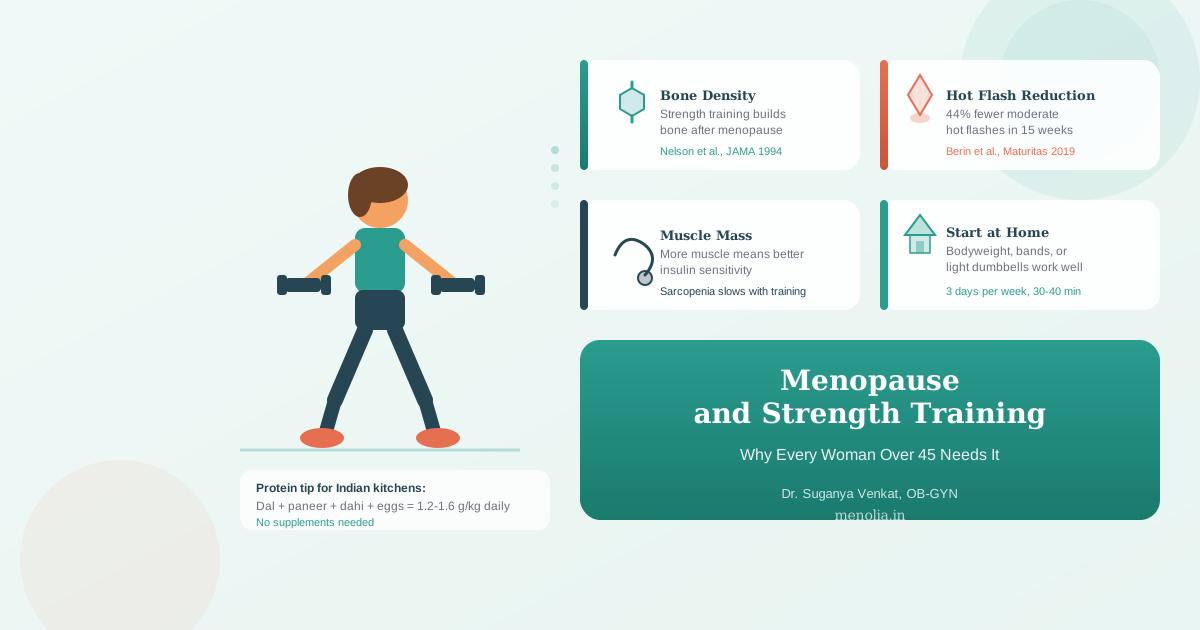
For bone, the mechanism is the same: mechanical loading through muscle contraction and gravitational stress sends a direct signal to osteoblasts to lay down new bone. A landmark randomised controlled trial by Nelson ME and colleagues (JAMA, 1994) placed postmenopausal women in a resistance training programme twice a week for one year. The women who trained gained approximately one percent in bone mineral density at the femoral neck and lumbar spine. The control group, who maintained their usual activity, lost approximately two to two and a half percent. The difference between those two groups was not the result of medication or hormone therapy; it was two sessions per week of resistance exercise.
Strength training also reduces hot flash frequency. A randomised controlled trial by Berin E and colleagues (Maturitas, 2019) found that postmenopausal women who followed a 15-week resistance training programme reported a 44 percent reduction in moderate-to-severe hot flash frequency compared to controls. The proposed mechanism involves improved thermoregulatory efficiency and reduced sympathetic nervous system reactivity, both of which are trained by regular resistance exercise.
The metabolic benefits are equally significant. Muscle is metabolically active tissue: it consumes glucose at rest and during activity. Maintaining muscle mass through the menopause transition directly supports insulin sensitivity, which deteriorates when muscle mass declines. Women who maintain more muscle through menopause have lower rates of type 2 diabetes, lower triglyceride levels, and more stable energy across the day.
Strength training recommendations vary by individual health picture. Message Dr. Suganya on WhatsApp if you want guidance on how to start given your specific health history, bone density results, or any joint concerns.
How to Start: An India-Relevant Approach
The mental image many women have of strength training (a noisy gym, heavy barbells, a crowd of young people) is not what the evidence recommends for beginning at 45 or 55. Effective resistance training starts with bodyweight, adds load gradually, and can be done at home in 30 to 40 minutes, three days a week.
The Foundation: Bodyweight Movements
Bodyweight training uses your own weight as resistance. These movements are enough to begin stimulating muscle and bone adaptation, particularly in the lower body, which carries the most skeletal load.
Squats. Stand with feet shoulder-width apart. Lower as if sitting into a chair until your thighs are parallel to the floor (or as far as comfortable), then return to standing. Three sets of 10 to 12 repetitions builds significant leg and hip strength over weeks. If balance is uncertain, hold a chair back with one hand.
Wall push-ups or floor push-ups. Wall push-ups require standing an arm’s length from a wall and pressing in and out. Floor push-ups, even done with knees on the ground, provide meaningful upper-body resistance. Upper-body strength preserves the wrist and shoulder bone density that women often lose first.
Glute bridges. Lie on your back, feet flat on the floor, knees bent. Press through your heels to lift your hips to a straight line from knee to shoulder. Lower and repeat. This builds the gluteal muscles that stabilise the pelvis and reduce fall risk.
Step-ups. Using the bottom stair in your home, step up and down with one foot, then the other. This loads the femur (the bone most at risk for osteoporotic fracture) in a direct, functional way.
Progressing to Resistance
Once bodyweight movements feel manageable, adding resistance increases the stimulus. Resistance bands (available at most sports shops for a few hundred rupees) provide graduated load for the same movements. A set of light dumbbells (2 to 5 kg to start) opens the full range of upper-body exercises: overhead press, bicep curls, lateral raises.
Many Indian homes do not have gym equipment, and none is necessary for the first six to twelve months of consistent training. The priority is regularity and progressive overload (doing slightly more than last week, whether that is one more repetition, a slightly heavier band, or a slightly deeper squat).
Frequency and Recovery
Three days per week of strength training, with at least one rest day between sessions, is the evidence-supported starting point. More is not automatically better: muscle repair happens in the 48 hours after a session, not during it. Overtraining in women over 45 (before the body has adapted) is a common reason for early dropout.
Our guide to exercise during menopause covers the full picture of movement in this life stage, including the role of cardio alongside strength work.
Nutrition That Makes Strength Training Work
Lifting without enough protein is like trying to renovate a kitchen while the supplies truck is empty. Muscle protein synthesis after exercise requires available amino acids. The recommendation for women in the perimenopause and menopause years who are doing resistance training is 1.2 to 1.6 grams of protein per kilogram of body weight per day (approximately double the minimum-survival requirement that most sedentary adults consume).
For a 60 kg woman, this means 72 to 96 grams of protein daily. Spread across three to four meals, this is entirely achievable through Indian food without supplements:
- Two eggs at breakfast (12 g protein) with a bowl of dahi or a glass of buttermilk (5 g)
- A large bowl of rajma, chana, or moong dal at lunch (15 to 18 g per 200g cooked serving)
- Paneer in a sabzi at dinner (14 g per 100g paneer)
- Idli with sambar, or a small bowl of sprouted moong as an evening snack (6 to 8 g)
Post-workout nutrition matters too. Eating a protein-containing meal or snack within 90 minutes of training maximises the muscle repair window. A bowl of curd rice, a paneer paratha, or dal with roti each serve this purpose.
Calcium and vitamin D remain important alongside protein. Ragi is one of the richest plant sources of calcium available in Indian kitchens (approximately 364 mg per 100g of raw flour). Combined with morning sun exposure and the vitamin D it supports, this pairs naturally with a strength training programme targeting bone density.
Our guide to menopause and bone health has more on calcium intake, supplementation, and the specific risk factors for Indian women.
The Connection to Weight, Energy, and Sleep
Strength training reshapes the body composition picture in ways that go beyond aesthetics. When muscle mass increases, the body’s resting metabolic rate increases with it. This means more energy burned through the day without additional effort, and gradually, a shift in the ratio of muscle to fat even without dramatic changes in overall weight.
For many women in their 40s and 50s, the frustrating reality is that the same habits that maintained their weight for decades stop working. The cause is partly the decline in oestrogen (which affects fat distribution, shifting it toward the abdomen), but also the quiet decline in muscle mass. Reversing the muscle loss reverses part of the metabolic slowdown.
Sleep quality also improves with regular strength training. Women who train consistently report fewer sleep disruptions and shorter time to fall asleep, likely through the combined effects of physical fatigue promoting deeper sleep, reduced hot flash frequency, and lowered cortisol (which interferes with deep sleep when chronically elevated). Our guide to menopause sleep problems covers the full picture.
The fatigue that many women experience in perimenopause and menopause (the persistent flatness that is not quite tiredness but not quite normal either) also responds to regular strength training within six to eight weeks of consistent practice. Our guide to menopause fatigue addresses the multiple contributing factors, of which muscle loss and reduced metabolic activity are among the most treatable.
Starting Safely: What to Tell Your Doctor
If you have not exercised consistently for some time, or if you have any of the following, a conversation with your OB-GYN before starting is worthwhile:
- Diagnosed osteopenia or osteoporosis (modification of exercises to reduce fracture risk)
- Knee, hip, or shoulder joint problems that affect movement
- Uncontrolled hypertension or a recent cardiac event
- Significant balance problems (vestibular or neurological)
For the vast majority of women over 45 with no active medical complications, starting with the bodyweight movements described above carries a very low risk and a high benefit. The research on falls is clear: women who do regular resistance and balance training have significantly fewer falls and fractures than those who do not (Sherrington C et al., Cochrane Database of Systematic Reviews, 2019). Starting is the decision that matters most.
If you are ready to start and want a programme tailored to your current bone density results, joint health, and time available, message Dr. Suganya on WhatsApp. A brief conversation can save months of uncertainty about where to begin.
FAQ
Is strength training safe after menopause if I have never done it before?
Yes, and it is specifically the women who have never trained who gain the most from starting. Research consistently shows that even women in their 60s and 70s who begin resistance training for the first time achieve meaningful gains in bone density, muscle strength, and balance within three to six months. The key is starting conservatively (bodyweight first, resistance added only when movements feel solid) and respecting recovery time between sessions.
How is strength training different from the exercise I am already doing?
Walking, cycling, and swimming are excellent for cardiovascular health, mood, and general metabolic function. However, they do not produce sufficient mechanical load on the skeleton or sufficient muscle-fibre recruitment to counteract sarcopenia and bone density loss at the same rate as resistance exercise. Strength training and aerobic exercise complement each other; neither replaces the other.
Will strength training make me look bulky?
No. Women do not have the testosterone levels required for large muscle hypertrophy. What resistance training produces in women over 45 is increased muscle definition, improved posture, and a firmer body composition, without any of the dramatic size increases associated with competitive bodybuilding. The changes visible in the first few months are primarily strength and function, with body composition shifting more gradually over six to twelve months.
How long before I notice a difference?
Strength increases (being able to do more repetitions or use a heavier resistance) typically become noticeable within four to six weeks. Changes in body composition and the secondary effects on energy and sleep follow within eight to twelve weeks of consistent three-sessions-per-week training. Bone density changes are slower and are measured on DEXA scans at intervals of one to two years.
What if I have knee pain? Can I still do strength training?
Many women in perimenopause and menopause experience joint discomfort related to oestrogen decline, which affects cartilage and synovial fluid. Strength training is not contraindicated for knee pain; in fact, building quadriceps and hamstring strength often reduces knee pain by improving joint stability and shock absorption. Modifications include seated leg extensions, wall squats (less range of motion), and resistance band exercises that load the hip without stressing the knee. If your knee pain is severe or has a diagnosed structural cause, a physiotherapist can guide exercise selection.
How much protein do I really need, and is it achievable through Indian food?
For a woman doing resistance training, 1.2 to 1.6 g of protein per kilogram of body weight per day is the evidence-supported target. This is achievable through Indian food: two eggs with breakfast, a generous bowl of rajma or chana or dal at lunch, a paneer dish at dinner, and dahi or sprouted moong as a snack will cover the requirement for most women without protein powder supplementation. Supplementation is an option if appetite is low or plant-based sources are insufficient, but it is not a necessity.
Does strength training help with hot flashes as well as bone and muscle?
Research suggests yes. A randomised controlled trial found a significant reduction in moderate-to-severe hot flash frequency in women who followed a structured resistance training programme compared to controls. The mechanism is not fully established but likely involves improved thermoregulatory control and reduced baseline sympathetic nervous system activity. The effect is not as dramatic as hormone replacement therapy for severe hot flashes, but it is meaningful for women with moderate symptoms who want a non-hormonal approach.