You notice it in small ways at first. Your arms feel softer even though you have not gained weight. Climbing stairs takes more out of you than it used to. You carry groceries in from the car and your wrists ache in a way they did not three years ago. A kilo or two has shifted to your middle, but the scale has barely moved.
This is not imagination. It is a physiological process called sarcopenia, the gradual loss of muscle mass and strength that accelerates in the years around menopause. It happens quietly, without pain, which is exactly why most women do not connect these small changes to their hormonal transition until the cumulative effect becomes hard to ignore.
This post explains what sarcopenia is, why menopause specifically accelerates it, why muscle loss and bone loss are connected in ways that matter enormously for Indian women, and what protein intake can do about it. The exercise piece is important too, and you can find a full evidence-based guide at our strength training post for women over 45. This post is primarily about the other half of the equation: what you eat, why it matters, and how to build enough protein into an Indian daily diet.
What Sarcopenia Actually Is
Sarcopenia is not simply “getting weaker as you age.” It is a clinical syndrome defined by low muscle mass combined with reduced muscle strength or physical function. The European Working Group on Sarcopenia in Older People (EWGSOP2, Cruz-Jentoft AJ et al., Age and Ageing, 2019) established these criteria because the research had been inconsistent, with some studies measuring only mass and others measuring only strength. The current definition requires both components to be present for a diagnosis.
The gradual process begins around age 30, when muscle protein synthesis (the body’s rate of building new muscle fibre) starts to decline by roughly 3 to 5 percent per decade. This pace feels invisible through the 30s and early 40s because the body compensates with normal daily activity. The numbers only become noticeable in their effect when oestrogen starts fluctuating and then declining during perimenopause, which in Indian women typically begins in the early to mid-40s.
By the time a woman has been post-menopausal for five years, she may have lost 10 to 15 percent of her total muscle mass compared to her peak. For a woman who weighed 60 kg with a healthy 45 percent muscle mass in her 30s, that represents roughly 4 kilograms of lost muscle tissue, replaced over time by fat and connective tissue. The scale might read the same, but what the body is made of has changed significantly.
Why Menopause Accelerates It
Oestrogen plays a direct role in muscle maintenance through several pathways that most women are not told about at their annual check-up.
First, oestrogen supports muscle protein synthesis by acting on the same cellular receptors that respond to exercise. When oestrogen is present in adequate levels, the body is primed to repair microscopic muscle damage (from daily activity, from exercise, from carrying children or groceries) and rebuild fibres slightly stronger than before. When oestrogen declines, this repair process becomes less efficient. The same walk you have been taking for years provides less adaptive stimulus for muscle maintenance than it once did.
Second, oestrogen has anti-inflammatory properties that protect muscle tissue. Chronic low-grade inflammation is a known driver of sarcopenia. During the menopause transition, the withdrawal of oestrogen’s anti-inflammatory effects contributes to a higher baseline of systemic inflammation, which accelerates muscle protein breakdown.
Third, oestrogen affects insulin-like growth factor 1 (IGF-1), a hormone that stimulates muscle growth and repair. Postmenopausal women show lower IGF-1 levels, which reduces the body’s anabolic (building) response to both protein intake and physical activity.
None of this means muscle loss is inevitable or irreversible. These are mechanisms, not sentences. But understanding them matters because it explains why the same habits that maintained your body in your 30s may no longer be enough in your 50s, and why specific changes to protein intake and exercise type are the evidence-backed levers rather than simply doing more of what you already do.
The Dual Threat: When Muscle and Bone Decline Together
Sarcopenia does not occur in isolation during menopause. It coincides with a period of accelerated bone loss for the same hormonal reason: oestrogen suppresses osteoclast activity (the cells that break down old bone). When oestrogen falls, osteoclasts are less restrained and bone resorption outpaces bone formation.
The practical consequence of losing muscle and bone simultaneously is a compounding risk. Muscle contraction is one of the primary stimuli for osteoblast activity (bone building). Less muscle mass means fewer and weaker mechanical loading signals to the skeleton, which means bone loss progresses faster than it would if muscle mass were preserved. A woman losing muscle in her early 50s is simultaneously accelerating her bone loss in a way that would not happen if the two systems were independent.
For Indian women, this matters more than the textbooks written for Western populations suggest. Indian women typically reach menopause between ages 46 and 48, compared to 51 in Western populations (Ahuja M, J Midlife Health 2016, PMID 27721640). This means the window of vulnerability begins earlier. Separately, Indian women on average have lower baseline bone mineral density and higher rates of vitamin D deficiency than Western reference populations, which makes the sarcopenia-osteoporosis compounding effect more clinically significant here than the numbers from UK or US studies suggest.
Our post on menopause and bone health covers the bone side of this in detail. The key point here is that protecting muscle is not separate from protecting bone. They are the same intervention.
How Protein Becomes the Central Lever
If you reduce the muscle loss question to its most practical lever, protein intake is the starting point. Muscle protein synthesis requires a constant supply of amino acids. When dietary protein is inadequate, the body breaks down existing muscle tissue to meet its amino acid needs for other metabolic functions (immune activity, enzyme production, organ maintenance). This is called net muscle protein catabolism, and it happens quietly at any age but is more pronounced in postmenopausal women whose anabolic signalling (the body’s instruction to build) has already weakened.
The recommendation for women in the perimenopause and menopause years is higher than what many doctors tell their patients. The PROT-AGE study group (Bauer J et al., Journal of the American Medical Directors Association, 2013) recommended 1.0 to 1.2 grams of protein per kilogram of body weight per day for healthy older adults, with an upper range of 1.5 g/kg for those who are physically active. More recent consensus papers targeting the peri and postmenopausal population put the practical range at 1.2 to 1.6 g/kg for women actively trying to preserve or build muscle.
For a woman weighing 60 kg, this translates to 72 to 96 grams of protein per day. The typical Indian vegetarian diet without deliberate planning delivers roughly 40 to 55 grams per day. This is not a criticism of Indian cuisine: dal, dahi, paneer, and eggs are excellent protein sources. The gap is almost always a matter of portion sizes and meal structure, not a lack of good ingredients.
If you want to understand exactly how to adjust your protein intake given your weight, activity level, and health history, message Dr. Suganya on WhatsApp. Small, specific adjustments make a measurable difference.
India-Relevant Protein Sources: What to Prioritise Each Day
The following foods are the highest-value protein sources available in Indian kitchens and are directly relevant to building a 75 to 90 g/day protein intake without relying on protein supplements.
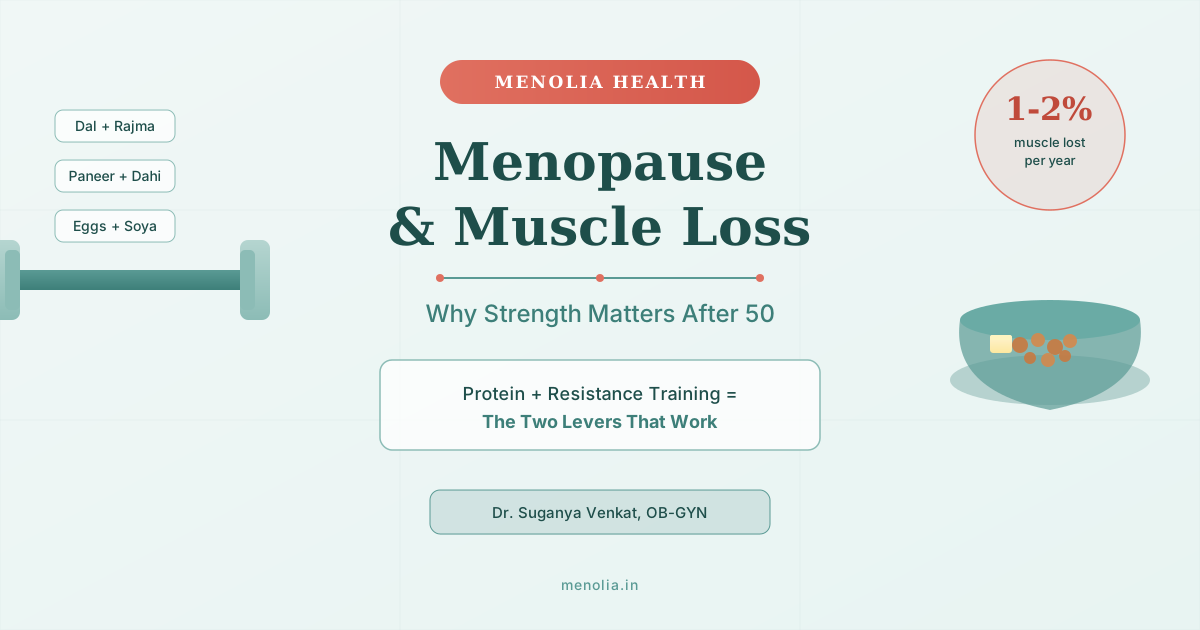
Dal (lentils and legumes). Masoor dal (red lentils) provides approximately 26 grams of protein per 100 grams of dry weight. Moong dal (split mung beans) provides roughly 24 grams. A typical one-cup cooked serving of any dal contributes about 8 to 10 grams of protein. Having dal at both lunch and dinner, which is common in South Indian households, already provides 16 to 20 grams without any other source.
Rajma, chana, and chickpeas. One cup of cooked rajma (kidney beans) provides approximately 15 grams of protein. Chana (chickpeas, both kala and safed) is comparable at 14 to 15 grams per cooked cup. These are particularly valuable because their protein comes packaged with fibre and a low glycaemic index, which supports the insulin sensitivity work that menopause makes harder.
Paneer. 100 grams of paneer provides approximately 18 to 20 grams of protein and is one of the highest protein density foods in a vegetarian diet. Its fat content is real but not a reason to avoid it: the fat in paneer (primarily saturated fat from whole milk) is contextually appropriate in moderate portions and contributes to the satiety that prevents compensatory eating later in the day.
Dahi (yoghurt). One cup of full-fat dahi provides approximately 10 to 12 grams of protein alongside calcium (roughly 300 mg per cup) and live cultures that support gut health. For menopausal women managing both protein and bone density simultaneously, dahi is one of the most efficient single foods available in an Indian pantry.
Eggs. One large egg provides approximately 6 grams of high-quality, complete protein (containing all essential amino acids). For women who eat eggs, two eggs at breakfast adds 12 grams before the day has properly started.
Soya (tofu and soya granules). 100 grams of firm tofu provides approximately 8 grams of protein. Soya granules (textured soy protein, or TSP) provide approximately 52 grams of protein per 100 grams dry weight and are one of the most economical high-protein foods available in India. Soya also contains phytoestrogens (isoflavones), which for most postmenopausal women have a mildly beneficial effect on oestrogen-sensitive tissues when consumed in food form (not supplemental megadoses). There is no credible evidence that moderate dietary soya intake is harmful for women with a personal history of hormone-sensitive conditions at the amounts typical of a daily Indian meal.
Ragi (finger millet). Ragi is not a high-protein food (approximately 7 grams per 100 grams), but it is worth including here because its amino acid profile is better than most other cereals, it is rich in calcium (364 mg per 100 grams, the highest of any cereal grain), and it has a low glycaemic index. In the context of a complete daily protein plan, ragi mudde or ragi dosa contributes meaningfully when eaten alongside a pulse or dairy dish.
A practical daily structure
Rather than counting grams at every meal, the simplest framework for hitting 75 to 90 g/day is: include a protein source at every meal and do not treat protein as the side item.
A day might look like: eggs or paneer bhurji at breakfast (12 to 20 g), dal or rajma at lunch with dahi (18 to 25 g), a small dahi snack (10 g), dal or soya curry at dinner (15 to 20 g). That adds to 55 to 75 grams from food alone. A glass of warm milk before bed adds another 8 to 9 grams. The gap between 55 and 90 grams closes quickly once protein is treated as the structural element of each meal rather than an afterthought.
The Exercise Piece, Briefly
Protein intake without resistance exercise will slow muscle loss. Resistance exercise without adequate protein will also be less effective than the research suggests it should be. The two work together in a straightforward biological way: exercise creates the stimulus (microscopic muscle damage that triggers repair signals), and protein provides the material (amino acids) the body uses to carry out that repair and build slightly more than was there before.
The practical starting point for resistance exercise at home (bodyweight squats, wall push-ups, glute bridges, step-ups, resistance bands) is covered in full at our strength training guide for women over 45. Three sessions per week, 30 to 40 minutes each, is the evidence-supported minimum. The guide there also covers how to progress from bodyweight to resistance bands to light dumbbells without needing a gym.
What that guide does not cover in detail, and what this post does, is the protein side. Both matter. Most Indian women over 50 are doing neither systematically. If you have to choose one place to start today, start with protein: increase dal portions, add a dahi snack, include an egg at breakfast. The exercise can follow when you are ready. The protein adjustment is something you can make in the next meal.
If you are also dealing with body aches or joint pain alongside the muscle weakness, our post on menopause body aches explains the inflammation and connective tissue side of the picture.
For a personalised assessment of your muscle health, protein needs, and exercise plan given your specific health history, speak to Dr. Suganya on WhatsApp. The consultation is available at any stage of perimenopause or post-menopause.
Frequently Asked Questions
How much muscle do women lose during menopause?
Research estimates range from 1 to 2 percent of muscle mass per year during the perimenopause and early post-menopause years, which is roughly twice the rate of the gradual loss that begins after age 30 (approximately 0.5 percent per year). The total loss over five post-menopausal years without intervention can be in the range of 5 to 10 percent of total muscle tissue. The variation is large because baseline activity level, protein intake, and resistance exercise habits all modify the rate substantially.
Is sarcopenia the same as normal ageing weakness?
No. Sarcopenia is a defined clinical syndrome with specific criteria: low muscle mass AND reduced strength or physical performance. Normal ageing includes some reduction in strength, but sarcopenia is a degree of muscle loss that is beyond what age alone explains and that carries measurable consequences for mobility, fall risk, and metabolic health. Women with sarcopenia are at higher risk for fractures after a fall, metabolic syndrome, and reduced quality of life in their 60s and 70s. The good news is that it is largely preventable and partially reversible with targeted protein intake and resistance training.
Can you rebuild lost muscle after menopause?
Yes, partially. Muscle protein synthesis does not stop after menopause; it slows and becomes less responsive. Older research suggested postmenopausal women could not build new muscle, but better-designed studies have consistently shown that women in their 50s, 60s, and even 70s can increase muscle mass and strength with adequate protein intake combined with progressive resistance exercise. The rate of gain is slower than in younger women, and the gains require maintenance, but they are real and clinically meaningful.
How do I know if I am getting enough protein from Indian food?
A practical check: if every main meal has a clearly identifiable protein source (dal, rajma, paneer, dahi, eggs, soya, tofu) in a portion roughly the size of your closed fist, you are likely in the 55 to 70 g/day range. To reach 80 to 90 g/day, add a second protein item to at least two meals (for example, dahi alongside your lunch dal, or an egg in addition to your breakfast dosa) and include a dairy-based snack. Tracking for three days using a basic food app will give you an accurate baseline if you want to verify.
Do I need a protein supplement?
Not necessarily. Whole food protein sources from an Indian diet are adequate if meal structure is deliberate. Supplements (whey protein, plant protein powders) are a convenient way to close the gap if a meal has been skipped or if appetite is low, which is common in some women during the menopause transition. They are not superior to food protein in terms of muscle outcomes when whole food intake is sufficient. If you are considering a supplement, a plain whey protein without added sugar is the most evidence-supported option.
Does sarcopenia affect bone density?
Yes, directly. Muscle contraction is one of the primary mechanical signals that stimulates osteoblasts (bone-building cells) to lay down new bone. Less muscle means fewer and weaker loading signals to the skeleton, which allows bone resorption to outpace bone formation more readily. This is one reason protecting muscle mass through the menopause transition also protects bone density, and why the two interventions (protein intake + resistance exercise) address both problems simultaneously.
What Indian foods help with both muscle and bone?
Dahi is the standout: it provides protein (10 to 12 g per cup) and calcium (approximately 300 mg per cup) together, with the added benefit of live cultures that support gut health and nutrient absorption. Ragi is the second: exceptionally high calcium (364 mg per 100 g) with a reasonable protein contribution. Paneer provides protein and calcium together. Including all three consistently across a week covers both goals without requiring supplements for most women whose dietary protein and calcium gaps are not extreme.