You have been eating the same way for years. Maybe even a little less. You added a morning walk. You cut out the biscuits with your evening chai. And yet, the scale does not move. Worse, your trousers are tighter around the middle than they were eighteen months ago.
If this sounds familiar and you are somewhere between 42 and 52, you are not imagining it. The rules of weight management genuinely change during perimenopause. What worked in your 30s stops working. Not because your willpower failed, but because the hormonal environment that quietly regulated your metabolism for decades is now in a state of flux.
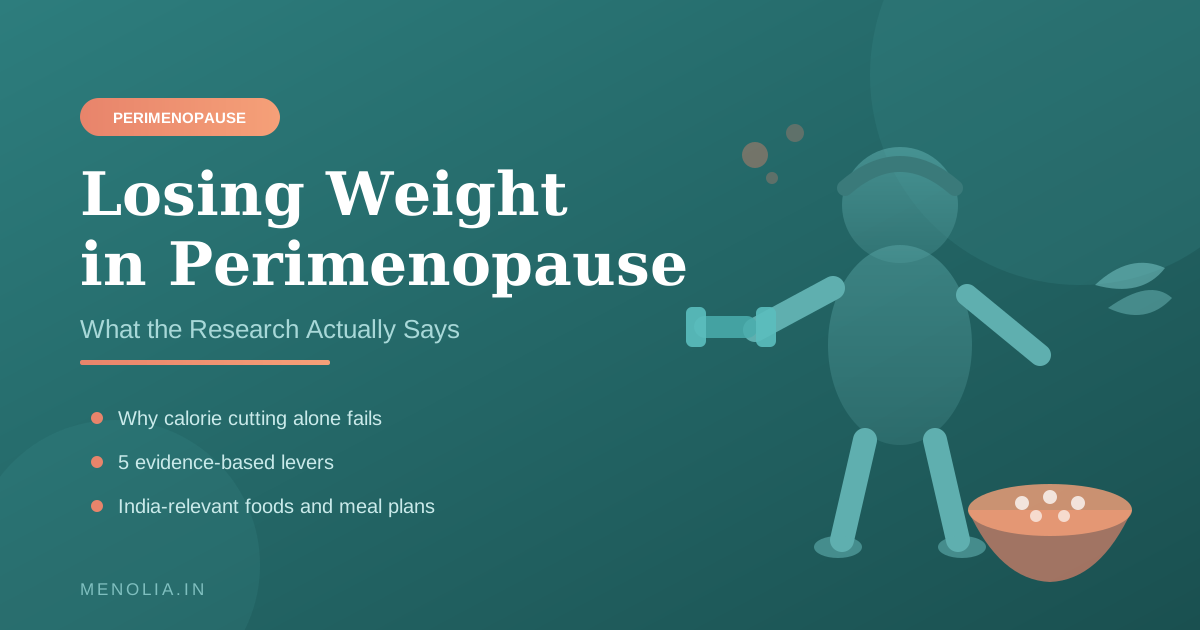
This post explains what changes and how food, resistance exercise, aerobic movement, sleep, and recovery can fit into a sustainable plan.
What this post covers
- Why the body holds onto fat differently during the perimenopause transition
- Why muscle preservation matters alongside calorie management
- Five practical areas to consider
- India-relevant proteins and low-GI carbohydrates that form the foundation
- What to avoid
- When to speak to your OB-GYN
Why weight management is genuinely different during perimenopause
Perimenopause is not a single hormonal event. It is a years-long transition in which oestrogen levels fluctuate unpredictably before they fall permanently. This hormonal volatility changes the body’s relationship with food, fat storage, and energy in three specific ways.
Fat redistributes to the abdomen. Before perimenopause, oestrogen directs fat toward the hips and thighs, subcutaneous fat that is metabolically quieter. As oestrogen fluctuates and eventually declines, fat migrates inward, accumulating around the liver, pancreas, and abdominal organs. Lovejoy JC et al. (Int J Obes, 2008, PMID 18332882) followed initially premenopausal women for four years: all of them gained subcutaneous abdominal fat with age, but only those who became postmenopausal had a significant increase in visceral fat.
Muscle mass starts declining. Oestrogen supports muscle protein synthesis and muscle fibre preservation. As oestrogen falls, skeletal muscle gradually shrinks, a process that accelerates through the menopause transition, when weight gain becomes harder to reverse. Skeletal muscle is the body’s main site of insulin-stimulated glucose disposal (DeFronzo RA, Diabetes, 2009, PMID 19336687). Losing muscle means burning fewer calories around the clock, not just during exercise. Eating the same amount as before now represents a relative calorie surplus.
Appetite signalling shifts. Cortisol promotes fat storage around the abdomen, increases appetite (particularly for high-carbohydrate, high-fat foods), and makes it harder to stay in a calorie deficit. Women who are also managing significant stress from work, family caregiving, or aging parents compound this hormonal pressure.
Taken together, these three shifts mean that a woman in perimenopause who “eats the same” is navigating a metabolic environment that has changed beneath her. The calorie-in, calorie-out equation still works, but the numbers on both sides have shifted without any visible change in behaviour.
Why muscle preservation matters alongside calorie management
The instinctive response to weight gain is to eat less. The problem with doing only this during perimenopause is that significant calorie restriction, without protein prioritisation and strength training, accelerates the very muscle loss that is slowing metabolism.
When calories are severely restricted and protein intake is low, the body breaks down muscle tissue for fuel. Less muscle means a lower resting metabolic rate, which means fewer calories burned each day. The initial weight loss stalls, and when normal eating resumes, the weight returns faster because the metabolic floor has dropped.
A second problem with cut-and-cardio approaches: long cardio sessions raise cortisol. Moderate-duration cortisol spikes are normal and healthy. Chronically elevated cortisol from sustained, high-volume cardio without adequate recovery signals the body to preserve abdominal fat as an emergency energy reserve, the exact opposite of what is intended.
Restrictive diets also tend to fail at consistency. Perimenopause already disrupts sleep, mood, and energy. Layering significant hunger on top of that is difficult to sustain, and the binge-restrict cycle that often follows produces worse outcomes than a moderate, structured approach from the start.
Food intake and exercise can be considered together; the resistance-training review discussed below does not establish an order in which women in perimenopause must change them.
Five practical areas to consider
1. Prioritise protein at every meal
The PROT-AGE consensus, written for people over 65, recommends an average daily intake at least in the range of 1.0 to 1.2 grams of protein per kilogram of bodyweight, and at least 1.2 grams per kilogram for those who are exercising and otherwise active (Bauer J et al., J Am Med Dir Assoc, 2013, PMID 23867520). For a 60-kilogram woman, 1.2 grams per kilogram is 72 grams per day.
Protein does three things simultaneously. It preserves muscle mass during a calorie deficit. It has the highest thermic effect of any macronutrient, meaning your body burns more calories digesting it. And it produces the strongest satiety signal per calorie.
India-relevant protein sources that meet this requirement:
- Dahi (curd): 3.5 to 4 grams per 100 grams. A katori at both lunch and dinner adds a consistent base.
- Chana, rajma, moong dal: 7 to 9 grams per 100 grams cooked. A bowl of dal or a chana curry at each meal.
- Paneer: 18 grams per 100 grams. Even a small portion adds substantial protein.
- Eggs: 6 grams per egg. Two eggs with breakfast shifts the morning protein number significantly.
- Chaas (buttermilk): A hydrating mid-morning option adding 2 to 3 grams per glass with the benefit of probiotics.
2. Include strength training
Resistance training can improve muscle strength in older adults. A 2013 review centred on type 2 diabetes reports improvements in insulin sensitivity and glycaemic control (Strasser and Pesta, BioMed Research International, 2013, PMID 24455726). It describes diabetes guidance at that time recommending resistance training at least twice a week alongside aerobic activity, not an exact perimenopause weight-loss programme.
You do not need a gym or heavy weights. Bodyweight squats, supported lunges, push-ups against a wall, chair stands, resistance bands, and dumbbell rows are options. Begin with movements you can do safely, then increase repetitions or resistance gradually as they become easier.
For people with type 2 diabetes or prediabetes, the 2013 review recommends combining resistance training with aerobic activity rather than using either as a replacement for the other. Before choosing exercises, you can use our list of health concerns to discuss before starting. For the separate food-planning side, our muscle-loss article lists Indian protein-containing foods. Neither guide is evidence for a promised weight-loss timetable.
3. Protect your sleep
Sleep and weight are not two separate concerns during perimenopause. They are the same system.
A single night of partial sleep restriction, four hours in bed instead of eight and a half, induced insulin resistance in multiple metabolic pathways in nine healthy adults (Donga E et al., J Clin Endocrinol Metab, 2010, PMID 20371664). Perimenopause already disrupts sleep through hot flashes, night sweats, and middle-of-night waking.
Treating sleep as part of the weight management plan is not a soft recommendation. It is mechanistically essential. Our menopause sleep guide covers specific interventions: a cool room, layered bedding, no screen light after 10 PM, and addressing night sweats with your OB-GYN if they are disrupting more than two nights per week.
4. Lower your glycaemic load, not just your calories
Swapping refined carbohydrates for lower-glycaemic-index alternatives reduces the post-meal insulin spike that drives fat storage, without requiring significant calorie counting. Jenkins DJ et al. (Am J Clin Nutr, 1981, PMID 6259925) introduced the glycaemic index concept.
In practice for Indian kitchens:
- Replace white rice with ragi (finger millet), bajra (pearl millet), or jowar (sorghum) at one or two meals per week to begin.
- Swap maida rotis for bajra or jowar rotis.
- Pair every carbohydrate with protein and vegetables so glucose release is slower. A bowl of dal with ragi roti raises blood sugar far less than the same roti with plain achaar.
- Eat the vegetable component of a meal before the grain component where possible.
Our perimenopause diet guide covers the full nutrition framework for this transition phase, including specific meal patterns for different symptoms.
5. Manage cortisol actively
Cortisol is the overlooked variable in most perimenopause weight discussions. Practical strategies that lower cortisol:
- Cap caffeine to one or two cups before noon.
- Thirty minutes of low-intensity movement: a walk, gentle yoga, or stretching.
- Ten minutes of slow breathing (four counts in, six counts out) twice a day.
- Setting a consistent sleep and wake time, even on weekends, prevents the cortisol dysregulation that comes from irregular sleep timing.
Perimenopause weight management works best with a plan matched to your specific picture, not a generic chart. If you want to work out which of these levers matters most for your body right now, start a conversation with Dr. Suganya Venkat on WhatsApp. She sees women navigating exactly this every day.
What to avoid
Skipping meals. Skipping breakfast or lunch to create a calorie deficit often backfires by spiking cortisol, increasing the hunger response by mid-afternoon, and leading to larger portions at dinner. A protein-rich breakfast, two eggs or a bowl of dahi with nuts, is consistently associated with lower total daily calorie intake.
Very low calorie diets below 1,200 kilocalories per day. These accelerate muscle loss, lower resting metabolic rate, and are nutritionally inadequate for a woman navigating hormonal transition. The short-term scale movement reverses rapidly when the diet ends.
Treating cardio and strength work as rivals. The Strasser and Pesta review describes benefits from both and recommends combining them for people with type 2 diabetes or prediabetes. It does not identify a winning exercise formula for lasting weight loss through perimenopause.
Eliminating entire food groups. Cutting out all carbohydrates, all fat, or all grains may produce short-term results and fails for most women by six months. The sustainable approach is quality and proportion adjustments within familiar cooking patterns, not wholesale elimination.
A practical starting structure
This is not a rigid meal plan. It is a framework to plug into your existing cooking:
Breakfast: Two eggs scrambled with vegetables, or a bowl of dahi with a handful of mixed nuts and a piece of fruit. Skip the biscuits and white bread toast.
Lunch: A full dal with ragi or bajra roti and two vegetable sides. Or a bowl of rajma curry with hand-pounded rice and a salad. Include curd on the side.
Dinner: Lighter than lunch. A moong dal soup with a jowar roti, or a paneer sabzi with a small portion of millet. Finish by 8 PM where possible.
Snacks: Chaas (buttermilk), a handful of peanuts or roasted chana, or a small cup of curd. Avoid biscuits, namkeens, and sweetened yoghurt.
Movement: Combine regular aerobic movement with resistance exercise if it is appropriate for you. Choose a session length you can sustain and increase the work gradually rather than chasing a fixed 12-week result.
For a comprehensive breakdown of what to eat across different perimenopause symptoms, read our perimenopause diet guide and menopause belly fat guide.
When to speak to your OB-GYN
If your weight or body composition is not changing despite consistent, sustainable changes, or if you have symptoms that suggest another condition, speak with your doctor rather than waiting for a fixed number of weeks. Contributors worth discussing include:
- Hypothyroidism
- Insulin resistance that has progressed to pre-diabetes
- Significant cortisol dysregulation from chronic stress
Ask for a full panel: TSH, free T4, fasting glucose, HbA1c, HOMA-IR, and a lipid profile. A five-minute conversation with the right data is far more useful than another month of guesswork.
Frequently asked questions
Why am I gaining weight in perimenopause even though I am eating less? Because the metabolic environment has changed beneath you. Oestrogen fluctuations cause fat to redistribute to the abdomen. Muscle mass declines, lowering calorie burn at rest. Cortisol promotes abdominal fat storage. The resistance-training review discussed above does not establish protein and strength training as a root-cause treatment for this whole pattern. Discuss your food intake, activity and symptoms together rather than treating one change as a guaranteed solution.
How much protein do I need to lose weight during perimenopause? The PROT-AGE consensus (Bauer J et al., J Am Med Dir Assoc, 2013, PMID 23867520) recommends an average daily intake at least in the range of 1.0 to 1.2 grams per kilogram of bodyweight for people over 65 to maintain and regain lean body mass, and at least 1.2 grams per kilogram for those who are exercising and otherwise active. For a 60-kilogram woman, 1.2 grams per kilogram is 72 grams per day, achievable through dahi, dal, paneer, eggs, and chana distributed across three meals.
Is exercise or diet more important for weight loss in perimenopause? Both food intake and movement belong in the discussion. Aerobic activity supports cardiovascular fitness, while resistance training can improve strength. The review discussed above recommends combining aerobic and resistance exercise for people with type 2 diabetes; it does not establish that twice-weekly strength training produces more body-fat loss than extra cardio in perimenopause.
Will cutting carbohydrates help? Reducing refined carbohydrates, white rice, maida, packaged snacks, and sweetened drinks, does help, because it lowers the insulin spike that drives fat storage. Cutting all carbohydrates is not necessary and creates nutrient gaps. The better approach is replacing high-GI sources with lower-GI millets (ragi, bajra, jowar) and always pairing carbohydrates with protein and fibre.
Can stress cause weight gain during perimenopause? Yes, directly. Chronic stress raises cortisol, and cortisol promotes visceral fat storage, increases appetite, and disrupts sleep. Women in the sandwich generation, caring for aging parents and adolescent children simultaneously, carry a particularly high cortisol burden. Managing stress is not a soft add-on to a weight management plan during perimenopause. It is mechanistically central to the whole system.
Why is sleep important for weight loss during perimenopause? A single night of partial sleep restriction was enough to induce insulin resistance in multiple metabolic pathways in nine healthy adults (Donga E et al., J Clin Endocrinol Metab, 2010, PMID 20371664). Read our menopause sleep guide for specific interventions.
How long does it take to see results? The review discussed above does not establish how soon a woman in perimenopause will see changes in weight, waist size, energy, or sleep. It should not be used to promise an eight-to-twelve-week response.
Weight management during perimenopause is solvable. It requires a different approach than what worked before, one that accounts for the actual hormonal biology rather than just calorie counting. If you want to put together a plan specific to your weight, your labs, and your lifestyle, talk to Dr. Suganya Venkat on WhatsApp. She works with women navigating exactly this every day and knows where to start.