Periods are changing, sleep is patchier, and your usual clothes fit differently around the waist. You search for a perimenopause diet and find a long list of foods to stop eating, followed by supplements to buy.
My starting advice is simpler: keep your familiar meals, make the protein and vegetables visible, and check whether calcium-rich foods are actually reaching your plate. Food can support your health through this transition. It cannot reliably switch off hot flushes or explain every new symptom.
The Short Answer: What to Eat and What to Reduce
- Add a protein food to each main meal: dal, chana, rajma, tofu, paneer, eggs or fish according to your preferences.
- Keep vegetables and whole fruit in the day: keerai, beans, gourds, carrots, guava or another seasonal choice.
- Include calcium sources: milk or dahi if you use dairy, plus foods such as ragi; check labels on fortified alternatives.
- Use nuts and seeds as ingredients: ground alsi or til can go into chutney or meals, but there is no required “hormone-balancing” dose. Dahi is not a phytoestrogen food, and no food is established as a reliable hot-flush treatment; the evidence is explained below.
- Reduce the extras that add up: sugary drinks, frequent biscuits or fried snacks, and large amounts of achar, papad or other salty packaged foods.
- Keep rice if you enjoy it: serve it with dal or another protein food and vegetables rather than making it the whole meal.
This is a practical application of ICMR-NIN’s Dietary Guidelines for Indians, 2024, not a special menopause prescription. The guide recommends variety across food groups and limiting foods high in added fat, sugar and salt.
A Sample Indian Day of Eating
Use this as a starting menu, not a fixed-calorie plan. Katori sizes and recipes vary; adjust amounts with your appetite, activity and any individual diabetes or kidney-care advice.
| Meal | One practical option | Alternative using familiar foods |
|---|---|---|
| Breakfast | Two small adai with vegetable chutney and a bowl of plain dahi | Two idlis with a bowl of dal-rich sambar and eggs or tofu on the side |
| Lunch | A serving of rice, a bowl of rajma or chana, vegetables and dahi | Roti with dal, keerai and paneer or fish |
| Snack, if hungry | A small bowl of sundal or roasted chana | Whole fruit with a small handful of nuts |
| Dinner | Moong-dal vegetable khichdi with dahi or tofu | Ragi roti with dal and a vegetable poriyal |
A few useful kitchen decisions:
- If breakfast is usually chai and biscuits, start by replacing that meal, rather than changing the whole week.
- If you eat idli or dosa, serve the sambar in a bowl rather than using a spoonful only as a dip.
- Cook an extra portion of dal or sundal for a busy evening, and keep the same vegetable dish for the family. You do not need a separate “menopause menu”.
- If you choose eggs one day and dahi the next, the meals will contain different amounts of protein. They are options, not nutritionally identical exchanges.
I would choose one change you can repeat comfortably before adding another. A plan that survives a working week is more useful than an exact menu you abandon after two days.
Protein: Plan the Food Before Buying the Powder
Pulses, milk products, eggs, fish and soy foods are useful protein choices. The ICMR-NIN 2024 guide, guideline 8, describes pulses as important, relatively inexpensive protein sources in Indian vegetarian diets.
For adults, the ICMR-NIN 2020 brief note gives a protein RDA of 0.83 g/kg/day, with 1 g/kg/day for cereal-based diets containing lower-quality protein. These are reference allowances, not a ceiling or an individual treatment plan. Needs vary with body size, activity, age and illness.
You may have seen advice that every perimenopausal woman must eat 25 to 30 g at each meal. A frequently cited paper proposed that approach to preserve muscle with ageing; it was not a perimenopause-specific trial (Paddon-Jones and Rasmussen, Current Opinion in Clinical Nutrition and Metabolic Care, 2009, PMID 19057193). Ask for a daily target that fits you rather than treating that meal number as mandatory.
For a measurable example, IFCT 2017, Table 1, food L003 lists paneer at 18.86 g protein per 100 g. Packaged products differ, so use their labels. For dal and chana, distinguish the weight of dry pulses from the weight after cooking: added water changes the amount per 100 g, and a thin gravy is not equivalent to a bowl of cooked beans.
Calcium: Count Ingredients, Not the Weight of the Porridge
The ICMR-NIN 2020 RDA summary, Annexure IA, lists 1,000 mg calcium/day for adult women. This means total intake, not a 1,000 mg tablet on top of food.
Ragi is a useful example of why portion labels matter. IFCT 2017, Table 5, food A010 lists 364 mg calcium per 100 g raw ragi. If you use 30 g of raw ragi flour, that contributes about 109 mg calcium before other ingredients are added. A large bowl made with water does not acquire extra calcium just because it weighs more after cooking.
Milk, dahi, paneer and calcium-fortified alternatives can contribute too. For dahi, tofu and fortified drinks, check the product label instead of assuming every brand supplies the same amount. For the broader bone-health plan, including movement and who needs a scan, see our osteoporosis prevention guide.
Iron Still Matters While Periods Continue
The same ICMR-NIN 2020 summary, Annexure IA, gives an iron RDA of 29 mg/day in the adult-woman row (reference weight 55 kg). It is a population dietary allowance, not a perimenopause-specific supplement dose or a treatment for anaemia.
Pulses and leafy vegetables can contribute dietary iron. Pair plant foods with vitamin-C foods such as guava, amla or citrus. The NIN 2024 dietary guide explains the role of vitamin C in plant-iron absorption and advises keeping tea and coffee at least an hour away from meals because they interfere with iron absorption.
Heavy bleeding needs assessment, not just more iron-rich food. Contact a doctor about bleeding between periods, after sex, prolonged bleeding or very heavy periods. ACOG’s abnormal-bleeding guidance advises emergency care if you are changing a pad or tampon every hour for more than two hours and also have chest pain, breathlessness, light-headedness or dizziness. Diet can accompany treatment; it should not delay finding the cause.
If tiredness accompanies heavy periods, ask whether you need blood tests for anaemia and iron deficiency. A list of iron-rich foods cannot tell you whether your haemoglobin is low.
Have your periods, sleep and eating habits all changed together?
Message Dr. Suganya for an online perimenopause consultation. A consultation can help separate nutrition planning from symptoms that need investigation. Care is online, pan-India; urgent symptoms need local medical care.
Soy, Alsi, Til and Dahi: Food or Symptom Treatment?
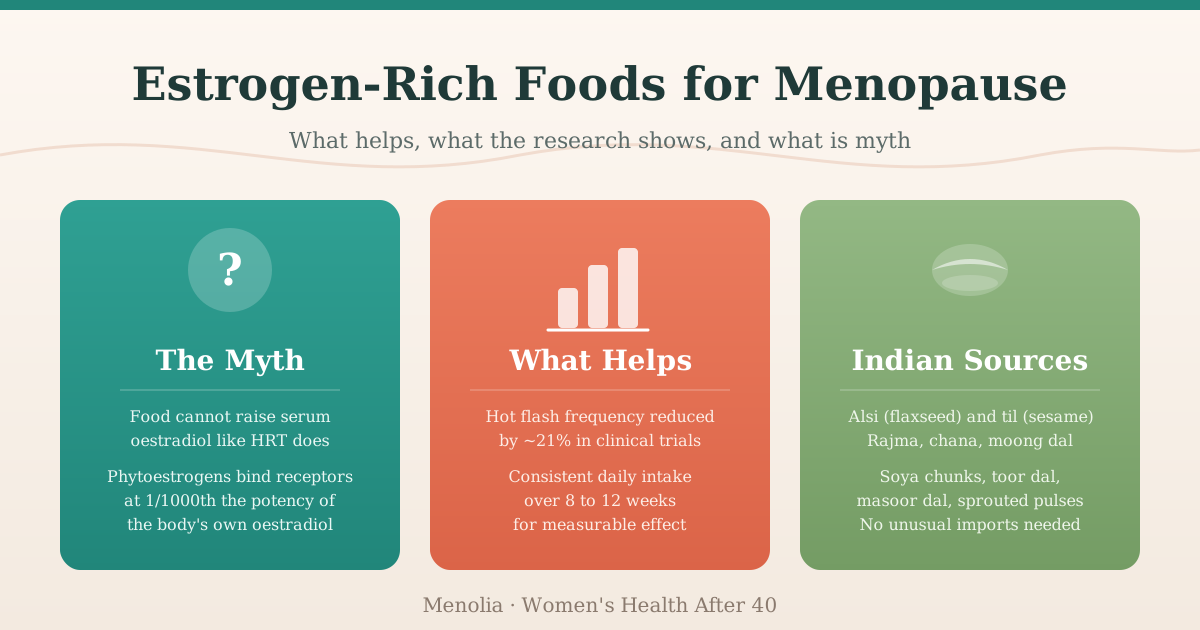
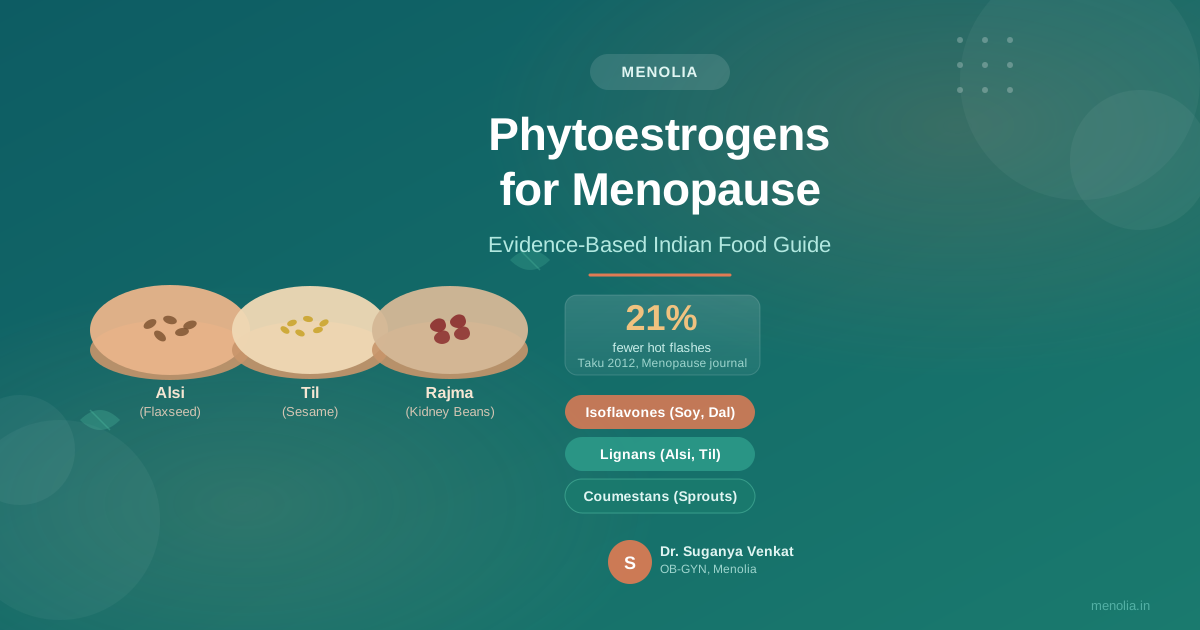
Soy foods and some seeds contain plant compounds called phytoestrogens. Dahi is dairy, not a plant phytoestrogen food. Use it for its place in a balanced diet, rather than expecting it to act like oestrogen treatment.
The clinical evidence needs the same distinction. A small 2010 trial tested a soy supplement containing 90 mg isoflavones daily in 60 postmenopausal women over 16 weeks, comparing the supplement with low-dose hormone therapy and placebo. It found improvement in some symptom domains, but no significant between-group difference in the overall menopause rating score (Carmignani et al., Maturitas, PMID 20833488). This was not a trial of dahi, sesame chutney or ordinary meals in perimenopause.
After reviewing the wider evidence, the 2023 North American Menopause Society position statement, PMID 37252752, did not recommend soy foods, soy extracts, supplements or dietary modification as treatments for hot flushes. That does not make soy an unhealthy food; it means food and symptom treatment are different questions.
You can use tofu in a bhurji, soya chunks in a curry, ground alsi in porridge or til in chutney if you enjoy them. Choose these as foods, not as a prescribed dose to balance hormones. The same applies to haldi in dal: culinary seasoning should not be presented as equivalent to a concentrated curcumin product used in a trial.
If night sweats keep waking you despite a reasonable diet, ask about evidence-based menopause treatment rather than adding more seeds. Our perimenopause treatment guide explains the wider discussion.
What to Reduce Without Making Meals Joyless
Frequent sugar-rich and salty extras
Use the NIN 2024 guide’s general advice: reduce foods high in added sugar, salt and fat. In practice, look at the sweetened chai repeated through the day, the biscuit packet, sugary drinks, chips, achar and papad before banning a staple meal.
Try water instead of a sweetened drink, whole fruit instead of juice, or sundal instead of a daily fried snack. You can keep a small amount of pickle for taste without making several salty accompaniments part of every meal. Jaggery in a laddoo still counts toward the sweet additions; it is not a menopause treatment.
Rice can remain on your plate alongside pulses, vegetables and another protein food if needed. Ragi can add variety, but replacing rice with ragi twice a week has not been established as a specific perimenopause treatment. Portion size, preparation and the rest of the meal matter.
Caffeine and alcohol
The NIN 2024 guide, guideline 14 on water and beverages, printed page 91 (PDF page 109), advises moderating caffeine and avoiding alcoholic beverages. Coffee and tea strength and cup size vary, so a universal “two cups safe, five cups harmful” rule is not useful.
If sleep is poor, note when you have tea, filter coffee, cola or energy drinks and discuss moving caffeine earlier or reducing it. Do not count on this to treat hot flushes: the NAMS position statement above did not recommend trigger avoidance as a proven vasomotor-symptom treatment. If you do not drink alcohol, there is no health reason in this diet plan to start.
Do You Need Supplements?
Not automatically. Bring any supplements you already take to the consultation so doses can be checked together.
- Vitamin D: A 2014 review documented widespread deficiency in India, but it cannot tell you your individual level (Ritu and Gupta, Nutrients, PMID 24566435). The 2024 Endocrine Society guideline, PMID 38828931, advises against routine testing in otherwise healthy people without an established indication. Testing and treatment may still be appropriate for particular clinical problems; do not automatically begin high-dose sachets because you are in your forties.
- Calcium: Review the diet first and discuss whether a shortfall needs a supplement. A reference daily intake and a tablet dose are different quantities.
- Magnesium: The Indian adult-woman RDA is 370 mg/day, from the total diet. A review of anxiety studies found suggestive benefit but poor-quality evidence, not a reliable treatment effect (Boyle et al., Nutrients, 2017, PMID 28445426). A sleep review involved older adults, not specifically perimenopausal women, and rated the evidence low to very low quality (Mah et al., 2021, PMID 33865376). There is no basis here for a routine bedtime magnesium prescription for every reader.
- Iron: If anaemia or deficiency is identified, ask for a treatment dose and follow-up plan. Food advice alone may not meet the treatment need.
What About Weight Around the Middle?
The menopause transition is associated with changes in fat distribution, including more abdominal fat. But weight gain itself cannot all be attributed to menopause: ageing and other influences also matter (Davis et al., Climacteric, 2012, PMID 22978257).
The sensible response is to review your whole eating pattern and activity, rather than assuming rice has suddenly become unsuitable or that calories no longer matter. The NIN 2024 guide supports balanced food intake alongside physical activity. Ask for an individual plan if you have diabetes, kidney disease, substantial weight change or difficulty eating enough.
For a focused discussion, see Menopause Weight Gain: What Actually Works. If weight is falling without trying, seek medical review rather than treating that as an automatic success.
Frequently Asked Questions
Is a perimenopause diet very different from a menopause diet?
The main food groups remain the same. Continuing periods make bleeding and iron status particularly relevant. Your needs depend on your diet and health, not simply whether you have crossed the final-period date.
Should I stop eating rice?
No blanket ban is needed. Keep a suitable portion alongside dal or another protein food and vegetables. If you have diabetes, use the meal plan agreed with your clinician rather than assuming a millet swap will control glucose by itself.
How much flaxseed should I take for hot flushes?
There is no established culinary dose that reliably treats them. Use ground alsi in food if you like it; persistent symptoms deserve a treatment conversation.
Can vegetarians get enough protein?
Yes, a planned diet can use pulses, soy foods, nuts and seeds, plus dairy if you eat it. Look at the day’s total and actual portions. A small bowl of dahi and two eggs should not be counted as equal-protein alternatives.
Which foods are proven to stop hot flushes?
No specific food is established as a reliable treatment in the 2023 NAMS statement cited above. Nutrition remains worthwhile for general health even when hot flushes need separate treatment.
What is the first change to make this week?
Choose one: add a bowl of sambar or a protein side to breakfast, plan dal and vegetables with lunch, or replace a daily sugary drink. Keep a short note of meals and symptoms so your next consultation starts with your real routine, not a generic list.
Want a plan that fits your kitchen and your symptoms?
Book an online consultation with Dr. Suganya. For continuing support alongside medical care, explore the Menolia perimenopause program. You do not need to perfect your diet before asking for help.