Every week, women in my clinic ask some version of the same question.
“Doctor, I don’t want to take hormones. Is there something in food that can help?”
It is a fair question, and it deserves a fair answer, not a dismissal and not an exaggeration.
The honest answer is this: plant compounds called phytoestrogens do have measurable effects on menopause symptoms, particularly hot flashes. The effects are real but modest. They work best when incorporated consistently into an already balanced Indian diet, not as a cure but as one layer of a broader approach.
For more on this, read our guide on Menopause Supplements That Work. This post covers what phytoestrogens are, what the research actually shows, which Indian foods provide the most, and how much to include each day.
What Phytoestrogens Are and How They Work
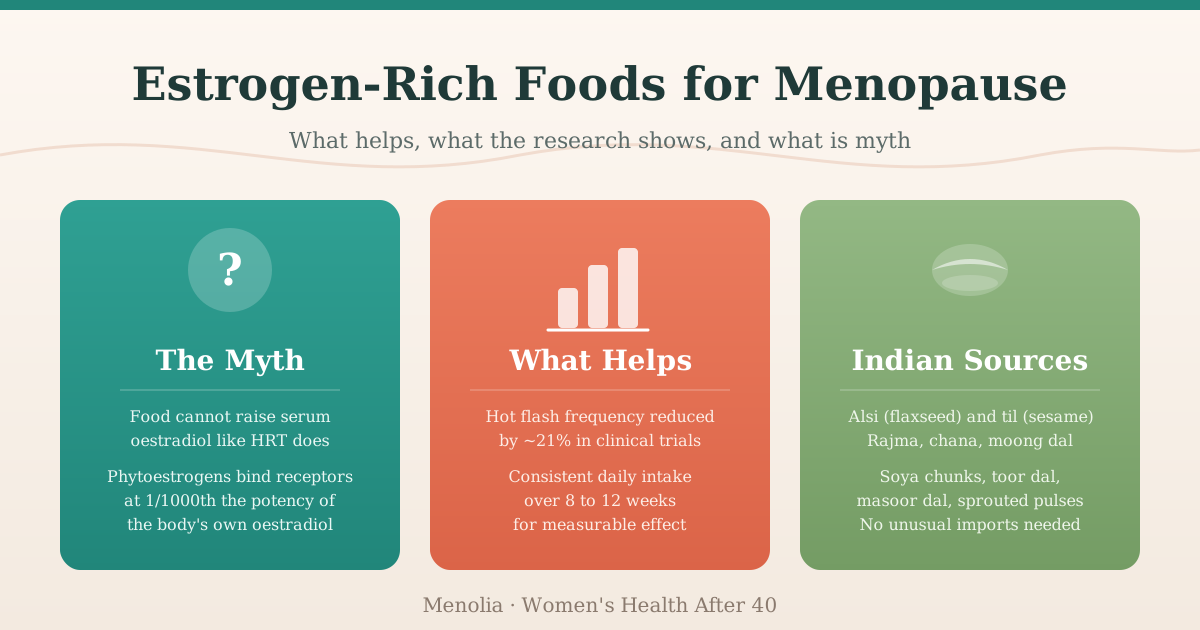
Phytoestrogens are naturally occurring plant compounds with a molecular structure similar enough to the body’s own oestradiol that they can bind to oestrogen receptors (specifically ERalpha and ERbeta). Patisaul and Jefferson, writing in Frontiers in Neuroendocrinology in 2010, described their potency as roughly 1/1000th to 1/10,000th of endogenous oestradiol, depending on the tissue and the receptor subtype.
This is both why they help and why their effects are limited.
In post-menopausal women, when circulating oestradiol is very low, even weak binding at oestrogen receptors can provide a gentle buffering effect. In the hypothalamus, where hot flashes originate, this mild agonist activity helps stabilise the thermoregulatory set point, reducing the frequency and intensity of flushing episodes.
The same binding mechanism means phytoestrogens can sometimes act as weak antagonists in tissues where oestrogen levels are relatively higher, which is why the picture in breast tissue is more complex and worth a separate discussion below.
Three Classes, Each Found in Different Indian Foods
Phytoestrogens come in three main classes. Each class is found in different food families, which is why variety across the day matters more than eating large amounts of one source.
Class 1: Isoflavones (Soy and Legumes)
Isoflavones are the most studied class. They are concentrated in soy and, to a lesser degree, in all legumes. The main isoflavones are genistein and daidzein.
Indian food sources:
- Soy nuggets (soya chunks): roughly 20 to 55 mg isoflavones per 30g dry weight (soaked and cooked). Published values for textured soy protein span about 66 to 183 mg per 100g, because the isoflavone content depends on the soybean variety and how hard the product was processed
- Rajma (kidney beans): approximately 0.3 to 0.5 mg isoflavones per 100g cooked
- Kabuli chana (chickpeas): approximately 0.2 to 0.4 mg per 100g cooked
- Moong dal (split green gram): small but measurable amounts
- Chana dal: similar to moong dal
Soy is by far the densest isoflavone source. For Indian cooking, soy nuggets (the kind used in pulao and gravies) are the most practical form, providing a consistent dose without requiring specialised products.
Class 2: Lignans (Alsi and Til)
Lignans are the class most relevant to Indian cooking because the two richest sources are everyday Indian pantry items: alsi (flaxseed) and til (sesame).
Lignans are converted in the gut to enterolactone and enterodiol, compounds that also bind oestrogen receptors with weak agonist activity. ICMR-NIN 2017 food composition data confirms both foods are nutrient-dense beyond their lignan content.
Indian food sources:
- Alsi (flaxseed): the single richest lignan source available in Indian kitchens. 2 tablespoons (14g) of ground flaxseed provides approximately 50 to 75 mg of secoisolariciresinol diglucoside (SDG), the primary flaxseed lignan. Grind before use as whole seeds pass through without absorption.
- Til (sesame): contains sesamin and sesamolin. 2 to 3 tablespoons (20 to 30g) per day as chutney, laddoo, or sprinkled on dal.
- Ragi: contains modest lignan amounts. Useful as a daily grain contribution.
Class 3: Coumestans (Sprouts)
Coumestans are found primarily in sprouts, particularly sprouted moong (green gram sprouts) and matar (pea sprouts). Their contribution is smaller than isoflavones or lignans, but they add to the daily total when sprouts are eaten regularly.
A simple way to include them: sprouted moong added to salads or sabzi two to three times per week.
What the Research Actually Shows
The most rigorous evidence comes from two major analyses.
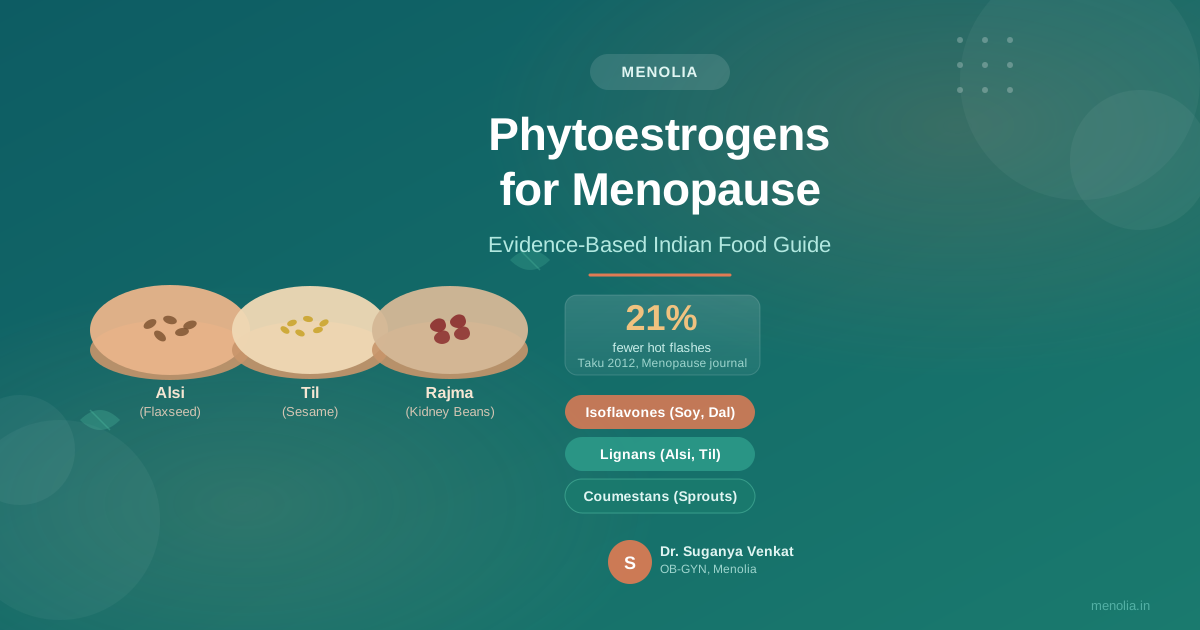
Taku et al. (2012, Menopause) conducted a meta-analysis of 17 randomised controlled trials with a total of 1,173 participants. The finding: supplemental soy isoflavones reduced hot flash frequency by approximately 21% compared to placebo, and reduced severity by approximately 26%. The effect was meaningful for women with moderate to frequent hot flashes. For women with mild symptoms, it was less distinguishable from placebo.
Lethaby et al. (2013, Cochrane Database of Systematic Reviews) reviewed phytoestrogen interventions more broadly, including both food sources and supplements, across 43 trials. The conclusion was more cautious: modest reductions in hot flash frequency were seen in some trials but not all, and the quality of evidence was variable. Lignan-based interventions showed less consistent effects than isoflavone-based ones.
The honest summary: phytoestrogens work for hot flashes at a level that is clinically meaningful for many women, but they do not work as reliably or as completely as hormonal treatment. They are most helpful when:
- Symptoms are mild to moderate (not severe, frequent, or affecting sleep significantly)
- They are consumed consistently as part of daily food, not occasionally
- They are combined with other evidence-based interventions (adequate sleep, limiting alcohol and spice triggers, physical activity)
For bone density, cardiovascular health, and mood, the evidence for phytoestrogens is weaker and more mixed. The focus should remain on calcium and vitamin D, strength training, and good sleep.
If you would like to discuss how dietary changes fit into your particular menopause picture, I am available via WhatsApp.
Send Dr. Suganya a message on WhatsApp
An Indian Daily Portion Guide
The goal is not pharmacological dosing. It is consistent, moderate inclusion across the day.
| Food | Daily Portion | How to Use |
|---|---|---|
| Alsi (ground flaxseed) | 2 tbsp (14g), ground | Stir into dahi, add to roti dough, mix into porridge |
| Til (sesame) | 2 to 3 tbsp (20 to 30g) | Til chutney with idli, sprinkled on rice, mixed into laddoo |
| Soy nuggets | 30 to 50g dry weight | Added to sabzi, pulao, or soaked and pressure-cooked with dal |
| Rajma or kabuli chana | 1 katori cooked (100 to 150g) | As a main dal or side dish, 3 to 5 times per week |
| Sprouted moong | 50 to 100g | Raw salad, light sabzi, or added to upma |
You do not need all five every day. Alsi and til daily plus legumes three to five times a week covers the meaningful range of phytoestrogen classes.
One practical combination: Ground alsi stirred into morning dahi (provides lignans) plus rajma or chana for lunch or dinner (provides isoflavones). This alone, done consistently, gives a meaningful daily phytoestrogen intake from food that most Indian women can sustain without any change to their usual cooking.
Who Should Be Cautious
Most women can include these foods freely. However, one group needs to discuss with their doctor first.
Women with a history of oestrogen-receptor-positive (ER+) breast cancer should consult their oncologist before increasing phytoestrogen intake significantly. The question of whether dietary phytoestrogens benefit or pose any risk for ER+ breast cancer survivors is genuinely unsettled. Some large observational studies suggest soy is neutral or mildly protective even in this group (Kang et al. 2010, CMAJ 182:1857; Nechuta et al. 2012, American Journal of Clinical Nutrition). Others express caution about high-dose supplementation. The conservative position, supported by most oncology guidelines, is: regular food-based amounts (not supplements) are likely safe, but the individual oncologist should be part of this decision.
For more on this, read our guide on Menopause Supplements Decoded. For women without this history, the food sources described above at everyday cooking amounts carry no identified risk.
Women on tamoxifen: the interaction between phytoestrogens and tamoxifen is not fully characterised. Do not change food habits without checking with your oncologist.
Thyroid medication (levothyroxine): soy in large amounts can reduce absorption of thyroid medication. If you take levothyroxine, eat soy nuggets or other soy foods at least two hours apart from your tablet. This applies to large servings; regular-sized dal portions are unlikely to cause a clinically significant interaction.
Phytoestrogens Versus HRT: An Honest Comparison
Women sometimes frame this as a choice between natural and medical, and I want to address that directly.
Phytoestrogens from food work through the same receptor pathway as oestrogen-based therapy, but at a fraction of the potency. For women with mild-to-moderate hot flashes who are not candidates for hormonal treatment, or who prefer not to use it, consistent dietary phytoestrogens offer real benefit. For women whose symptoms are severe, disrupting sleep and daily function, dietary phytoestrogens alone are unlikely to be sufficient.
This is not a failure of the food approach. It is simply a matter of matching the intervention to the symptom severity.
The full range of options for hot flashes, from lifestyle and dietary measures through non-hormonal medications to hormonal therapy, is covered in the Hot Flash Treatment guide. The perimenopause diet guide covers the broader nutritional picture for the transition.
Putting It Together: A Sample Day
Here is what a phytoestrogen-rich day looks like in a typical Indian kitchen, without any unusual or expensive ingredients:
Morning: Dahi with 2 tbsp ground alsi stirred in, or a ragi porridge with til chutney on the side.
Midday: Rajma chawal or chana masala with a small sprouted moong salad.
Evening: Sabzi with soy nuggets in the curry base, or til-coated til rice as a side.
This is not a specialised diet. It is the way many South Indian, Maharashtrian, and North Indian households already eat, with minor intentional additions. The aim is consistency, not perfection.
FAQ
1. Do phytoestrogens actually work, or is this just food marketing?
They work, but modestly. The Taku 2012 meta-analysis, which pooled 17 controlled trials, found soy isoflavones reduce hot flash frequency by approximately 21% compared to placebo. This is a real effect, though smaller than hormonal therapy. For women with mild to moderate symptoms, it is clinically meaningful. For severe symptoms, it is usually insufficient on its own.
2. Which Indian food has the most phytoestrogens?
Ground alsi (flaxseed) is the richest lignan source available in Indian kitchens. Soy nuggets (soya chunks) are the richest isoflavone source per serving. For women who do not use soy regularly, consistent daily alsi plus regular rajma or chana covers both main classes.
3. Should I take a phytoestrogen supplement instead of getting it from food?
Food sources are preferable. Supplements deliver concentrated doses that remove the natural matrix of fibre, protein, and other nutrients that come with the food. The studies with the most consistent positive results use food-based isoflavones. If you want to consider a supplement, discuss the dose with your gynaecologist first.
4. I have had breast cancer. Can I still eat these foods?
Women with a history of ER+ breast cancer should discuss this specifically with their oncologist. Large observational studies suggest regular food-based soy amounts are likely safe, but the decision should involve your treating doctor. Do not make significant dietary changes without that conversation.
5. How long does it take to notice any effect?
Most trials ran for 8 to 12 weeks before measuring outcomes. If you incorporate these foods consistently, expect a gradual change over two to three months rather than a quick fix. Hot flash frequency tends to show the most measurable improvement.
6. Can I give these foods to my teenage daughter or younger family members without worry?
Everyday food amounts are safe for the whole family. The phytoestrogen content in a normal Indian diet, even a relatively high-isoflavone one, is not associated with harm in the general population. The cautions above apply specifically to large supplemental doses and women with certain medical histories.
7. Does dahi (curd) count as a phytoestrogen source?
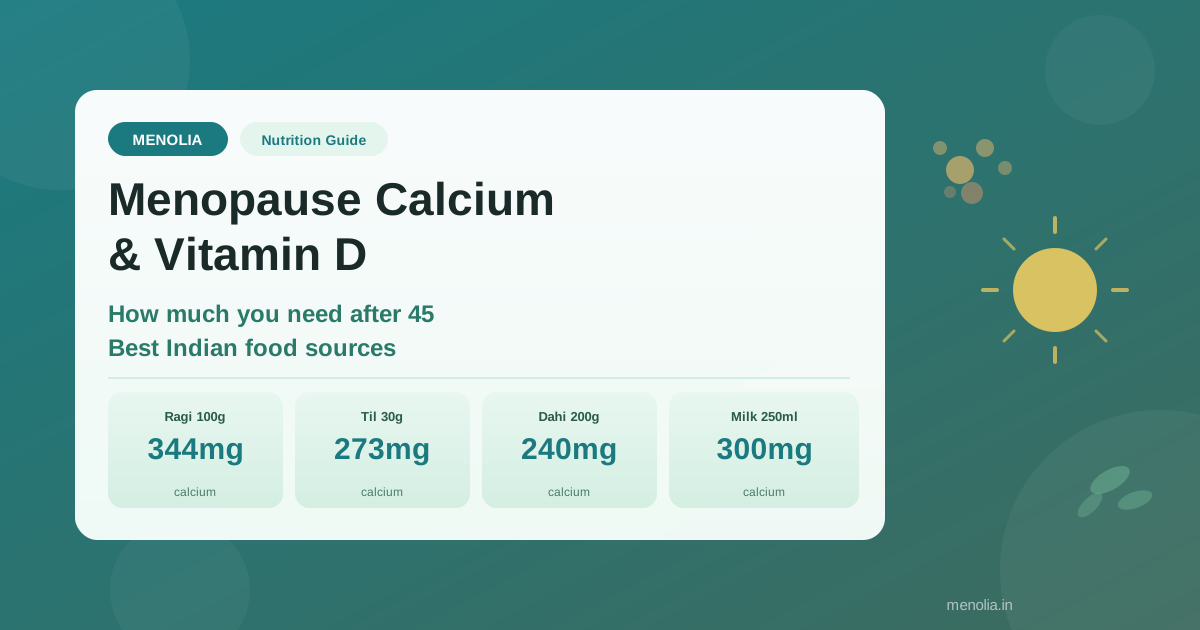
Dahi contains small amounts of isoflavones if made from soy milk, but regular cow’s-milk dahi is not a significant phytoestrogen source. Its value for menopause lies in calcium (approximately 240mg per 200g), probiotics for gut health, and protein. For phytoestrogens, focus on alsi, til, and legumes.
Book a WhatsApp consultation with Dr. Suganya Venkat
This post draws on Taku et al. (2012, Menopause), Lethaby et al. (2013, Cochrane), and Patisaul & Jefferson (2010, Frontiers in Neuroendocrinology) for the evidence base. Indian food composition data from ICMR-NIN 2017. For personalised advice on menopause management, consult your OB-GYN or primary care physician.