You have already read about what hot flashes are and why they happen. You may have tried cutting out chai in the morning, wearing cotton kurtas to bed, keeping a window open at night. And the flashes are still there, still waking you at 2 AM, still arriving midway through a meeting.
The next step is a structured approach. Not a tip sheet. A decision framework.
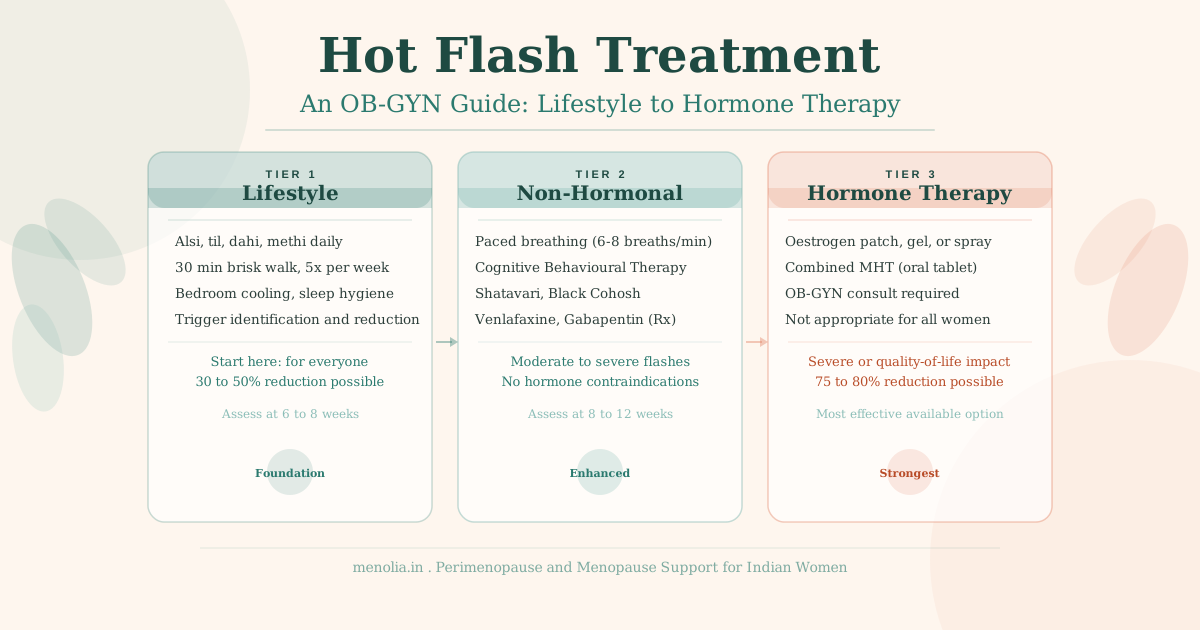
This guide walks through three tiers of hot flash treatment, ordered by the level of evidence and the level of intervention required. The goal is to help you start at the right tier for the frequency and severity of what you are experiencing, rather than either jumping to the strongest option immediately or staying too long at Tier 1 when your symptoms genuinely warrant more.
What this post covers
- Tier 1: Lifestyle changes with strong evidence (the foundation for everyone)
- Tier 2: Non-hormonal therapies for moderate or persistent flashes
- Tier 3: Menopausal Hormone Therapy (MHT), who it suits and what to ask your OB-GYN
- How to know when to move to the next tier
- A note on what the evidence actually says (versus what family members may have told you)
If you are still at the stage of “what exactly is a hot flash and why does it happen,” What Are Hot Flashes? Causes, Triggers & Relief covers the physiology in full. This post starts where that one leaves off.
Tier 1: Lifestyle changes (everyone starts here)
Lifestyle interventions do not eliminate hot flashes in most women. What they do is reduce frequency, reduce intensity, and establish a physiological foundation that makes everything else work better. It is worth being straight about the evidence here: trials of exercise specifically have not shown a reliable reduction in hot flash frequency. What lifestyle work does reliably improve is sleep, weight, mood and how well you tolerate the flashes when they come.
Sleep protocol
Hot flashes and sleep create a reinforcing loop. A flash wakes you, the broken sleep increases temperature sensitivity the next day, which produces more flashes. Breaking this cycle requires treating sleep as a clinical target.
Practical changes that make a measurable difference:
- Keep your bedroom temperature between 18 and 20 degrees Celsius. This is the most impactful single change for most women.
- Use two separate, lighter blankets rather than one shared duvet, so either partner can adjust without disturbing the other.
- Shower about 90 minutes before bed, not immediately before. Showering right before bed keeps you too warm.
- Avoid alcohol in the three hours before bed. Alcohol disrupts sleep architecture and dilates peripheral blood vessels, the same mechanism as a hot flash, so it both worsens episodes and fragments sleep structure.
For a full approach to sleep during this phase, read Menopause Sleep Problems: What Actually Helps.
Trigger management
The understanding post covers common triggers in detail. At the treatment stage, the shift is from awareness to systematic reduction. Pick the two triggers with the most reliable effect on your flashes and address those first, rather than trying to overhaul everything at once. A trigger diary for one week, noting time, food, drink, room temperature, and emotional state, gives you data rather than guesswork.
Indian phytoestrogens
Phytoestrogens are plant compounds that interact weakly with oestrogen receptors in the body. They do not replace oestrogen, but in women whose oestrogen has declined, they may reduce some of the thermoregulatory sensitivity underlying hot flashes.
The meta-analysis worth knowing here is Taku K et al. (2012, Menopause 19(7):776-790, PMID 22433977), which found soy isoflavone supplements reduced hot flash frequency by 20.6 percent and severity by 26.2 percent compared with placebo. Supplements delivering more genistein were roughly twice as effective as lower-genistein ones.
Four Indian foods are the most practical daily sources:
Alsi (flaxseeds): One tablespoon ground, added to roti dough, warm water, or dahi. Flaxseeds are among the richest dietary sources of lignans, a class of phytoestrogen. Grind fresh each week and store in the refrigerator.
Til (sesame seeds): Three tablespoons (roughly 30 grams) in chutney, laddoos, or as a garnish. Beyond phytoestrogens, til provides approximately 350 mg of calcium per 30 g serving, which matters for bone density as oestrogen declines.
Dahi (yoghurt): 150 to 200 g daily. Beyond phytoestrogens, dahi supports the gut microbiome’s ability to metabolise oestrogen through the entero-hepatic circulation. Chaas (buttermilk) is a lighter alternative for warmer months.
Methi (fenugreek): Half a teaspoon of seeds soaked overnight, or methi-based dal two to three times per week. A randomised trial published in Phytotherapy Research (Shamshad Begum S et al., 2016, PMID 27406028) found that fenugreek husk extract reduced hot flash frequency in postmenopausal women compared to placebo.
For a complete breakdown of food-based options, read 9 Indian Foods That Reduce Hot Flashes.
Exercise
The Cochrane review by Daley and colleagues found that there is insufficient evidence that exercise reduces hot flash frequency on its own, though women consistently report better sleep and mood with regular activity. This distinction matters: exercise does not turn off the alarm, but it reduces how disruptive the alarm is.
Thirty minutes of brisk walking, five days per week, is the exercise dose consistently used in well-powered studies showing this benefit. Strength training twice per week adds further protection for bone density and muscle mass, both of which decline with falling oestrogen.
When Tier 1 is not enough
If you have implemented Tier 1 changes consistently for six to eight weeks and you are still experiencing seven or more hot flashes per day, or if the severity is significantly affecting your sleep or daily functioning, Tier 2 is appropriate. Moving to Tier 2 does not mean Tier 1 has failed. It means your symptoms are in the moderate-to-severe range that warrants more.
Tier 2: Non-hormonal therapies
Tier 2 includes interventions with a solid evidence base for hot flash reduction that do not involve hormones. These are appropriate for women with moderate-to-severe flashes who prefer non-hormonal management, or for women who have contraindications to MHT.
For more on this, read our guide on Fezolinetant (Veozah).
For more on this, read our guide on Non-Hormonal Hot Flash Treatment.
Paced breathing
This is the most accessible non-pharmacological option. The technique: at the first sign of a flash, drop your shoulders and place one hand on your abdomen. Inhale slowly for four counts through the nose, allowing your abdomen to rise. Exhale for six counts. Repeat until the flash passes. This does not stop the flash, but it prevents the anxiety-norepinephrine feedback loop that intensifies it.
Cognitive Behavioural Therapy (CBT)
CBT for hot flashes targets the thoughts, beliefs, and behaviours that amplify the distress caused by vasomotor symptoms, even when the frequency itself stays the same. The MENOS 2 randomised controlled trial (Ayers B et al., 2012, Menopause, PMID 22336748) tested group CBT and guided self-help CBT in 140 women against no treatment. Both significantly reduced hot flush problem rating at 6 weeks (adjusted mean differences of about 2.1 points on a 1 to 10 scale) and the benefit was still present at 26 weeks. Notably, guided self-help worked about as well as attending a group, which matters if getting to sessions is difficult.
CBT with a licensed therapist is the gold-standard delivery. Structured online programmes based on CBT principles are a practical alternative for most women in India, where referrals to specialist menopause therapists are not yet a routine part of care.
Shatavari (Asparagus racemosus)
Shatavari is the most studied Ayurvedic adaptogen for vasomotor menopausal symptoms. There is preclinical evidence for mild oestrogenic activity, but large-scale randomised controlled trials in humans are lacking. I would treat it as unproven for hot flashes rather than as a lesser version of MHT or Black Cohosh.
For more on this, read our guide on Menopause Supplements Decoded. If you use Shatavari, source it from a licensed Ayurvedic practitioner rather than an unlicensed supplement brand. Tell your OB-GYN you are taking it, as interactions with thyroid medications and hormone-sensitive conditions need clinical consideration.
Black Cohosh
Black Cohosh has been reviewed repeatedly by Borrelli and Ernst, and it is the herbal option with the most peer-reviewed attention behind it. Their conclusion across those reviews was that the evidence is mixed and not sufficient to establish a reliable effect size, so I would not quote you a percentage. It is the best-studied herbal option, which is not the same as a proven one.
Black Cohosh is not widely available in India as a standardised supplement. If sourcing it, use a product with the standardised extract concentration stated on the label and limit use to six months without clinical reassessment, as longer-term liver safety data is still being established.
Prescription non-hormonal medications
Two prescription classes have regulatory-grade evidence for hot flash reduction. These require a consultation with your OB-GYN and are not available over the counter.
Low-dose SNRIs: Venlafaxine at 75 mg per day is the most studied in this class. The randomised trial by Loprinzi CL et al. (2000, The Lancet, PMID 11145492) found a 61 percent reduction in hot flash score at 75 mg, against 27 percent on placebo. That trial also found no added benefit from going up to 150 mg, only more side effects, which is why 75 mg is the usual dose. It requires a prescription and an assessment for suitability, particularly in women on other medications.
Gabapentin: At 300 mg three times daily, it has shown a 45 percent reduction in hot flash frequency in a randomised trial (Guttuso T et al., 2003, Obstetrics and Gynecology, PMID 12576259). Drowsiness is a significant side effect in some women, and it is typically used as a short-term bridge or for women for whom other options are contraindicated.
If your flashes are disrupting your sleep three or more nights per week, or if they are making it difficult to concentrate at work or be present with your family, that is a clinical threshold worth taking seriously. Start a conversation with Dr. Suganya Venkat on WhatsApp. She can help you assess whether Tier 2 or Tier 3 is the right next step for your specific health history.
Tier 3: Menopausal Hormone Therapy (MHT)
MHT, also called HRT (Hormone Replacement Therapy), is the most effective available treatment for hot flashes in terms of absolute symptom reduction. The clinical evidence is consistent and long-standing.
For more on this, read our guide on How Long Do Hot Flashes Last?.
What the data shows
The Cochrane review of oral hormone therapy (Maclennan AH et al., Cochrane Database of Systematic Reviews, 2004, PMID 15495039) found a 75 percent reduction in weekly hot flush frequency compared with placebo. No non-hormonal intervention approaches this magnitude of effect. Worth noting from the same review: women on placebo also improved by around 58 percent, which is why uncontrolled claims about any remedy should be read carefully.
For women whose flashes are severe (defined clinically as seven or more per day, or any frequency that significantly disrupts sleep, work, or relationships) and who have no contraindications, current NAMS (North American Menopause Society) guidelines and NICE guidance both position MHT as a first-line option, not a treatment of last resort.
Who MHT is generally appropriate for
MHT requires an individual clinical assessment. It is broadly considered appropriate for:
- Women with moderate-to-severe vasomotor symptoms for whom quality of life is significantly affected
- Women under 60, or within 10 years of their final menstrual period, without established cardiovascular disease
- Women without a personal history of hormone-sensitive breast cancer, active blood clots, or unexplained vaginal bleeding
It is generally not recommended for women with a history of oestrogen-receptor-positive breast cancer, recent stroke or heart attack, or active clotting conditions. Your OB-GYN will assess your specific situation against current guidelines.
Questions to bring to your OB-GYN
If you are considering MHT, these questions help structure a productive clinical conversation:
- Based on my health history, am I a candidate for MHT?
- Which type (oestrogen-only, or combined) and which route (oral tablet, patch, gel) would you recommend for my symptom pattern?
- How long would I need to take it, and how will we decide when to taper?
- What should I watch for in the first three to six months?
- Does my family history change the risk calculation for me specifically?
For a complete overview of the types of MHT, the evidence on risks, and what the guidelines say, read HRT for Menopause: Benefits, Risks and Guide.
A note on the fear around MHT in India
Many Indian women have heard that HRT “causes cancer” from family members, or from guidance that circulated a generation ago. The Women’s Health Initiative study (2002), which generated much of this concern, has since been substantially reanalysed. The NICE guidelines (2015) clarify that for healthy women under 60, within 10 years of menopause, the benefits of MHT for symptom control outweigh the risks for most women.
The decision is individual, and it should be made with a doctor who knows your specific history. Neither reflexively avoiding MHT because of a 20-year-old headline nor taking it without clinical assessment is the right approach. Your OB-GYN is the appropriate person to help you weigh this, not a family conversation at the dinner table.
Frequently asked questions
How do I know which tier to start at?
Start with Tier 1 unless your flashes are already severe (seven or more per day, or severely disrupting sleep every night). Tier 1 provides the physiological foundation that makes everything else work better. If you implement it consistently for six to eight weeks and symptoms remain moderate-to-severe, Tier 2 is the appropriate next step. If Tier 2 is inadequate after 8 to 12 weeks of consistent use, or if your symptoms are severe from the outset, speak to your OB-GYN about Tier 3.
Are the Tier 1 phytoestrogen foods safe for everyone?
For most women, yes. Dietary phytoestrogens from whole foods like alsi, til, and dahi at the doses described above are not contraindicated in most conditions. The exception: women with a history of oestrogen-receptor-positive breast cancer should confirm with their oncologist before significantly increasing dietary phytoestrogen intake, as this remains an area of active research and clinical discussion.
How long does it take for lifestyle changes to work?
Trigger reduction can produce a noticeable effect within one to two weeks. The phytoestrogen-related benefit from consistent food changes typically takes six to eight weeks to become measurable. Exercise benefits on symptom severity (though not necessarily frequency) also emerge over six to eight weeks of consistent practice. Commit to a full six to eight weeks before concluding that Tier 1 is not working.
Can I take Shatavari alongside MHT?
Discuss this with your OB-GYN before combining them. Shatavari has mild oestrogenic properties, and its interaction with exogenous oestrogen has not been studied in adequately powered clinical trials. Most OB-GYNs will advise one or the other rather than both together, particularly during the initial months of MHT.
I had breast cancer three years ago. Are there any treatment options for my hot flashes?
Yes. Tier 1 lifestyle changes are appropriate for almost all women regardless of health history. Tier 2 CBT and paced breathing are non-pharmacological and carry no hormone-related risk. Certain prescription non-hormonal options (some SNRIs and gabapentin) have been specifically studied in breast cancer survivors and are used in oncology settings. MHT is generally contraindicated after hormone-sensitive breast cancer; your oncologist’s guidance takes precedence. This is a conversation for your treating team, who know your full history.
What is the difference between a hot flash and a night sweat?
They are the same physiological event. A hot flash that occurs during sleep is called a night sweat because sweating becomes the dominant experience when you are lying down. The temperature dysregulation mechanism, the triggers, and the treatment options are identical. For more on night sweats specifically, including why they disrupt sleep architecture differently from daytime flashes, read Menopause Night Sweats: Why You Wake Up Soaking Wet.
Do hot flashes eventually go away without treatment?
For most women, yes, eventually. The SWAN study (Avis NE et al., 2015, JAMA Internal Medicine, PMID 25686030) found a median total duration of approximately 7.4 years for frequent vasomotor symptoms from the time they begin. However, a meaningful proportion of women experience flashes for 10 or more years, and some into their 60s. Waiting for resolution is a valid choice for mild symptoms that are manageable. For moderate-to-severe symptoms affecting sleep, work, and daily relationships, waiting is not the most evidence-based strategy.
Hot flash treatment is not one-size-fits-all. It is a staged, evidence-based process. Most women begin with lifestyle changes, move to non-hormonal support if needed, and a subset of women with significant symptoms find that MHT provides the relief that allows them to sleep, think clearly, and be present for their families.
The most important step is matching the treatment tier to the actual severity of your symptoms, rather than either accepting distress that is treatable or reaching for a high-intervention option before the foundation is in place.
If you are navigating this and would like guidance specific to your symptoms, your health history, and the options that are realistic for your life, start a conversation with Dr. Suganya Venkat on WhatsApp. She works with women at every stage of this transition and can help you build an approach that is grounded in evidence and suited to where you actually are.