The Conversation Indian Women Are Not Having
In my clinic, I see women in their late 40s and 50s managing severe hot flashes with a fan pointed at them all night, unable to sleep more than three hours at a stretch, and struggling with joint pain, mood changes, and vaginal dryness that has made intimacy painful. When I mention Menopausal Hormone Therapy (MHT), also called Hormone Replacement Therapy (HRT), the reaction is almost always the same: “But is it not dangerous? Did it not cause cancer?”
The answer is more nuanced than the 2002 headlines suggested. And for many of my patients, the evidence now clearly supports having a proper conversation about it.
Very few Indian women who could benefit from HRT actually receive it. I am not going to put a precise figure on that, because I have not seen an Indian prescribing audit robust enough to quote, but the gap between who would benefit and who is offered it is wide, and it is much wider here than in the UK, where prescribing rose substantially after NICE issued its menopause guideline in 2015. The main driver is a two-decade-old study that was misread, and whose nuances have since been clarified by better data.
This post covers what the updated evidence says, who HRT is appropriate for, what Indian women need to know about routes and availability, and how to have a productive conversation with your OB-GYN.
For more on this, read our guide on Ozempic & GLP-1 for Menopause Weight.
What This Post Covers
- Why the 2002 WHI study scared everyone and what the 2017 reanalysis actually shows
- What HRT reliably does, with evidence for each benefit
- Types of HRT and why route matters in the Indian context
- Who should not take systemic HRT
- Phytoestrogen-rich Indian foods that can complement (but cannot replace) HRT
- When to bring this up with your doctor
The WHI Story: 2002 vs 2017
In 2002, the Women’s Health Initiative (WHI) published a large randomised controlled trial of combined HRT in postmenopausal American women (Writing Group for the Women’s Health Initiative Investigators, JAMA 2002;288(3):321-333). The trial was stopped early because it found small but statistically significant increases in breast cancer, coronary heart disease, stroke, and venous thromboembolism in the combined oestrogen-progestogen group.
The headlines that followed were severe: “Hormone therapy causes cancer.” Millions of women stopped their HRT overnight. Prescriptions halved within a year worldwide.
What those headlines missed: the average age of women in the WHI study was 63. More than a third had cardiovascular risk factors at entry. They were starting HRT more than 10 years after their last period. For this group, the risk profile differed from what you see in a 51-year-old who has just entered menopause and whose hot flashes and sleep disruption are affecting her daily life.
The 2017 long-term mortality analysis by Manson and colleagues (JAMA 2017;318(10):927-938, PMID 28898378) addressed this directly, and it is worth stating precisely what it did and did not find, because this paper is routinely overstated in both directions.
Across 27,347 women followed for 18 years, hormone therapy was not associated with any increase in all-cause, cardiovascular or cancer mortality (all-cause mortality 27.1% on hormone therapy versus 27.6% on placebo; hazard ratio 0.99). That is the headline: the mortality alarm that followed 2002 did not materialise.
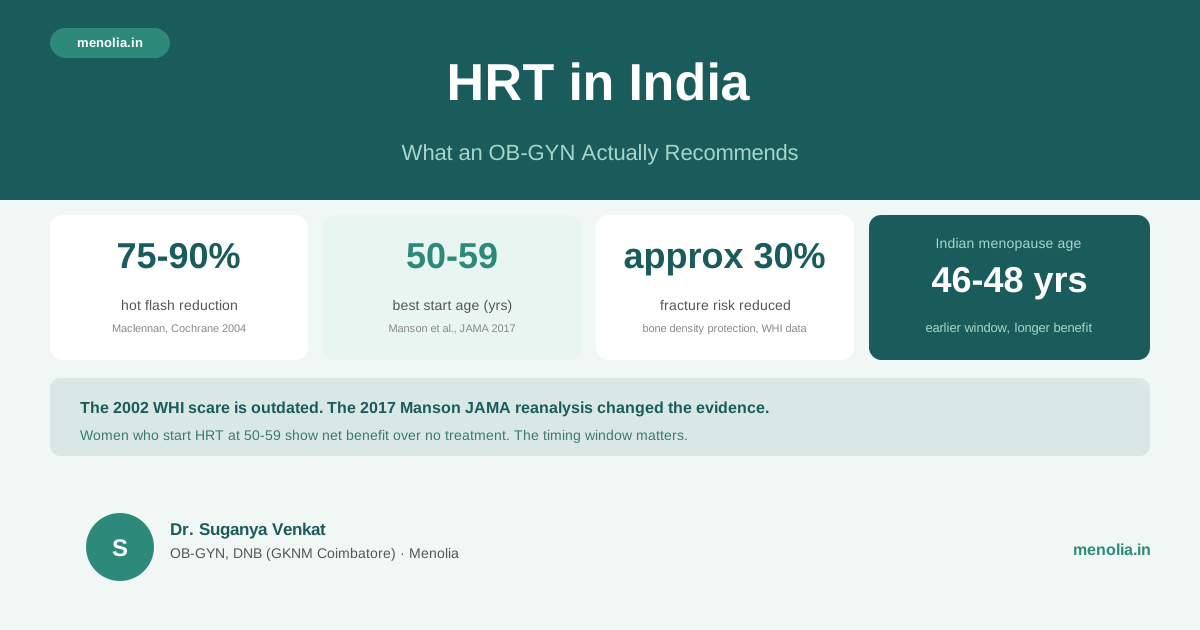
What it did not show is that HRT reduces mortality. When the authors compared age groups, the ratio of hazard ratios for women starting at 50 to 59 versus 70 to 79 was 0.61 during the treatment phase, meaning outcomes were clearly more favourable the younger a woman was when she started. That is an age gradient between groups, not a proven survival benefit against placebo, and anyone who tells you HRT will make you live longer has gone past the evidence.
The “window of opportunity” concept is now central to modern menopause care: starting HRT close to menopause, when blood vessels and receptors are still oestrogen-responsive, produces different outcomes from starting it decades later.
NICE Clinical Guideline NG23 reflects this. Originally published in 2015, it was substantially updated in November 2024, including its recommendations on the effects of HRT on specific health outcomes and on managing genitourinary symptoms, and amended again in April 2026. It recommends discussing HRT with all symptomatic women and states explicitly that the risks of modern HRT are low in women under 60 who start within 10 years of menopause, and that quality-of-life benefits deserve proper weight in the decision.
For more on this, read our guide on CBT for Menopause.
For more on this, read our guide on Does HRT Cause Weight Gain? What the Evidence Shows.
What HRT Actually Does
Vasomotor Symptoms (Hot Flashes, Night Sweats)
This is the strongest evidence base. A Cochrane review by Maclennan and colleagues (Cochrane Database Syst Rev, 2004, PMID 15495039) found that oestrogen-based HRT reduces hot flash frequency by about 75 percent compared to placebo (95% confidence interval 64 to 82 percent), with significant reductions in severity. Worth noting from the same review, because it explains why so many remedies seem to work: women on placebo also improved by around 58 percent. No lifestyle intervention, no phytoestrogen food, and no non-hormonal medication matches this effect size.
For women whose night sweats are waking them three or four times a night, whose work performance has declined, whose relationships are strained by fatigue and irritability: this level of symptom relief is not a luxury. It is restorative.
For practical guidance on non-hormonal options while you are making your decision, see our complete hot flash treatment guide.
Bone Density Protection
Post-menopausal bone loss accelerates sharply in the first five to seven years after the last period. Oestrogen is the primary regulator of bone turnover: when it falls, osteoclast activity outpaces osteoblast activity, and bone is lost faster than it is rebuilt. HRT, when started close to menopause, preserves bone mineral density and reduces fracture risk by approximately 30 percent at the hip and spine (data from the Women’s Health Initiative, including Cauley JA et al., JAMA 2003;290(13):1729-38). This effect is active only while HRT is being taken: bone loss resumes at normal post-menopausal rates after stopping.
For Indian women, this is particularly relevant. Indian women reach menopause at an average age of 46 to 48 years (Palacios et al., Climacteric 2010; and a systematic review of Indian studies, Prasad et al., 2021, put the pooled average at 46.6 years), four years earlier than the global average. That earlier start to the bone-loss clock, combined with the widespread vitamin D deficiency described in Indian studies (Ritu and Gupta, Nutrients, 2014, PMID 24566435), means the post-menopausal bone risk is real and it opens earlier than in Western populations.
For more on protecting bone after menopause, see our OB-GYN bone health guide.
Genitourinary Syndrome of Menopause (GSM)
Vaginal dryness, recurrent urinary tract infections, painful intercourse, and bladder urgency after menopause are together called Genitourinary Syndrome of Menopause (Portman and Gass, Menopause 2014;21(10):1063-1068, PMID 25160739). Unlike vasomotor symptoms, which often improve somewhat over time, GSM progressively worsens without treatment.
Low-dose local vaginal oestrogen (cream, tablet, or vaginal ring) is the gold-standard treatment for GSM per ACOG and NAMS guidance. Systemic absorption is minimal. It is generally considered acceptable even for survivors of oestrogen-sensitive cancers when the treating oncologist agrees, though that is a decision for her oncologist to make rather than a blanket reassurance. Local oestrogen directly reverses the vaginal and urethral changes that cause symptoms.
This distinction matters for Indian women: local vaginal oestrogen is entirely separate from systemic HRT. A woman who cannot take systemic HRT for any reason can still use local vaginal oestrogen for genitourinary symptoms. Many women who come to me with painful intimacy and recurrent UTIs have never been told this option exists.
Our detailed GSM guide covers the full range of management.
Mood and Sleep
Oestrogen withdrawal contributes to the mood instability, irritability, and perimenopausal anxiety that many women experience. The oestrogen-serotonin pathway in the limbic system is well-documented (McEwen and Woolley 1994), and sleep disruption from night sweats compounds mood dysregulation significantly.
HRT addresses both pathways: it reduces the vasomotor cause of sleep disruption and has direct effects on serotonin signalling. The original double-blind trial by Soares and colleagues (Arch Gen Psychiatry 2001;58(6):537-42) showed that transdermal estradiol was superior to placebo for depressive symptoms in perimenopausal women. For women whose low mood or anxiety began at perimenopause rather than before it, HRT is a legitimate first-line option alongside CBT and lifestyle measures, and it deserves to be part of the conversation.
For more on this, read our guide on HRT Side Effects. For the evidence on cortisol, stress, and menopause, see our cortisol guide.
Want to understand if HRT is appropriate for your situation? Dr. Suganya goes through your symptom picture, health history, and risk factors to give you an honest, personalised recommendation.
Types of HRT Available in India
Oestrogen-Only vs Combined
Women who have had a hysterectomy (uterus removed) can take oestrogen alone. Oestrogen-only HRT has a better safety profile than combined HRT for breast cancer risk.
For more on this, read our guide on HRT & Breast Cancer Risk. Women with an intact uterus must take a progestogen alongside oestrogen to protect the uterine lining. Oestrogen alone, without progestogen, causes the uterine lining to thicken over time, which increases endometrial cancer risk. This is a non-negotiable clinical rule: intact uterus means combined therapy.
Route Options and VTE Risk
| Route | India Availability | VTE Risk | Best For |
|---|---|---|---|
| Oral tablets (e.g., Femoston, Premarin) | Widely available | Small increase with oral oestrogen | Women without VTE risk factors |
| Transdermal patch | Major cities, prescription only | No increased clot risk | Women with VTE risk factors or preference for steady levels |
| Transdermal gel | Major cities, prescription only | No increased clot risk | Women preferring dose-adjustable, easy-apply option |
| Local vaginal cream or tablet | Widely available | Not applicable (local action only) | GSM symptoms: dryness, UTIs, painful intercourse |
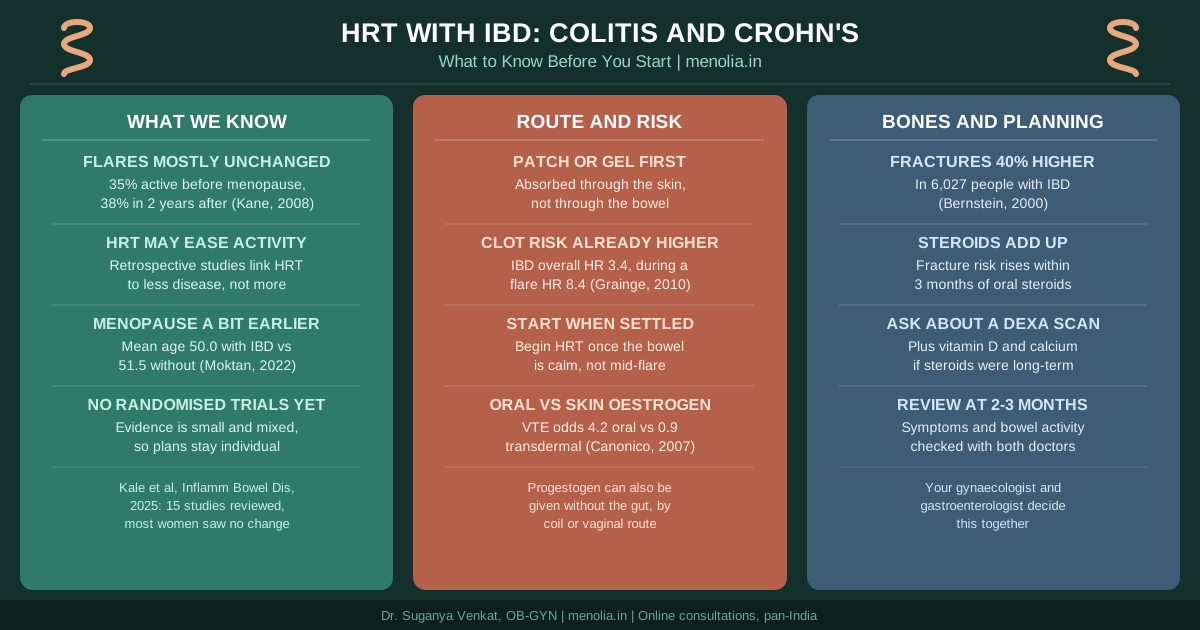
The most important clinical point in this table: transdermal oestrogen (patch or gel) does not increase the risk of venous thromboembolism (VTE). Oral oestrogen carries a small increase in VTE risk because it passes through the liver during absorption, activating coagulation pathways. This difference is significant for women who have a personal or family history of clots, are overweight, or have other VTE risk factors.
For most of my patients, I prefer to start with transdermal delivery for this reason. But availability and cost are practical considerations in India, and oral preparations remain appropriate for women without VTE risk factors.
Progestogen Type
In combined HRT, the progestogen component comes as either micronised body-identical progesterone (Utrogestan, available at select Indian pharmacies) or synthetic progestins (norethisterone, medroxyprogesterone acetate, dydrogesterone). Data from large French cohort studies suggest that body-identical micronised progesterone carries a lower breast cancer risk than synthetic progestins. This is an evolving area, and your prescribing doctor will factor in your clinical picture, cost, and availability.
For more on this, read our guide on Bioidentical Hormones.
Who Should NOT Take Systemic HRT
According to NICE Clinical Guideline NG23, systemic HRT is not recommended for women with:
- History of hormone-receptor-positive breast cancer. Local vaginal oestrogen can still be discussed individually with your oncologist.
- Active or recent venous thromboembolism (DVT or pulmonary embolism). Transdermal HRT may be considered after specialist risk assessment in some cases.
- Active or recent arterial cardiovascular disease (stroke, heart attack). Case-by-case evaluation with a cardiologist is needed.
- Undiagnosed vaginal bleeding. This must be investigated before any HRT is started.
- Active liver disease with abnormal liver function tests.
- Known or suspected pregnancy (uncommon in this age group but relevant).
This is not an exhaustive list. The decision requires a full clinical assessment including symptom review, blood pressure measurement, breast assessment, and personal and family history. Your OB-GYN makes this assessment with you.
India-Specific Considerations
The WHI Stigma in Indian Practice
The 2002 WHI study reached Indian gynaecologists and patients in the same wave it reached the rest of the world. Many clinicians who trained in the early 2000s absorbed the message that HRT is risky, and have not revised that position as the evidence evolved. Many Indian women who ask about HRT are still told “it is dangerous” without the nuance of age at start, duration, route, or progestogen type.
The conversation is changing, but slowly. Professional bodies including the International Menopause Society, NICE, and the Indian Menopause Society have published updated guidance supporting appropriate HRT for symptomatic women. If you are managing significant symptoms and your gynaecologist has not raised HRT as an option, it is entirely appropriate to ask.
Indian Menopause Age and the Timing Window
Indian women reach menopause at an average of 46 to 48 years. This means the therapeutic window opens earlier. A woman who is 47 and has just entered menopause has a much more favourable risk-benefit profile for HRT than a woman who is 62 starting for the first time. The bone protection benefit is also more actionable: starting at 47 means protecting against 35 or more years of post-menopausal bone loss.
Phytoestrogen-Rich Indian Foods
Phytoestrogens are plant compounds that weakly bind oestrogen receptors. They do not replace HRT, but they can modestly reduce hot flash frequency for women managing mild symptoms or those who cannot take systemic HRT. India’s traditional diet is naturally rich in phytoestrogens:
- Alsi (flaxseeds): the richest plant source of lignans; 1 tablespoon daily in dahi, roti, or smoothie
- Til (sesame seeds): high in lignans; in til chutney podi, ellu sadam, or til laddoo
- Dahi (curd): fermented dairy with isoflavone metabolites and gut-microbiome benefits
- Rajma, chana, moong dal: contain plant isoflavones; already central to Indian meals
- Methi seeds: mild phytoestrogen activity alongside benefits for blood sugar balance
Including these foods regularly supports overall menopause health. They are particularly relevant for women managing mild symptoms through diet and lifestyle while they consider whether to discuss HRT with their doctor.
When to Have the HRT Conversation with Your OB-GYN
These are the situations where the conversation is most important:
Symptoms severely affecting quality of life. If hot flashes are waking you four or more times a night, if you cannot concentrate at work, if your mood changes have strained your closest relationships: these symptoms deserve a proper treatment discussion, not just reassurance that they are “normal.”
Early or surgical menopause. If you reached menopause before age 45 (whether natural, surgical, or treatment-induced), current guidelines recommend HRT at least until the average menopause age of 51, unless there is a specific contraindication. The long-term bone and cardiovascular risk of untreated early oestrogen deficiency is clinically significant.
Significant GSM symptoms. Vaginal dryness, recurrent UTIs, and painful intercourse are underreported and undertreated in Indian women, partly because of cultural taboo around discussing these symptoms. Local vaginal oestrogen is a highly effective, low-risk option for GSM regardless of whether systemic HRT is appropriate. If this is affecting your quality of life, ask specifically about it.
You want to understand your options. You do not need to wait for symptoms to become severe. A conversation to understand the risk-benefit picture for your individual situation is always appropriate, especially if you are approaching menopause age and want to plan ahead.
What to ask your OB-GYN: “Given my symptom picture, my age at menopause, and my health history, what is my individual risk-benefit profile for HRT? If you recommend it, what route and formulation would work best for me?”
For a broader view of the health checks that matter after menopause, see our post-menopause health checklist.
For guidance on managing perimenopause symptoms comprehensively, including the full lifestyle layer alongside any medical treatment, see our perimenopause treatment overview.
Not sure whether HRT is the right step for you?
Dr. Suganya provides evidence-based, personalised guidance on all menopause treatment options, including HRT, non-hormonal options, and lifestyle approaches. WhatsApp consultation at Rs 399.
Explore Menopause Treatment in Depth
HRT is one part of the picture. These guides cover the specific treatments, tests and protective steps that go alongside it.
Hormonal options
- Estradiol patch in India: brands, cost and how to use
- Vaginal estrogen cream: types, how to use and cost
- Tibolone (Livial): how it works and who it suits
Bone protection
- Bone density test in India: cost, results and timing
- Osteopenia vs osteoporosis: symptoms and what to do
- How to prevent osteoporosis: an OB-GYN’s action plan
Protecting your heart
Frequently Asked Questions
Is HRT safe for Indian women?
For most women aged 50 to 59 who start within 10 years of menopause, the benefits of HRT outweigh the risks. That is the position of NICE and the International Menopause Society, and it rests on symptom relief and bone protection set against a low absolute risk, not on a survival benefit. The specific risk profile depends on your health history, the type of HRT, and the route. A full assessment with your OB-GYN is the right starting point before making this decision.
Does HRT cause breast cancer?
The picture is more nuanced than the 2002 headlines. Oestrogen-only HRT (for women without a uterus) does not appear to increase breast cancer risk. Combined HRT with synthetic progestins carries a small increase with long-term use over five or more years. Combined HRT with body-identical micronised progesterone appears to have a better risk profile. The absolute risk increase, even with synthetic progestins, is small and must be weighed against the benefits for each individual woman.
Is transdermal HRT safer than oral tablets?
For VTE risk, yes. Transdermal oestrogen bypasses the liver and does not activate coagulation pathways, so it carries no increased clot risk. Oral oestrogen has a small increase in VTE risk. For women with any VTE risk factors, obesity, or a family history of blood clots, transdermal is the preferred route. Your OB-GYN will factor in availability, cost, and your full health history.
How long can I take HRT?
There is no fixed time limit in current guidelines. NICE NG23 recommends using the lowest effective dose and reviewing annually. Many women safely take HRT for five to ten or more years. Women who entered menopause before age 45 are generally advised to continue at least until the average menopause age of 51 to protect against early bone loss and cardiovascular changes.
For more on this, read our guide on How to Stop HRT Safely.
Can I take HRT if I had a hysterectomy?
Yes. Women who have had their uterus removed can take oestrogen-only HRT without a progestogen, as there is no uterine lining to protect. Oestrogen-only HRT has a better breast safety profile than combined HRT and is generally associated with no increase in breast cancer risk in shorter-term use.
Are there natural alternatives to HRT for Indian women?
Phytoestrogen-rich Indian foods (alsi, til, dahi, rajma, chana) can modestly reduce hot flash frequency for mild symptoms. Non-hormonal prescription options (SSRIs/SNRIs, gabapentin, clonidine) reduce hot flashes by 50 to 60 percent. None of these match the roughly 75 percent reduction seen with HRT for moderate to severe vasomotor symptoms. For detailed guidance on the full treatment ladder, see our hot flash treatment guide.
My doctor says HRT is risky. What should I ask them?
Ask: “What specific risks apply to me, given my age, my time since menopause, my family history, and my symptom severity?” The 2002 WHI concerns apply mainly to older women starting HRT late, with elevated baseline risk. For a woman aged 50 to 59 starting close to menopause onset, the updated evidence (Manson, JAMA 2017, which found no excess mortality over 18 years; NICE NG23) supports a favourable risk-benefit profile in the absence of specific contraindications. A second opinion from an OB-GYN specialising in menopause care is always a valid option.