She Had No Symptoms. That Was the Point.
Revathi is a composite of women I see, with details changed. In this illustration, she booked an online consultation at 54 for a routine review. She had finished menopause two years earlier, felt reasonably well, and had booked it mostly because her daughter insisted. She had not had any health checks since her last delivery, 22 years ago.
Her results told a different story. Her LDL was 168 mg/dL. Her fasting glucose was 108. Her DEXA T-score at the hip was -1.8, placing her firmly in the osteopenia range. Her vitamin D was 14 ng/mL. Her TSH was creeping up at 5.8 mIU/L.
She had five separate issues, each developing silently, each now at a stage where lifestyle changes could still reverse direction. If she had waited another five years, some of those numbers would have crossed into intervention territory.
This is the central argument for post-menopausal screening: symptoms are a late signal. The goal of these tests is to act before symptoms appear.
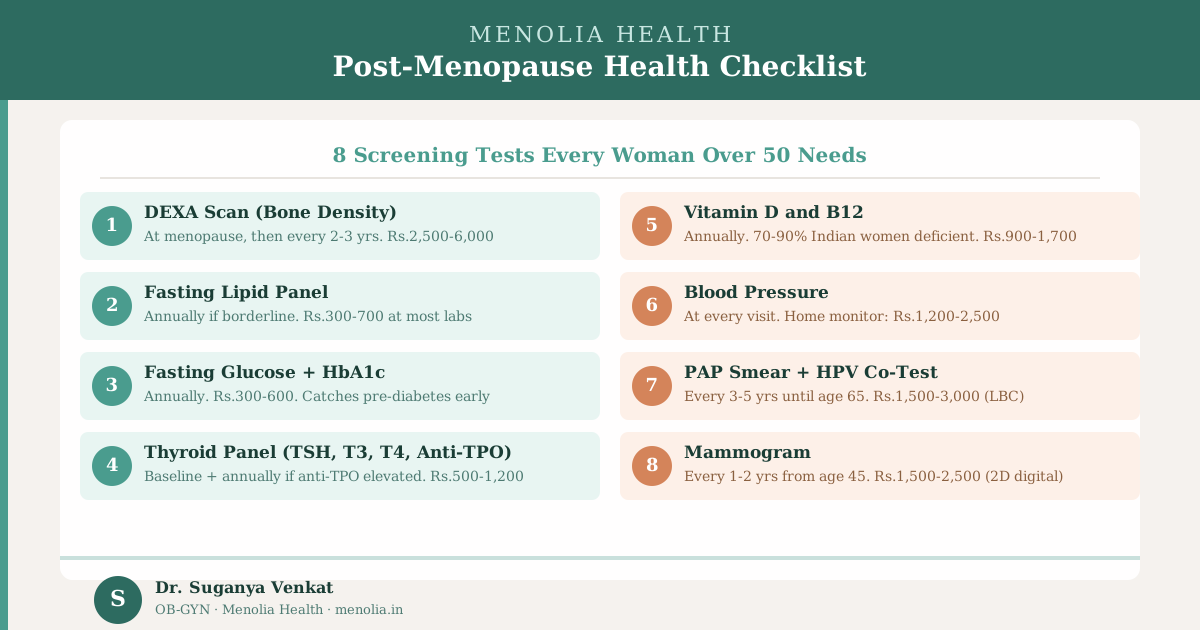
This post is a practical checklist. Eight tests, why each one matters specifically after menopause, how often to repeat it, and what it costs at Indian labs today.
Why Screening Needs Change After Menopause
For the 30-odd years you were cycling, oestrogen was doing a great deal of quiet work. It kept your LDL lower and your HDL higher. It preserved bone density by slowing osteoclast activity. It improved insulin sensitivity. It maintained the cervical environment. Oestrogen influences thyroxine-binding globulin and thyroid hormone requirements, so thyroid function can shift around menopause.
When oestrogen falls after menopause, these effects change. The risks do not appear overnight, but they begin building. In the first few years after menopause, it is common for:
- LDL cholesterol to rise and HDL to fall across the menopause transition
- Bone density to fall by around 2 to 3 percent a year
- Fasting insulin to rise as oestrogen-mediated glucose disposal declines (Carr 2003, JCEM)
- Thyroid problems to overlap with menopausal symptoms and be easy to miss
None of these changes causes symptoms in their early stages. A lipid panel done at 51 looks different from one done at 45. A DEXA scan at 54 may show something a scan at 48 would not have.
The 8 tests below are the clinical minimum for a woman who is post-menopausal. They are not extras. They are the foundation of post-menopausal care.
The 8-Test Checklist
Test 1: DEXA Scan (Bone Density)
What it checks: Bone mineral density at the hip and lumbar spine. Results are expressed as a T-score, which compares your bone density to that of a healthy 30-year-old woman.
Why it matters after menopause: Oestrogen slows down osteoclasts (the cells that break down bone). Without it, bone resorption outpaces bone formation. The risk is not just osteoporosis in the distant future. It is fractures from minor falls in your 60s, which in India carry a high rate of complications because of limited post-fracture physiotherapy access. The reassuring part is how modifiable this is: weight-bearing movement, enough calcium and vitamin D, and, where it is appropriate for you, menopausal hormone therapy can all slow the loss when started at the right time. This guide to menopause and bone health explains the wider prevention plan.
T-score interpretation:
- Above -1.0: Normal
- -1.0 to -2.5: Osteopenia (low bone density, manageable with lifestyle changes)
- Below -2.5: Osteoporosis (requires medical management)
When to get it: At or soon after menopause, ideally by age 50-52. If normal, repeat every 2-3 years. If osteopenic, annually.
Prices below are indicative private-sector ranges as of 2026 and vary by lab and city.
India cost range: Hip and spine DEXA scans cost approximately Rs.2,500-6,000 at private diagnostic centres. Government hospitals and some medical college centres may offer them at lower rates.
Read more: Bone Density Test in India: Cost, Results and When to Get It
Test 2: Lipid Panel (Full Fasting)
What it checks: LDL cholesterol, HDL cholesterol, total cholesterol, and triglycerides. Must be done fasting (at least 8-10 hours).
Why it matters after menopause: Before menopause, oestrogen helps maintain a healthier lipid ratio by keeping LDL lower and HDL higher. After menopause, LDL tends to rise and HDL may fall. A woman’s cardiovascular risk rises steadily after menopause and, by her sixties, approaches that of men.
In India, the concern is compounded by South Asian metabolic phenotype: Indian women tend to have higher triglycerides, lower HDL, and a less favourable LDL particle size profile at the same total cholesterol reading compared to Western populations (Misra 2008, JCEM).
Targets (general reference, discuss with your doctor):
- LDL below 100 mg/dL (below 70 if you have other risk factors)
- HDL above 50 mg/dL for women
- Triglycerides below 150 mg/dL
When to get it: Baseline at menopause, then annually if results are borderline or elevated. Every 3-5 years if results are consistently healthy.
India cost range: A fasting lipid panel at private labs costs approximately Rs.300-700, with home collection available in many cities.
Read more: Menopause and Cholesterol: Why Your Numbers Changed
Test 3: Fasting Blood Glucose and HbA1c
What it checks: Fasting blood glucose gives your sugar level after an overnight fast. HbA1c reflects your average blood sugar over the past 2-3 months.
Why it matters after menopause: Oestrogen improves insulin sensitivity in muscle and liver cells. After menopause, insulin resistance rises alongside visceral fat accumulation. Indian women face an additional layer of risk: the ICMR-INDIAB study found that diabetes and pre-diabetes are highly prevalent in urban India, where roughly one in nine urban adults has diabetes and many more have pre-diabetes (Anjana et al., Lancet Diabetes and Endocrinology, 2017, PMID 28601585).
ADA Standards of Care thresholds:
- Fasting glucose below 100 mg/dL: Normal
- 100-125 mg/dL: Pre-diabetes
- 126 mg/dL or above on two readings: diabetes
- HbA1c below 5.7%: Normal. 5.7-6.4%: Pre-diabetes. 6.5% or above: Diabetes.
When to get it: At menopause as a baseline. Annually if pre-diabetic or if you have risk factors (central obesity, family history, gestational diabetes history). Every 2-3 years if results are consistently normal.
India cost range: A combined fasting glucose plus HbA1c test costs approximately Rs.300-600 at most diagnostic labs. Apollo 247’s sugar and HbA1c panel is available through home collection.
Read more: Menopause and Blood Sugar: Why Diabetes Risk Rises After 45
Test 4: Thyroid Panel (TSH, Free T3, Free T4, Anti-TPO)
What it checks: TSH is the primary screening test. Free T3 and free T4 clarify the picture if TSH is abnormal. Anti-TPO (anti-thyroid peroxidase) antibodies detect autoimmune thyroid disease (Hashimoto’s thyroiditis).
Why it matters after menopause: Hypothyroidism is common in Indian adults and more common in women. An eight-city study found hypothyroidism in about 11% of Indian adults (Unnikrishnan et al., Indian J Endocrinol Metab, 2013, PMID 23961480). Its symptoms often overlap with menopausal symptoms: fatigue, weight gain, brain fog, hair thinning, low mood, and constipation. Without a thyroid panel, it is genuinely difficult to separate the two.
Anti-TPO is important because elevated antibodies predict future hypothyroidism even when TSH is still normal. Knowing this early allows monitoring and early treatment if needed.
When to get it: At menopause as a baseline. If anti-TPO is elevated, repeat TSH annually even if it is currently normal. If hypothyroid, regular monitoring as per your doctor’s guidance.
India cost range: TSH alone costs Rs.150-400. A full thyroid panel (TSH, free T3, free T4, anti-TPO) costs approximately Rs.500-1,200, with home collection available in many cities.
Read more: Thyroid Changes During Menopause
Test 5: Vitamin D (25-OH Vitamin D) and Vitamin B12
What it checks: 25-hydroxyvitamin D is the active storage form that reflects your true vitamin D status. Serum B12 is the standard screening test for cobalamin deficiency, ideally paired with MMA (methylmalonic acid) to detect functional deficiency even when serum B12 looks borderline.
Why it matters after menopause: A review documented widespread vitamin D deficiency across varied Indian populations and discussed its consequences for calcium absorption, bone health, and muscle weakness (Ritu and Gupta, Nutrients, 2014, PMID 24566435). It was not a menopause-specific screening trial. Ask your doctor whether testing would change your care.
Vitamin B12 deficiency becomes more common after 40 because the stomach progressively makes less acid and intrinsic factor, both of which are needed to absorb B12 from food. Indian vegetarians face a double risk, since B12 is found almost exclusively in animal products. Deficiency causes fatigue, brain fog, tingling in the hands or feet, and mood changes, all of which overlap with menopausal symptoms.
Reference ranges:
- Vitamin D: below 20 ng/mL is deficient; 20-30 ng/mL insufficient; above 30 ng/mL adequate
- B12: below 200 pg/mL is deficient; 200-400 pg/mL is grey zone (check MMA if symptomatic)
When to get it: At menopause as a baseline. Repeat vitamin D annually if deficient or supplementing. Repeat B12 every 1-2 years, especially if vegetarian or on long-term metformin or antacids.
India cost range: Vitamin D test costs Rs.500-1,000 at private labs. Serum B12 costs Rs.400-700. Thyrocare, Metropolis, and Redcliffe Labs offer both through home collection.
Read more: Menopause and Vitamin B12: Why Deficiency Rises After 40
Read more: Menopause Calcium and Vitamin D: How Much You Need
Test 6: Blood Pressure (Measured Correctly)
What it checks: Systolic and diastolic blood pressure. This is a clinical measurement, not a test done at a lab, but it is on this checklist because it is the most commonly skipped check and the one with the most straightforward intervention.
Why it matters after menopause: Blood pressure tends to rise after menopause as the blood-vessel-relaxing effect of oestrogen is lost. In India, high blood pressure becomes more common in women around and after menopause, and a large share of it is undiagnosed, which is why a simple BP check matters at this stage.
Hypertension carries no symptoms until it causes a stroke or heart attack. At-home monitors are widely available in India for Rs.1,200-2,500, and getting one is a reasonable investment for any woman over 50.
ACC/AHA 2017 categories:
- Normal: systolic under 120 mmHg and diastolic under 80 mmHg
- Elevated: systolic 120-129 mmHg and diastolic under 80 mmHg
- Stage 1 hypertension: systolic 130-139 mmHg or diastolic 80-89 mmHg
- Stage 2 hypertension: systolic 140 mmHg or higher or diastolic 90 mmHg or higher
A diagnosis depends on repeated, properly measured readings and clinical review.
When to check: At every routine medical appointment. Invest in a home monitor. If consistently elevated, discuss with your cardiologist or internist.
Read more: Menopause and Blood Pressure: The Oestrogen Connection
Test 7: PAP Smear and HPV Co-Test (Cervical Screening)
What it checks: A PAP smear (Papanicolaou test) checks for abnormal cells on the cervix that could develop into cervical cancer. An HPV co-test checks for high-risk strains of human papillomavirus, which cause the majority of cervical cancers. This guide to cervical screening after 40 explains how PAP and HPV testing fit together.
Why it matters after menopause: Cervical cancer does not stop being a risk at menopause. India has one of the highest cervical cancer burdens in the world, with about 1.24 lakh new cervical cancer cases and roughly 77,000 deaths a year (GLOBOCAN 2020). A significant proportion of these are in women over 45 who were never screened. NFHS-5 found that only 1.9% of Indian women aged 30-49 had ever had a cervical cancer screening test.
Many women believe that PAP smears stop being needed at menopause. This is not correct. US guidelines use cervical cytology every 3 years from age 21 to 65, or HPV-based co-testing every 5 years from age 30 to 65, for women at average risk (US Preventive Services Task Force, JAMA 2018, PMID 30140884). If you are over 65 and have not had adequate prior screening, ask your doctor whether screening should continue.
What to tell your doctor: Ask which screening method fits your age, prior results, and risk factors. Liquid-based cytology with HPV co-testing is one option from age 30.
When to get it: Follow the interval for the screening method you and your doctor choose: cytology every 3 years from age 21 to 65, or co-testing every 5 years from age 30 to 65. If you have never been screened, arrange a screening review now.
India cost range: A conventional PAP smear costs approximately Rs.500-1,500. Liquid-based cytology (LBC) plus an HPV co-test costs approximately Rs.1,500-3,000 at private labs.
Test 8: Mammogram (Breast Cancer Screening)
What it checks: A mammogram is a low-dose X-ray of the breast tissue. It detects breast masses, calcifications, and tissue changes that may not be palpable on self-examination or clinical breast exam. If you are deciding when to start, this guide to mammograms after 45 explains the timing and process.
Why it matters after menopause: Breast cancer risk increases with age and accelerates after menopause. In India, breast cancer is often diagnosed around age 50, younger than in Western countries. NFHS-5 found that only about 0.9% of Indian women aged 30-49 had ever had a clinical breast examination for cancer.
A commonly heard concern is that mammograms are only for women with a family history. This is not accurate. Most women who develop breast cancer have no family history. The recommendation is population-level screening based on age, not just family history.
In India, the national programme centres on clinical breast examination for population screening, with mammography used for higher-risk women and where it is accessible; discuss the right approach for you with your doctor.
When to get it: Most international guidelines recommend beginning mammograms at 40-45 and repeating every 1-2 years. The American Cancer Society recommends annual mammograms from age 45. If you are over 50 and have never had one, discuss starting with your doctor.
India cost range: A standard 2D digital mammogram costs approximately Rs.1,500-2,500 at private hospitals and diagnostic centres. 3D mammography (tomosynthesis) costs approximately Rs.3,000-7,000 and provides greater detail in women with dense breast tissue.
How to Get These Tests Done in India
A few practical notes for Indian women navigating the diagnostic system:
Home collection for blood tests: Thyrocare, Metropolis, SRL Diagnostics, Apollo 247, and Redcliffe Labs all offer home blood collection with online booking. For fasting tests (glucose, lipid panel, thyroid), the phlebotomist comes before 9 AM. Results are typically available within 24-48 hours online.
Cost of a full baseline panel: Getting tests 2, 3, 4, and 5 (lipid panel, glucose plus HbA1c, thyroid full panel, vitamin D, and B12) as a combined package often costs less than ordering them separately. Many labs offer a “women’s health package” in the range of Rs.2,000-4,000 that covers most or all of these.
DEXA scan and mammogram availability: These are imaging tests requiring a specialised machine. They are available at most major city private hospitals and radiology centres. In smaller cities, district hospitals, and medical colleges often have DEXA units. Ask specifically for a DEXA scan (not a “BMD test” done on a peripheral ultrasound device, which is less accurate).
Other age-based screening: Your doctor may also discuss bowel screening based on your age and risk factors. This guide to colorectal cancer screening after 45 explains the available options.
Coordination: In an online consultation, Dr. Suganya can review all your reports together over a video call and explain what each number means for your situation.
What to Do With Your Results
Getting the tests is step one. Knowing what to do with the results is step two. Here is a practical framework:
If your bone density (T-score) is -1.0 to -2.5 (osteopenia): This is not a crisis. It is a signal to take bone health seriously now, before it progresses. Strength training 2-3 times per week, calcium 1,200 mg per day from food and supplement, vitamin D 1,000-2,000 IU per day, and a repeat DEXA in 1-2 years. Read: How to Prevent Osteoporosis
If your LDL is elevated: Start with food changes first: ragi, rajma, chana, oats, palak, brinjal, okra (bhindi), and reducing refined carbohydrates. For a moderate rise with no other risk factors, many doctors trial diet and exercise for about three months first, but that decision belongs to your doctor, who will weigh your blood pressure, glucose, family history and any past cardiac events. If cardiovascular risk factors are high, discuss statin therapy with your internist or cardiologist.
If your fasting glucose is 100-125 or HbA1c is 5.7-6.4 (pre-diabetes): This is the most reversible stage. Resistance training and post-meal walks both help restore insulin sensitivity and work best alongside dietary change, not instead of it. Ragi and bajra instead of white rice, dal and chana as protein at every meal, and reducing refined sugar and maida are good starting points.
If your TSH is elevated or anti-TPO is positive: Discuss with your doctor before starting any supplement or dietary intervention for thyroid. Levothyroxine, if needed, is straightforward and safe. Do not self-medicate with iodine supplements.
If your vitamin D is below 30 ng/mL: Between 20 and 30 ng/mL is insufficiency, usually corrected with a daily cholecalciferol (D3) dose of 1,000-2,000 IU. Below 20 ng/mL is deficiency, which typically needs a loading regimen first (in India commonly 60,000 IU once a week for 8 weeks) and then a maintenance dose, as per your doctor’s prescription (Endocrine Society bands: Holick MF et al., J Clin Endocrinol Metab 2011, PMID 21646368). Retest in 3 months. Spend 15-30 minutes in morning or late afternoon sun on most days if possible.
Ready to take stock of your post-menopausal health? In a ₹399 online consultation, Dr. Suganya reviews your reports over a video call and helps you build a plan; see the Menolia menopause program.
WhatsApp Dr. Suganya to book your online consultation
Frequently Asked Questions
Is there an ideal age to start all of these tests? A reasonable checkpoint is 50, which coincides with post-menopausal transition for most Indian women (average age at menopause is 46-48 years in India) (Ahuja M, J Midlife Health 2016, PMID 27721640). If you reach menopause earlier, start the full baseline panel at that point rather than waiting for a specific age.
Do I need to see a specialist for each test, or can my general physician order them? Your general physician or internist can order all the blood tests (lipid panel, glucose, HbA1c, thyroid panel, vitamin D, B12) and blood pressure measurement. You will need a radiology centre or hospital for the DEXA scan and mammogram. A gynaecologist or trained nurse can perform the PAP smear. An OB-GYN like Dr. Suganya can coordinate all of this in a single review.
I have had my uterus removed (hysterectomy). Do I still need all 8 tests? Yes, with one modification: if you have had a complete hysterectomy and have never had abnormal cervical cells, many guidelines allow you to stop PAP smears. Discuss this with your gynaecologist based on the reason for your hysterectomy and your HPV status. All other 7 tests remain relevant.
My periods stopped only a year ago. Do I need to do all of this now? You are in early post-menopause. It is a good time to establish baselines. Even if all your numbers look fine now, having a documented baseline at 50 makes it much easier to detect gradual changes at 55 or 60. Think of these tests as photographs taken at a fixed point in time.
Can I get a “women’s health package” from a lab that covers most of these? Many labs in India offer comprehensive women’s health packages that combine blood tests into a single booking. Check whether the package includes a full thyroid panel (not just TSH), HbA1c (not just fasting glucose), and both vitamin D and B12. The imaging tests (DEXA, mammogram) are always separate bookings at a radiology centre or hospital. A combined package for blood tests from a good lab typically costs Rs.2,000-5,000 and is a practical starting point.
What if I cannot afford all 8 tests at once? Prioritise based on your personal risk. If your family has a history of osteoporosis or you have had fractures, start with the DEXA scan. If diabetes or heart disease runs in your family, prioritise fasting glucose, HbA1c, and the lipid panel. If you have never had a cervical or breast cancer screen, start with the PAP smear and mammogram. There is no wrong order. Getting some of them done is better than getting none.
The science behind these 8 tests is not complicated: oestrogen was doing a great deal of protective work throughout your reproductive years, and screening after menopause is how you monitor the systems it used to manage quietly.
In Revathi’s illustrative composite story, she left with a plan. She started vitamin D supplements, adjusted her diet for her pre-diabetic range, scheduled a gynaecology follow-up for her bone density, and booked her first mammogram. Two years later, her lipid, glucose and vitamin D readings had all moved in the right direction. This is a softened illustration of what earlier detection can make possible, not the outcome of one documented patient.
That is the point.
These results look different when you have a doctor who can explain what each number means for you personally. WhatsApp Dr. Suganya to talk through your reports and build a plan together.