A woman messages me after her consultation with her gynaecologist. She has been prescribed Livial. She has the box in front of her, the insert is dense and confusing, and she wants to know two things: is this HRT, and is it safe?
These are both reasonable questions. Tibolone is available for menopause symptoms in India, but the key questions about how it works, what the evidence shows, and who it suits can be difficult to cover in one consultation.
This post covers all of that.
What Is Tibolone?
Tibolone is a synthetic steroid. It is not a conventional HRT formulation, but it is used for the same purpose: managing menopausal symptoms and protecting bone. The distinction matters because tibolone works in a fundamentally different way from the oestrogen-progestogen combinations that most people associate with HRT.
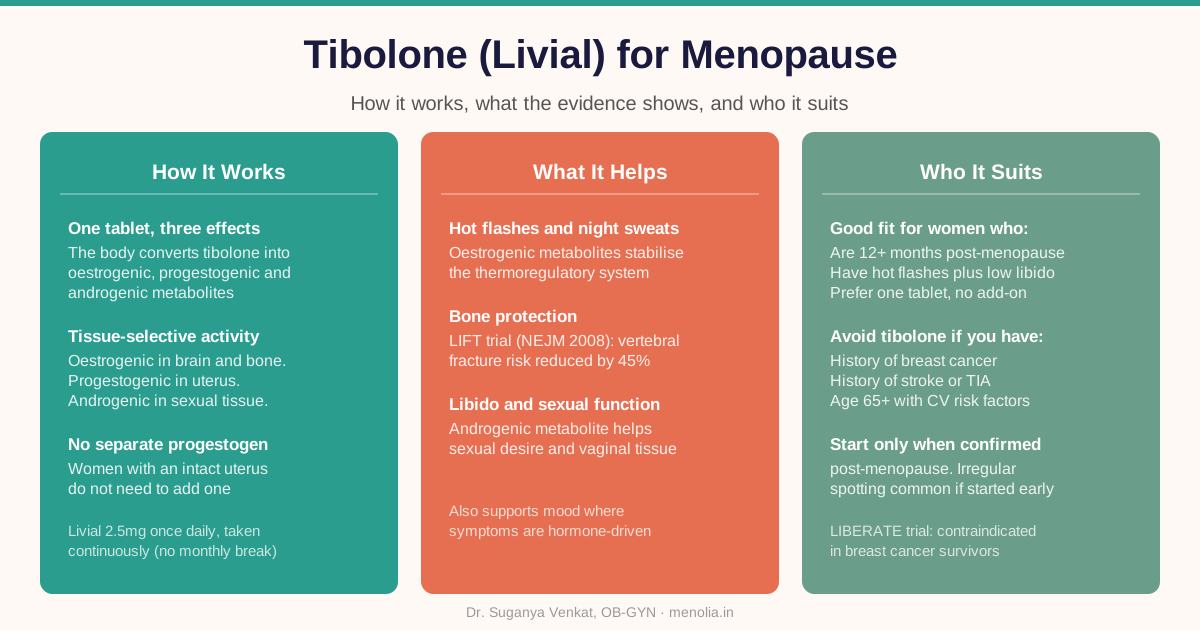
Conventional HRT delivers hormones (usually oestradiol plus a progestogen) to replace what the ovaries have stopped producing. Tibolone is a single molecule. The body converts it, after absorption, into three different metabolites. Each acts on different tissues in a targeted way. The technical term for this is tissue-selective oestrogenic activity.
The practical upshot is that one tablet provides what would otherwise require two separate hormones, with different effects in different parts of the body.
How Tibolone Works in the Body
After you take a tibolone tablet, your body breaks it down into:
- Two oestrogenic metabolites (acting on the brain, bones, and vaginal tissue)
- One compound with progestogenic and androgenic (testosterone-like) activity
Here is what each of those metabolites does, and where:
In the brain and vasomotor system: The oestrogenic metabolites reduce hot flashes and night sweats by stabilising the thermoregulatory centres that oestrogen withdrawal disrupts. This is the same basic mechanism as conventional oestrogen HRT.
In the bones: The oestrogenic action on bone cells reduces bone breakdown. Bone loss accelerates in the first three to five years after menopause. Tibolone acts at this point in the remodelling cycle, providing protection similar in mechanism to oestrogen.
In the uterus: The progestogenic metabolite keeps the uterine lining thin. This matters because oestrogen without progestogen stimulates the endometrium and raises the risk of endometrial hyperplasia. Tibolone’s built-in progestogenic activity protects the lining, so a woman with an intact uterus does not need a separate progestogen added, unlike with conventional oestrogen-only HRT.
In sexual tissue and for libido: The androgenic metabolite acts on vaginal tissue and on the central pathways involved in sexual desire. This is a dimension that conventional oestrogen-only HRT does not address well. Tibolone is one of the few menopausal treatments with direct androgenic activity, and it is one reason it is specifically prescribed for women for whom low libido is a significant symptom alongside the more standard vasomotor complaints.
What the Evidence Shows
Vasomotor symptoms
Tibolone reduces hot flash frequency and severity. A 2016 Cochrane review, “Short-term and long-term effects of tibolone in postmenopausal women,” found tibolone more effective than placebo for vasomotor symptoms, but somewhat less effective than combined oestrogen-progestogen HRT.
Bone protection: the LIFT trial
The largest randomised controlled trial of tibolone for fracture prevention was the LIFT trial (Long-Term Intervention on Fractures with Tibolone), published in the New England Journal of Medicine in 2008 (Cummings SR et al., PMID 18703472). It enrolled 4,538 women aged 60 to 85 with osteoporosis and found:
- Vertebral fracture risk reduced by 45%
- Non-vertebral fracture risk reduced by 26%
LIFT used tibolone 1.25 mg daily, half the usual 2.5 mg treatment dose, in older women with osteoporosis. These fracture findings therefore should not be read as a direct prediction for every woman prescribed a 2.5 mg tablet.
The LIFT trial was stopped early because tibolone was associated with an increased stroke risk in this older population (relative risk 2.19). This is discussed below under who should avoid tibolone, because the trial population was significantly older and more cardiovascularly vulnerable than most women who are prescribed tibolone in clinical practice.
Libido and sexual function
This is where tibolone has a genuine clinical advantage over many conventional HRT formulations. Studies comparing tibolone with oestrogen-progestogen HRT found tibolone produced greater improvements in sexual interest, arousal, and satisfaction in post-menopausal women. A randomised crossover study (Laan et al., Climacteric, 2001) found tibolone increased vaginal blood flow, desire, and arousal compared to oestradiol-alone therapy, specifically attributing the effect to the androgenic metabolite. The androgenic metabolite acts both on genital tissue and on the central pathways that influence sexual desire. For women for whom this is a priority, tibolone is worth discussing specifically.
Mood
Some women notice improvements in mood, irritability, and overall wellbeing. This is consistent with the oestrogenic metabolites supporting serotonin and beta-endorphin pathways, the same mechanism through which oestrogen influences mood. This benefit is more pronounced when mood symptoms are driven by oestrogen withdrawal rather than a pre-existing depressive episode.
If you have been prescribed tibolone and want to understand whether it suits your specific situation, WhatsApp Dr. Suganya for an online consultation. She works with women across India, fully online.
Safety: What to Know Before Starting
Breast cancer
Tibolone does not increase breast mammographic density the way conventional combined HRT with synthetic progestins does. This was initially encouraging, but it does not mean tibolone carries no breast cancer considerations at all.
For healthy post-menopausal women, the breast cancer picture with tibolone is less clear than for conventional oestrogen-progestogen HRT. The Million Women Study found a modest increased risk; other analyses have not reached statistical significance. The current clinical position is that tibolone is not risk-free, but appears to carry a different risk profile from conventional combined HRT.
The clear line is for breast cancer survivors. The LIBERATE trial (Kenemans P et al., Lancet Oncology, 2009, PMID 19167925) enrolled 3,148 women with a history of breast cancer who had troublesome menopausal symptoms. It found tibolone increased breast cancer recurrence risk compared to placebo (relative risk 1.40). Tibolone is contraindicated for women with a current or recent history of breast cancer.
Stroke risk: understanding the LIFT signal
The LIFT trial’s stroke finding is the most important safety signal specific to tibolone. Stroke risk increased with age in LIFT, and the trial population was older than many women seeking symptom treatment. The result cannot establish that a younger woman has no added risk. Her prescriber should assess age, blood pressure, smoking, migraine, diabetes, and any history of stroke or TIA before treatment.
Endometrial safety
Trial data found little endometrial hyperplasia, but this does not make post-menopausal bleeding safe to ignore. Unlike oestrogen-only HRT, tibolone does not usually require a separate progestogen for a woman with a uterus.
Any vaginal bleeding that occurs in a post-menopausal woman on tibolone should be reported to the prescribing doctor. Light spotting in the first few months is not unusual and often settles. Bleeding that starts after 12 months of amenorrhoea, or that persists beyond the first few months of treatment, needs assessment.
Clot risk
Evidence about venous-clot risk with tibolone is less extensive than for standard HRT. A personal or strong family history of clots needs review with the prescribing doctor before any hormonal treatment.
Who Tibolone Suits
Tibolone tends to be a good fit for:
- Women who are at least 12 months post-menopause (tibolone can cause irregular spotting in perimenopause and is not recommended until menopause is established)
- Women with vasomotor symptoms plus low libido or reduced sexual desire and satisfaction
- Women with significant osteoporosis or bone loss risk
- Women who prefer the simplicity of one tablet without a separate progestogen
- Women who experienced troublesome breast tenderness or bloating on conventional combined HRT
- Women who have undergone surgical menopause and still want the libido benefit that oestrogen alone does not provide as directly
Who Should Avoid It or Discuss Carefully
- Women with a current or past history of breast cancer (LIBERATE trial: contraindication)
- Women with a history of stroke or TIA
- Women with active or prior deep vein thrombosis or pulmonary embolism
- Women aged 65 or over with significant cardiovascular risk factors (the LIFT stroke signal)
- Women still in perimenopause with irregular cycles (wait until 12 months of amenorrhoea are confirmed)
- Women with unexplained vaginal bleeding (this requires investigation before starting any hormonal treatment)
- Women with severe liver disease
For women who fall into any of these categories, conventional transdermal oestrogen with progestogen if the uterus is intact, or non-hormonal approaches, may be better options. The right choice depends on your full clinical picture, which is why this is a conversation to have with your prescribing doctor rather than something to decide independently based on reading alone.
Tibolone vs Conventional HRT: A Practical Comparison
| Aspect | Tibolone | Oestrogen + progestogen HRT |
|---|---|---|
| Progestogen needed if uterus intact | No | Yes |
| Direct libido benefit | Yes (androgenic metabolite) | Indirect, variable |
| Stroke risk signal | Yes, in women over 65-70 | Also present with oral oestrogen |
| Breast cancer: survivors | Contraindicated (LIBERATE) | Generally not recommended either |
| Bone protection | Strong (LIFT trial) | Strong |
| Available as patch | No, oral tablet only | Yes, transdermal option available |
| Suitable in perimenopause | No | Yes, with sequential regimen |
If you are weighing tibolone against conventional HRT, the full HRT guide for Indian women and the HRT side effects post give the broader picture. The testosterone for women post covers the separate question of prescribed testosterone, which some women use alongside conventional HRT for libido rather than switching to tibolone.
Tibolone in India: What Is Available and What It Costs
Tibolone is sold in India as a prescription medicine, usually as a 2.5 mg tablet. Brand availability, strip size, and price vary between pharmacies. Ask the dispensing pharmacy to confirm the current product, manufacturer, and monthly cost before purchase.
The standard dose is 2.5mg once daily, taken at the same time each day. Tibolone is taken continuously, with no monthly break or cycling.
What to Expect in the First Few Months
Most women notice an improvement in vasomotor symptoms within four to eight weeks. Sleep tends to improve as night sweats reduce. Mood often follows.
Changes in libido and sexual function may take longer and response varies. Review the balance of benefits and side effects with the prescriber rather than stopping or continuing solely by a fixed deadline.
Light spotting in the first few months is not unusual, particularly in women who started tibolone relatively close to their last period. It usually settles. Any bleeding that starts after months of being settled, or that is heavy, needs to be reported to the prescribing doctor.
At a treatment review, discuss symptom improvement, side effects, bleeding, and blood pressure. Mammography, bone-density, blood-sugar, and lipid checks should follow age- and risk-based schedules set by your clinician. See the post-menopause health check guide for the full list.
If you are trying to decide whether tibolone is the right treatment for your symptom picture, or whether conventional HRT or a non-hormonal approach would serve you better, WhatsApp Dr. Suganya for an online consultation. She consults with women across India, and the conversation starts with your specific situation, not a standard answer.
Frequently Asked Questions
Is tibolone the same as HRT?
Tibolone is not conventional HRT. Conventional HRT uses oestrogen (and progestogen for women with a uterus) to replace what the ovaries have stopped producing. Tibolone is a synthetic steroid that the body converts into three metabolites: two with oestrogenic activity and one with progestogenic and androgenic activity. The practical result is similar (vasomotor symptoms controlled, bones protected) but the pharmacology is distinct.
Do I still need a progestogen with tibolone if my uterus is intact?
No. The progestogenic metabolite of tibolone keeps the uterine lining thin, which is the protective effect a separate progestogen provides with conventional oestrogen HRT. Women with an intact uterus who take tibolone do not need to add a separate progestogen. This is one of tibolone’s practical conveniences.
Can I take tibolone if I have had breast cancer?
No. The LIBERATE trial found tibolone increased the risk of breast cancer recurrence in women with a history of breast cancer (relative risk 1.40 vs placebo). Tibolone is contraindicated for anyone with a current or past history of breast cancer.
I am 56 and worried about the stroke risk in the LIFT trial. Should I be?
The LIFT trial enrolled women aged 60 to 85 with osteoporosis, and the stroke signal was strongest in women aged 70 to 85 with pre-existing cardiovascular risk factors. For a woman in her mid-50s without a history of stroke, TIA, or significant cardiovascular disease, the trial population is substantially different from her situation. This is a conversation worth having explicitly with your prescribing doctor, who knows your full cardiovascular profile.
Does tibolone help with low libido?
It may improve sexual function for some post-menopausal women, partly because of its androgenic activity, but response varies. If low libido is the main concern, discuss other contributors such as pain, vaginal dryness, medicines, mood, sleep, and relationship factors as well.
What is the price of tibolone 2.5mg in India? Prices and available brands vary by pharmacy and pack size. Tibolone is prescription-only. Ask your pharmacy to confirm the current September 2026 price and manufacturer for the exact brand on your prescription.
How is tibolone different from an estradiol patch?
An estradiol patch delivers oestradiol transdermally, bypassing liver first-pass metabolism. Women with an intact uterus need a separate progestogen added. Tibolone is an oral tablet that delivers oestrogenic, progestogenic, and androgenic effects in one dose, but it is not available transdermally. Patches are often preferred for women with specific clot or liver concerns, or who want the flexibility of adjusting oestrogen and progestogen doses separately.
Does tibolone cause weight gain?
The randomised trial data does not show tibolone causing significant weight gain compared to placebo. Some women notice temporary fluid retention. Menopause itself is associated with changes in body composition, so weight change while taking tibolone is rarely attributable to the tablet alone. The menopause weight gain guide covers the broader picture.