A pattern I often see is a woman holding a printed DEXA report with a lumbar-spine T-score in the osteopenia range, worried that a hip fracture is inevitable. This is a pattern of practice, not one patient’s story.
Here is what I explain: osteopenia is not osteoporosis. It means low bone mass, and it creates an opportunity to assess fracture risk and act on modifiable factors. Bone density can stabilise and may improve, but no responsible plan can promise a particular T-score change within a fixed number of months.
This post explains what your DEXA number actually means, how osteopenia differs from osteoporosis, why Indian women are at higher risk, and the specific steps that build bone back up.
What Is Osteopenia?
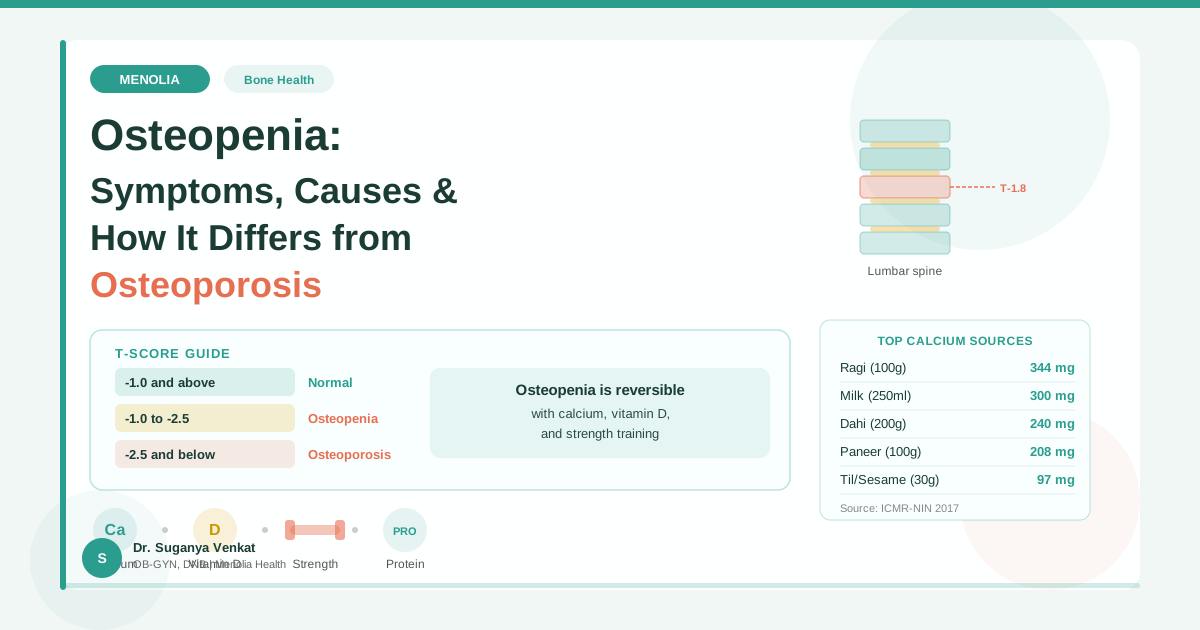
The World Health Organization established bone density thresholds in 1994 based on a landmark paper by Kanis and colleagues (Journal of Bone and Mineral Research, 1994; PMID 7976495). These thresholds compare your bone mineral density to that of a healthy 30-year-old woman at peak bone mass. That comparison is expressed as a T-score.
| Bone density category | T-score range |
|---|---|
| Normal | -1.0 and above |
| Osteopenia (low bone mass) | Between -1.0 and -2.5 |
| Osteoporosis | -2.5 and below |
| Severe osteoporosis | -2.5 and below, with a fragility fracture |
Osteopenia means your bone density is lower than the young-adult reference value, but not low enough to meet the osteoporosis threshold. This is not an age-matched comparison; an age-matched result is called a Z-score. It is sometimes called “low bone mass” in newer guidelines, deliberately avoiding language that makes women feel they already have a disease.
The important number is not where you are today. It is the rate at which your bones are changing and whether you are moving toward osteoporosis or stabilising and building back up.
What Are the Symptoms?
Osteopenia has no symptoms. This is not unusual in bone medicine. Bone loss is a silent process. The bones do not ache when they thin, the way a sore muscle announces itself.
Some women notice:
- Gradual loss of height (vertebral compression settling over years)
- Increased back curvature, what is sometimes described as a slight rounding of the upper back
But these changes are subtle and easy to attribute to posture or age. For most women, a DEXA scan is the only way to find osteopenia before a fracture happens.
Screening recommendations are risk-based. Many guidelines recommend DEXA for all women from age 65 and earlier for post-menopausal women with risk factors such as premature menopause, low body weight, a prior fragility fracture, long-term oral steroid use, smoking, or a parental hip fracture. Your doctor should decide the starting age and repeat interval from your risk profile.
For a detailed guide to what a DEXA scan measures, how to read your T-score, where to get it in India, and what it costs, read: Bone Density Test in India: Cost, Results & When to Get It
How Is Osteopenia Different from Osteoporosis?
The T-score threshold matters, but the practical difference is about fracture risk and treatment intensity.
Osteopenia carries a modestly elevated fracture risk compared to peak bone density, but fractures can still occur in this range, particularly when age, falls, prior fractures, or medicines add risk. Management may include calcium and vitamin D adequacy, resistance and balance exercise, protein adequacy, smoking cessation if relevant, fall prevention, and treatment of secondary causes. Medication decisions depend on overall fracture risk, not the T-score alone.
Osteoporosis (T-score below -2.5) carries a substantially higher fracture risk, including fractures from what would normally be minor events, bending to pick something up, a low-energy fall. At this level, medication (bisphosphonates or other anti-resorptive agents) is typically recommended alongside lifestyle interventions.
The difference matters because many women who hear “osteopenia” fear they are on an inevitable slide toward osteoporosis. This is not true. With consistent lifestyle intervention, bone density can stabilise and often improve in the osteopenia range. Osteopenia does not automatically progress to osteoporosis.
What determines progression is largely in your control: how much calcium you absorb, how much load your skeleton carries through exercise, how well your vitamin D levels are maintained, and whether you address other risk factors.
Why Indian Women Are at Higher Risk
A combination of factors makes Indian women particularly vulnerable to reaching menopause with lower bone density than their Western counterparts.
Earlier menopause. Menopause age varies across India, and some Indian studies report an earlier average than many Western cohorts. Earlier loss of ovarian oestrogen means more years of accelerated bone remodelling.
Vitamin D deficiency. Vitamin D inadequacy is widely reported in India despite abundant sunshine. Indoor living, darker skin pigmentation, covered clothing, and limited dietary sources can contribute. A blood test, rather than an assumed national percentage, tells you whether treatment is needed.
Lower calcium intake. Many diets provide less calcium than recommended after menopause. A dietitian can estimate your intake from actual portions and decide whether food changes or a supplement are needed.
Lower body weight. Lower BMI, while often associated with metabolic benefits, is independently associated with lower bone density. Bone responds to load: a heavier body places more mechanical stress on the skeleton, which stimulates bone remodelling and density. Women with very low body weight carry less of this skeletal stimulus.
If you want to understand the full background of bone loss at menopause and why the risk accelerates in the first five to seven years after your last period, read: Menopause and Bone Health: Why Indian Women Are at Risk
If your DEXA report shows osteopenia and you want to understand what steps to take first, Dr. Suganya offers online video or phone consultations, booked via WhatsApp. She can review your report, discuss your calcium and vitamin D levels, and help you build a plan suited to where you are. Start the conversation on WhatsApp
Can Osteopenia Be Reversed?
Yes, and the evidence supports this clearly, at least for the osteopenia range. This is the part most women do not hear when they receive their DEXA result.
The key studies here are in the field of exercise science and nutrition intervention. Controlled trials and meta-analyses generally find modest, site-specific benefits from progressive resistance exercise in post-menopausal women. Exercise also improves strength and balance, which helps reduce fall risk. The programme should be tailored if you have a fracture, severe pain, or established osteoporosis.
The mechanism makes intuitive sense. Bone is not passive tissue. It responds to the mechanical stress placed upon it. When you lift weight, the pull of muscle and tendon on bone stimulates the bone-building cells (osteoblasts) to lay down new mineral. The bones that are loaded most in strength training (spine, hips, wrists) are exactly the sites most vulnerable to fracture in osteoporosis.
This is distinct from walking, which is excellent for cardiovascular health but primarily loads the spine in compression. Walking maintains bone density to a degree but is less effective than resistance training at building it back up in women who already have osteopenia.
Two additional interventions have strong support alongside exercise:
Calcium and vitamin D adequacy. The building blocks for new bone mineral cannot come from nowhere. If your calcium intake is consistently below 800 to 1,000 mg per day, the body borrows calcium from bone to maintain blood calcium levels (which must stay tightly regulated for heart and nerve function). Correcting this deficit removes a core driver of continued bone loss.
Protein adequacy. Bone is not just mineral. Its structural framework is a protein matrix (primarily collagen). Adequate protein intake is essential for maintaining this matrix. The PROT-AGE Study Group’s position paper (Bauer et al. 2013, Journal of the American Medical Directors Association; PMID 23867520) recommends at least 1.0 to 1.2 g of protein per kilogram of body weight per day for healthy adults over 65, with 1.2 to 1.5 g/kg/day often advised during acute or chronic illness, a target that many Indian women on predominantly vegetarian diets fall short of.
The Practical Plan: What to Do with an Osteopenia Diagnosis
Step 1: Know your vitamin D level
Before adjusting calcium intake, get a 25(OH)D blood test. If your vitamin D is below 30 ng/mL (75 nmol/L), which it likely is based on Indian population data, supplementation is needed. Without correcting vitamin D, adding calcium to your diet or supplements has limited effect on bone.
Your doctor will guide supplementation dose. Once vitamin D is adequate, calcium absorption from food improves substantially.
Step 2: Reach the calcium target through food first
The goal is 1,000 to 1,200 mg of calcium per day from combined food and supplements if needed. Food is preferred because it also delivers other nutrients that support bone matrix, and because calcium from food is absorbed more gradually and consistently than from large supplements.
Here is what the highest-calcium Indian foods deliver:
| Food | Serving | Calcium |
|---|---|---|
| Food | Practical use | |
| --- | --- | |
| Ragi flour | Roti, mudde, dosa, or porridge | |
| Til (sesame) | Chutney or topping | |
| Dahi and milk | Daily dairy portions if tolerated | |
| Paneer | Protein and calcium in a meal | |
| Moringa (murungai keerai) | Cooked greens | |
| Rajma and chana dal | Protein-rich meal components |
Calcium varies by variety, preparation, brand, and serving size. Use the label for packaged foods or a dietitian’s calculation rather than adding raw-food values to cooked portions.
For women who cannot tolerate dairy, moringa, black til, rajma, and ragi become especially important. A til-moringa chutney with ragi roti is one of the most calcium-rich combinations available in Indian cooking.
A note on calcium supplements: If you use a supplement, take no more than 500mg at one sitting. The gut absorbs only about 30 to 35% of a calcium carbonate dose, and absorption drops further with higher doses. Two smaller doses across the day are more effective than one large one. Also, separate calcium from iron supplements by at least two hours, as they compete for absorption.
Step 3: Build resistance and balance exercise into your week
Progressive resistance exercise is an important part of an osteopenia plan. A practical starting point is two sessions per week of progressive resistance exercise, adjusted to your current strength, balance, and fracture risk by your care team.
“Progressive” is the key word. The skeleton adapts to load. If you always lift the same weight, the adaptation plateaus. Gradually increasing resistance over months is what continues to stimulate bone-building.
Practical starting points for women who have not lifted weights before:
- Bodyweight squats (load the hip and spine in the way bones need)
- Wall push-ups progressing to floor push-ups (load the wrists and upper body)
- Resistance band rows (posterior chain, which supports spinal posture)
- Glute bridges (hip and lumbar loading)
After eight to twelve weeks of bodyweight and light band work, progressively adding dumbbells or machines is the next step. If possible, a few sessions with a physiotherapist or certified trainer to establish safe form is worth the investment, particularly for women who have never lifted before.
For the full evidence base on strength training at menopause, read: Menopause and Strength Training: Why Every Woman Over 45 Needs It
Step 4: Protein at every meal
Ragi, rajma, chana, moong dal, dahi, paneer, and whole eggs are the primary protein sources for most Indian women. The goal is not to become protein-obsessed but to ensure that every meal has a meaningful protein component, which most traditional Indian meals already do when dal and dahi are present.
For more on managing weight and muscle through perimenopause, including practical protein guidance: Losing Weight in Perimenopause: What the Research Says
Step 5: Remove the factors that accelerate bone loss
Several common habits actively accelerate bone resorption:
- Smoking significantly increases bone resorption and reduces calcium absorption
- Alcohol above two drinks per day impairs bone-building cells and reduces calcium absorption
- Excess sodium (above 5g salt per day) increases calcium excretion in urine
- Very high caffeine (more than four to five cups of coffee per day) has a modest negative effect on calcium retention
- Physical inactivity, especially prolonged sitting, removes the mechanical stimulus that signals bone to maintain its density
None of this requires perfection. One or two cups of filter coffee or tea are not a bone health concern. Moderate sodium in Indian cooking is not a problem if calcium intake is adequate. The goal is awareness, not restriction.
When Does Medication Enter the Conversation?
For most women with uncomplicated osteopenia (a T-score between -1.0 and -2.5, no history of fragility fractures, no very high FRAX fracture risk score), medication is not the standard first step. Lifestyle measures are foundational, while the need for medication depends on fracture history, clinical risk factors, and locally appropriate risk assessment.
Medication becomes a consideration when:
- Osteopenia is accompanied by other high-risk features (personal history of fracture, strong family history of hip fracture, very low body weight, or specific medical conditions that accelerate bone loss such as long-term steroid use)
- Your fracture-risk assessment is high enough to justify medication under the guidance used in your country and clinical setting
- A follow-up DEXA scan after 12 to 24 months shows continued decline despite genuine lifestyle intervention
The most commonly used medications in this context are bisphosphonates (alendronate, risedronate, zoledronic acid). These are safe and effective when genuinely indicated. The conversation about whether you need them should happen with your treating doctor based on your full clinical picture.
This is not a decision to make alone from reading a report, and it is not a decision to delay indefinitely out of medication reluctance. If your numbers warrant discussion, the earlier the conversation, the more options you have.
Concerned about your bone density? Dr. Suganya reviews DEXA reports and bone health plans during online consultations, available pan-India and booked via WhatsApp, including whether medication is appropriate in your specific case. Message Dr. Suganya on WhatsApp
Frequently Asked Questions
Can osteopenia go back to normal? Yes, for many women. With consistent calcium and vitamin D adequacy, regular strength training, and adequate protein, T-scores in the osteopenia range can improve over 12 to 24 months. The extent of improvement depends on how long osteopenia has been present, how consistently interventions are followed, and individual factors like baseline vitamin D status. Any improvement is usually modest and must exceed the DEXA centre’s least significant change before it is treated as a real biological difference.
Is osteopenia dangerous? Osteopenia carries a modestly elevated fracture risk compared to normal bone density, but it is not the high-risk condition that osteoporosis represents. Most women with osteopenia do not fracture without significant trauma. The concern is progression: if bone density continues to fall without intervention, osteoporosis and its associated fracture risks become much more likely. Osteopenia is a warning and an opportunity, not a crisis.
What foods make osteopenia worse? No single food causes osteopenia, but dietary patterns that consistently deliver low calcium (less than 600 to 800mg per day), very high sodium (which increases urinary calcium losses), or very high caffeine can contribute to continued bone loss over years. Extreme calorie restriction is also harmful because it reduces the mechanical load on the skeleton and often cuts calcium intake significantly.
Does walking help osteopenia? Walking is beneficial for cardiovascular health, mood, and overall wellbeing. It provides some compressive load to the spine. But walking is not a strong enough stimulus to rebuild bone density in osteopenia. Resistance exercise (lifting weight) is the most effective form of exercise for bone at this stage. Ideally, do both: walk for cardiovascular health, lift for bone health.
Can calcium supplements alone fix osteopenia? No. Calcium supplementation without adequate vitamin D has limited effect because vitamin D is required for calcium absorption in the gut. And calcium plus vitamin D without mechanical loading (strength training) provides the raw material without the stimulus to build. All three elements work together.
How often should I repeat a DEXA scan if I have osteopenia? Your doctor will guide this based on your full clinical picture. A repeat scan may be considered after an interval chosen for your risk and treatment. When possible, use the same centre and machine because results from different DEXA systems may not be directly comparable. Annual scans are rarely necessary unless you are on bone-active medication or have high-risk features.
Should I take hormone replacement therapy (HRT) for osteopenia? MHT (menopausal hormone therapy) does preserve bone density, and in women who are already considering MHT for symptoms like hot flashes or vaginal dryness, bone protection is an additional benefit. HRT is not generally prescribed solely for osteopenia in the absence of menopausal symptoms. This is a conversation to have with your doctor based on your complete picture, including symptom burden, cardiovascular risk, and personal preference.
Dr. Suganya Venkat is an OB-GYN with 15+ years of clinical experience. She holds a DNB OB-GYN from GKNM Hospital, Coimbatore; MD Pathology from CMC Vellore; and MBBS with 5 Gold Medals from SRMC. She sees patients with bone health concerns as part of her menopause consultation practice at Menolia.