You Are Not Less Capable. Your Regulator Has Changed.
She came into the consult at 47 and said the same sentence I hear every week. “I used to manage so much. Now I cannot even handle small things.”
Her daughter forgetting a school bag had reduced her to tears that morning. A late delivery from a vendor had her shouting in a way that surprised her own husband. She was sleeping six hours, waking at 3 AM with her heart racing, and lying awake until the alarm rang. Her belly had thickened over the last year. She craved jalebi by 4 PM most days. And on the days she tried to “just push through”, her body would simply stop by Sunday afternoon with a low-grade headache and the kind of exhaustion that sleep did not fix.
She kept asking herself: am I depressed? Am I weak? What is wrong with me?
The honest clinical answer is this. Nothing is wrong with her. Her cortisol regulation has changed because her oestrogen has fallen, and her body is responding to ordinary stress with an extraordinary internal alarm signal that her brain cannot easily switch off.
We discuss anxiety and mood changes during menopause in a separate post. This article discusses cortisol and practical changes to consider; the resistance-training research cited below does not establish a diagnosis or treatment protocol for this whole symptom pattern.
What Cortisol Does (And Why It Matters After 45)
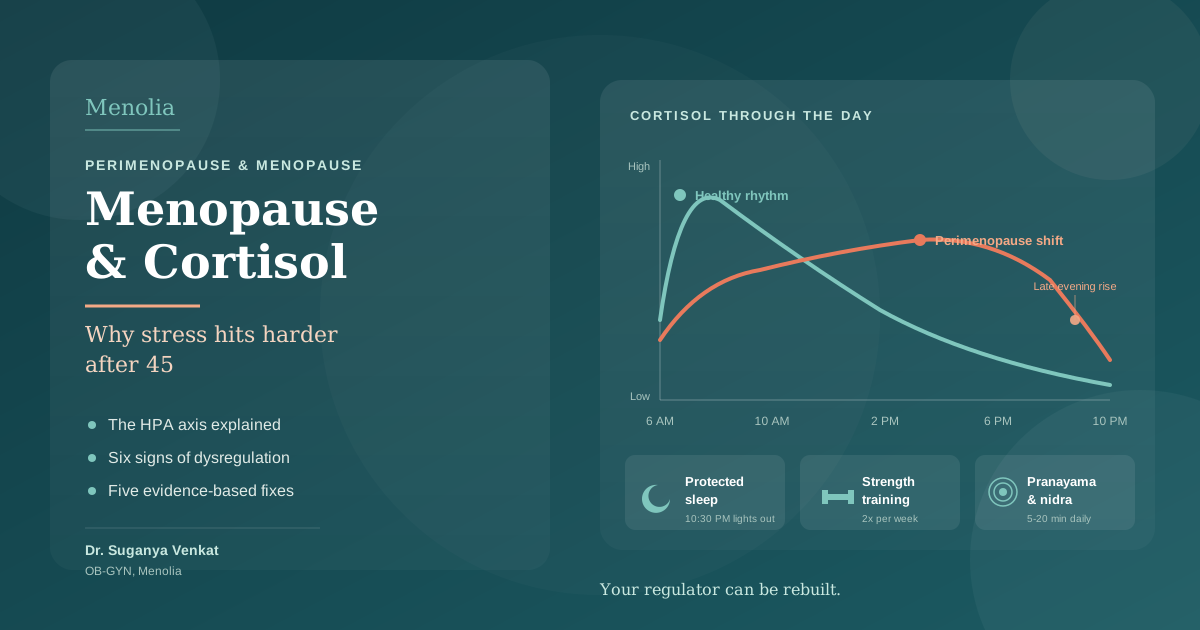
Cortisol is your body’s main stress hormone. It is released by the adrenal glands on signal from the brain, follows a clear daily rhythm, and prepares the body for action when something demands it.
In healthy regulation, cortisol works like this:
- A surge in the early morning (the cortisol awakening response) gets you out of bed with energy and motivation
- A gradual decline through the day lets you wind down naturally
- A low overnight level allows deep sleep, tissue repair, and immune work
- A short, controlled rise during stressful events helps you respond, then returns to baseline within an hour or two
This entire daily curve is governed by the HPA axis: the hypothalamus, pituitary, and adrenal glands working in feedback with each other. Oestrogen has an important modulating role in this circuit. Research by Genazzani and colleagues (Human Reproduction Update, 2007) demonstrated that oestrogen directly influences hypothalamic CRH neurons, which sit at the top of the HPA axis. When oestrogen levels are stable, cortisol responses are short, sharp, and well-controlled. When oestrogen falls and fluctuates during perimenopause, three things change:
- The morning peak gets blunted. Many women report waking tired and “needing two cups of tea to feel human” by the time they reach work. The cortisol that used to motivate them at 6 AM is delayed or weak.
- Daytime stress responses become exaggerated. A small trigger produces a larger cortisol surge than it used to. A traffic jam, a critical comment, a missed deadline: each lights up the alarm system more intensely.
- The off-switch slows down. Cortisol that should have returned to baseline within an hour is still elevated three or four hours later. By evening, the body is still in stress-response mode when it should be winding down. By night, deep sleep is harder to enter.
For more on this, read our guide on Menopause & Immune System.
Allostatic load (a concept formalised by McEwen in NEJM in 1998) describes the cumulative wear-and-tear when the body is held in stress mode for longer than it should be. Perimenopause silently increases allostatic load even without any change in actual life stressors.
This is why women say: “Nothing has changed in my life. So why does everything feel harder?”
The trigger has not become bigger. The internal regulator has become smaller.
The 6 Signs Your Cortisol May Be Dysregulated
These are the patterns I see most often in consults with women in perimenopause and early menopause. Any two or three together suggest a cortisol component to what they are experiencing.
1. Wired-but-tired afternoons. Energy drops at 3-4 PM, but you cannot rest. You feel exhausted yet revved up at the same time. A nap feels impossible even though your body is asking for one.
2. 3 AM awakening with a racing heart. You fall asleep fine. You wake at 2:30 or 3:30 AM with your mind racing, often replaying conversations or making lists. Heart rate may be elevated. Sleep does not return for an hour or more. This is the signature of a delayed cortisol peak, where the curve has shifted earlier into the night.
3. Belly weight gain despite no diet change. Cortisol drives fat to the abdomen specifically, not the hips or thighs. This is one of the most reliable hormonal weight patterns in perimenopause and overlaps with what we cover in our post on menopause belly fat: why it happens and what actually works.
4. Sugar and refined-carb cravings after 3 PM. Late-afternoon cortisol dysregulation drives a real biochemical hunger for quick energy. Jalebi, mithai, biscuits with chai, namkeen, or a second sweet after dinner are the most common cravings.
5. Short fuse with small things. Snapping at your partner over how the dishes are arranged. Tears at a minor parking inconvenience. The reaction is genuinely disproportionate to the trigger, and you can feel it as it happens but cannot stop it.
6. Slow recovery from minor illness. A cold that used to clear in three days takes a week. A small skin injury heals slowly. Recovery time after a single stressful event lengthens. This reflects cortisol’s longer-term suppressive effect on the immune system when it is chronically elevated.
There is no single blood test that captures cortisol dysregulation reliably. A morning serum cortisol can be normal in a woman whose entire daytime curve is shifted. Salivary cortisol day-curves are sometimes ordered by endocrinologists when there is a specific reason to investigate, but for most women in perimenopause, the symptom pattern is enough to act on.
Why Oestrogen Decline Specifically Disrupts the HPA Axis
There are three connected reasons.
One: Oestrogen calms CRH neurons. Corticotropin-releasing hormone is the brain signal that starts the cortisol cascade. Oestrogen receptors on these hypothalamic neurons reduce their firing rate when stimulated. When oestrogen falls, CRH neurons fire more readily. This raises the baseline cortisol set-point.
Two: Progesterone normally has a calming effect through GABA. Progesterone is converted in the brain to a neurosteroid called allopregnanolone, which binds to GABA-A receptors and produces a calming, sleep-promoting effect. As progesterone falls during perimenopause (often before oestrogen falls), this calming effect is lost. The HPA axis is less buffered against the rises of cortisol. Backstrom and colleagues (Progress in Neurobiology, 2014) documented this neurosteroid withdrawal pattern in detail.
For more on this, read our guide on Menopause & Sleep Apnea. Three: The sleep-cortisol loop becomes vicious. When perimenopausal hot flashes or simply hormonal sleep fragmentation reduce deep sleep, cortisol regulation gets worse the next day. When cortisol regulation is worse, deep sleep is harder to enter the next night. Donga and colleagues (JCEM, 2010) showed that even one night of sleep restriction shifts cortisol curves and insulin sensitivity measurably in healthy adults. In perimenopause, this loop runs almost every night. For the broader picture of what disrupted perimenopausal sleep looks like and how to fix it, see our post on perimenopause sleep problems: why you can’t sleep in your 40s.
These symptoms deserve support. The exercise review discussed below does not establish that a lifestyle plan will resolve this whole pattern.
💬 If this is sounding like exactly what you are experiencing, you are not alone. This pattern is one of the most common reasons women in their forties come to us, and it is one of the more workable ones. WhatsApp Dr. Suganya to start a conversation.
Five Practical Areas to Consider
These are starting points, not a fixed protocol. Choose one or two that fit your symptoms and routine, then review what changes.
Lever 1: Protected Sleep (the single biggest lever)
If you fix nothing else, fix sleep. Cortisol regulation is built during deep sleep. Without it, no other intervention works as well.
- Aim for 7 to 8 hours in bed, lights out by 10:30 PM if possible
- Cool the bedroom (24 to 25 degrees in summer is the comfortable threshold for most women in perimenopause)
- No phone after 9:30 PM. Replace with a paper book, journal, or quiet conversation.
- A warm shower 90 minutes before bed helps the core body temperature drop into sleep
- For the 3 AM awakening specifically: do not check the clock, do not pick up the phone, slow breathing (4 in, 6 out) until you drift back
If hot flashes are interrupting your sleep multiple times a night, the underlying vasomotor symptom needs treatment. Our hot flash treatment options guide walks through the full ladder from lifestyle to MHT.
Lever 2: Include Resistance Training
Resistance training can improve strength in older adults. In people with type 2 diabetes, it can also improve insulin sensitivity and glycaemic control (Strasser and Pesta, BioMed Research International, 2013, PMID 24455726). This review does not establish a cortisol-resetting effect or a sleep benefit for most women.
- Choose a session length and resistance that fit your current fitness and health
- Include movements for major muscle groups such as the legs, back, and shoulders
- A women-only gym, a home routine with resistance bands, or wall push-ups and squats are options
- Before choosing exercises, use our list of health concerns to discuss before starting
Lever 3: Low-Glycaemic Indian Meals with Protein at Every Meal
Blood sugar spikes drive cortisol surges. A bowl of refined rice or chapati with very little protein causes glucose to spike and crash, and the crash itself triggers a cortisol release.
- Start the day with protein (paneer bhurji, moong dal cheela, eggs, sprouts, or dahi-with-soaked-almonds) instead of cereal or toast
- Replace half your refined rice or wheat with millets twice a week: ragi roti, jowar bhakri, bajra roti, or thinai pongal
- Pair every meal with dal or paneer or eggs or chicken or fish: 20-30g of protein per main meal
- Snacks should combine fibre and protein: bhuna chana, soaked almonds with dahi, sprouted moong chaat
- Reduce sugary chai (and observe how your 4 PM mood changes within a week)
This dietary pattern overlaps closely with the broader perimenopausal blood-sugar story, which we cover in detail in our post on menopause and blood sugar: why your diabetes risk rises after 45.
Lever 4: Pranayama and Yoga Nidra
Slow, controlled breathing directly activates the parasympathetic nervous system and brings cortisol down within minutes. Pascoe and colleagues (Journal of Psychiatric Research, 2017) published a meta-analysis of yogic breathing interventions and confirmed measurable reductions in evening cortisol, perceived stress, and self-reported anxiety.
- Anulom Vilom (alternate-nostril breathing): 5 minutes in the morning and 5 minutes in the evening
- Bhramari (humming bee breath): 5 to 7 rounds before bed
- 4-7-8 breathing: breathe in 4 seconds, hold 7, exhale 8. Three rounds whenever you feel a wave of overwhelm
- Yoga Nidra: 20-minute guided body scan, ideally in the late afternoon. This is one of the most effective single interventions for resetting the cortisol curve and is more restorative than a nap
If you would like a structured yoga practice tailored to menopausal symptoms, yoga for menopause: poses, benefits and research walks through evidence-backed poses you can build a daily 20-minute practice from.
Lever 5: A Protected Non-Work Morning
This is the lever women resist the most and benefit from the most. Cortisol curves are set in the first 90 minutes of the day. If the first 90 minutes are spent on a phone, replying to office messages, watching news, or rushing children out the door in chaos, the cortisol curve gets jammed up high before 9 AM and stays there all day.
A 20-minute slower morning protects the entire rest of the day.
- 10 minutes of slow movement (walking, gentle yoga, stretching) in natural light
- 10 minutes of quiet (tea on the balcony, a journal, a moment of stillness)
- Eat before you check messages. The first meal stabilises cortisol; the first email destabilises it.
This is not a luxury. It is a hormonal intervention.
India-Relevant Foods That Help Cortisol Regulation
Indian kitchens already contain most of what supports a healthy stress response. The pattern is more important than any single food.
- Magnesium: kaddu ke beej (pumpkin seeds), til (sesame), ragi, rajma, chana, moong dal, dark green leafy vegetables (palak, methi, drumstick leaves). Magnesium is a co-factor for over 300 enzymes including those regulating the HPA axis.
- B vitamins: dal of any kind, eggs, dahi, paneer, milk, bajra, ragi. The B vitamins are essential for the adrenal cortisol pathway.
- Vitamin C: amla (one fruit has more than three oranges), guava, nimbu, kachi mirchi, bell peppers, drumstick leaves. The adrenal gland holds one of the highest concentrations of vitamin C in the body.
- Omega-3 fats: alsi (flaxseed), aakhrot (walnut), fish if you eat it (rohu, hilsa, bangda, sardines), sabja seeds. Omega-3 has documented anti-inflammatory effects that secondarily calm cortisol responses.
- Adaptogenic spices used in moderation: haldi in cooking, jeera, dhania, methi. Daily small doses in cooking, not large supplemental doses.
Skip the supplement industry’s claims about cortisol-blocking products sold online. The evidence base for those products is poor, the quality is unregulated, and the food-based approach is more reliable. If you are considering ashwagandha or any Ayurvedic preparation specifically, please discuss with your OB-GYN first; some interact with thyroid medications and antidepressants.
When to See a Doctor
Do not use the lifestyle ideas above to decide that symptoms need no medical assessment. See a doctor if you experience any of the following:
- Persistent low mood, hopelessness, or thoughts of self-harm. This may be clinical depression, which we cover separately in our post on menopause and depression: is your low mood hormonal.
- Panic attacks with chest pain, breathlessness, or dizziness that you cannot calm with breathing
- A pattern of memory or word-finding problems that is getting worse rather than better. The full discussion is in our post on menopause and memory loss: is it dementia or just hormones.
Before assuming a racing heart is panic, read the panic-attack guide’s section on having physical causes assessed.
- Severe fatigue that does not improve with sleep, especially with new weight changes (our fatigue guide discusses thyroid, anaemia and mood-related contributors)
- Suspected thyroid dysfunction (cold intolerance, hair loss, constipation, slow heart rate or unusually fast heart rate). A full TSH, free T3, free T4, and anti-TPO panel is the right starting investigation.
- Symptoms that are severely affecting your quality of life or your relationships
Do not wait for a fixed programme to end before seeking help with these symptoms. Our perimenopause treatment guide includes questions to bring to a discussion about hormonal therapy; following a lifestyle plan need not be a prerequisite for that conversation.
Frequently Asked Questions
Q: Is high cortisol the same as adrenal fatigue? A: No. Adrenal fatigue is not a recognised medical diagnosis. The mainstream endocrinology position is that the adrenal glands do not “burn out” or get “tired”; what changes is the brain-level signalling and the daily cortisol curve, not the gland itself. This is why blood tests of cortisol are often normal even when symptoms are strong. The pattern is what matters.
Q: Will MHT or HRT help with my cortisol-related symptoms? A: Menopausal hormone therapy can help indirectly by restoring oestrogen’s calming influence on the HPA axis. It is not prescribed for cortisol specifically, but women who start MHT for hot flashes often report that their stress reactivity also improves. This is a decision to make with your OB-GYN based on the broader risk-benefit picture, your individual symptoms, and your medical history.
Q: Should I get my cortisol levels tested? A: Routine cortisol testing is not usually needed for perimenopausal symptoms. A morning serum cortisol can be normal in a woman with a fully dysregulated daytime curve, so a normal result is not reassuring and an abnormal result rarely changes management. If your doctor suspects a specific endocrine problem (Cushing syndrome or Addison disease), they may order a salivary cortisol day-curve, an ACTH stimulation test, or imaging. Otherwise the symptom pattern guides care.
Q: Why do I feel worse in the evening even on days I rested in the afternoon? A: This is the classic late-afternoon cortisol pattern in perimenopause. The morning peak is blunted, daytime levels stay relatively elevated, and the natural evening wind-down is delayed. Protected sleep, evening pranayama, and avoiding screens after 9 PM gradually re-train the curve over several weeks.
Q: I am vegetarian. Can I still meet my protein needs to support cortisol regulation? A: Yes. A protein-forward Indian vegetarian day looks like: 1 katori moong dal (8g protein), 1 katori rajma (6g), 100g paneer (18g), 1 cup dahi (8g), 30g almonds (6g), 1 katori sprouts (4g). That is well over 50g of protein from a normal home-cooked vegetarian day. The shift from “dal-rice with little protein focus” to “protein-at-every-meal” makes the practical difference.
Q: Does caffeine make cortisol problems worse? A: Caffeine acutely raises cortisol. For women with already-dysregulated cortisol, two cups of strong filter coffee or black tea before noon is fine; cups after 2 PM and any third cup tend to delay the cortisol wind-down further. Try shifting your last caffeinated drink to before 1 PM and observe how your sleep changes within a week.
Q: Can yoga nidra really do as much as people claim? A: For many women, yes, though I would put this as clinical experience rather than settled evidence. A regular 20-minute yoga nidra session in the late afternoon leaves most women who try it calmer and sleeping better, and unlike a nap it does not tend to wreck the following night. There is no trial that pits yoga nidra against napping on evening cortisol, so treat it as something worth trying rather than something proven. It is one of the most under-used interventions in Indian wellness culture given how widely available it is.
💬 If you recognised your own experience here, you do not need to “just push through”. Message Dr. Suganya on WhatsApp to discuss what may help and whether your symptoms need further assessment.
You are not less capable than you were at 40. Changes in stress, sleep, and mood during this transition deserve support.
References
- Genazzani AR, Pluchino N, Luisi S, Luisi M. Estrogen, cognition and female ageing. Hum Reprod Update. 2007;13(2):175-187.
- McEwen BS. Protective and damaging effects of stress mediators. N Engl J Med. 1998;338(3):171-179.
- Backstrom T, Bixo M, Johansson M, et al. Allopregnanolone and mood disorders. Prog Neurobiol. 2014;113:88-94.
- Donga E, van Dijk M, van Dijk JG, et al. A single night of partial sleep deprivation induces insulin resistance. J Clin Endocrinol Metab. 2010;95(6):2963-2968.
- Black DS, Slavich GM. Mindfulness meditation and the immune system. Ann N Y Acad Sci. 2016;1373(1):13-24.
- Pascoe MC, Thompson DR, Ski CF. Yoga, mindfulness-based stress reduction and stress-related physiological measures. J Psychiatr Res. 2017;95:156-178.
- Strasser B, Pesta D. Resistance training for diabetes prevention and therapy: experimental findings and molecular mechanisms. BioMed Res Int. 2013;2013:805217. PMID 24455726.
- Lovejoy JC, Champagne CM, de Jonge L, et al. Increased visceral fat and decreased energy expenditure during the menopausal transition. Int J Obes. 2008;32(6):949-958.
- Mishra S, Palanivelu K. The effect of curcumin on Alzheimer’s disease. Ann Indian Acad Neurol. 2008;11(1):13-19.
- Markil N, Whitehurst M, Jacobs PL, Zoeller RF. Yoga Nidra relaxation. J Altern Complement Med. 2012;18(10):953-958.
- Innes KE, Selfe TK, Vishnu A. Mind-body therapies for menopausal symptoms. Menopause. 2010;17(3):649-655.