Why Are You Catching Every Cold Now?
In clinic, I hear a version of the same observation at least once a week from women in their late 40s and early 50s. They are catching infections they used to shake off easily. Each illness lingers longer than it used to. Their dentist mentions inflamed gums. They have had two or three throat infections in a season, where one used to be unusual. And their first question is: is this because of menopause?
The answer is: partly, yes. And the reason is oestrogen.
The connection is oestrogen.
Most women know oestrogen manages periods, hot flashes, and bone density. Fewer know that it also acts as a key regulator of the immune system. When oestrogen declines during and after menopause, the immune balance it had quietly maintained for decades begins to shift. This does not mean the immune system breaks down. It means it adapts to lower oestrogen, and that adaptation can make you more vulnerable to infections, slower to recover, and more prone to autoimmune flares.
This post explains how oestrogen shapes immunity, what changes after 45, why Indian women face a specific added vulnerability, and five evidence-based steps you can take today.
What This Post Covers
- How oestrogen regulates your immune cells
- The four immune shifts that happen at menopause
- Why Indian women carry an extra layer of vulnerability
- Five practical, evidence-based steps to support immunity
- India-relevant foods for the immune system
- When to talk to your doctor
Section 1: How Oestrogen Regulates Your Immune System
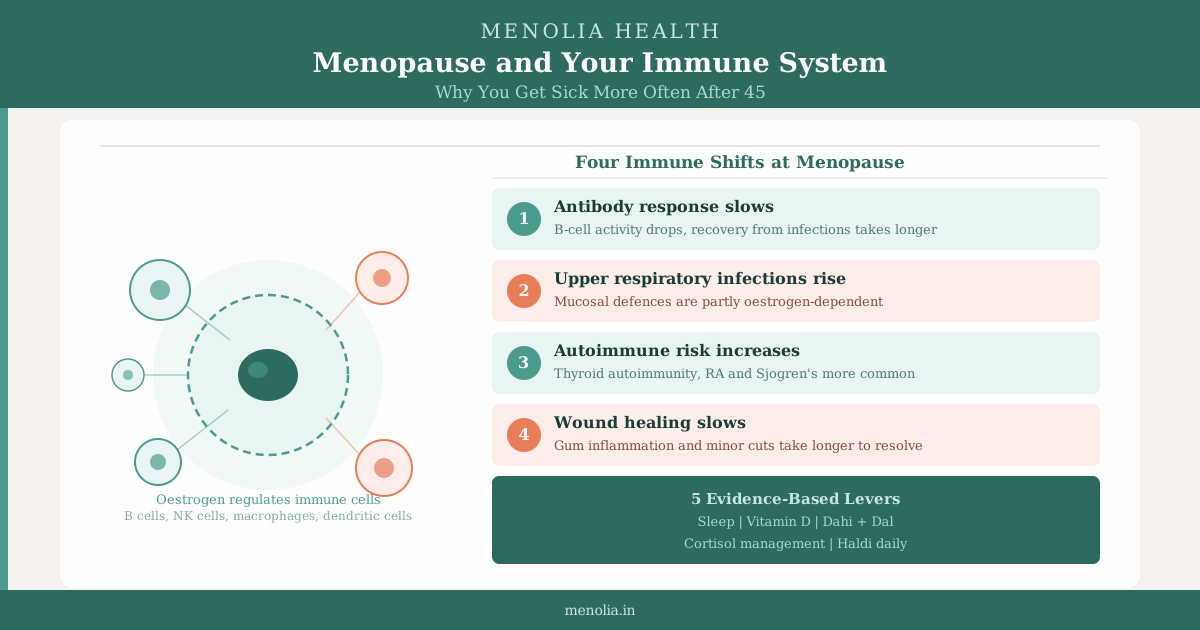
Oestrogen is not only a reproductive hormone. It binds to oestrogen receptors (ERalpha and ERbeta) found on B cells, T cells, natural killer (NK) cells, macrophages, and dendritic cells (Kovats 2015, Cellular Immunology). In other words, your immune cells are continuously responsive to oestrogen signals.
During your reproductive years, oestrogen was doing several things for your immune defences:
Upregulating B-cell activity. B cells produce the antibodies that recognise and neutralise viruses, bacteria, and other pathogens. Physiological oestrogen levels promote B-cell differentiation and antibody production. This is one reason women of reproductive age tend to mount stronger antibody responses to vaccines and infections than men of the same age.
Enhancing innate immunity. The innate immune system (NK cells, macrophages, neutrophils) is your first-response defence. Oestrogen supports the activity and vigilance of these cells (Straub 2007, Endocrine Reviews).
Modulating inflammatory cytokines. Oestrogen influences the balance between pro-inflammatory signals (IL-6, TNF-alpha) and anti-inflammatory signalling. It does not simply suppress inflammation; it regulates the response so it is proportionate to the threat.
Supporting mucosal immunity. The mucous membranes lining your respiratory tract, gut, and urogenital tract form a physical barrier against pathogens. Oestrogen supports their integrity and the production of secretory IgA, a frontline antibody active on these surfaces.
This is why many women with autoimmune conditions (rheumatoid arthritis, lupus, multiple sclerosis) find that symptoms calm during pregnancy, when oestrogen is high, and then flare in the post-menopausal period.
Section 2: Four Immune Shifts at Menopause
When oestrogen declines, the immune system reorganises around a new lower baseline. Four changes tend to emerge:
1. Reduced antibody response to infections
With lower B-cell activity, the antibody response to new pathogens is less vigorous. This does not prevent you from fighting infections, but it means the initial response is slower and recovery typically takes longer. Women over 50 also show a reduced response to vaccines compared to younger women, which is partly oestrogen-mediated.
2. Greater susceptibility to upper respiratory infections
The mucosal defences of the respiratory tract are partly oestrogen-dependent. Women after menopause tend to report more frequent and longer-lasting upper respiratory infections. Clinical evidence supports this trend (Klein and Flanagan 2016, Nature Reviews Immunology). The fact that many women notice “I catch everything now” in their late 40s and 50s is not imagined.
3. Heightened autoimmune activity
This seems paradoxical. If oestrogen was supporting immune activity, how does autoimmunity increase when it falls? The answer is that oestrogen was not just stimulating immunity. It was also regulating immune tolerance, the system’s ability to recognise “self” from “threat.” When oestrogen falls, the immune system loses some of this precise calibration, and in susceptible women, it can begin to target the body’s own tissues. This is why Hashimoto’s thyroiditis, rheumatoid arthritis, and Sjogren’s syndrome all become notably more prevalent in post-menopausal women compared to women of reproductive age (Kovats 2015, Cellular Immunology). If you have had a mildly elevated anti-TPO antibody for years without symptoms, menopause can be the trigger that shifts it into clinical hypothyroidism.
4. Slower wound healing and gum vulnerability
Oestrogen influences the inflammatory phase of wound healing. After menopause, minor cuts, skin irritations, and gum inflammation often take longer to resolve. This is clinically documented: post-menopausal women are at higher risk of gum disease and alveolar bone loss around teeth, driven by the same oestrogen-collagen pathway that causes osteoporosis in the skeleton. For more on gum changes at menopause, see our post on menopause and dental health.
Section 3: Why Indian Women Carry an Extra Vulnerability
Indian women going through menopause face two additional immune burdens that compound the shifts described above.
Vitamin D deficiency. Ritu and Gupta’s review documented widespread deficiency across varied Indian populations and discussed vitamin D’s role in immune function (Nutrients, 2014, PMID 24566435). It described limited sun exposure, skin pigmentation, covering clothing, and low dietary intake as contributing factors. It did not establish a menopause-specific infection risk or show that supplementation prevents recurrent infections in menopausal women. This is covered in more depth in our post on menopause calcium and vitamin D.
Zinc and selenium gaps on vegetarian diets. Zinc is essential for T-cell maturation, NK cell activity, and the production of antimicrobial compounds. Selenium supports antioxidant defences and thyroid function. Both are found in highest concentrations in animal-source foods. Women on predominantly vegetarian diets (common across Tamil Nadu and much of South and West India) may consume below the recommended intake for these two micronutrients, and phytates in grains and legumes reduce their absorption further. This is not an argument against vegetarian diets, which are otherwise rich in fibre, folate, and phytonutrients. It is an argument for being specific about which nutritional gaps exist.
If you are catching infections more often, recovering slowly, or have received an autoimmune marker result you do not understand, WhatsApp Dr. Suganya at wa.me/919940270499 for a 30-minute review. A simple blood panel can clarify your immune baseline.
Section 4: Five Evidence-Based Steps to Support Immunity
Step 1: Treat sleep as your primary immune intervention
Sleep is when immune memory consolidates. During deep sleep, the body releases cytokines that regulate immune responses, and T-cell adhesion to target cells strengthens (Besedovsky et al. 2012, Pflugers Archiv). Women who sleep fewer than six hours per night show significantly reduced vaccine response and higher susceptibility to rhinovirus infection (Cohen et al. 2009, Archives of Internal Medicine). At menopause, sleep disruption is already common because of hot flashes and night sweats. Treating the sleep problem is simultaneously treating the immune problem. The post on perimenopause sleep problems provides a structured approach.
Step 2: Test and optimise your vitamin D level
Ask your doctor for a 25(OH)D blood test. The optimal immune range is 40 to 60 ng/mL. Many Indian women of menopausal age present at 10 to 20 ng/mL. A combination of 15 to 20 minutes of midday sun exposure (10 AM to 2 PM, not through glass) three to four times a week, along with a vitamin D3 supplement of 1,000 to 2,000 IU daily, is appropriate for most women with insufficiency. Women with confirmed deficiency will usually need a higher loading protocol under medical guidance.
Step 3: Eat for your gut-immune axis
Approximately 70 percent of the body’s immune tissue lines the gut wall, and the composition of the gut microbiome directly regulates local immune tone. Oestrogen also shapes gut bacterial populations via an axis researchers now call the estrobolome, and declining oestrogen shifts these populations in ways that can increase intestinal permeability. Three practical steps for the Indian kitchen: eat fresh dahi (curd) daily for live probiotic cultures, include chaas (buttermilk) regularly especially in summer, and eat a variety of fibre-rich dal, rajma, and chana to feed beneficial bacteria. Fermented preparations like idli batter and dosa naturally contribute lactic acid bacteria.
Step 4: Manage the cortisol-immunity link
The HPA (hypothalamic-pituitary-adrenal) axis and the immune system are tightly cross-linked. Chronic cortisol elevation suppresses NK cell activity, impairs lymphocyte proliferation, and shifts cytokine balance toward chronic low-grade inflammation. At menopause, the cortisol awakening response becomes dysregulated, and many women find that stress hits harder and recovery is slower. Five to ten minutes of Bhramari pranayama (humming bee breath) in the morning has measurable effects on heart rate variability and cortisol output (Pascoe et al. 2017, Psychiatry Research). Our post on menopause and cortisol covers the full cortisol-management protocol for this life stage.
Step 5: Use haldi and probiotic foods daily, not supplements
Curcumin, the active compound in haldi (turmeric), has well-documented anti-inflammatory and immunomodulatory effects, including modulation of the NF-kB pathway (Mishra and Palanivelu 2008, Annals of the Indian Academy of Neurology). Consistent daily use in cooking is more effective than sporadic high-dose supplementation. Half a teaspoon of haldi in a dal, sabzi, or warm milk provides a meaningful daily dose, especially when combined with a small amount of fat (as in any sabzi cooked in oil) or black pepper, which increases curcumin bioavailability. Other India-relevant immune-supporting foods: amla (one of the highest vitamin C sources at approximately 600 mg per 100g), til (sesame seeds, a reliable source of zinc and selenium), and dark leafy greens including palak and methi for folate and iron.
India-Relevant Foods for Immune Support
| Food | Immune Benefit | Daily Use |
|---|---|---|
| Haldi | Curcumin: anti-inflammatory, NF-kB modulation | Half tsp in dal, sabzi, or warm milk daily |
| Dahi | Live probiotic cultures, gut-immune support | 1 cup fresh curd daily |
| Amla | 600 mg vitamin C per 100g, antioxidant defence | Chutney, murabba, fresh fruit, or powder |
| Ragi | Calcium and zinc for immune cell function | Ragi porridge, ragi roti 2-3 times per week |
| Rajma and chana | Dietary fibre for gut microbiome, plant zinc | 1 katori cooked 3-4 times per week |
| Til (sesame) | Zinc and selenium | 1 tablespoon in chutney, laddoo, or as garnish |
| Palak, methi | Folate and iron for immune cell production | Added to dal, sabzi, or paratha |
| Chaas (buttermilk) | Probiotics, gut permeability support | 1 glass at lunch or in the afternoon |
When to Have a Conversation with Your Doctor
Immune changes at menopause are worth mentioning at your next OB-GYN review, especially if:
- You are catching infections more frequently than before, or recovery consistently takes more than two to three weeks
- A blood test has returned an elevated autoimmune marker (ANA, anti-TPO, ESR, or CRP) and you have not had it explained
- You have a personal or family history of thyroid autoimmunity, rheumatoid arthritis, or Sjogren’s syndrome
- Your 25(OH)D vitamin D level is below 20 ng/mL
- You are experiencing persistent fatigue that does not improve with rest (see our post on menopause fatigue for the full checklist)
Your doctor can order the appropriate tests, interpret results in the context of your menopausal stage, and discuss whether any specific intervention (vitamin D loading, referral to a rheumatologist, or hormone therapy evaluation) is warranted. The post-menopause health checklist lists the eight screening tests most relevant to this phase of life, including thyroid panel and inflammatory markers.
Frequently Asked Questions
Q: Does menopause cause more colds and infections?
Falling oestrogen reduces the efficiency of mucosal immunity and B-cell antibody responses, which makes upper respiratory infections somewhat more frequent and longer-lasting for some women. It does not mean the immune system stops working. Good sleep, adequate vitamin D, probiotic foods, and stress management significantly offset this shift.
Q: Can menopause trigger an autoimmune condition?
Menopause does not directly “cause” autoimmune disease. But the immune recalibration that accompanies declining oestrogen can unmask a pre-existing susceptibility. Hashimoto’s thyroiditis, rheumatoid arthritis, and Sjogren’s syndrome all become more prevalent in post-menopausal women. If you notice new persistent joint pain, extreme fatigue, dry eyes and mouth, or unexplained thyroid symptoms, discuss autoimmune screening with your OB-GYN. For context on how B12 deficiency can mimic some of these symptoms, see our post on menopause and B12.
Q: Which vaccines should women over 50 prioritise?
Annual influenza vaccination is important: the immune response to flu is reduced in post-menopausal women without vaccination. A pneumococcal vaccine (Prevnar 13 or PPSV23) is recommended at 65 or earlier if immune-compromising conditions are present. A tetanus-diphtheria booster every 10 years. Discuss your complete vaccination history at your next doctor visit, as many Indian women have never received adult booster doses.
Q: Does HRT improve immunity?
HRT restores some of oestrogen’s immunomodulatory effects, and studies show women on HRT mount better vaccine responses and have lower rates of certain infections compared to untreated post-menopausal women. However, HRT is not prescribed for immune reasons alone. If you are already considering HRT for hot flashes, sleep disruption, or bone density, improved immune regulation is an additional benefit worth discussing with your OB-GYN. Our post on perimenopause treatment options covers the full range of interventions.
Q: How does vitamin D affect menopause immunity?
Vitamin D receptors are present on virtually every immune cell. Deficiency impairs both innate and adaptive immune responses, increases susceptibility to respiratory infections, and is associated with higher autoimmune disease risk. For post-menopausal Indian women, getting 25(OH)D levels tested is one of the most actionable single steps available. The optimal immune range is 40 to 60 ng/mL. Most Indian urban women test significantly below this.
Q: Are there specific Indian foods that boost immunity at menopause?
Dahi for gut microbiome support, haldi in daily cooking for curcumin’s anti-inflammatory effects, amla for vitamin C, til for zinc and selenium, ragi for calcium and mineral support, and a variety of dals and legumes for fibre. These are not exotic supplements. They are already present in most Indian kitchens. The key is daily consistency.
Q: How long does the immune shift last at menopause?
The most pronounced shift typically occurs in the first two to three years after the final menstrual period, as the body adapts to a new oestrogen baseline. With optimised vitamin D, consistent sleep, a varied gut-friendly diet, and managed stress, many women report returning to something close to their previous baseline. The immune system adapts continuously; this is not a one-way decline.
You Can Act on This Today
The immune changes at menopause are real, but they respond to specific, practical steps. Sleep, vitamin D, dahi and haldi in daily cooking, and managing cortisol are not vague wellness advice. They are the levers with the clearest evidence, and they are all accessible without prescriptions.
If you want a personalised review of your immune health at this stage, whether that means interpreting a recent blood result, discussing autoimmune screening, or understanding your vitamin D status, WhatsApp Dr. Suganya at wa.me/919940270499 for a 30-minute consultation.