“My Dentist Says I Have Gum Disease. I Brush Twice a Day.”
She was 48, meticulous about oral hygiene, and genuinely confused. Her gums had started bleeding occasionally over the past few months, her dentist found early periodontitis at her last visit, and she had been sent away with a prescription mouthwash and a recommendation to floss more.
She mentioned this almost as an afterthought at the end of a consultation about her irregular periods and hot flashes. When I told her that falling oestrogen can change the tissue in her gums, she looked at me as though I had said something in a foreign language.
Nobody had connected the dots.
This happens often. Oral health changes in perimenopause and menopause are well documented in the dental literature, but women typically see their dentist and their gynaecologist in separate rooms, on separate days, without either knowing what the other found. The result is that a hormonal symptom gets treated as a hygiene problem, and the root cause is never addressed.
For more on this, read our guide on Menopause Hair Thinning. This post explains what is happening, what you can do about it, and how to have a more useful conversation with both your dentist and your OB-GYN.
Why Your Mouth Has Oestrogen Receptors
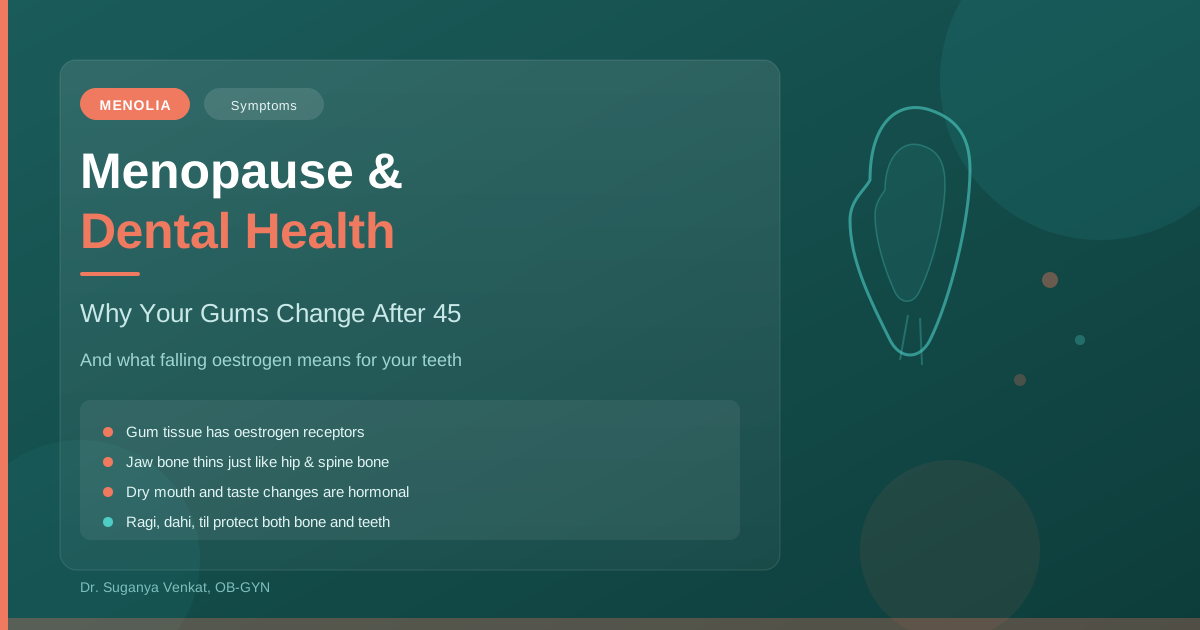
Most women know that oestrogen affects the uterus and ovaries. Fewer know that oestrogen receptors are present throughout the body, including in the gingival tissue (the soft tissue that surrounds and supports your teeth), the bone of the jaw, and the salivary glands.
This is not an unusual feature of the body. Oestrogen is a signalling molecule that influences tissue maintenance across many organ systems. When its levels are stable, it helps maintain healthy blood flow to the gums, supports collagen turnover in gingival tissue, and modulates the inflammatory response to oral bacteria.
When oestrogen levels fall, as they do during perimenopause and after menopause, these protective functions are reduced. The gingival tissue becomes more susceptible to inflammation. The inflammatory response to everyday oral bacteria becomes more pronounced. And the result, for a subset of women, is gum changes that look like a hygiene problem but are actually a hormonal one.
For more on this, read our guide on Menopause Symptoms in Hindi. Falling oestrogen is associated with increased periodontal inflammation, and the clinically useful version of this is simple: the same bacterial load tends to produce a bigger inflammatory response in lower-oestrogen tissue. That is why gums can start bleeding in your late forties even though your brushing has not changed.
Four Oral Changes That Are Linked to Menopause
1. Bleeding and Sensitive Gums
The most common oral complaint women bring to me during perimenopause is gum sensitivity or occasional bleeding on brushing. Many assume they are brushing too hard, and some switch to softer brushes (which is actually helpful). But the underlying cause is often tissue-level: the gingival tissue has become thinner, its blood vessel supply has changed, and its tolerance for the normal mechanical friction of brushing has decreased.
This is not an emergency. It is a recognisable pattern. Tell your dentist you are perimenopausal or post-menopausal. Ask them to factor this into their assessment. A dentist who knows your hormonal status may take a different approach to periodontal treatment than one who assumes it is a plaque problem.
The practical steps here are: use a soft-bristled brush, replace it every 3 months, and brush gently in small circular motions at a 45-degree angle to the gumline. Electric toothbrushes with pressure sensors are genuinely useful if you tend to press hard.
2. Jaw Bone Thinning (Alveolar Bone Loss)
Your teeth are held in place by the alveolar bone, a ridge of jawbone that forms the tooth sockets. Like the spine and hip, the alveolar bone is part of the skeletal system. It responds to the same hormonal changes that drive osteoporosis and osteopenia after menopause.
Postmenopausal women, particularly those with lower bone mineral density, tend to show greater alveolar bone loss and more periodontal attachment loss than premenopausal women. The mechanism is the same as systemic bone loss: oestrogen normally suppresses osteoclast activity (the cells that break down bone). When oestrogen falls, osteoclast activity increases and bone resorption outpaces bone formation.
For teeth, this means the supporting structure gradually becomes less dense. Teeth may become slightly more mobile over years. Gaps between teeth may appear or widen. A dentist may note on X-ray that “there is some bone loss around the roots”, which is often attributed to gum disease alone but may reflect a systemic bone process.
This is exactly why the calcium and vitamin D protocol matters for oral health, not just for your spine. The same foods that protect your skeletal bone also protect your jaw. You can read about the full calcium protocol in our guide to Menopause, Calcium & Vitamin D. For a deeper look at the bone loss progression, the post on osteopenia and osteoporosis explains what the T-score readings mean and when they require action.
3. Dry Mouth and Reduced Saliva
Saliva does more work than most people realise. It neutralises acid after meals, washes away bacteria, provides minerals to remineralise tooth enamel, and keeps the soft tissues of the mouth comfortable. Oestrogen plays a role in the secretory function of the salivary glands, and when oestrogen falls, saliva production often decreases.
The result is a dry, sticky sensation in the mouth that many women notice in their mid-to-late 40s. It tends to be worse in the morning, after meals, and at night. It makes speaking, swallowing dry foods, and wearing dental prosthetics less comfortable. It also increases the risk of dental decay because the protective buffer of saliva is reduced.
For more on this, read our guide on Menopause Dry Mouth. Research published in the Australian Dental Journal (2013) found that menopausal women reported significantly higher rates of xerostomia (the medical term for dry mouth) compared to premenopausal women of similar ages, independent of medication use. A case-control study published in BMC Oral Health (2021) found that hormone replacement therapy significantly improved salivary oestradiol levels and reduced subjective dry mouth scores, suggesting a direct hormonal mechanism.
Practical steps: sip water frequently through the day, avoid alcohol-based mouthwashes (which worsen dryness), chew sugar-free gum after meals to stimulate saliva, and ask your dentist about saliva substitute gels if the dryness is affecting your quality of life.
4. Altered Taste
Some women in perimenopause report that familiar foods taste slightly different. Food may seem blander, slightly metallic, or simply less satisfying in ways that are hard to articulate. This is less universal than the other symptoms, but it is a recognised oral phenomenon linked to hormonal change.
Oestrogen has a role in the maintenance of taste receptor cells on the tongue. As oestrogen falls, the sensitivity and turnover of these cells can be affected. Dry mouth also reduces taste perception because taste requires saliva to carry flavour molecules to the receptors.
This tends to resolve partially or fully over time. Staying well hydrated, addressing dry mouth, and ensuring adequate zinc and B12 intake (both of which support taste receptor function) are reasonable supportive steps.
If any of the symptoms above sound familiar and you would like to understand how they fit into your overall hormonal picture, a conversation with Dr. Suganya can help you connect what your dentist and your body are telling you.
WhatsApp Dr. Suganya: wa.me/919940270499
The India-Specific Picture
Calcium-Rich Indian Foods for Teeth and Jaw Bone
The same Indian foods that support skeletal bone health are your best allies for alveolar bone health. Based on ICMR-NIN 2017 data:
| Food | Calcium (per 100g or serving) |
|---|---|
| Ragi (finger millet) | 364 mg per 100g |
| Black til (sesame seeds) | 351 mg per 30g |
| Moringa leaves (cooked) | 220 mg per 50g |
| Dahi (full-fat curd) | 240 mg per 200g serving |
| Paneer | 208 mg per 100g |
| Milk | 300 mg per 250ml glass |
Aim for 1,000 to 1,200 mg of calcium daily from food sources, with vitamin D to support absorption (sunlight, 15 to 20 minutes mid-morning, 3 to 4 times a week).
Neem Twigs and Oil Pulling
Two traditional practices come up often in this context.
Neem twigs (datun): Neem has documented antimicrobial properties. Small studies have shown that neem twig use reduces bacterial plaque and gingivitis scores. However, it does not replace a soft toothbrush for mechanical plaque removal, and biting hard on dry twigs can cause gum trauma in already-sensitive tissue. If you use them, use them gently and wet.
Oil pulling: Pulling sesame or coconut oil around the mouth for 10 to 15 minutes is a traditional Ayurvedic practice. Some studies show a modest reduction in oral bacterial counts. It is safe to add to your routine and may contribute to oral microbiome support, but it does not replace brushing, flossing, or dental visits.
Dahi for the Oral Microbiome
The mouth has its own microbiome. Emerging research suggests that a diverse, probiotic-rich diet supports oral bacterial balance. Dahi (curd) is a natural probiotic that may provide benefit here, in addition to its well-established role as a calcium source. One small bowl of fresh, unsweetened dahi daily is a sensible addition for women managing menopausal oral changes.
A Five-Step Menopause-Aware Oral Care Routine
Based on the evidence and clinical practice, these are the steps that make the most meaningful difference:
Step 1: Use a soft toothbrush, always. Medium and hard bristles increase gum trauma in hormonally sensitive tissue. Replace the brush every 3 months.
Step 2: See your dentist every 6 months, not once a year. Periodontal changes in menopause can progress quickly. A 6-monthly cleaning and review catches problems while they are manageable. Tell your dentist at every visit that you are perimenopausal or post-menopausal.
Step 3: Prioritise calcium and vitamin D. A dietary calcium intake of 1,000 to 1,200 mg per day (from ragi, dahi, til, paneer, milk) supports alveolar bone alongside skeletal bone. Adequate vitamin D (check your 25(OH)D level if you have not done so) is necessary for calcium absorption. More on this is in our calcium and vitamin D guide.
Step 4: Stay hydrated and support saliva. Drink water consistently through the day. Avoid alcohol-based mouthwashes. Use a fluoride toothpaste (fluoride remineralises enamel even when saliva production is reduced).
Step 5: Check your B12 and tell your gynaecologist about your oral symptoms. B12 deficiency is common in women over 45, especially vegetarians and those on long-term metformin or antacids. B12 deficiency can cause burning mouth sensation, tongue soreness, and altered taste that is separate from menopausal oral changes but often overlaps. Our post on menopause and B12 deficiency explains when and how to test.
Your Dentist and Your OB-GYN Need to Know About Each Other
This is perhaps the most important practical point. Dentists are typically not trained to ask about hormonal status, and gynaecologists rarely ask about oral health. But the two are connected, especially in the years around menopause.
At your next dental visit: mention your menopausal status. Ask the dentist to note it. If you are on HRT, mention that too, as HRT has a documented protective effect on periodontal attachment and alveolar bone.
At your next OB-GYN visit: mention any oral changes you have noticed since perimenopause began. Bleeding gums, dry mouth, and increased dental sensitivity are legitimate hormonal symptoms that belong in the conversation alongside hot flashes, sleep problems, and joint pain.
The connection between systemic bone health and jaw bone is also why the strength training and bone protection protocol matters. You can read more about that in our post on menopause and strength training.
Stress is a third factor worth naming here. Chronic elevated cortisol (which increases as oestrogen falls, a pattern explored in our menopause and cortisol post) suppresses immune function, including the immune response to periodontal bacteria. Women who are under sustained stress show faster periodontal deterioration. Managing cortisol is not just a mental health strategy; it is also an oral health one.
Frequently Asked Questions
Can menopause cause tooth loss? Menopause itself does not cause tooth loss directly. But the alveolar bone loss associated with falling oestrogen, if untreated and combined with active periodontal disease, can over years reduce the supporting structure for teeth. Regular dental care, calcium and vitamin D support, and good periodontal hygiene reduce this risk significantly.
Will my gum problems improve once I am fully post-menopausal? Not automatically. Oestrogen levels stabilise after menopause but at a lower baseline than before. Gingival tissue and alveolar bone do not regenerate spontaneously. The goal of management is to slow the progression and maintain what is there, not to reverse changes. Starting the calcium and dental care protocol during perimenopause produces better long-term results than waiting.
Can HRT help with oral symptoms? Yes. Postmenopausal women using oestrogen therapy consistently show less periodontal attachment loss, less alveolar bone loss, and lower rates of tooth loss compared to non-users in observational studies. Dry mouth symptoms also improve with HRT. Whether HRT is appropriate for you is a broader clinical question that depends on your full history. This is worth discussing with your gynaecologist.
My gums only started bleeding after I began taking calcium supplements. Is that related? No. Calcium supplements do not cause gum bleeding. If the bleeding coincided with starting supplements, it is more likely to be a coincidence of timing with perimenopausal tissue changes. However, large calcium tablets can occasionally cause constipation or reflux, and switching to calcium citrate or spreading doses across the day can help if that is a concern.
Is dry mouth at night just because I breathe through my mouth? It can be, but in perimenopausal and menopausal women, reduced salivary gland function is often a contributing factor independent of breathing pattern. Using a humidifier in the bedroom, staying well hydrated through the day, and applying a water-based oral moisturising gel before bed can all help. If the dryness is affecting sleep quality, mention it to your doctor.
I had good teeth all my life. Why are things changing now? Because the hormonal environment that supported your gum and bone tissue for decades has changed. This is not a sign that your dental hygiene has worsened. It is a sign that your oral tissues now need a slightly different care protocol. The change is manageable with the right information, which is exactly what this article has aimed to provide.
Does stress make gum disease worse? Yes. Cortisol suppresses immune function, including the local immune response in gingival tissue that keeps periodontal bacteria in check. Women under sustained stress show faster progression of periodontal changes. This is one more reason why cortisol management (sleep, movement, pranayama) is worth prioritising during perimenopause.
For more on this, read our guide on Menopause & Immune System.
If you have noticed changes in your gums, jaw sensitivity, dry mouth, or taste since turning 45, these are worth discussing with an OB-GYN who understands the menopausal transition and can help you put the full picture together.
Start a conversation with Dr. Suganya on WhatsApp: wa.me/919940270499
Dr. Suganya Venkat is an OB-GYN with 15+ years of clinical experience. DNB OB-GYN from GKNM Hospital, Coimbatore. MD Pathology from CMC Vellore. MBBS with 5 Gold Medals from SRMC.