You have been waking at 3 AM, damp and wide-eyed, unable to settle back to sleep. Your knees creak on the stairs in a way they did not two years ago. Some afternoons a wave of heat rises through you so suddenly you have to step outside. You forget words mid-sentence. Your mood is less steady than it used to be, not dramatically, but noticeably. You have started to wonder whether all of this is connected, or whether your body is producing a string of unrelated problems at once.
In the vast majority of cases, it is connected. The link is falling oestrogen.
For more on this, read our guide on Menopause & Gallstones.
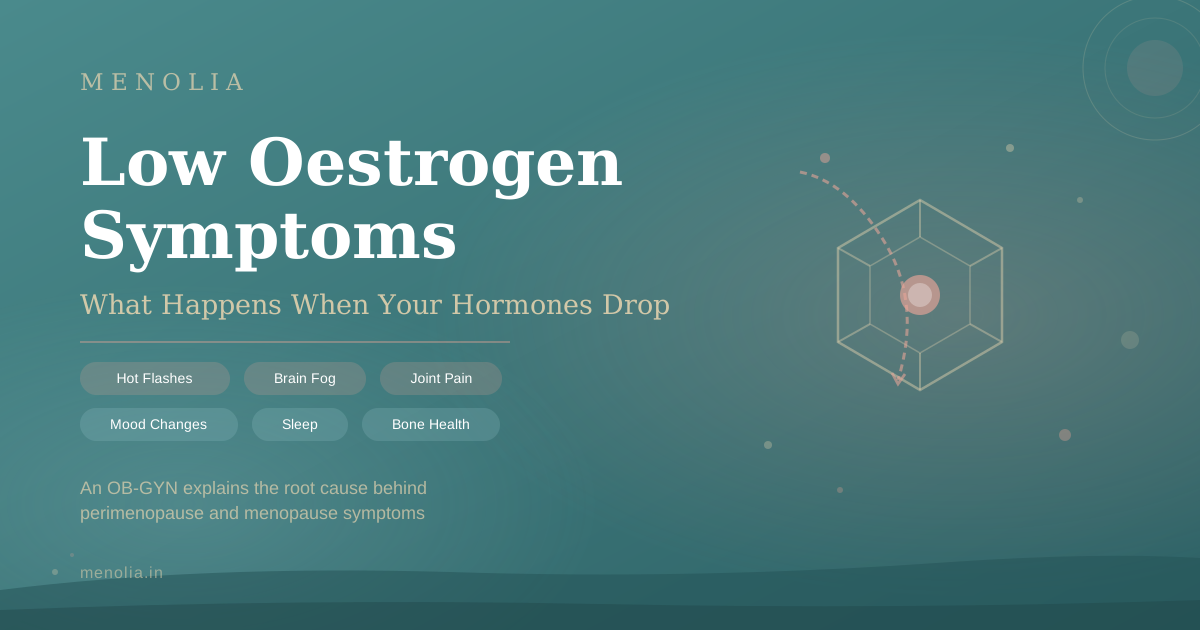
This post explains what happens physiologically when oestrogen levels decline, the ten body systems most directly affected, and what the research shows about why these symptoms arrive together.
How Oestrogen Levels Change During Perimenopause
The ovaries are the primary source of oestradiol, the most biologically active form of oestrogen. Oestradiol is produced by follicles during each menstrual cycle. As the ovarian follicle pool diminishes with age, oestradiol output per cycle falls. This process begins gradually in the mid-to-late thirties but becomes clinically significant during perimenopause, the transitional phase before menopause.
Data from the Study of Women’s Health Across the Nation (SWAN), one of the largest longitudinal studies on hormonal transitions, documents that mean oestradiol does not change until about two years before the final menstrual period, when it begins decreasing, reaching its maximal rate of change at the final menstrual period itself and then stabilising about two years after it (Randolph JF et al., Journal of Clinical Endocrinology and Metabolism, 2011, PMID 21159842). By the time menopause is reached (defined as 12 consecutive months without a period), oestradiol levels are a fraction of what they were during the reproductive years.
For Indian women, the average age of natural menopause is approximately 46 to 47 years (Ahuja M 2016, J Midlife Health, PMID 27721640), four to five years earlier than the global average of 51. This means the low-oestrogen transition often begins in the early forties, earlier than most women expect.
What makes oestrogen so central is that it is not a single-purpose reproductive hormone. Oestrogen receptors (ERα and ERβ) are distributed throughout the body: in the brain, bone, cardiovascular tissue, skin, joints, vaginal tissue, and urinary tract. When oestrogen falls, all of these tissues are affected simultaneously. The result is not ten separate problems. It is one hormonal shift with ten visible expressions.
10 Symptoms Explained by Falling Oestrogen
1. Hot Flashes and Night Sweats
Hot flashes are the most widely recognised low-oestrogen symptom, experienced by the large majority of women during the menopause transition (Stearns V et al., Lancet, 2002, PMID 12480376). They occur because oestrogen plays a regulatory role in the hypothalamus, the brain region responsible for thermoregulation. In reproductive years, the hypothalamus tolerates a range of core body temperature before activating heat-dissipation mechanisms. When oestrogen falls, this thermoregulatory zone narrows significantly, so even a small rise in core temperature triggers a sweating and flushing response (Freedman RR 2014, Current Topics in Behavioral Neurosciences, PMID 24929849).
Night sweats are hot flashes during sleep. They fragment sleep architecture and compound the fatigue of the perimenopausal transition. Our dedicated post on menopause night sweats covers triggers and practical strategies.
2. Disrupted Sleep
Menopause is associated with insomnia, through hot flashes, mood disorders, and increased sleep-disordered breathing among other factors (Moline ML et al., Sleep Medicine Reviews, 2003, PMID 12628216).
A SWAN community survey found self-reported sleep difficulty was most common in late perimenopause, and that stage of the menopausal transition was associated with sleep difficulty independently of other potential explanatory factors (Kravitz HM et al., Menopause, 2003, PMID 12544673). Our post on menopause sleep problems covers what the evidence shows about interventions.
3. Brain Fog and Memory Changes
Many women in perimenopause describe a mental slowing: slower word retrieval, difficulty holding multiple things in mind at once, forgetting names or plans more readily than before. This is a documented physiological change, not a psychological response to stress.
Oestrogen receptors are present throughout the brain, including in the hippocampus and prefrontal cortex, regions central to memory and executive function.
The SWAN cohort, followed for four years, found that perimenopause was associated with a decrement in cognitive performance, characterised by women not being able to learn as well as they had during premenopause, with improvement rebounding to premenopausal levels in post-menopause (Greendale GA et al., Neurology, 2009, PMID 19470968). For most women, this represents a transitional effect rather than a permanent trajectory. Our post on menopause brain fog explains the mechanism and what helps.
4. Mood Changes and Anxiety
Oestrogen modulates serotonin receptor sensitivity and serotonin transporter expression in the brain. When oestrogen levels fluctuate or fall, serotonin signalling becomes less stable. This destabilisation can manifest as mood swings, increased emotional reactivity, or new-onset anxiety in women who have not experienced these symptoms before.
For more on this, read our guide on Menopause Symptoms in Hindi. This is a physiological mechanism, not a character change or a psychological weakness. It explains why mood symptoms often improve as oestrogen levels stabilise in post-menopause for many women, and why they feel qualitatively different from mood changes caused by external life events. Our post on menopause mood and anxiety covers the distinctions and evidence-based approaches.
5. Joint Pain and Morning Stiffness
Synovial membranes, the tissue lining the inside of joints, carry oestrogen receptors. Oestrogen matters for articular cartilage, for the subchondral bone beneath it, and for the maintenance of healthy joints: in an ovariectomised mouse model, oestrogen depletion alone induced significant cartilage damage in the patella, and in combination with a chemical joint insult it damaged cartilage in the tibia and thinned subchondral cortical bone, which the authors read as support for a role of altered oestrogen signalling in osteoarthritis (Sniekers YH et al., Arthritis Research and Therapy, 2010, PMID 20923566).
Women often report knee pain, hip stiffness, and hand joint aches during perimenopause, without a prior history of arthritis. The pattern is typically worse in the morning and improves with movement, which is characteristic of inflammatory rather than mechanical joint pain. See our post on menopause joint pain for detailed guidance.
Experiencing several of these symptoms and wondering what to do first? Dr. Suganya Venkat works with Indian women through perimenopause and menopause every day. A short conversation can help you understand what is happening and where to start.
For more on this, read our guide on Perimenopause Symptoms. Chat with Dr. Suganya on WhatsApp
6. Vaginal Dryness and Urinary Changes
Vaginal tissue is among the most oestrogen-sensitive in the body. The cells lining the vaginal wall depend on oestrogen for their moisture, thickness, and elasticity. When oestrogen falls, the vaginal epithelium thins, lubrication decreases, and the tissue becomes more fragile. The clinical term for the constellation of symptoms this produces is the Genitourinary Syndrome of Menopause (GSM), which includes vaginal dryness, discomfort, recurrent urinary tract infections, and urinary urgency (Portman DJ and Gass ML, Menopause, 2014, PMID 25160739).
Unlike hot flashes and brain fog, which often ease as the body adjusts to lower oestrogen levels, GSM symptoms tend to persist and can worsen without treatment. Our post on vaginal dryness during menopause explains what the options are, and if urine leakage or urgency is part of your picture, the guide to menopause bladder leaks covers what helps.
7. Fatigue
Fatigue during perimenopause has multiple contributing pathways, all connected to falling oestrogen. Disrupted sleep (covered above) is the most direct. Beyond sleep, oestrogen withdrawal alters dopamine and serotonin signalling, both of which affect motivational energy and the sense of drive that is separate from simple tiredness.
It is worth checking thyroid function separately. Hypothyroidism is significantly more common in perimenopausal women and produces overlapping symptoms. Our post on menopause fatigue covers how to distinguish hormonal fatigue from thyroid-related causes.
8. Skin Dryness, Thinning, and Hair Changes
Oestrogen receptors are present in the fibroblasts, keratinocytes, and sebaceous gland cells of skin. When oestrogen falls, fibroblasts reduce collagen production, sebaceous glands produce less surface oil, and glycosaminoglycan synthesis (which controls the skin’s internal hydration capacity) declines. Skin collagen content and skin thickness in postmenopausal women decline by between 1 and 2% per year after menopause (Brincat M et al., Obstetrics and Gynecology, 1987, PMID 3120067).
Hair changes follow an overlapping mechanism: oestrogen prolongs the anagen (growth) phase of the hair cycle. As oestrogen falls, more hairs shift into resting and shedding phases, producing diffuse thinning at the temples and crown. Our posts on menopause skin dryness and collagen loss and menopause hair loss cover both in detail.
9. Bone Density Changes
Oestrogen is central to the maintenance of bone. It promotes the activity of osteoblasts (bone-building cells) and limits the activity of osteoclasts (bone-resorbing cells). When oestrogen falls, this balance tips toward net resorption, and bone density declines. Menopause initiates an accelerated phase of predominantly cancellous bone loss that declines rapidly over four to eight years, followed by a slower phase that continues indefinitely (Riggs BL et al., Endocrine Reviews, 2002, PMID 12050121).
Indian women carry additional risk: vitamin D deficiency is highly prevalent in both urban and rural settings, across all socioeconomic and geographic strata, despite plentiful sunshine (Ritu G and Gupta A, Nutrients, 2014, PMID 24566435). It is likely to play an important role in the very high prevalence of osteoporosis in India. Our post on menopause and bone health in Indian women explains the India-specific picture and prevention.
10. Heart Palpitations and Cardiovascular Changes
Oestrogen has direct protective effects on the cardiovascular system. It supports arterial flexibility, promotes nitric oxide production (which dilates blood vessels), and reduces LDL cholesterol oxidation. When oestrogen falls, LDL cholesterol tends to rise, HDL may fall, and blood vessel tone changes, contributing to increased cardiovascular risk in postmenopausal women (Mendelsohn ME and Karas RH, New England Journal of Medicine, 1999, PMID 10362825).
Heart palpitations, an awareness of one’s own heartbeat, are a common perimenopausal symptom arising from the same autonomic nervous system instability that underlies hot flashes. They are not a sign of cardiac disease in most otherwise healthy women, but a cardiac evaluation is appropriate if palpitations are frequent, prolonged, or accompanied by other symptoms. Our post on menopause heart palpitations covers when evaluation is needed.
What Helps: Foods and Lifestyle for Indian Women
Understanding that these ten symptoms share one root cause is useful because it focuses the response. You are supporting your body through one hormonal transition. Here is what is relevant and practical for Indian women.
Foods Rich in Phytoestrogens
Phytoestrogens are plant compounds that weakly bind to oestrogen receptors. They do not replace oestrogen, but consistent food-source intake modestly reduces hot flash frequency and provides supportive signalling to oestrogen-sensitive tissues including bone and skin.
Alsi (flaxseeds): The highest known food source of lignans, the most researched class of phytoestrogens for menopausal benefit. Use one tablespoon ground (not whole) per day, stirred into dahi or kneaded into roti dough.
Til (sesame seeds): Rich in lignans and calcium. Use in chutneys, laddoos, or sprinkled over rice. Two teaspoons daily is a practical target.
Soya: Tofu, soya milk, and soya chunks are among the highest sources of isoflavones. Studies in Asian women with high soy intake report lower hot flash frequency than in populations with minimal soy consumption.
Ragi (finger millet): A calcium-rich grain that supports bone maintenance alongside the phytoestrogen contribution. Use for rotis, ambali, or laddoos.
Dahi (yoghurt): Provides calcium and protein. Emerging research on the gut-oestrogen axis (the estrobolome) suggests that gut bacteria influence oestrogen metabolism and systemic oestrogen levels. A dahi-rich diet supports both.
For a curated list of Indian foods with documented benefit, see 9 Indian foods that fight hot flashes.
Lifestyle
Weight-bearing exercise stimulates bone turnover and partially offsets the bone density loss associated with oestrogen decline. Thirty minutes of brisk walking five days per week is a well-studied minimum. Adding light resistance work (lifting groceries, bodyweight exercises, resistance bands) from the mid-forties onwards has documented benefit for both bone and muscle. Our post on menopause and strength training covers how to start safely.
Stress management matters more during perimenopause than in earlier life. Consistent pranayama, a short daily meditation, or intentional outdoor time provides a meaningful counter.
When to Discuss Medical Options
If symptoms are significantly affecting your sleep, mood, or quality of daily life, this is the time to have an honest conversation with your doctor about the full range of options. Hormone therapy is the most effective treatment for vasomotor symptoms and genitourinary changes, and current evidence shows that for healthy women under 60 who begin within ten years of menopause, the benefit-to-risk balance is favourable for most (The North American Menopause Society, Menopause, 2022, PMID 35797481). If you still have your uterus and take systemic oestrogen (tablets, patches or gel), a progestogen is added alongside it to protect the womb lining, because oestrogen on its own increases the risk of endometrial overgrowth and cancer. Low-dose vaginal oestrogen used just for dryness does not usually need this. Whether it is appropriate for you depends on your individual history.
For more on this, read our guide on Perimenopause Mood Changes.
Frequently Asked Questions
What are the most common symptoms of low oestrogen?
Hot flashes and night sweats are the most widely reported. Disrupted sleep, mood changes, and brain fog are reported with nearly equal frequency in longitudinal studies. Vaginal dryness and joint pain are common but often under-discussed.
Can low oestrogen cause anxiety?
Yes. Oestrogen regulates serotonin receptor sensitivity in the brain. When oestrogen falls, serotonin signalling becomes less stable, producing anxiety or emotional volatility in women who have not experienced these symptoms before. This is a hormonal mechanism, not a psychological response.
Does low oestrogen cause weight gain?
Oestrogen influences fat distribution. In reproductive years, oestrogen directs fat toward the hips and thighs. When oestrogen falls, the fat redistribution pattern shifts toward abdominal (visceral) fat. Total caloric intake may not change, but body composition and shape do, particularly around the waist. Our post on menopause weight gain covers this mechanism and what helps.
How long do low oestrogen symptoms last?
Vasomotor symptoms (hot flashes, night sweats) peak in the two years surrounding the final menstrual period and improve for most women over three to five years. Genitourinary symptoms (vaginal dryness, urinary changes) tend to persist and require active management. Joint, bone, and cardiovascular changes are ongoing and warrant long-term attention.
At what age do low oestrogen symptoms start for Indian women?
Most Indian women begin experiencing perimenopausal symptoms in their early to mid-forties. The average age of menopause in India is approximately 46 to 47 years, four to five years earlier than the global average of 51. Symptoms can begin three to five years before the final period.
Should I get my oestrogen levels tested?
A single oestrogen blood test is rarely diagnostic for perimenopause because oestradiol levels fluctuate significantly across the cycle and between days. Clinically, perimenopause is assessed through the combination of symptoms, menstrual pattern changes, age, and sometimes FSH levels. Speak with your doctor about which tests are most informative for your situation.
Can Indian foods reduce low oestrogen symptoms?
Foods rich in phytoestrogens (alsi, til, soya) and calcium (ragi, dahi, sesame seeds) provide nutritional support during the transition. They are not a substitute for medical treatment when symptoms are severe, but consistent intake has documented modest benefit for vasomotor and bone health outcomes, particularly in Asian women with higher baseline phytoestrogen consumption.
All ten of these symptoms are connected to one hormonal transition, and you do not have to figure out how to manage them alone. Dr. Suganya Venkat’s team works with Indian women through every stage of perimenopause and menopause. Start with a conversation.