The first time it happens, most women try to convince themselves it was nothing.
A small leak on a sneeze. A few drops while laughing with friends. The sudden, unexpected urgency on the way home from a function, that no woman in her forties has ever quite been ready for.
In my clinic, women rarely raise this in their first sentence. They mention it after the blood pressure reading, after the period chart, sometimes only when their husband or daughter has nudged them to. And almost always, they apologise for bringing it up at all.
If this is you, please hear this clearly: bladder leaks after 45 are extremely common, they are not your fault, and they are treatable. You do not need to plan your life around them, wear protection in silence, or accept this as part of getting older. The medical name is urinary incontinence, and it is a recognised condition with effective, evidence-based solutions.
What This Post Covers
- Why menopause changes how your bladder and pelvic floor work
- The two main types of leaks (stress and urge) and how to tell them apart
- What actually helps, from simple at-home steps to clinical treatments
- India-relevant dietary changes that support bladder calm
- Practical steps to take starting this week
Why Bladder Leaks Become More Common After 45
Three things change at the same time during the menopause transition, and together they make leaks much more likely.
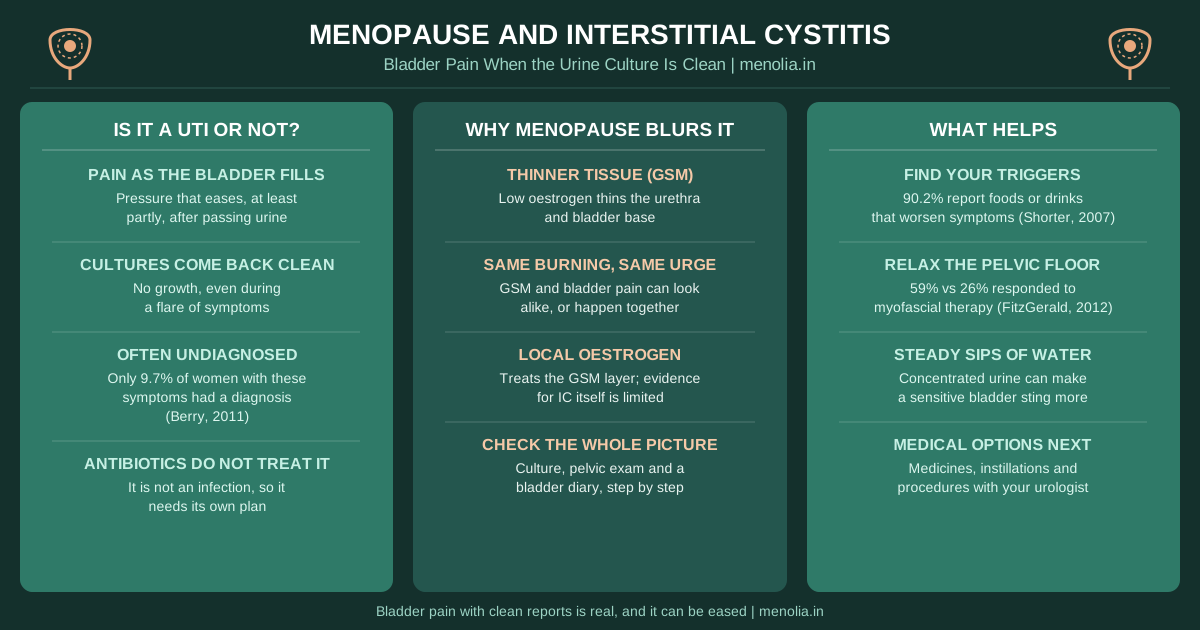
Oestrogen falls, and the urethra and bladder respond. Like the vaginal walls, the lining of the urethra and bladder neck carry oestrogen receptors. When oestrogen drops, these tissues become thinner and less elastic. The seal at the top of the urethra, which normally holds urine in, becomes less efficient. This is one of the components of Genitourinary Syndrome of Menopause, or GSM, described by Portman and Gass in the journal Menopause (2014).
The pelvic floor weakens. The muscles that form a sling under the bladder, uterus, and bowel lose collagen and tone with age. If you have given birth vaginally, especially more than once or with a long second stage, the supporting structures may already have stretched. Add years of chronic constipation, heavy lifting in daily housework, or a chronic cough, and the cumulative strain on these muscles is significant. Our post on why pelvic floor muscles weaken in menopause covers the anatomy in detail.
The bladder muscle itself becomes more reactive. Inside the bladder, a muscle called the detrusor contracts when it is time to empty. With age and oestrogen decline, this muscle can become twitchy, contracting before the bladder is full. This is what creates that sudden, hard-to-control urge that many women describe.
These changes are gradual. They are not a sign that anything is wrong with you. They are a normal physiological response to a hormonal shift, and they are very much treatable.
The Two Main Types of Leaks
Most bladder leaks during and after menopause fit into one of two patterns, or a combination of the two.
Stress Incontinence
This is the leak that happens with effort: a cough, a sneeze, laughing, lifting a grandchild, climbing stairs, jumping, or exercise.
The trigger is a sudden rise in pressure inside the abdomen. In a younger body with a strong pelvic floor and a well-supported urethra, that pressure is contained. After menopause, with weakened muscles and a less elastic urethra, a small amount of urine escapes.
Stress incontinence is the most common type in women between 45 and 60, especially in those who have had vaginal births. The amount of leakage is usually small but can be very embarrassing and limits what women feel they can do.
Urge Incontinence
This is the leak that follows a sudden, intense urge to urinate, sometimes with little or no warning. Women describe it as: “I just stood up and I had to run.” Or: “The moment I put my key in the door, I knew I was not going to make it.”
The mechanism is different. Here, the bladder muscle is contracting on its own, before the bladder is full and before you have decided to empty it. This is also called overactive bladder, or OAB. Triggers include cold weather, the sound of running water, drinking caffeine, drinking alcohol, and simply arriving home (a learned association).
Mixed Incontinence
Many women have both: leaks with effort and leaks with urgency. This is called mixed incontinence and is also extremely common in the menopause years. The treatment plan addresses both components.
Knowing which pattern you have is the starting point, because the treatments are different. A short symptom diary, a few days of noting when leaks happen and what triggered them, gives your doctor or physiotherapist a clear picture quickly.
How Common Is This
Studies consistently show that urinary incontinence affects between 25 and 45 percent of women in midlife and beyond. The EPINCONT study in Norway by Hannestad and colleagues (BJU International, 2003) reported that around one in four adult women had some form of urinary incontinence, with prevalence rising with age. The Indian data is similar: a study by Singh and colleagues in the Indian Journal of Urology (2013) reported a prevalence of around 21 percent in adult Indian women, with a sharp rise around the menopause years.
The point is not the percentage. The point is that this is a common, recognised, well-studied condition. You are not the only one, even though it can feel that way because almost no one talks about it openly.
If bladder leaks are starting to limit how you exercise, work, or socialise, message Dr. Suganya on WhatsApp for a personalised assessment of what will help your situation.
What Actually Helps
The good news is that most women can reduce or resolve their symptoms with a stepwise plan. It does not need to start in a hospital. Most progress happens through a combination of pelvic floor training, bladder retraining, simple lifestyle adjustments, and (when needed) targeted medical support.
Pelvic Floor Muscle Training (the Foundation)
For both stress and urge incontinence, pelvic floor muscle training is the most evidence-based first-line treatment. A Cochrane review by Dumoulin and colleagues (2018) confirmed that supervised pelvic floor muscle training significantly reduces leaks in women with stress and mixed incontinence, with benefits maintained over time.
The principle is simple: the same muscles that hold urine in are trainable, just like any other muscle. Done correctly and consistently, the improvement is meaningful, often within 8 to 12 weeks.
A correct pelvic floor contraction (sometimes called a Kegel) involves a gentle squeeze and lift of the muscles around the urethra, vagina, and anus, as if you were trying to stop the flow of urine, then a full release. Most women benefit from learning this with a women’s health physiotherapist first, because guesswork often leads to using the wrong muscles or holding the breath.
A practical starting protocol:
- 10 slow contractions, holding each for 5 seconds, with a 10-second rest between
- 10 quick contractions, 1 second on, 1 second off
- Three sets per day, ideally at the same time daily so it becomes a habit
Important caveat: if you have pain with intercourse or an already-tight pelvic floor, standard Kegels may worsen things. In that case, the muscles need relaxation work first, and a physiotherapist will guide you. Our post on menopause pelvic floor changes explains this more fully.
Bladder Training (for the Urge Pattern)
Bladder training is the structured retraining of the bladder so it can hold more comfortably and respond to urgency more calmly.
The idea is to gradually extend the time between visits to the toilet. Start with whatever interval feels manageable, even if that is just 60 minutes. When an urge arrives between scheduled visits, pause, take a few slow breaths, do a few firm pelvic floor squeezes (the urge usually subsides within 30 seconds), and then walk to the toilet calmly rather than running.
Over a few weeks, the interval gradually extends to a comfortable 3 to 4 hours during the day. This works because the bladder relearns that being moderately full is not an emergency. Wallace and colleagues (Cochrane review, 2004) confirmed bladder training as effective for women with urge and mixed incontinence.
Lifestyle Adjustments That Genuinely Help
A few small daily changes have a measurable effect on bladder calm:
Treat constipation. A loaded bowel sits next to the bladder and increases pressure on the pelvic floor. A diet rich in dal, vegetables, fruit, and whole grains, with adequate water and daily movement, makes a real difference. Aakhrot (walnuts), alsi (flaxseeds), and ragi all support regular bowel habit.
Reduce, do not eliminate, bladder irritants. Caffeine (chai, coffee, cola), alcohol, very spicy food, and citrus can all increase urgency and frequency. You do not need to give up your morning chai. A useful experiment is to reduce intake by half for two weeks and observe whether urgency improves.
Drink water steadily through the day. Many women cut back on water hoping to reduce leaks. This usually backfires, because concentrated urine irritates the bladder lining and makes urgency worse. Aim for steady sips throughout the day, with most fluid intake before evening.
Lose any extra weight gradually. A higher body weight increases pressure on the pelvic floor. Even modest weight loss (5 to 10 percent) has been shown to reduce leak frequency in trials such as Subak and colleagues (NEJM, 2009).
Use good posture for housework and lifting. When you lift, exhale and gently engage your pelvic floor first. Avoid holding your breath and bearing down, which spikes pelvic pressure.
Local Oestrogen Therapy
For women whose urinary symptoms are part of a wider GSM picture (vaginal dryness, recurrent urinary tract infections, painful intercourse), low-dose vaginal oestrogen often helps the urinary symptoms as well as the vaginal ones. A Cochrane review by Cody and colleagues (2012) reported improvement in incontinence outcomes with vaginal oestrogen in post-menopausal women.
Local oestrogen is delivered as a cream, low-dose tablet, or vaginal ring. Because the dose is low and absorption is mostly local, systemic oestrogen levels stay in a low range. This is a conversation to have with your gynaecologist, because the right formulation depends on your full medical history.
Our posts on menopause and recurrent UTIs and low oestrogen symptoms explain the GSM connection in more detail.
Yoga, Breathwork, and Movement
For Indian women, regular yoga that includes mula bandha and ashwini mudra (gentle pelvic floor engagement), gentle hip openers, and diaphragmatic breathing supports both pelvic floor strength and bladder calm. Our wellness coach Ms. Shobhna Deepak (founder of ZenMums and Menolia’s wellness partner) works with women on pelvic floor and postnatal movement and offers guided sessions over video call.
A daily 10 to 15 minute practice that combines a few rounds of pranayama with two or three pelvic-floor-friendly poses (supta baddha konasana, viparita karani with a folded blanket, malasana with support) is a sustainable starting point.
When to See a Urogynaecologist
Most women improve well with the conservative steps above. Refer to a urogynaecologist or a urologist with a women’s health interest if:
- Leaks are heavy or affecting your daily life despite 8 to 12 weeks of consistent pelvic floor training
- You notice a sensation of something falling down at the vaginal opening (this can suggest pelvic organ prolapse and benefits from a proper assessment)
- You have urgency with associated frequent UTIs, blood in the urine, or pain on emptying
For more on this, read our guide on Pelvic Organ Prolapse After Menopause.
- Bladder leaks started suddenly rather than gradually
Specialist care can offer further options including pessaries for support, medications for overactive bladder, bulking agents for the urethra, or (for selected women) a small day-care surgical procedure such as a midurethral sling. These are valid options when conservative care has not been enough, and your gynaecologist will refer you when the timing is right.
Indian Dietary Choices That Support Bladder Calm
A few additions and a few small reductions can support steadier bladder behaviour over weeks.
Curd and chaas (dahi and buttermilk): Support gut and vaginal microbiome balance, which indirectly supports the urinary tract. Plain dahi with one meal a day is an easy daily habit.
Cranberry, where available: Pure unsweetened cranberry juice (not the sweetened cocktail versions) has modest evidence for reducing recurrent UTIs in some women. It is supportive, not curative, and is worth trying alongside other steps.
Alsi (flaxseeds), aakhrot (walnuts), til (sesame seeds): Support regular bowel habit and supply lignans, which provide gentle phytoestrogen support for tissues affected by GSM.
Ragi, jowar, bajra: Whole grain millets keep bowels regular, reduce constipation pressure on the bladder, and provide steady energy through the day.
Methi (fenugreek): Methi seeds soaked overnight help with both bowel regularity and blood sugar steadiness. A teaspoon, soaked in water and chewed in the morning, is a simple addition.
For more on this, read our guide on Menopause & Blood Sugar. Gentle reduction in: strong filter coffee, late-evening chai, fizzy drinks, very spicy curries when symptoms are bad, and packaged citrus juices. You do not need to remove these. A pause and observe approach for two weeks usually clarifies which of them affects you personally.
Practical Steps to Take This Week
Keep a 3-day bladder diary. Note every visit to the toilet, every leak, what you were doing at the time, and roughly how much fluid you drank. Three days is enough to reveal a pattern. This becomes the most useful single document to bring to a consultation.
Begin daily pelvic floor practice. Three sets a day, slow holds plus quick contractions, attached to a daily anchor (after morning chai, after lunch, before bed). Consistency over 8 to 12 weeks is what produces the result.
Adjust fluid timing. Spread your water through the day, with most intake before 6 pm. This usually reduces overnight visits and helps with daytime urgency.
Address constipation first. Add ground alsi (one tablespoon daily) to dahi or chapati dough, increase dal and vegetable intake, and walk for 20 minutes after lunch and dinner.
Speak to your gynaecologist about local oestrogen if you also have vaginal dryness, painful intercourse, or recurrent UTIs. The same low-dose treatment often improves all three.
Plan for a women’s health physiotherapy session if leaks have been present for more than three months or if you are not sure whether you are doing pelvic floor exercises correctly.
For the bigger picture, our post on menopause self-care daily routine lays out a calm morning-to-evening structure that supports bladder, mood, sleep, and joints together.
Frequently Asked Questions
Why does urine leak when I cough, sneeze, or laugh after menopause?
Leaking urine with a cough, sneeze, laugh, or jump is called stress urinary incontinence. After menopause, lower oestrogen thins the lining of the urethra and weakens the pelvic floor muscles that keep it sealed, so a sudden rise in pressure from a cough pushes a small amount of urine past the seal. Urine leakage of this kind is very common after 45, and it responds well to pelvic floor muscle training, with most women seeing improvement within 8 to 12 weeks of consistent practice.
Are bladder leaks a normal part of getting older?
They become more common with age and after menopause, but they are not something you have to accept. They respond well to treatment. Calling them normal is what keeps women from seeking help. Calling them common and treatable is more accurate.
Will pelvic floor exercises actually work for me?
For most women with stress or mixed incontinence, yes, when done correctly and consistently. Cochrane reviews consistently show meaningful improvement at 8 to 12 weeks of supervised pelvic floor training. The main reasons women do not see results are using the wrong muscles, holding the breath, or stopping too early. A women’s health physiotherapist solves all three.
Can I just wear pads and avoid all this?
You can, and many women do for a while because it feels simpler. The concern is that the underlying changes tend to progress slowly without treatment, and the loss of confidence (not stepping out, avoiding exercise, avoiding intimacy) often grows. The conservative treatments are not difficult, and most women regret how long they waited to start, not the time they put in.
Is it safe to drink less water to reduce leaks?
Cutting back on water usually makes urgency worse, because concentrated urine irritates the bladder lining. Steady sips through the day, with most intake before evening, works better than fluid restriction.
Does HRT help bladder leaks?
The picture is mixed. Low-dose vaginal oestrogen often helps urinary symptoms that are part of GSM. Systemic oral hormone therapy is a separate decision with broader considerations, and the evidence for it improving stress incontinence specifically is less consistent. This is a discussion to have with your gynaecologist in the context of your overall menopause picture.
When should I worry that this is something more serious?
See a doctor sooner rather than later if leaks started suddenly, if there is blood in the urine, if you have pain on emptying or fever (which can suggest infection), or if you feel a bulge or heaviness at the vaginal opening (which can suggest pelvic organ prolapse). Most bladder leaks in midlife are due to the changes described here, but a quick assessment confirms that and points to the right treatment path.
Is surgery the only option if conservative care does not work?
No. Specialist care offers many non-surgical options first: pessaries (small support devices), bladder-calming medications for overactive bladder, urethral bulking agents in clinic. Day-care surgical options such as the midurethral sling are well-studied and effective when needed, but they are usually a later step after conservative care has been given a fair trial.
Bladder leaks are common, and they are quietly limiting more women’s lives than anyone realises. They are also one of the most treatable parts of the menopause picture, especially when addressed early. If this is starting to affect how you live, message Dr. Suganya on WhatsApp to talk through a plan that fits your situation.