She had been meaning to mention it for months. Each time she laughed with her grandchildren or ran to catch an auto, she felt a brief, unexpected leak. She was managing it, she said, with extra toilet trips and by layering her clothing carefully. She had told no one.
When I asked whether this had changed her daily life in any small way, she paused for a long time.
“I’ve stopped going for evening walks,” she said. “I’m not sure I trust myself anymore.”
Urinary leaks, pelvic heaviness, and the sensation of something not quite sitting right are among the most under-reported changes in menopause. They affect a significant number of Indian women over 45 and go almost universally unmentioned in clinic consultations.
The reason they happen is predictable and well-documented. The same oestrogen fall that triggers hot flashes, sleep changes, and joint aches also affects the group of muscles and connective tissues that support your bladder, uterus, and bowel. This is the pelvic floor, and understanding what happens to it during menopause makes the symptoms less mysterious and the solutions more straightforward.
What This Post Covers
This post explains why the pelvic floor changes during and after menopause, what symptoms to watch for at each stage, how to do Kegel exercises correctly (most women who think they are doing them correctly are not), and which additional strategies give the best results. It also covers when self-directed exercise is enough and when to ask for specialist support.
Why Oestrogen Loss Affects the Pelvic Floor
The pelvic floor is a hammock-shaped group of muscles and ligaments running from the pubic bone at the front to the tailbone at the back. These structures support three organ systems: the urinary tract, the reproductive organs, and the lower bowel. They also coordinate with the sphincters that control continence.
Oestrogen receptors are present throughout this tissue. When oestrogen levels are adequate, these receptors maintain collagen synthesis in the ligaments, keep the vaginal and urethral epithelium moist and elastic, and support the tone and contractile strength of the pelvic floor muscles (Bump and Norton, 1998, Obstetrics and Gynecology Clinics of North America).
During perimenopause and after the final period, oestrogen drops substantially. The effects are gradual but cumulative:
- Collagen in the pelvic ligaments and fascial supports begins to thin. These ligaments act as the scaffolding that holds organs in position. When they lose tensile strength, organs shift slightly from their optimal positions.
- The urethral epithelium becomes thinner and less elastic. The urethra depends on this mucosal seal for passive continence at rest. When the seal thins, even modest increases in abdominal pressure, such as a cough, a sneeze, or a jump, can produce a small leak.
- Pelvic floor muscle fibres, like other skeletal muscle, respond to the loss of anabolic hormonal support by reducing mass and contractile force. This muscle atrophy compounds the structural ligament changes.
The Study of Women’s Health Across the Nation (SWAN), which followed over 3,000 midlife women, found that urinary incontinence was significantly more common among women in the menopausal transition compared to pre-menopausal women (Waetjen et al., 2007, American Journal of Epidemiology). The transition, not just the post-menopausal years, is when changes begin. If leaks are already part of your picture, our guide to bladder leaks after menopause covers the two patterns and what treats each one.
In India, the average age of menopause is 46 to 48 years (Ahuja M, J Midlife Health 2016, PMID 27721640). This means many Indian women enter this transition while still managing full household, professional, and caregiving responsibilities. The physical demands of daily life in India, including floor seating, squatting, and carrying weight, place intermittent load on the pelvic floor. This load is manageable when the floor is strong. It becomes a source of symptoms when muscle strength and connective tissue support have declined.
What Symptoms Tell You Your Pelvic Floor Needs Attention
Not every woman develops the same set of symptoms, and severity varies widely. The three main presentations are:
Stress urinary incontinence is leaking triggered by physical exertion. Coughing, sneezing, laughing, jumping, climbing stairs, or lifting a heavy vessel in the kitchen can each produce a brief, involuntary release of urine. The defining feature is that it is provoked by pressure, not by urgency.
Pelvic organ prolapse presents as a feeling of pressure, heaviness, or fullness in the pelvis, occasionally described as “something coming down.” This reflects the downward displacement of the uterus, bladder (cystocele), or rectum (rectocele) due to weakened ligamentous support. Symptoms are often worse at the end of the day, after prolonged standing, or after heavy physical activity. Many women have grade 1 or 2 prolapse and are unaware of it until a routine examination.
For more on this, read our guide on Pelvic Organ Prolapse After Menopause. Urgency incontinence or overactive bladder involves a sudden, intense urge to urinate that is difficult to defer, sometimes followed by leaking before reaching the toilet. This is more closely linked to bladder muscle behaviour than to pelvic floor weakness alone, though the two frequently coexist in post-menopausal women.
If you recognise any of these, you are not alone. The prevalence increases through the menopausal transition and rises further in the post-menopausal years. It is not a character or hygiene failing. It is a predictable physiological response to hormonal change, and it is manageable.
One important note: recurrent urinary tract infections often accompany pelvic floor changes in menopause, because oestrogen depletion changes the vaginal environment and urethral protection. Our post on menopause and UTIs explains the connection in detail.
Kegel Exercises: How to Do Them Correctly
Kegel exercises, also called pelvic floor muscle training (PFMT), are the most evidence-supported first-line treatment for stress incontinence. They also reduce urgency leaking and provide meaningful benefit for mild prolapse. A Cochrane review by Dumoulin et al. (2018), which analysed 31 trials and over 1,800 women, found that women who completed a supervised PFMT programme were significantly more likely to report cure or improvement compared to those who did not, across all types of urinary incontinence.
The critical problem is that most women who try Kegel exercises on their own are not contracting the correct muscles, or are not holding contractions for long enough, or are inadvertently straining downward rather than lifting upward.
Step one: identify the correct muscles. The pelvic floor muscles are the ones you use to stop the flow of urine midstream. Use this as an identification method once only. Do not use stop-start urination as your ongoing exercise, as repeatedly interrupting urinary flow can lead to incomplete bladder emptying over time. Once you can identify the sensation, you should be able to reproduce it without any urine involved.
Step two: confirm you are not substituting. Common substitution errors include squeezing the buttocks, tightening the inner thighs, or holding your breath and bearing down. Place one hand on your abdomen. It should remain soft and relatively still during a correct Kegel. If your belly tenses, you are likely bracing with your core rather than lifting the pelvic floor.
Step three: practise both types of contraction. Pelvic floor training requires two kinds of work.
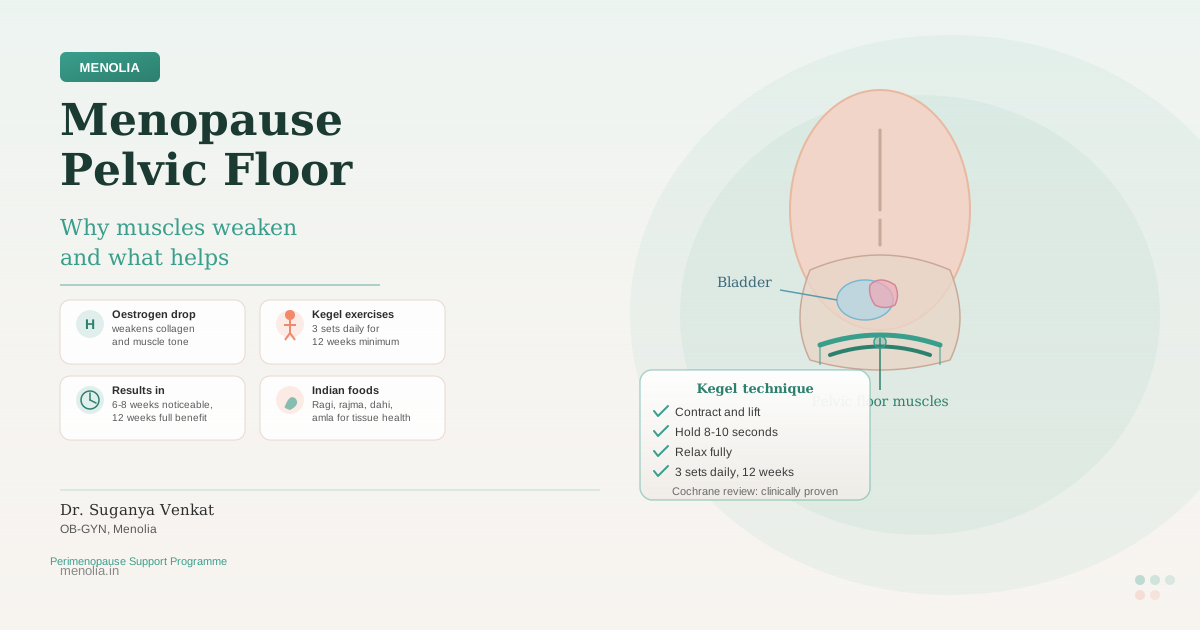
Endurance contractions build the tonic holding capacity that keeps you dry between toilet visits. Contract, hold for 8 to 10 seconds, then relax fully for the same duration. Aim for 8 to 12 repetitions. The relaxation phase matters as much as the contraction. A pelvic floor that holds constant tension without releasing can cause different problems, including pelvic pain and difficulty emptying the bladder or bowel fully.
Quick contractions train the reflex response that prevents a leak on a cough or sneeze. Contract quickly and fully, then release. Aim for 8 to 12 repetitions after your endurance set.
Step four: be consistent. Three sets per day for at least 12 weeks is the protocol that produced the clearest results in research trials. Most women who report that Kegels “did not work” stopped within 4 to 6 weeks, before the neuromuscular changes could consolidate. Treat this as a 12-week minimum commitment, the way you would approach physiotherapy for a knee.
A practical habit anchor: practise during morning tea, during evening resting time, or while seated for abhyanga or prayer. Floor-seated positions common in Indian households are fully compatible with pelvic floor training.
Beyond Kegels: What Else Supports Recovery
Pelvic floor training works best alongside a broader approach. The following strategies reduce load on the pelvic floor and support tissue health from the inside.
Bowel habits and fibre. Chronic constipation is one of the most modifiable risk factors for pelvic organ prolapse. Straining at stool repeatedly places downward pressure on the pelvic floor, working against every Kegel you do. Ensure adequate dietary fibre from psyllium husk (isabgol), ragi, rajma, chana, and cooked green vegetables. If constipation is persistent, it deserves its own clinical attention alongside pelvic floor training.
Abdominal weight. Excess abdominal adiposity increases intra-abdominal pressure, which loads the pelvic floor continuously even when you are sitting still. The belly fat changes that accompany menopause are directly relevant here. Our post on menopause belly fat covers the hormonal mechanism and what actually helps.
Lift with technique. When lifting anything from the floor, including grandchildren, pressure vessels, or shopping, exhale on the effort and gently engage your core before initiating the lift. The “knack manoeuvre,” contracting the pelvic floor a half-second before a cough or sneeze, reduces stress leaking significantly and becomes automatic with practice.
Postural alignment. Tucking the tailbone under, a common posture in women who spend long hours sitting, shortens the posterior pelvic floor and reduces the natural hammock tension needed for support. A neutral pelvis, where the lumbar curve is preserved, allows the pelvic floor to sit at its optimal length and tension. A women’s health physiotherapist or qualified yoga teacher can assess this in a single session.
Strength training. Compound lower-body exercises, particularly squats and deadlifts performed with correct form, improve the coordination between the pelvic floor, abdominal wall, and hip muscles. These structures work together as a pressure management system. Training them together is more effective than training the pelvic floor in isolation. Our post on menopause and strength training covers the evidence and a practical starting point for women who have not lifted weights before.
Nutrition for connective tissue. The collagen thinning that underlies ligamentous laxity responds to nutritional support. Vitamin C-rich foods (amla, lemon, tomato) are required cofactors in collagen synthesis. Protein from dal, paneer, dahi, rajma, ragi, and soya provides the amino acids needed for tissue maintenance. Ritu and Gupta’s review describes widespread vitamin D deficiency in India and discusses general muscle weakness as a consequence of chronic deficiency (Nutrients, 2014, PMID 24566435). It does not establish that correcting vitamin D improves pelvic floor symptoms. Discuss a confirmed deficiency with your doctor alongside, rather than instead of, your pelvic floor assessment. For a detailed guide to calcium and vitamin D in menopause, see our post on bone health and osteoporosis.
Limit bladder irritants. Strong chai, coffee, fizzy drinks, and alcohol are bladder irritants that increase urgency and frequency. Reducing them, particularly in the evenings, can reduce urgency symptoms and improve sleep continuity without requiring you to eliminate morning tea entirely.
When to Ask for Help
Kegel exercises and the lifestyle changes above are appropriate first steps for mild to moderate symptoms. Seek specialist assessment in the following situations:
- Stress leaking that does not improve after 12 weeks of consistent, correctly performed pelvic floor training
- Prolapse that causes symptoms: heaviness, pressure, difficulty emptying the bladder or bowel, or a visible or palpable bulge
- Recurrent urinary tract infections alongside pelvic symptoms
- Post-menopausal bleeding: any bleeding after 12 consecutive months without a period needs separate investigation
- Pelvic pain or pain during intercourse, which may indicate high-tone pelvic floor dysfunction (a floor that cannot relax, not one that cannot contract, requiring a different treatment approach)
For more on this, read our guide on Discharge After Menopause.
- Any symptom that is affecting your daily routine or that you find yourself managing around, as the woman at the start of this post was doing by avoiding her evening walks
A gynaecologist or women’s health physiotherapist can assess pelvic floor tone and strength directly and guide you toward the appropriate intervention: physiotherapy, local oestrogen, a ring pessary, or in selected cases, a surgical option. Most women who present early, before symptoms become severe, manage well with conservative treatment.
The broader picture of how oestrogen loss affects the urogenital system is covered in our post on low oestrogen symptoms, which connects pelvic floor changes to vaginal health, bladder behaviour, and skin changes as part of one hormonal shift.
Have questions about pelvic floor symptoms, leaking, or prolapse? Message Dr. Suganya directly on WhatsApp for personalised guidance.
Practical Steps to Start This Week
- Set aside 10 minutes today to identify your pelvic floor muscles using the stop-start method once to locate them, then practise a set of 8 endurance contractions.
- Add three sets of Kegels to an existing daily habit: morning, afternoon, and evening.
- Check your fibre intake. Are you eating rajma, chana, ragi, or isabgol regularly? Add one source if not.
- Count your chai and coffee intake over the next two days and note whether urgency is worse on high-intake days.
- If you have been managing around a symptom, such as reducing activity or layering clothing, write it down. Naming a symptom is the first step toward bringing it to a consultation.
Frequently Asked Questions
Can Kegel exercises reverse a prolapse?
Grade 1 and grade 2 prolapse, the most common presentations, often improve with consistent pelvic floor muscle training combined with lifestyle measures. Kegels do not reverse the structural displacement itself, but they reduce symptoms by improving the surrounding muscle support and reducing the load on weakened ligaments. Grade 3 and grade 4 prolapse typically requires a surgical or pessary-based approach, which an OB-GYN or urogynecologist can advise on after examination.
How long before Kegel exercises produce results?
Most women notice reduced leaking frequency within 6 to 8 weeks of consistent daily training. The full benefit from pelvic floor muscle training takes 12 weeks. Improvements in prolapse symptoms take longer, typically 3 to 6 months of sustained effort.
Is it normal to have pelvic symptoms during perimenopause, or does it only happen after menopause?
Pelvic floor symptoms can begin during perimenopause as oestrogen levels start fluctuating and falling. The SWAN study found increased rates of urinary incontinence beginning during the menopausal transition, not only after the final period. Addressing symptoms early generally gives better outcomes.
Can I do Kegel exercises if I already have a prolapse?
Yes. Pelvic floor muscle training is first-line conservative management for mild to moderate prolapse. The key is correct technique: contracting upward and inward, not straining or bearing down. If you are uncertain about your technique, or if symptoms feel worse during exercise, a women’s health physiotherapist can assess and guide you.
Do I need to see a doctor, or can I manage this on my own?
Mild symptoms that have just begun can be addressed with the exercises and lifestyle changes in this post. If symptoms are affecting daily life, if you experience recurrent UTIs, if there is a prolapse causing discomfort, or if 12 weeks of Kegel training has not produced improvement, an OB-GYN assessment is the appropriate next step.
Will local oestrogen help with pelvic floor weakness?
Local (topical) oestrogen applied vaginally restores vaginal and urethral epithelial health and can reduce urinary urgency and recurrent UTIs by rehydrating and thickening the tissue. It does not rebuild pelvic floor muscle strength directly, but it addresses the genitourinary changes that accompany pelvic floor dysfunction. Whether local oestrogen is appropriate for you is a conversation for your OB-GYN based on your specific symptoms and medical history.
How do I know if my Kegel technique is correct without seeing a physiotherapist?
A correct Kegel produces a gentle lifting sensation inside the pelvis, not a downward pressure. Your abdomen should remain soft, your buttocks relaxed, and your breathing steady. If you feel pressure downward, are squeezing your legs together, or are holding your breath, the contraction is not isolated. Practising in front of a mirror during the initial weeks can help you detect inadvertent buttock clenching or breath-holding.