You pick up a packet of keerai from the market and notice the backs of your hands look different. The skin is thinner, dryer, less springy than it was a few years ago. You apply the same moisturiser you have used for a decade but it absorbs in minutes, leaving your skin feeling tight again. Your face feels papery by the afternoon. Your forearms itch for no reason. You have not changed your routine, the weather has not changed, but your skin clearly has.
This is not you imagining it. And it is not simply getting older. It is a measurable, biochemical change driven by the same hormonal shift behind your hot flashes, sleep disruption, and joint aches: falling oestrogen.
This post explains why menopause changes your skin at a structural level, the collagen loss timeline that research has documented, what glycosaminoglycans are and why losing them causes the dryness and tightness you are feeling, and what Indian foods and practical adjustments can genuinely help. If you are looking for a guide to building a skincare routine around these changes, we also have a complete post on menopause skin care.
Your Skin Has Oestrogen Receptors
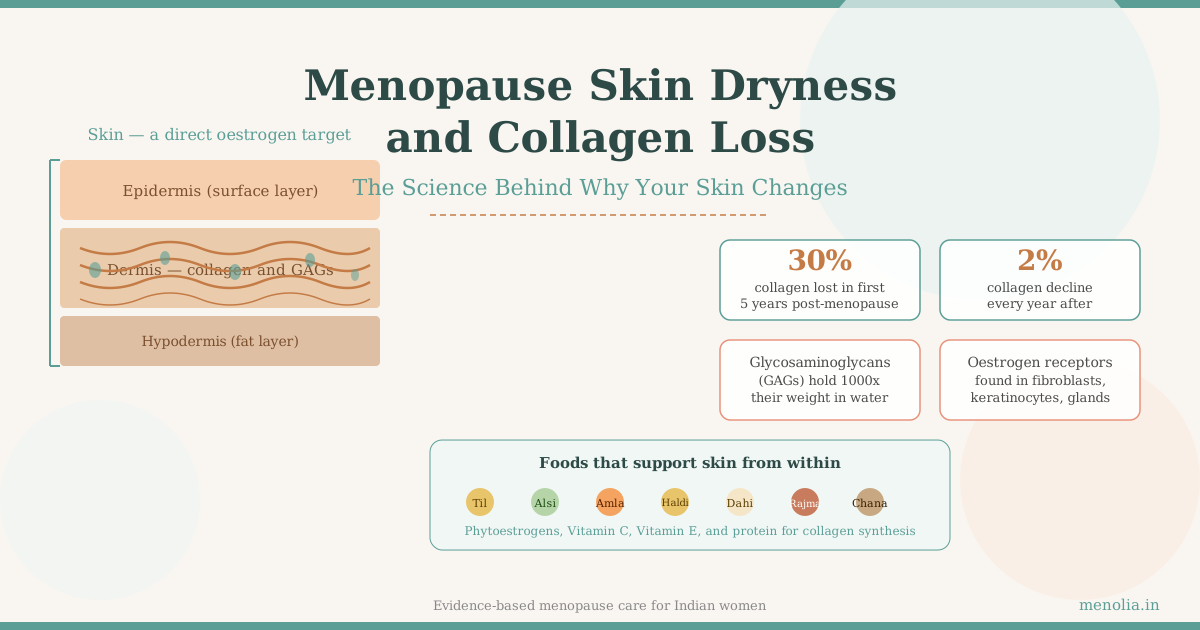
The first thing to understand is that skin is not just a passive bystander during menopause. It is a direct target of oestrogen. Every major cell type in your skin carries oestrogen receptors: keratinocytes (the surface cells), fibroblasts (the structural cells), and sebaceous gland cells all carry oestrogen receptor subtypes ERα and ERβ. When oestrogen binds these receptors, it switches on a range of processes including collagen synthesis, sebum production, hydration maintenance, wound healing, and UV protection. When oestrogen falls, all of these processes slow down at the same time (Thornton MJ, Journal of Steroid Biochemistry and Molecular Biology, 2002).
For more on this, read our guide on Menopause Electric Shock & Skin Crawling.
For more on this, read our guide on Menopause & Memory Loss. This is why skin changes during menopause are not a cosmetic issue. They are a physiological response to the same hormonal event affecting your bones, your cardiovascular system, and your mood. Treating them at the surface without understanding the cause gives temporary relief but does not address what is happening underneath.
The Collagen Timeline: What the Research Shows
Collagen is the structural protein that keeps your skin firm, plump, and resilient. About 70 to 80% of your skin’s dry weight is collagen. It is produced by fibroblasts, the cells that act as your skin’s scaffolding builders.
Oestrogen directly stimulates fibroblasts to produce collagen, specifically types I and III, which together form the fibrous network that gives skin its structure and elasticity (Brincat MP et al., Maturitas, 2005). When oestrogen falls, fibroblasts slow their collagen production and the structural scaffolding begins to thin.
The numbers from the research are striking. In the first five years after menopause, skin collagen decreases by approximately 30% (Brincat MP, Obstetrics and Gynaecology, 1987). After that initial rapid phase, collagen continues to decline at around 2% per year (Calleja-Agius J and Brincat M, Maturitas, 2012). Separately, skin thickness decreases by approximately 1.13% per year after menopause (Brincat et al., 1987).
The 30% figure in five years matters because it explains why the changes feel sudden. Women often describe going from “fine” to “noticeably different” within two to three years of their last period. That is not a subjective impression. It corresponds to a period of rapid structural change that is well-documented in the literature.
Collagen loss from skin also parallels bone collagen loss. Bone is approximately 35% collagen by weight, and the same oestrogen-fibroblast pathway drives skeletal collagen too. Research has found a correlation between skin collagen density and bone mineral density in postmenopausal women: a woman with more retained skin collagen tends to have stronger bones (Brincat 2000). For a full guide to bone health during menopause, see our post on menopause and bone health in Indian women.
Glycosaminoglycans: The Hydration Infrastructure
Collagen gets most of the attention, but there is another class of molecules in your skin that may explain the dryness and tightness even more directly: glycosaminoglycans, or GAGs.
GAGs are long, chain-like molecules found in the extracellular matrix, the gel-like material between your skin cells. Hyaluronic acid is the most well-known GAG (you will recognise it from skincare serums). Dermatan sulphate and chondroitin sulphate are two others present in significant amounts in skin. What all GAGs share is the ability to bind water. Hyaluronic acid can hold up to 1,000 times its own weight in water.
Oestrogen regulates GAG synthesis in the skin, particularly hyaluronic acid and dermatan sulphate (Brincat 2000). When oestrogen falls, GAG levels fall with it. When GAG levels fall, the skin’s ability to hold water is compromised from the inside out. This is why, no matter how much water you drink or how often you apply moisturiser, the dryness keeps returning: the underlying structure that retains moisture has become less effective. The surface product can only do so much when the internal infrastructure is depleted.
This also explains why the dryness of menopause feels qualitatively different from seasonal dryness caused by cold weather or sun exposure. Seasonal dryness is a surface problem: the skin barrier has been disrupted by external factors. Menopause-related dryness involves a reduction in the skin’s internal water-holding capacity. Both contribute to the tight, papery feeling, but the menopause component does not resolve with barrier creams alone.
The loss of GAGs also contributes to the loss of skin plumpness. When cells are not surrounded by a water-rich matrix, the skin looks flatter and fine lines become more visible. This reflects a real change in the extracellular environment of your skin, not merely surface texture.
Why This Matters for Indian Women Specifically
Indian women with darker skin tones have more melanin, which provides some additional protection against UV-induced collagen degradation. However, this does not mean they are protected from the hormonal pathway described above. The oestrogen-collagen-GAG mechanism operates regardless of skin tone.
Vitamin D deficiency is another health issue worth discussing if it has been identified. A review documented widespread deficiency across Indian populations (Ritu G and Gupta A, Nutrients, 2014, PMID 24566435). It did not establish that vitamin D deficiency worsens menopause-related skin changes or that supplementation restores collagen. Those claims need separate evidence.
Indian dietary patterns can work both for and against skin health during menopause. Traditional Indian food is rich in phytoestrogens (til, alsi, haldi, rajma, chana) and antioxidants, which are genuinely protective. But diets high in refined carbohydrates and low in protein may not optimally support collagen synthesis, since collagen is built from amino acids that require adequate dietary protein as a raw material.
Foods That Support Your Skin From the Inside
No food can replace oestrogen or stop the physiological process of menopause. What food can do is give your skin’s remaining collagen-producing cells the substrates and cofactors they need to work as effectively as possible, and reduce the inflammatory signals that accelerate skin ageing alongside the hormonal changes.
Til (sesame seeds): Sesame is one of India’s richest dietary sources of lignans, a type of phytoestrogen. Lignans bind weakly to oestrogen receptors and may provide a partial signal to oestrogen-responsive tissues including skin. Til is also rich in Vitamin E, which protects skin-cell membranes from oxidative damage. Two teaspoons daily in chutneys, ladoos, or sprinkled over rice is a practical target.
Alsi (flaxseeds): Flaxseeds are the highest known food source of lignans. They are also rich in alpha-linolenic acid (ALA), an omega-3 fatty acid that supports the skin’s lipid barrier, reducing transepidermal water loss. Ground alsi (not whole seeds, since whole seeds pass through undigested) stirred into dahi or added to rotis is an easy daily inclusion.
Amla (Indian gooseberry): Amla is exceptionally rich in Vitamin C, the essential cofactor for the enzymes that cross-link collagen strands into their functional triple-helix structure. Without adequate Vitamin C, collagen synthesis stalls even if fibroblast activity is otherwise normal. Fresh amla, amla murabba (in moderation given the sugar content), or amla powder in warm water in the morning are all practical options.
Haldi (turmeric): Curcumin, the active compound in turmeric, has anti-inflammatory and antioxidant properties studied in the context of skin ageing. The inflammatory microenvironment that accompanies menopause activates matrix metalloproteinases, enzymes that break down collagen. Curcumin can downregulate some of these enzymes. Daily haldi in cooking with a pinch of black pepper to improve absorption provides a consistent low-dose protective effect.
Dahi (yoghurt): Emerging research suggests the gut microbiome influences systemic inflammation, which in turn affects skin. Probiotic-rich dahi supports a healthy gut environment. Dahi also provides protein, supplying the amino acids (particularly glycine, proline, and hydroxyproline) that are the building blocks of collagen.
Rajma and chana (legumes): These are among India’s best plant-based protein sources and also contain phytoestrogens. Adequate protein intake supports collagen synthesis at a foundational level. Women in their late 40s and 50s often reduce protein intake inadvertently as appetite changes: staying intentional about legume consumption matters during this period.
Are you unsure whether your skin changes are hormonal, thyroid-related, or something else? Dr. Suganya Venkat’s team can help you identify the cause and guide you toward the right next step.
Chat with Dr. Suganya on WhatsApp
Practical Skincare Adjustments That Help
Understanding the mechanism points toward which interventions actually make a difference.
Switch to a richer moisturiser, applied to damp skin. A ceramide-containing or glycerin-heavy moisturiser applied within 60 seconds of washing while skin is still slightly damp traps surface moisture before evaporation. This directly compensates for reduced GAG-mediated internal hydration.
Use a gentle, non-stripping cleanser. Harsh cleansers remove sebum, which is already in shorter supply after menopause. Oestrogen loss leads to reduced sebaceous gland activity and less surface oil (Zouboulis CC et al., Experimental Dermatology, 2007). A mild, pH-balanced cleanser avoids compounding this.
Apply sunscreen daily, regardless of whether you plan to be outdoors. UV radiation activates the same collagen-degrading matrix metalloproteinases that the inflammatory environment of menopause is already upregulating. Combining these two triggers accelerates collagen loss significantly faster than either factor alone.
Consider topical Vitamin C. Applied topically, Vitamin C can support residual collagen synthesis and reduce oxidative damage from UV exposure. It works through a complementary pathway to dietary Vitamin C rather than replacing it.
For women also experiencing itching alongside dryness, our post on menopause itchy skin covers why itching happens even when the skin looks relatively normal, and what helps specifically for that symptom.
The hair thinning that many women notice around the same time follows an overlapping hormonal pathway. If you are seeing changes in hair density alongside skin changes, menopause and hair loss explains the mechanism and what the evidence shows for intervention.
When to Check With a Doctor
Most menopause-related skin changes are a normal physiological response to falling oestrogen and do not require medical evaluation. A few situations are worth checking in about: sudden significant skin thinning or easy bruising without injury (which can point to low cortisol or thyroid dysfunction, both more common around menopause), new or rapidly changing skin lesions, and severe dryness that is affecting your quality of life.
For more on this, read our guide on Menopause & Easy Bruising.
In cases of significant quality-of-life impact, a gynaecologist can discuss evidence-based options including local or topical oestrogen therapy, which in some forms has minimal systemic absorption. Treating skin changes as a physiological process connected to the hormonal transition, rather than a cosmetic concern to accept without action, opens up more options.
For a broader picture of what menopause involves and how different symptoms connect to the same underlying hormonal shift, our complete guide to what is menopause is a useful starting point.
Frequently Asked Questions
Why does menopause cause skin dryness? Oestrogen receptors are present in the fibroblasts, keratinocytes, and sebaceous glands of the skin. When oestrogen falls during menopause, these cells reduce their activity: they produce less collagen, less sebum, and fewer glycosaminoglycans (the molecules that hold water in the skin from within). The result is skin that is structurally thinner, less hydrated internally, and produces less surface oil.
How much collagen does skin lose during menopause? Research shows skin collagen decreases by approximately 30% in the first five years after menopause, then continues to decline at around 2% per year. Skin thickness also decreases by approximately 1.13% per year. This rate of loss is faster than age-related collagen decline in the pre-menopause years, which is why the changes can feel sudden.
Will eating collagen supplements help? Oral collagen supplements (collagen peptides) have some evidence supporting improved skin hydration and elasticity in clinical trials, though the evidence is stronger for hydration than for structural change. The peptides are broken down in the gut and then circulate as amino acids, which fibroblasts can use as building blocks. They do not replace the oestrogen signal but provide raw material. Dietary protein from dal, paneer, dahi, rajma, and eggs combined with adequate Vitamin C to support collagen cross-linking achieves the same goal through well-understood pathways.
Does darker skin age differently during menopause? Darker skin tones have more melanin, which provides natural protection against UV-induced collagen degradation. However, the hormonal pathway (oestrogen controlling fibroblast activity and GAG synthesis) operates the same across skin tones. Indian women face the same internal hormonal mechanism and are not protected from menopause-related skin changes.
Can menopause skin changes be reversed? They cannot be fully reversed, but you can significantly slow the rate of change and improve your skin’s current condition. The most evidence-backed approaches include: adequate dietary protein (to support collagen synthesis), Vitamin C (to support collagen cross-linking), daily sunscreen (to prevent additive UV-related collagen loss), richer moisturisers applied to damp skin (to compensate for reduced GAG-mediated hydration), and phytoestrogen-rich foods such as til, alsi, and rajma.
At what age do menopause skin changes start? In perimenopause, oestrogen is already beginning to fluctuate and decline, and many women notice the first skin changes in their mid-40s. The most rapid phase of change occurs in the first five years after the final menstrual period. For Indian women, who reach menopause on average around age 46 to 47 (slightly earlier than the global average of 51), this accelerated phase typically falls between the late 40s and early 50s.
Is dry skin during menopause a sign something is wrong? In most cases, no. Skin dryness, thinning, and reduced elasticity are expected physiological responses to falling oestrogen. They are not signs of a skin disease or a medical emergency. If dryness is severe, rapidly worsening, or accompanied by other unusual skin changes (such as unusual bruising or new lesions), a check with a doctor is sensible to rule out thyroid-related causes, which can compound menopause-related skin changes.
Managing multiple menopause symptoms and not sure where to start? Dr. Suganya Venkat’s team works with Indian women through perimenopause and menopause every day. A single conversation can help you make sense of what is happening and what to do next.