“I Thought Something Was Seriously Wrong”
She had been to a cardiologist, a neurologist, and a general physician before she came to see me. The cardiologist had done an ECG and an echo. Normal. The neurologist had done nerve conduction studies. Normal. The GP had checked her blood pressure and thyroid. Normal.
What she described was this: a sharp, electric jolt that ran from her left shoulder to her elbow, lasting about two seconds, occurring twice or three times a day. And separately, at night, she felt like something was crawling under the skin of her lower legs. Not painful. Not itchy. Just moving. Relentless and invisible.
She was 48 years old. She was eight months into irregular periods. She had never mentioned either symptom to any of the three doctors because she did not know how to describe them in a way that would sound credible.
These sensations have names. They have a physiological explanation. And they are far more common during the perimenopause transition than any standard symptom checklist suggests.
Two Sensations with One Root Cause
Women in their 40s and early 50s sometimes experience two unusual sensory phenomena that are rarely discussed in menopause consultations, partly because they are difficult to describe and partly because they are not on the standard hot-flash-focused checklists.
Electric shock sensations are brief, sharp, zapping feelings that arise suddenly anywhere on the body: the scalp, face, neck, arms, legs, or deep in the torso. They last seconds and leave no physical mark. Some women describe them as touching a live wire for a moment. Others say it feels like a rubber band snapping under the skin, or like a brief surge of static. They can occur in isolation, in small clusters over a day, or just before a hot flash.
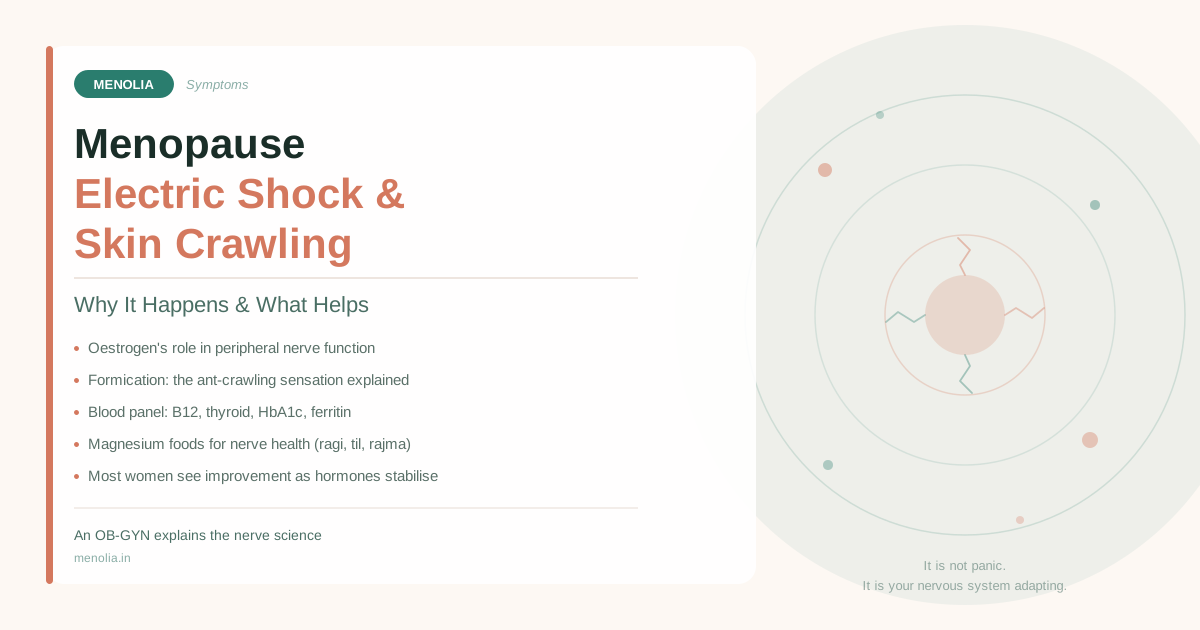
For more on this, read our guide on Menopause Symptoms in Hindi. Formication comes from the Latin word formica, meaning ant. It is the sensation of something crawling on or under the skin with no external cause. There is no rash, no insect, no visible trigger. The feeling is one of persistent, small movement under the surface, most often on the legs, arms, and scalp, and most noticeable in the evening or at night.
Both are classified clinically as paraesthesias: abnormal sensory experiences that arise without any external stimulus. Both have been documented in women during the perimenopause and menopause transition in multiple longitudinal cohort studies, including the Study of Women’s Health Across the Nation (SWAN), which tracked thousands of women through the menopausal transition and documented a far wider range of neurological and sensory symptoms than standard vasomotor symptom questionnaires capture.
For more on this, read our guide on Menopause & Dental Health. Both, in most women, have a direct connection to falling and fluctuating oestrogen.
Why Oestrogen Is at the Centre of This
Most people know that oestrogen affects the uterus, breasts, and ovaries. What is less widely appreciated is that oestrogen receptors are distributed throughout the nervous system, including the peripheral sensory neurons that carry information from the skin, joints, and muscles to the spinal cord and brain.
Oestrogen plays two important roles in peripheral nerve health.
First, it supports myelin maintenance. Myelin is the fatty insulating layer around nerve fibres, equivalent in function to the plastic coating on an electrical wire. It ensures that nerve signals travel cleanly along the correct pathway without leaking or misfiring. The cells that produce myelin in the peripheral nervous system (Schwann cells) carry oestrogen receptors, and oestrogen withdrawal is known to affect the stability and quality of this insulation.
Second, oestrogen modulates sensory receptor thresholds: it affects how easily sensory receptors in the skin fire in response to a given input. When oestrogen is stable, sensory thresholds are well-calibrated. When oestrogen drops sharply or fluctuates erratically (as it does during perimenopause rather than following a smooth decline), sensory receptors can become unpredictably excitable. The result is spontaneous firing that registers as a sharp zap, a brief electrical surge, or the sensation of movement under the skin, even when nothing external has triggered it.
This is the same underlying story as several other lesser-discussed menopause symptoms: the mouth and tongue burning of menopause burning mouth syndrome and the skin crawling and tingling of menopause itchy skin. In each case, oestrogen’s withdrawal from a tissue that depends on it for normal function creates a short-term period of dysregulation. Understanding this is a very different experience from wondering whether you have a neurological disease.
For a full picture of the range of changes that falling and fluctuating oestrogen drives across the body, our guide on low oestrogen symptoms covers the broader pattern.
If these sensations are affecting your sleep or daily life, a conversation about your hormonal picture is a useful first step. WhatsApp Dr. Suganya on 91 99402 70499
When to Get a Blood Panel Done First
Attributing these sensations to the menopause transition is reasonable in context, but some common and treatable conditions produce almost identical symptoms and should not be missed.
Vitamin B12 deficiency is one of the most frequent causes of peripheral tingling and skin-crawling sensations in Indian women. Women who are vegetarian, who have been on long-term metformin for PCOS or blood sugar management, or who have low dietary intake of B12 are all at significant risk. Peripheral neuropathy from B12 deficiency can cause precisely the sensations described above. A serum B12 level, supplemented by methylmalonic acid if available, provides clear confirmation or exclusion.
Thyroid dysfunction produces a range of neurological symptoms including tingling, unusual skin sensations, and muscle changes. Women in their 40s and 50s have a substantially elevated risk of subclinical hypothyroidism, and the symptom overlap with perimenopause is considerable. A TSH, free T3, free T4, and anti-TPO antibodies panel is worthwhile if you have not had one in the past 12 months.
For more on this, read our guide on Menopause Skin Care.
For more on this, read our guide on Perimenopause Mood Changes. Pre-diabetes or undiagnosed type 2 diabetes can cause peripheral neuropathy, typically presenting as tingling, crawling, or numbness starting in the feet and lower legs. India has one of the highest global rates of type 2 diabetes, with a significant proportion undiagnosed. A fasting blood glucose and HbA1c will identify this quickly.
Iron deficiency anaemia is highly prevalent among Indian women (National Family Health Survey data consistently documents rates above 50%). Low iron reduces the oxygen supply available to peripheral nerves, which can contribute to unusual sensory experiences. A serum ferritin (more sensitive than haemoglobin for this purpose) is the right test.
For most women: a standard panel covering B12, TSH, HbA1c, ferritin, and Vitamin D will either identify a correctable cause or leave a clear hormonal picture. If results are normal and sensations track with hormonal fluctuations (worse around ovulation, worse in the days before a period, coinciding with hot flashes, or worse during periods of high stress), the perimenopause connection is the most likely explanation.
One additional note: a phenomenon called L’Hermitte’s sign (a brief electric-shock sensation that runs down the spine on neck flexion) is an early documented symptom of multiple sclerosis. It is mentioned here not to create alarm but to ensure completeness. If sensations are severe, run specifically along the spine, or are accompanied by vision changes, hearing changes, or difficulty with balance, a neurology referral is appropriate. For the vast majority of perimenopausal women, this picture is not present.
Five Things That Actually Help
1. Have an explicit conversation with your OB-GYN about these specific symptoms
This sounds simple, but many women do not mention electric shock sensations or formication because they worry about being dismissed. Name the symptoms directly. Oestrogen-based therapy (menopausal hormone therapy) is the most direct intervention available for oestrogen-mediated peripheral nerve symptoms. Whether MHT is appropriate depends on your full health history, and that is a conversation only your OB-GYN can lead. What we know is that for women with severe or frequent episodes, stabilising oestrogen levels significantly reduces the nerve dysregulation driving these sensations.
2. Prioritise magnesium-rich foods
Magnesium is essential for nerve conduction and for regulating the excitability threshold of sensory neurons. It is commonly depleted in women under sustained stress (cortisol accelerates magnesium excretion), and the Indian diet often falls short of adequate intake, particularly in households that rely heavily on refined grains and processed foods. Practical, accessible sources:
- Ragi (finger millet): approximately 137 mg per 100g cooked. One of the most bioavailable whole-grain magnesium sources available in South Indian kitchens year-round.
- Kaddu ke beej (pumpkin seeds): approximately 262 mg per 100g. Easy to add as a garnish on dal, or eat as a mid-morning snack.
- Til (sesame seeds): approximately 346 mg per 100g. Used in chikki, added to rice dishes, blended into chutney, or sprinkled over sabzi.
- Rajma (kidney beans): approximately 40 mg per cooked cup. A practical main-dish source that also provides protein and iron.
- Palak (spinach): approximately 79 mg per 100g cooked. Widely available and easy to include in dal, sabzi, or soup.
Aim for at least one magnesium-rich food at each of the three main meals rather than relying on a single large serving.
3. Address the cortisol and sleep interaction
Cortisol dysregulation raises the excitability of peripheral sensory neurons and lowers the threshold at which they fire spontaneously. Women managing the combined load of perimenopause, caregiving responsibilities, professional demands, and disrupted sleep tend to experience more frequent and more intense sensory symptoms. This is not because the symptoms are psychosomatic. It is because an already-unstable hormonal environment is further amplified by high and fluctuating cortisol.
Our guide on menopause and cortisol covers the mechanism and practical interventions in detail. For sleep specifically, our guide on perimenopause sleep problems addresses the specific sleep architecture changes in this phase and what actually helps beyond general sleep hygiene advice.
Protecting sleep as a biological priority rather than a lifestyle preference, building 10-12 minutes of pranayama into the day (Anulom Vilom and Bhramari are particularly relevant for calming peripheral nervous system reactivity), and reducing over-scheduling in the evenings are clinically relevant interventions, not merely supportive suggestions.
4. Manage temperature transitions gradually
Many women notice that electric shock sensations are more common during or immediately before a hot flash, or when moving between temperature extremes (from a hot shower into an air-conditioned room, or stepping outside into strong heat after a cool indoor environment). The likely mechanism is rapid vasodilation or vasoconstriction triggering nearby peripheral sensory nerves. Gradual transitions help: a light cotton shawl over bare arms when moving from warm to cool spaces, keeping the sleeping environment at a consistent moderate temperature rather than alternating between hot and very cold, and a lukewarm rather than scalding shower.
5. Check your B12 and Vitamin D status, and correct if low
Myelin maintenance depends on both B12 and Vitamin D. Even without a diagnosed deficiency, women at the lower end of the adequate range benefit from dietary attention to both. Dahi, paneer, milk, and eggs provide B12. Sun exposure at 15-30 minutes between 10 AM and 2 PM on the forearms and lower legs, three to four times per week, remains the most efficient Vitamin D source for Indian women. For those with limited sun exposure due to indoor work or cultural and clothing preferences, a Vitamin D3 supplement of 1,000-2,000 IU daily is a reasonable practical measure (check with your doctor first if you have any kidney or calcium-related conditions).
What Most Women Most Need to Hear
The strongest reassurance available to most women experiencing these sensations is also supported by the evidence: for the majority, frequency and intensity reduce significantly as oestrogen stabilises in post-menopause. The perimenopause transition is a period of hormonal volatility, not a permanent new baseline. Once the fluctuations settle, the peripheral nervous system’s sensitivity settles with them.
For more on this, read our guide on Stages of Menopause. These sensations are not the beginning of a neurological disease. They are not panic attacks wearing a physical costume. They are not a sign of something wrong that was not there before. They are a short-term response of a nervous system that depends on oestrogen to function smoothly, now having to adapt to a significantly changed hormonal environment.
For more on this, read our guide on Menopause Panic Attacks. The journey is uncomfortable. The lack of a name for what is happening makes it more so. The people who matter most in this: an OB-GYN who takes the full symptom picture seriously, and a woman who advocates for a complete explanation rather than a brief reassurance.
You are not imagining it. It gets better.
Frequently Asked Questions
Why do I sometimes feel the electric shock just before a hot flash starts?
A hot flash is triggered by the hypothalamus signalling rapid vasodilation in response to oestrogen withdrawal and a narrowed thermal neutral zone. In some women, the neural pathway that triggers this vasodilation also activates peripheral sensory neurons nearby, producing a brief zapping or electrical sensation in the seconds before the flush begins. The two experiences (electric sensation and hot flash) are part of the same hormonal event, perceived through adjacent nerve pathways. Managing hot flash triggers (evening alcohol, spiced food before bed, sudden heat exposure) tends to reduce the associated electric sensations too.
Is the skin crawling feeling the same as restless legs syndrome?
These are distinct conditions with some overlap. Restless legs syndrome (RLS) produces a compelling urge to move the legs, typically in the evening, to relieve an uncomfortable sensation. Formication is a passive crawling or movement sensation without the motor urgency. Both are more common in perimenopausal women. Oestrogen withdrawal is relevant to both, as is iron deficiency (low serum ferritin below 50 ng/mL is a correctable driver of RLS specifically). If the urge-to-move component is prominent, mention it specifically to your doctor since RLS has a somewhat distinct management pathway from formication.
Can formication affect the scalp? It is making me worry about my hair.
Yes, scalp formication is well-described and tends to be particularly distressing for women who are already noticing menopause-related hair thinning. It is important to understand that scalp formication is a nerve sensation, not a hair follicle or scalp condition, and it does not itself cause hair loss. The two may co-occur because they share the same underlying hormonal cause (falling oestrogen affecting both sensory nerve function and the hair growth cycle), but the crawling sensation is not damaging hair roots. A dermatologist consultation to rule out a primary scalp condition (seborrhoeic dermatitis, folliculitis) is reasonable if the scalp symptoms are severe, but a normal scalp examination points to the hormonal nerve explanation.
For more on this, read our guide on Menopause Hair Thinning. My doctor said it is anxiety. Is that possible or is it dismissive?
Anxiety can amplify sensory symptoms and make them more noticeable. That is physiologically true. But anxiety as a complete explanation for electric shock sensations and formication in a perimenopausal woman, without first checking B12, thyroid, and blood glucose, is clinically incomplete. These symptoms have a documented physiological basis in oestrogen’s effects on peripheral nerve function. A doctor who attributes them entirely to anxiety without doing the blood panel has not yet ruled out treatable causes. It is entirely reasonable to ask for the panel before accepting an anxiety explanation.
Should I take magnesium supplements, or is food enough?
Both food-based and supplemental magnesium can contribute. If you are unable to meet needs through food alone, or if you are under high sustained stress (which depletes magnesium rapidly), magnesium glycinate or magnesium citrate taken at 200-300 mg before bed is well-tolerated and practical. Magnesium oxide is less well-absorbed and not recommended. Always check with your doctor before starting any supplement, particularly if you have kidney disease or take blood pressure medications.
For more on this, read our guide on Ovarian Cyst After Menopause. These sensations went away for two months and have now returned. Should I be worried?
This pattern is entirely consistent with a hormonal cause, and it is not a cause for alarm. Perimenopause is not a linear decline in oestrogen: levels fluctuate significantly and can spike upward before falling again. Sensory symptoms tied to oestrogen follow this fluctuating pattern, often disappearing for weeks or months during periods of relative hormonal stability, then returning when oestrogen drops sharply again. A return of symptoms after an absence points toward a hormonal mechanism, not toward a new or worsening neurological condition.
When does a neurologist referral become necessary?
If electric shock sensations are severe, occur many times a day, run specifically down the spine on neck movement, or are accompanied by any of: persistent numbness or weakness in a limb, double vision or blurred vision, difficulty walking or loss of balance, or unexplained fatigue out of proportion to the rest of the picture, a neurology referral is appropriate. For mild to moderate intermittent sensations in an otherwise well woman with a normal basic blood panel and a clear perimenopausal pattern, a conversation with your OB-GYN is the right first step.
These sensations are real, they have a physiological explanation, and most of them resolve as the transition completes. If you would like to understand your individual hormonal picture and discuss what is available to help, Dr. Suganya is available on WhatsApp.