You’re Not Imagining It
You walk into a room and forget why you’re there. You search for a word that’s right on the tip of your tongue. You read a paragraph three times and still can’t retain it. You miss appointments you’ve never missed before.
If this sounds like you (and you’re in your 40s or 50s, the typical perimenopause window for Indian women) you’re probably experiencing menopause-related brain fog. And no, you’re not losing your mind.
The short answer: this is most likely perimenopausal brain fog, it is driven by fluctuating estrogen on top of broken sleep and stress, it usually eases after the transition, and the things that help most are unglamorous. Sleep, movement, stress load, and ruling out the two conditions that imitate it, thyroid trouble and low B12. Nothing below asks you to buy a supplement, a device, or a test kit.
It is one of the most distressing symptoms of this stage precisely because it touches your confidence, your work, and your sense of self. One frequently quoted estimate puts the share of women who perceive memory problems during the transition at around 60% (Luetters C et al., Journal of Women’s Health, 2007, PMID 17439378). What formal testing shows is more subtle than what women feel, which is part of why so many women are told there is nothing wrong.
What Exactly Is “Brain Fog”?
Brain fog isn’t a medical diagnosis. It’s a collection of cognitive symptoms:
- Word-finding difficulty: you know the word but can’t retrieve it
- Poor concentration: difficulty focusing on tasks, especially complex ones
- Memory lapses: forgetting names, appointments, where you put things
- Mental slowness: processing information takes longer
- Difficulty multitasking: something you used to do easily now feels overwhelming
Why Does Menopause Cause Brain Fog?
Estrogen and Your Brain
Estrogen isn’t just a reproductive hormone. It’s a brain hormone. It plays critical roles in:
- Brain energy metabolism: estrogen helps brain cells use glucose efficiently
- Neurotransmitter production: it influences serotonin, dopamine, and acetylcholine, which is heavily involved in memory and attention
- Blood flow to the brain: estrogen promotes cerebral circulation
- Neuroplasticity: it supports the brain’s ability to form new connections
When estrogen fluctuates wildly during perimenopause, all of these functions are disrupted. Your brain is essentially adjusting to a new hormonal environment.
Sleep Deprivation Compounds It
Poor sleep (caused by night sweats, insomnia, or anxiety) directly impairs:
- Memory consolidation (memories are stored during deep sleep)
- Attention and focus
- Executive function (planning, decision-making)
Many women attribute their cognitive symptoms to menopause when sleep deprivation is the primary culprit. Fix the sleep, and the brain fog often lifts significantly. It is the same night-sweat-driven fragmentation that produces the flat daytime exhaustion so many women describe at this age, and the two usually improve together.
Stress and Mood Changes
Chronically high cortisol is associated with reduced volume in the hippocampus, the brain’s memory centre. Anxiety and low mood, both common during perimenopause, also impair concentration and memory in their own right, and they are treatable independently of the hormones.
The Good News: It’s Usually Temporary
This is the part I most want women to take away. Cognitive change across the menopause transition looks time-limited.
The largest longitudinal look at this followed 2,362 women in the SWAN cohort for four years with repeated cognitive testing. Premenopausal, early perimenopausal and postmenopausal women improved on a processing-speed test with repeat administration, in the ordinary way people improve at a test they have done before, while late perimenopausal women did not. Verbal memory scores climbed during premenopause and postmenopause but did not increase during early or late perimenopause. The authors described this as women not being able to learn as well as they had before, and found that improvement rebounded to premenopausal levels after the transition, which suggests the difficulty is time-limited (Greendale GA et al., Neurology, 2009, PMID 19470968).
In plain terms: the hardest period is the transition itself, not the years after it.
Current evidence does not show that ordinary menopausal brain fog predicts dementia, and the two behave differently. Menopausal fog fluctuates, arrives alongside sleep and mood symptoms, and tends to lift. Dementia progresses. If you want that distinction laid out properly, it has its own guide.
One caveat: symptoms that are progressive rather than fluctuating deserve a proper assessment. The full list of what to watch for is at the end of this post.
Reassured it isn’t dementia, but still fogged in? The useful next question is which driver is yours: sleep, thyroid, B12, mood, or the hormones themselves. Dr. Suganya works through them in order, and the answer is often not the one women expect.
Evidence-Based Strategies for Brain Fog
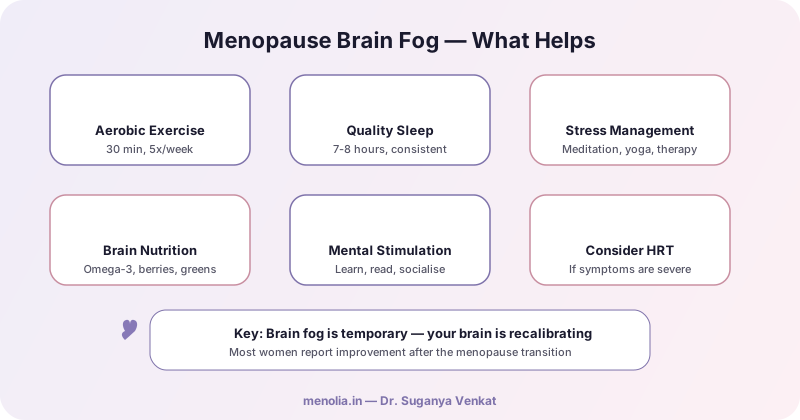
1. Aerobic Exercise (Most Evidence)
This is the lifestyle intervention with the strongest evidence behind it. Regular aerobic exercise:
- Increases blood flow to the brain
- Supports the growth factors involved in learning and memory
- Improves memory and executive function
- Reduces inflammation
- Improves sleep quality
What to do: 30 minutes of moderate aerobic exercise, 5 days a week. Brisk walking, swimming, cycling, or dancing. The key is consistency.
2. Prioritise Sleep
You cannot think clearly on poor sleep. Period.
- Treat night sweats (lifestyle changes or HRT)
- Maintain consistent sleep/wake times
- No screens 1 hour before bed
- Keep the room as cool and dark as you can manage. Most Indian homes are not running air conditioning all night, so a fan, thin cotton bedding instead of synthetics, curtains that actually block the street light, and a cool shower before bed do a lot of the same work
- Magnesium glycinate before bed helps some women sleep, but check with your doctor before starting it, particularly if you have any kidney problem
3. Manage Stress
Chronic stress is toxic to your brain.
- Daily mindfulness or meditation (even 10 minutes helps)
- Regular yoga or tai chi
- Therapy. CBT is well-supported for the sleep and mood problems that feed brain fog
- Set boundaries. This is brain health, not indulgence
4. Brain-Healthy Nutrition
You do not need an imported shopping list for this.
- Omega-3 fatty acids: flaxseed (alsi), walnuts, and fish if you eat it. A spoon of roasted, coarsely ground alsi stirred into curd or rotis is the cheapest way to do this in an Indian kitchen
- Antioxidant-rich foods: palak, methi, drumstick leaves, and whatever fruit is actually in season, guava, amla, papaya, pomegranate. Imported berries are not required
- Pattern over single foods: an ordinary home-cooked thali, dal, a vegetable sabzi, a whole grain like ragi or jowar, curd, does most of this work
- Adequate hydration: dehydration impairs concentration, and it is easy to under-drink in a hot climate while blaming the fog on hormones
- Adequate protein: amino acids are neurotransmitter precursors. Dal, rajma, chana, paneer, curd, eggs if you eat them
- Alcohol: if you drink, it fragments sleep, and sleep is the thing you are trying to protect here
5. Cognitive Engagement
Use it or lose it:
- Learn a new skill or language
- Do puzzles, crosswords, or brain training games
- Read challenging material
- Social interaction (conversation is one of the most cognitively demanding activities)
6. Consider HRT
HRT can improve cognitive symptoms, especially when:
- Brain fog is linked to poor sleep from night sweats (certain Indian foods can help reduce night sweats naturally)
- You’re in early perimenopause or early menopause
- Other symptoms (hot flashes, mood) are also present
HRT is not a “brain pill”, and brain fog on its own is not an indication to start it. Any cognitive benefit is usually downstream of better sleep, steadier mood, and fewer hot flushes.
Timing matters, and the same SWAN analysis is honest about both halves of it. Women who had started hormones before their final menstrual period scored higher on the initial tests, while postmenopausal women currently taking hormones performed worse than the premenopausal comparison group; the authors describe initiation before the final period as beneficial and initiation after it as detrimental to cognitive performance (Greendale GA et al., Neurology, 2009, PMID 19470968). Whether HRT suits you depends on your history and how long it has been since your last period, which is a decision to make with your doctor rather than from an article.
What I Check Before Blaming the Hormones
In consults, the women who describe this most vividly tend to be in their late forties, working, running a household, and quietly terrified that this is early dementia. Almost nobody says that part out loud until asked.
Before we discuss hormones at all, I want two cheap blood tests: thyroid function and vitamin B12. Both imitate brain fog closely, both are common at this age, and both change the plan completely if they come back abnormal. I also ask how the nights are going, because a woman waking four times to a soaked kurta is not going to think clearly at 11 the next morning, whatever her estrogen is doing.
Often the fog is not one thing. It is a hormonal shift sitting on top of six months of broken sleep, an untreated low mood, and a B12 level nobody has looked at since her last pregnancy. That is worth knowing, because it means there are several places to intervene rather than one.
Practical Tips for Daily Life
While you work on the root causes, these practical strategies help:
- Write everything down: use a notes app or physical notebook
- Create routines: keys always go in the same place
- Use calendar reminders aggressively
- Do one thing at a time: multitasking is harder now, and that’s okay
- Be patient with yourself: frustration and self-criticism make it worse
- Tell people: “I’m going through perimenopause and my memory is temporarily affected” is perfectly acceptable
When to See a Doctor
See your doctor if:
- Cognitive symptoms are getting progressively worse (not fluctuating)
- You’re getting lost in familiar places
- You can’t manage daily tasks you’ve always done
- Family or friends are expressing concern
- You have a family history of early-onset dementia
These could indicate something other than menopause, and it’s important to rule out thyroid disorders, vitamin B12 deficiency, depression, and other causes.
The Bottom Line
Menopause brain fog is real, common, and usually time-limited. Your brain is adapting to a new hormonal reality, and with the right support (exercise, sleep, nutrition, stress management), it adapts well.
At Menolia, Dr. Suganya Venkat treats brain fog as part of the whole picture, because it is rarely one thing. Sleep, hormones, stress, nutrition, and exercise all interconnect. Work on the system and the fog usually lifts.
You haven’t lost yourself. Your brain is recalibrating.
Brain fog often improves dramatically when sleep and mood are addressed. Good nutrition also plays a key role.
Frequently Asked Questions
Is menopause brain fog permanent?
For most women, no. In the SWAN cohort, cognitive test performance rebounded to premenopausal levels after the transition (Greendale GA et al., Neurology, 2009, PMID 19470968). The hardest stretch is perimenopause itself, when hormones are fluctuating most.
Does HRT help with brain fog?
Some women report improvement, usually because sleep and hot flushes settle. In the SWAN analysis, hormones started before the final menstrual period were associated with better cognitive performance and hormones started after it with worse performance (Greendale GA et al., Neurology, 2009, PMID 19470968). Whether it suits you is a conversation with your doctor, not a decision to take from an article.
What foods help brain fog?
Omega-3 sources (flaxseed, walnuts, fish), seasonal fruit and greens such as palak and methi, and enough protein from dal, chana, curd, paneer or eggs. Eat at regular intervals so you are not running on a blood-sugar crash by mid-afternoon.
Does exercise help my brain?
It is among the best-studied things you can do here, and brisk walking counts. Exercise increases blood flow to the brain and supports neuroplasticity. Thirty minutes on most days is a realistic target.
Could my brain fog be something else?
If severe, sudden, or with other neurological symptoms, see your doctor to rule out thyroid disorders, B12 deficiency, or depression. Menopause brain fog is a diagnosis of exclusion.
Get Your Clarity Back
₹399 consultation · Holistic assessment · Personalised plan