The burning starts again. You know the feeling by now: the pressure low in your belly, the need to pass urine every half hour, the sting at the end. You send a sample to the lab and wait. The report comes back with no growth. You take the antibiotic anyway, because nothing else has been offered, and a few weeks later it all returns.
Many women in their late forties and fifties go round this loop for months or years. Some are told it is “just a UTI that keeps coming back.” Others are told the reports are normal, so nothing is wrong. Neither explanation fits what they feel.
I’m Dr. Suganya Venkat, an OB-GYN, and when a woman tells me her bladder hurts but her cultures keep coming back clean, one of the conditions I want to look at carefully is interstitial cystitis, also called bladder pain syndrome. It is a real, recognised condition. It is not an infection, so antibiotics do not treat it, and it has its own path to relief.
What This Post Covers
- What interstitial cystitis (IC) is, and how it differs from a urinary infection
- How doctors reach the diagnosis once infection has been ruled out
- Why the menopause years can make bladder pain harder to read
- Where vaginal oestrogen fits, and where it does not
- What helps: food, habits, pelvic floor physiotherapy and medical options
- Questions to take to your gynaecologist or urologist
If your problem is mainly leaking urine rather than pain, our post on bladder leaks during menopause covers that separately. Leakage and bladder pain often travel together after 45, but they are different problems with different treatments.
What Interstitial Cystitis Is
Interstitial cystitis/bladder pain syndrome (IC/BPS) describes pain, pressure or discomfort that the woman feels in the bladder, together with urinary symptoms such as frequency and a strong urge to pass urine, with no infection or other clear cause to explain it. The American Urological Association’s guideline, last updated in 2022 (Clemens JQ et al., J Urol, 2022, PMID 35536143), describes it as a heterogeneous syndrome: women present with similar symptoms, but there are different subgroups underneath.
A few features often help it stand out:
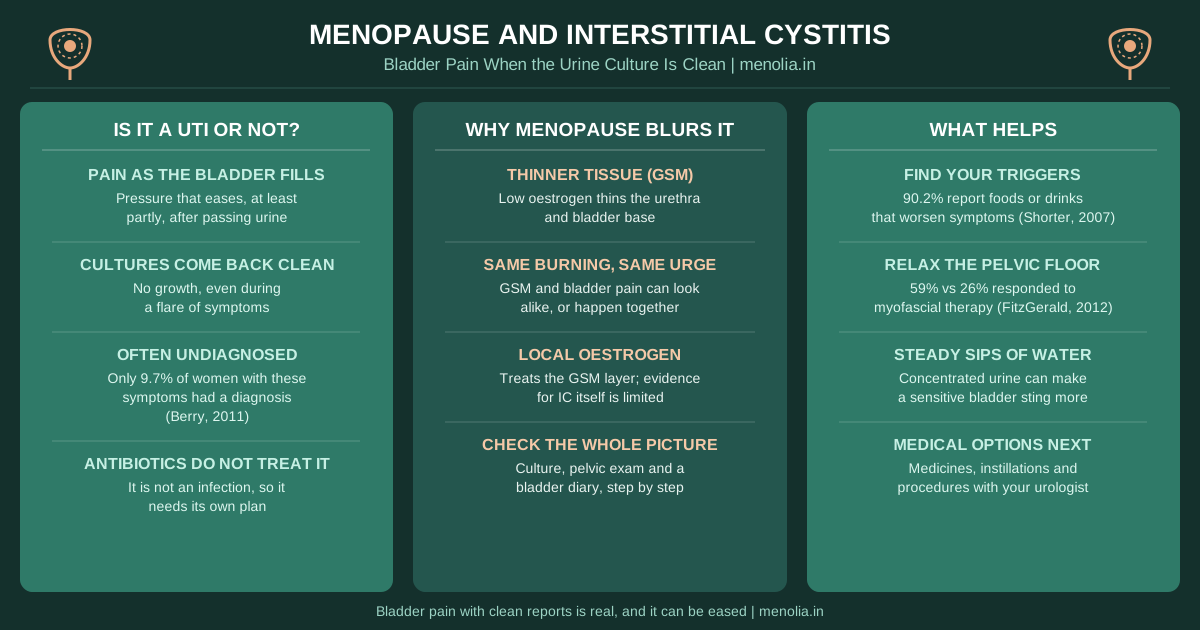
- Pain that builds as the bladder fills and eases, at least partly, after passing urine
- Frequent urination, day and night, often in small amounts
- Urgency that comes from discomfort, not only from a fear of leaking
- Flares after certain foods or drinks, after stress, around intercourse, or for no clear reason
- Urine tests that keep coming back negative, even during a flare
It is more common than most people think, and most women who have it are never told its name. A large American household survey, which screened more than 131,000 households and interviewed 12,752 women with bladder symptoms (Berry SH et al., J Urol, 2011, PMID 21683389), estimated that between 2.7% and 6.5% of adult women met symptom criteria for IC/BPS, depending on how strictly it was defined. Only 9.7% of the women with these symptoms had ever been given the diagnosis. The authors concluded that the condition is probably underdiagnosed.
In India, many women describe these symptoms simply as “urine infection.” In Hindi, the burning is often called peshab mein jalan (पेशाब में जलन), and in Tamil siruneer erithal (சிறுநீர் எரிச்சல்). Those words describe a symptom, not a cause. Burning can come from infection, from thinning tissue after menopause, or from a bladder that has become sensitive in its own right.
How It Is Diagnosed Once Infection Is Ruled Out
There is no single blood test or scan that proves IC/BPS. The diagnosis is built step by step, mainly by checking for other causes first.
1. A urine culture, ideally during symptoms. A dipstick test alone can miss or overcall infection. A culture tells you whether bacteria are present and which antibiotics they respond to. If you have had several “UTIs,” it helps to know how many were confirmed by culture. Our post on recurrent UTIs during menopause explains how genuine repeated infections are investigated and prevented.
2. A pelvic examination. This looks for signs of thinning vaginal and urethral tissue, prolapse, and tenderness in the pelvic floor muscles. Tender pelvic floor muscles are common in women with bladder pain and change the treatment plan.
3. A frequency-volume chart. For two or three days, you write down when you pass urine and roughly how much, along with what you drank. Small, frequent volumes with pain point towards a sensitive bladder. Large volumes point towards drinking patterns or other causes.
4. Checking for blood in the urine. Blood seen in a urine test, or visible blood, is not explained by IC/BPS and is always worth investigating properly. That usually means a urologist’s review.
5. Cystoscopy, when it is indicated. A cystoscopy is a look inside the bladder with a thin camera. It is not needed for everyone. It becomes more useful when symptoms do not respond to first steps, when there is blood in the urine, or when Hunner lesions are suspected. Hunner lesions are distinct inflamed patches on the bladder wall. An ESSIC working group report (Fall M et al., Scand J Urol, 2020, PMID 32107957) found that cystoscopy is the method of choice to identify them, and that they seem more frequent in older patients. In one clinic series of 150 patients (Van Moh F et al., Neurourol Urodyn, 2018, PMID 30187950), those with Hunner lesions had a median age of 58, compared with 41 for those without. This matters for women after menopause, because the 2022 AUA guideline (Clemens JQ et al., J Urol, 2022, PMID 35536143) treats Hunner lesions as the one group in whom treatment during cystoscopy comes early, rather than after other steps.
Message Dr. Suganya on WhatsApp if you have been going round the culture-and-antibiotic loop and would like someone to look at the whole picture with you.
Why Menopause Makes Bladder Pain Harder to Read
Falling oestrogen affects more than the vagina. The tissues of the urethra and the base of the bladder also carry oestrogen receptors. When oestrogen drops, these tissues become thinner and more easily irritated. The 2014 consensus that named the genitourinary syndrome of menopause, or GSM (Portman DJ et al., Menopause, 2014, PMID 25160739), lists urinary urgency, painful urination and recurrent urinary infections among its symptoms, alongside vaginal dryness and burning.
That creates a real overlap. A woman after menopause with urgency and burning might have:
- GSM alone, where the irritation comes from thin, dry tissue and often improves with local treatment
- IC/BPS alone, where the bladder itself has become a source of pain
- Both together, where thin tissue adds to the discomfort of a sensitive bladder and makes flares harder to settle
- Genuine recurrent infections, which also become more common after menopause
Our post on genitourinary syndrome of menopause explains the full set of GSM symptoms. The practical point is that bladder pain after 45 deserves a careful look at the vaginal and urethral tissue as well as the bladder. Treating the GSM part does not rule out IC/BPS, but it often removes one layer of the problem and makes it clearer what is left.
Where Vaginal Oestrogen Fits
Vaginal oestrogen is a well-established treatment for GSM, and it reduces repeat urinary infections in many women after menopause. It is a different question whether it treats IC/BPS itself.
A 2023 review of vaginal hormone therapy for lower urinary tract conditions (Nemirovsky A et al., Curr Urol Rep, 2023, PMID 36454371) found that vaginal oestrogen improves overactive bladder symptoms and helps prevent recurrent UTIs in postmenopausal women. For IC/BPS specifically, the review found that the evidence is limited and inconclusive.
In my practice, when a woman has bladder pain along with signs of GSM, local oestrogen is a reasonable part of the plan, because it treats the tissue changes that often add to the burning and urgency. It is not offered as a cure for IC/BPS. If the pain persists once the tissue has improved, the IC/BPS treatment steps below carry on alongside it. Our guide to vaginal oestrogen creams available in India explains the types, how they are used and what they cost.
What Helps: The First Steps
The 2022 AUA guideline (Clemens JQ et al., J Urol, 2022, PMID 35536143) groups treatment into behavioural and non-drug approaches, oral medicines, bladder instillations, procedures and, rarely, major surgery. It no longer ranks these as a fixed ladder. Instead, it encourages an individual plan and notes that more than one approach can be used at the same time. Apart from women with Hunner lesions, the starting treatment is usually non-surgical.
Finding your food and drink triggers
Food sensitivity is common in IC/BPS. In a questionnaire study of 104 people with the condition (Shorter B et al., J Urol, 2007, PMID 17499305), 90.2% said that certain foods or drinks made their symptoms worse. The most often reported were coffee, tea, soft drinks, alcohol, citrus fruits and juices, artificial sweeteners and hot pepper.
For many Indian households, that list includes some daily staples. Common triggers to watch for:
- Filter coffee and strong chai, especially several cups a day
- Lime juice, orange and mosambi juice, and very sour tamarind dishes
- Tomato-heavy rasam and gravies
- Green chilli, chilli powder and spicy pickles
- Cola and other fizzy drinks
- Sugar-free sweeteners in “diet” products
Not everyone reacts to the same things, and cutting out everything at once is neither necessary nor easy to live with. A practical approach is to remove the most likely triggers for two to three weeks, note how the bladder feels, and then bring foods back one at a time. Plain rice, dal, idli, ragi, curd rice, cooked vegetables and milder home-style cooking usually make a comfortable base while you test. If chai is a ritual you would miss, a weaker or smaller cup is often easier to keep than none.
Drinking enough, steadily
Many women cut down on water to reduce trips to the toilet, especially when travelling or when a clean toilet is hard to find. Very concentrated urine can make the bladder sting more. Steady sips through the day, rather than large amounts at once or long gaps, tend to be easier on a sensitive bladder. Your frequency-volume chart helps you find the right amount for you.
Calming the pelvic floor, not only strengthening it
Women with bladder pain often have pelvic floor muscles that are tight and tender rather than weak. For them, the aim is to help those muscles relax. In a multicentre trial of 81 women with IC/BPS and pelvic floor tenderness (FitzGerald MP et al., J Urol, 2012, PMID 22503015), 59% responded to pelvic floor myofascial physical therapy, compared with 26% who received general therapeutic massage.
This is why a pelvic floor physiotherapist trained in women’s health is useful here, and why repeated Kegel squeezes are often not the right starting point for a painful bladder. Our post on the pelvic floor after menopause explains how these muscles change with age. If your main problem is pain, ask the physiotherapist to assess for tightness as well as weakness.
Managing flares at home
Simple measures help many women through a flare: a warm water bottle or a cold pack over the lower belly or between the thighs, loose cotton clothing, gentle stretches, and planning rest on bad days. Many women notice that stressful weeks bring flares, so anything that reliably calms you, whether that is breathing exercises, a walk, prayer or music, is part of treatment.
When First Steps Are Not Enough
If the bladder is still painful after a fair trial of the first steps, there are medical options. These are decided with your gynaecologist or urologist, who will consider your other health conditions and medicines.
- Oral medicines. Several are used, including amitriptyline, some antihistamines, and pentosan polysulfate. The evidence varies. In a placebo-controlled trial of 271 people with IC/BPS who had not been treated before (Foster HE Jr et al., J Urol, 2010, PMID 20303115), amitriptyline plus an education programme did not improve symptoms significantly more than placebo plus education overall. People who could reach the higher doses did better, though that comparison was not planned in advance. In plain terms, it helps some women and is worth discussing with your doctor.
- Pentosan polysulfate and the eyes. This medicine has been linked with a pigmentary change in the retina after long-term use. A case series from an eye clinic (Pearce WA et al., Ophthalmology, 2018, PMID 29801663) described this in six patients with many years of exposure, and the 2022 AUA guideline (Clemens JQ et al., J Urol, 2022, PMID 35536143) added a statement on its potential adverse effects. If it is prescribed, ask about an eye check before starting and at intervals.
- Bladder instillations. Medicine is placed directly into the bladder through a thin catheter, usually as a short course.
- Procedures. These include treating Hunner lesions during cystoscopy and, for selected women, other bladder procedures. Major surgery is reserved for a very small number of women when everything else has failed.
When a woman with these symptoms comes to Dr. Suganya Venkat for a video consultation, the work usually starts with the parts that can be checked and improved early: reviewing past culture reports, looking for GSM, building the trigger diary, and arranging pelvic floor physiotherapy. Where a cystoscopy or bladder treatment is needed, that care sits with a urologist or urogynaecologist, and the menopause side of the plan runs alongside it.
Questions to Take to Your Doctor
- How many of my past “UTIs” were confirmed by a urine culture?
- Do I have signs of GSM, and would local oestrogen help that part of my symptoms?
- Is my pelvic floor tight or tender, and should I see a pelvic floor physiotherapist?
- Is there any blood in my urine that needs investigating?
- Do I need a cystoscopy, and would it look for Hunner lesions?
- If a medicine is suggested, what are its likely benefits and side effects for me?
Bring your frequency-volume chart and your food diary. They often say more than a single test.
Frequently Asked Questions
What is the difference between interstitial cystitis and a UTI?
A UTI is a bacterial infection, confirmed by a urine culture and treated with antibiotics. Interstitial cystitis, or bladder pain syndrome, causes similar pain, pressure and frequency, but no infection is found. Antibiotics do not treat it. Its treatment focuses on food triggers, bladder habits, pelvic floor therapy and, when needed, medicines or bladder treatments.
Can menopause cause interstitial cystitis?
There is no good evidence that menopause causes IC/BPS. What menopause does cause is thinning of the urethral and vaginal tissue, known as GSM, which can bring urgency, burning and repeat infections. That can make existing bladder pain worse or look very similar to it, so a careful examination after 45 is worthwhile.
Why does my urine feel like it is burning but the test is negative?
Burning without infection can come from thin, dry tissue after menopause, from a sensitive bladder as in IC/BPS, from vaginal causes, or from very concentrated urine. Many women ask “peshab mein jalan ho rahi hai par report normal hai, kya karein?” The first step is a urine culture during symptoms and a pelvic examination to find which of these applies.
Does vaginal oestrogen help interstitial cystitis?
It helps the GSM part of the problem and reduces repeat urinary infections after menopause. For IC/BPS itself, a 2023 review found the evidence limited and inconclusive. It is a reasonable part of the plan when GSM is present, alongside the usual IC/BPS treatments, not a replacement for them.
Which foods make bladder pain worse?
Common triggers include coffee, tea, fizzy drinks, alcohol, citrus fruits and juices, artificial sweeteners and spicy food. In Indian kitchens, that can mean strong chai, lime juice, sour tamarind, tomato rasam and chilli. Triggers differ between women, so remove likely ones for two to three weeks and reintroduce them one at a time.
Do I need a cystoscopy for bladder pain?
Not always. It is usually advised when symptoms do not improve with first steps, when there is blood in the urine, or when Hunner lesions are suspected. Hunner lesions are seen more often in older patients, and finding them matters because they are treated differently, with treatment during cystoscopy offered early.
Can bladder pain syndrome be cured?
The aim of treatment is usually control of symptoms rather than a one-time cure, and the 2022 AUA guideline frames it as an individual plan that can combine several approaches. Finding food triggers, calming the pelvic floor, treating GSM and, where needed, medicine or bladder treatment can make daily life much more comfortable.
If your bladder hurts and your reports keep saying nothing is wrong, you deserve a plan that looks at the whole picture. Message Dr. Suganya Venkat on WhatsApp to talk it through.