If you are nearing menopause and Indian vegetarian, the three supplements with the strongest evidence are Vitamin D (1,000 to 2,000 IU daily), Calcium (500 to 600 mg if your dietary intake is under 800 mg), and an algal-oil Omega-3 (1,000 to 2,000 mg EPA + DHA daily). Together they protect bones, support the heart, and reduce inflammation, all of which change rapidly once oestrogen drops. Total cost is roughly 650 to 1,300 rupees a month. Anything beyond this trio (phytoestrogens, magnesium, ashwagandha, collagen) is symptom-specific and worth adding only if those symptoms apply to you. Get a 25-hydroxy Vitamin D blood test before starting; most Indian women are deficient.
Quick reference: the Indian vegetarian starter trio
| Supplement | Why it matters | Vegetarian food sources | Typical supplement dose |
|---|---|---|---|
| Vitamin D3 | Bone, immune, mood; 70 to 90% of Indian women are deficient | Fortified milk, mushrooms, fortified cereals (limited) | 1,000 to 2,000 IU daily after testing |
| Calcium | Bone loss accelerates in the first 5 post-menopause years | Ragi (364 mg/100g), til, dahi, paneer, moringa | 500 to 600 mg if diet is under 800 mg |
| Omega-3 (EPA + DHA) | Heart, joints, mood; Indian diets are now omega-6 heavy | Flaxseed, walnuts, chia seeds (ALA only) | 1,000 to 2,000 mg algal oil (vegetarian source of EPA + DHA) |
Food-first is the default. Supplements fill what your kitchen cannot.
Walk into any pharmacy or browse any health website and you’ll find dozens of supplements marketed for menopause, evening primrose oil, black cohosh, wild yam extract, red clover, DHEA, collagen peptides, and more. Each one promises relief from hot flashes, better sleep, stronger bones, or renewed energy.
But which ones actually work? And which ones are just expensive placebo?
As an OB-GYN who helps women navigate perimenopause and menopause daily, I believe in being honest: some supplements have good evidence behind them, some have modest evidence, and some have essentially none. Your money (and more importantly your health) deserves an honest breakdown.
The Basics: What Changes During Menopause
Before we talk supplements, let’s understand what’s happening. As oestrogen declines during perimenopause and menopause:
- Bone density drops: oestrogen protects bones. Without it, calcium loss accelerates.
- Cardiovascular risk increases: oestrogen had a protective effect on your blood vessels and cholesterol.
- Hot flashes and sleep disruption: the hypothalamus (your brain’s thermostat) becomes sensitive to small temperature changes.
- Joint pain and stiffness: oestrogen has anti-inflammatory properties that decline.
- Mood changes: oestrogen influences serotonin and other neurotransmitters.
- Vaginal and urinary changes: tissues that depend on oestrogen become thinner and drier.
Supplements can support some of these changes, alongside a well-planned menopause diet. But they can’t replace oestrogen entirely. That’s what HRT does, and that’s a separate discussion.
The Strong Evidence Tier
These supplements have robust research behind them. If you’re going to spend money on anything, start here.
1. Vitamin D
Vitamin D is what allows your body to actually absorb the calcium you eat, which is why it comes first in this list. It also supports bone health, modulates immune function, and influences mood.
The evidence: Meta-analyses of calcium plus Vitamin D taken together show a modest reduction in fracture risk, mainly in older women who were deficient to begin with (Weaver et al., Osteoporos Int 2016, PMID 26510847). Vitamin D on its own, in women who are already replete, has not shown a fracture benefit. So the point of testing and correcting a real deficiency is exactly that: correcting a deficiency, not dosing everyone.
Vitamin D deserves a discussion with your doctor, particularly if you have a confirmed deficiency. Ritu and Gupta’s review documented widespread deficiency across varied Indian populations, including urban and rural groups (Nutrients, 2014, PMID 24566435). That prevalence finding alone does not establish that every woman in menopause needs a supplement. The reasons are mundane rather than mysterious: most of the day is spent indoors, skin is covered when we are outside, darker skin needs longer sun exposure to make the same amount of Vitamin D, and almost nothing in a typical Indian kitchen supplies it. Our calcium and Vitamin D guide goes deeper on Indian food sources and dosing.
What to do:
- Get your Vitamin D level tested (25-hydroxy Vitamin D blood test, costs ₹500-800)
- Ask whether it is bundled in a cheaper “bone health panel” with serum calcium; and check the units, some Indian labs report in nmol/L rather than ng/mL, so divide an nmol/L result by 2.5 to compare it with the ng/mL targets here
- Target level: 40-60 ng/mL
- If deficient (below 30 ng/mL): Your doctor will prescribe a loading dose (typically 60,000 IU weekly for 8-12 weeks) followed by maintenance
- Do not self-prescribe the 60,000 IU sachets. They are prescription-strength and are widely overused in India; toxicity from months of unsupervised weekly sachets is something I do see in clinic
- Maintenance: 1,000-2,000 IU daily, taken with a fat-containing meal for absorption
- Retest every 6 months until stable
Cost: ₹200-400/month for maintenance supplementation.
2. Calcium
Calcium is the primary mineral in your bones and teeth, and during menopause the balance tips: you begin losing it faster than you absorb it.
The evidence: In the Women’s Health Initiative, one of the largest trials in postmenopausal women, calcium plus Vitamin D did not significantly reduce hip fractures overall. But among the women who actually took their tablets consistently, hip fracture risk fell by about 29% (Jackson et al., NEJM 2006, PMID 16481635). That last figure comes from a post-hoc analysis of adherent women, not the randomised comparison, so it probably flatters the effect. The honest read is that calcium and Vitamin D help most in women who are genuinely short of both and who actually take them.
How much you need: 1,000-1,200 mg daily (total from food + supplements). Most Indian women get only 400-600mg from diet.
Food-first approach: Before supplementing, maximise dietary calcium:
- Ragi (nachni): 364mg per 100g (one of the richest plant sources in the world)
- Sesame seeds (til): 975mg per 100g, add to chutneys and laddoos
- Dahi (curd): 150mg per cup
- Paneer: 208mg per 100g
- Amaranth (rajgira): 159mg per 100g
- Drumstick leaves (moringa): 185mg per 100g
Food values are from the ICMR-NIN Indian Food Composition Tables, 2017. Note that the sesame figure is for whole unhulled til per 100g and varies by variety. Nobody eats 100g of til in one go, but one tablespoon (about 9g) gives roughly 88mg, still a useful daily addition to chutneys and podis.
When to supplement: If your dietary intake is below 800mg/day (most Indian women), supplement the gap, typically 500-600mg/day. One caveat: if you have kidney disease, a history of calcium-oxalate kidney stones, or you take a thiazide diuretic, do not start a calcium supplement without asking your doctor first, as these change how your body handles calcium. Take calcium citrate (better absorbed than carbonate, especially if you’re over 50 or on acid-reducing medications). Split the dose, 500mg at a time maximum.
Important: Don’t mega-dose calcium. More than 1,500mg/day from all sources may increase cardiovascular risk. The goal is to fill the dietary gap, not flood your system.
Cost: ₹150-300/month.
3. Omega-3 Fatty Acids
Omega-3s are anti-inflammatory. They support heart health and may help with joint pain and mood.
The evidence: Do not take omega-3s for hot flashes; the trial evidence there is weak and inconsistent, and the large MsFLASH trial found no benefit for vasomotor symptoms. Take them for the heart, joints and mood, which is where the evidence actually sits, and where they matter most as oestrogen’s cardiovascular protection falls away.
Traditional Indian diets were not short of omega-3s: mustard oil in the north, fish in every coastal community. What has changed in a generation is the cooking oil. Most kitchens have moved to sunflower and soybean oil, which are heavy in omega-6, and that shift leaves the balance tilted towards inflammation.
What to do:
- If you eat fish: 2-3 servings of fatty fish per week (sardines, mackerel, hilsa, salmon)
- If you’re vegetarian: ground flaxseeds (1-2 tablespoons daily), walnuts, chia seeds
- Supplement if needed: 1,000 to 2,000 mg combined EPA + DHA daily (fish oil or algal oil for vegetarians)
Cost: ₹300-600/month for quality supplements.
💜 Not sure which supplements are worth it for you? Instead of guessing, talk to Dr. Suganya on WhatsApp. I’ll review your situation and recommend only what’s necessary for your specific health profile.
The Moderate Evidence Tier
These have promising research but aren’t as definitive as the tier above. They’re reasonable to try, especially if the strong-evidence supplements are already in place.
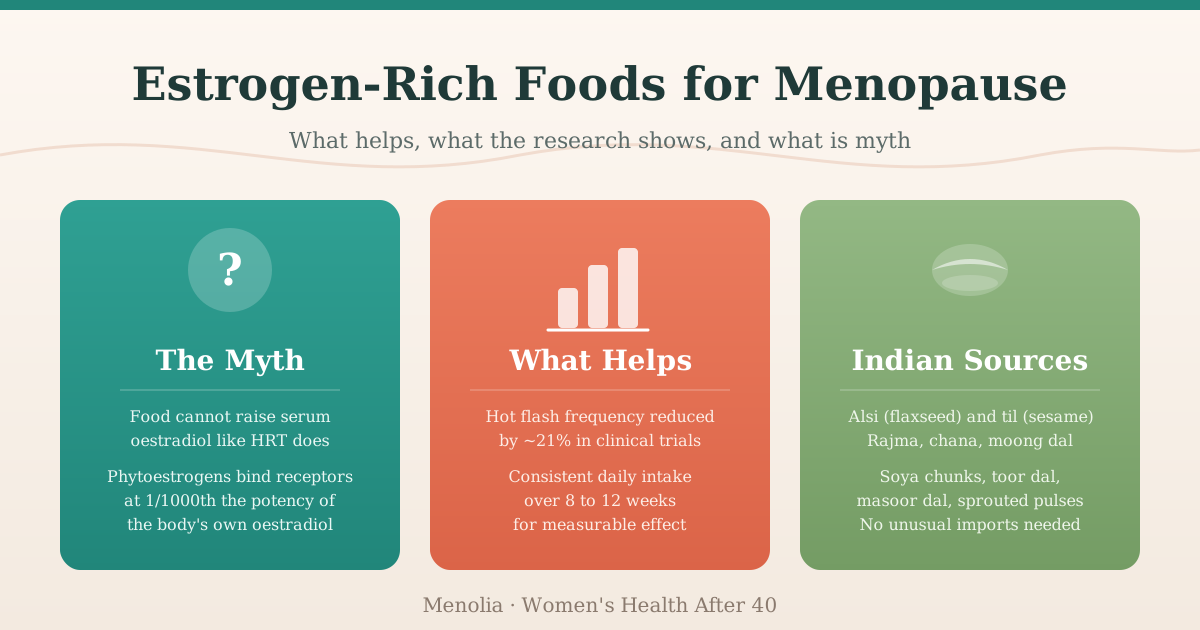
4. Phytoestrogens (Soy Isoflavones)
What they are: Plant compounds that have a weak oestrogen-like effect in the body. The most studied are soy isoflavones (genistein, daidzein).
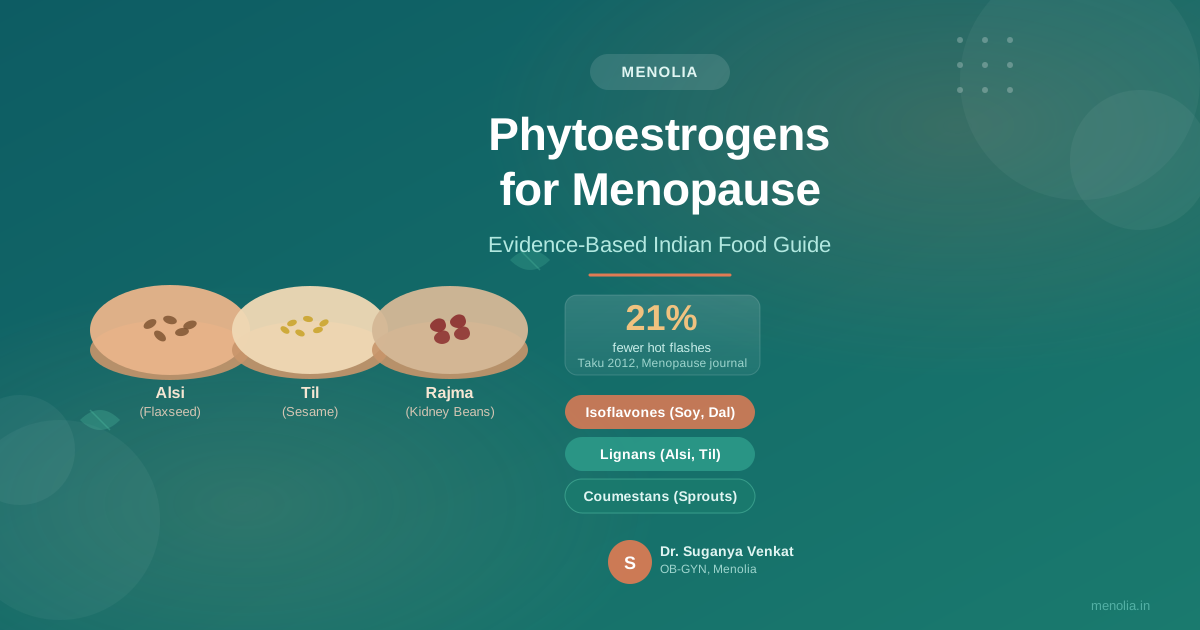
The evidence: The Cochrane review (Lethaby et al., 2013, PMID 24323914) found no consistent benefit for phytoestrogen supplements overall. The one exception was concentrated genistein extracts at 40 to 80 mg daily, where a few trials showed a reduction of one to two flushes a day. So the food and the concentrated genistein extract are not the same bet.
The nuance: Not every woman metabolises phytoestrogens the same way. A substantial minority of people produce equol (a metabolite of daidzein) in their gut, and equol producers tend to get more benefit. Asian populations generally have higher rates of equol production, which may explain why traditional soy-rich diets in Japan correlate with fewer menopausal symptoms.
Indian food sources:
- Soy chunks (meal maker/nutrela): widely available and affordable
- Tofu: increasingly common in Indian cities
- Soy milk: easy addition to tea or smoothies
- Edamame: as a snack
Supplement option: if you try one, it has to be a standardised genistein extract at 40 to 80mg daily, because that is the specific product the positive trials used. A generic “soy isoflavone” capsule at the same milligram number is not the same thing. Give it 8 to 12 weeks to judge the effect.
Safety note: Soy isoflavones are safe for most women, including breast cancer survivors at moderate dietary levels. However, if you have a history of oestrogen-receptor-positive breast cancer, discuss with your oncologist before taking concentrated supplements.
5. Magnesium
Magnesium is involved in more than 300 enzymatic reactions, and in menopause it earns its place for sleep, muscle relaxation, bone health and mood. The sleep claim you will see on the label rests on a small trial of elderly people with insomnia (n=46), not menopausal women (Abbasi et al., J Res Med Sci 2012, PMID 23853635), so treat it as suggestive rather than settled. It does support bone density when combined with calcium and Vitamin D. What it will not do is help hot flashes: magnesium has been tested for exactly that and did not beat placebo in randomised data, so do not take it for flushes. Many adults fall short of the magnesium their diet should provide.
The richest Indian sources (per 100g, ICMR-NIN 2017) are pumpkin seeds (550mg), dark chocolate of 70% or higher (228mg), ragi (137mg), bajra (124mg) and spinach or palak (87mg), though a realistic handful of seeds is closer to 30g. Ragi keeps appearing in these lists. It is genuinely one of the best menopause foods.
If food alone is not enough, magnesium glycinate or citrate at 200 to 400mg at bedtime is the form I suggest: glycinate is gentler on the stomach and may help with sleep. Avoid magnesium oxide, which is poorly absorbed. Budget around ₹200-400 a month.
6. Ashwagandha (Withania somnifera)
Ashwagandha is an adaptogen traditionally used in Ayurveda for stress, sleep and vitality. A small single-centre randomised trial in 100 perimenopausal women (Gopal et al., J Obstet Gynaecol Res, 2021, PMID 34553463) found that ashwagandha root extract (300mg twice daily for 8 weeks) improved menopause-specific quality-of-life scores (the MENQOL and Greene Climacteric scales) compared with placebo. It is a single 8-week study with no long-term safety data, and there are case reports of ashwagandha-associated liver injury, so it is worth the same caution as any daily supplement: stop and see a doctor if you develop yellowing of the eyes, dark urine, or unexplained fatigue. What it has going for it is that this overlaps with ashwagandha’s better-established effect on stress and sleep.
You also have access to high-quality ashwagandha grown in India: Rajasthan, Madhya Pradesh and Maharashtra are major producers, and it sits inside a traditional knowledge system women here already know, so there is cultural familiarity. KSM-66 or Sensoril are the best-studied extract forms. Take 300mg twice daily and give it 6 to 8 weeks before judging. Quality extracts cost ₹300-500 a month.
7. Collagen Peptides
Collagen is the most abundant protein in the body, found in skin, bones, joints and connective tissue. Oestrogen decline accelerates collagen loss in the skin and connective tissue. Systematic reviews of collagen peptide supplementation (2.5 to 15g daily) report improvements in skin elasticity and hydration, with some evidence for joint pain. Read this one with a caveat: most of these trials are funded by the companies that sell collagen, so the effect sizes are likely flattering.
If you want to try it, use hydrolysed collagen peptides at 5 to 10g daily, dissolved in water, a smoothie or tea, Type I for skin and Type II for joints. Quality products cost ₹600-1,200 a month.
The Weak/No Evidence Tier
These are widely marketed but have limited scientific support. I’m not saying they’re harmful, just that the evidence doesn’t justify the cost.
Evening Primrose Oil
Marketed for hot flashes, but the trials that exist have not shown a benefit over placebo for menopausal symptoms. Save your money.
Black Cohosh
Popular in Western countries for hot flashes. Results are mixed, some small studies show modest benefit, others show none. A Cochrane review (Leach & Moore, 2012, PMID 22972105) concluded there is insufficient evidence to recommend it. There are also rare reports of liver toxicity, which makes me cautious. If you are already taking it and develop yellowing of the eyes, dark urine, or unexplained fatigue, stop it and see a doctor.
Wild Yam Extract/Cream
Often marketed as “natural progesterone.” Your body cannot convert the diosgenin in wild yam into progesterone, that conversion requires laboratory processing. Wild yam cream has no hormonal effect. This is one of the biggest myths in menopause supplements.
DHEA
Sometimes promoted for libido and energy. Oral DHEA has inconsistent results for menopausal symptoms and can cause androgenic side effects (acne, facial hair). Not recommended for self-supplementation. Vaginal DHEA (prasterone) is a different story, it has FDA approval for vaginal atrophy and works well, but requires a prescription.
Red Clover
Contains isoflavones similar to soy, but studies show inconsistent results for hot flashes. If you’re already getting phytoestrogens from soy, red clover adds minimal benefit.
For a deeper look at the herbal supplements specifically (shatavari, black cohosh, red clover), see our menopause herbal supplements guide.
My Recommended Starting Protocol
Based on what I see in my clinic, here’s what most Indian women in perimenopause or menopause benefit from:
Two patterns show up again and again. When a woman in perimenopause has her 25-hydroxy Vitamin D checked for the first time, the number almost always comes back deficient, commonly somewhere in the teens to low 20s ng/mL, and that holds even for women living in cities with strong sun all year round. And the bottle I most often ask a woman to stop is an expensive multi-ingredient “menopause formula” proprietary blend: it hides the dose of everything inside it, costs more than the whole essential trio, and does less than simply correcting the one or two things her blood work actually shows.
Essential (almost everyone):
- Vitamin D3: Get tested first. Most will need 1,000-2,000 IU/day maintenance
- Calcium: 500-600mg supplement if dietary intake is below 800mg (plus food sources)
- Omega-3: 1,000 to 2,000 mg EPA+DHA daily (or 2-3 fish servings/week)
Add based on symptoms: 4. Magnesium glycinate (200-400mg at bedtime), if sleep is disrupted or you have muscle cramps/restless legs 5. Standardised genistein extract (40-80mg daily, not a generic soy isoflavone capsule), if hot flashes are bothersome and you’re not on HRT 6. Ashwagandha (300mg 2x/day), if stress, anxiety, or poor sleep is prominent
Consider if relevant: 7. Collagen peptides (5-10g daily), if skin changes or joint pain are significant concerns
Total monthly cost for the essential trio: approximately ₹650 to 1,300. For most women that is under a thousand rupees a month, and it is the part of the plan that reliably shows up on a bone-density scan five years from now.
💜 Want a plan built around your own symptoms and blood work? Every woman’s menopause is different. Message Dr. Suganya on WhatsApp. I’ll look at your specific health picture, current symptoms, and existing medications to recommend exactly what you need (and nothing you don’t).
How to Choose Quality Supplements in India
Not all supplements are created equal. Here’s how to buy smart:
- Look for FSSAI licensing: Every supplement sold in India should have an FSSAI number. No number = don’t buy.
- Check for third-party testing: Brands that get their products tested by independent labs (like NABL-accredited labs) are more trustworthy.
- Choose standardised extracts: For herbal supplements, look for standardised extracts (e.g., “KSM-66 ashwagandha” rather than just “ashwagandha powder”).
- Avoid proprietary blends: If the label says “proprietary blend” without individual doses, you can’t know how much of each ingredient you’re getting.
- Judge the label, not the brand: I don’t endorse specific brands. What matters is on the label: a valid FSSAI number, a named standardised extract (not a “proprietary blend”), an independent lab test report available on request, and, for imported products, USP or NSF certification.
Supplements Are Not a Substitute
Let me be direct: supplements supplement. They fill gaps. They don’t replace:
- Proper nutrition: Ragi, til, dahi, fish, vegetables, dal. These provide a matrix of nutrients that no pill can replicate
- Regular movement: Weight-bearing exercise for bones, walking for heart health, yoga for flexibility and stress
- Good sleep: No supplement fixes chronic sleep deprivation
- HRT when indicated: If your symptoms are severe, HRT is the most effective treatment. Supplements are a complement, not an alternative
- Medical evaluation: Get your blood work done. Supplement based on actual deficiencies, not marketing
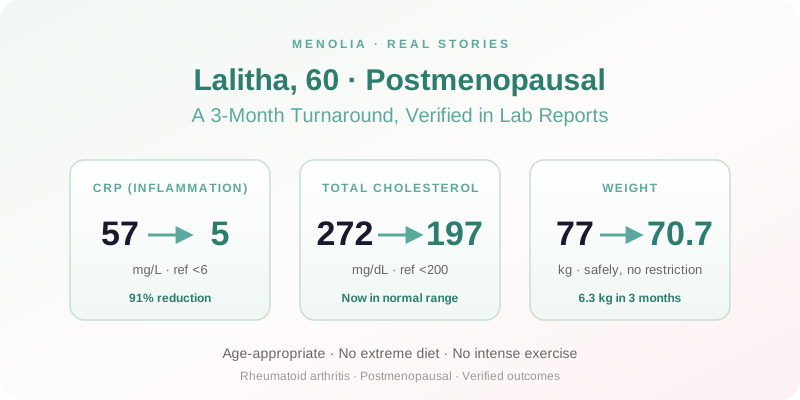
In Lalitha’s case study (our first published Menolia case study), targeted supplementation was one of five interventions that together brought her CRP from 57 to 5 mg/L and her cholesterol into the normal range in 3 months. The supplements mattered, but they worked because the rest of the plan was in place too. One woman’s result is not a prediction for yours.
When Supplements Are Not the Answer
A supplement is the wrong response to a red flag. See a doctor promptly, rather than reaching for a bottle, if you have any bleeding after 12 full months without a period, a fracture from a minor fall or knock, chest pain or breathlessness on exertion, or a new, severe low mood. These need assessment, not a shelf of capsules, and catching them early matters far more than any supplement on this page.
FAQ
Q: Which supplements should I take if I am nearing menopause and am Indian vegetarian?
The shortest honest answer is three: Vitamin D3 (1,000 to 2,000 IU daily, after testing), Calcium (500 to 600 mg daily if dietary intake is under 800 mg), and an algal-oil Omega-3 (1,000 to 2,000 mg combined EPA + DHA daily). These three have the strongest evidence for what changes during menopause, bone density loss, cardiovascular risk, and inflammation, and all three are commonly low in Indian vegetarian diets even when overall nutrition looks balanced. Add ground flaxseed (1 to 2 tablespoons daily) and sesame seeds (til) to your food for phytoestrogens and additional calcium. Add magnesium glycinate (200 to 400 mg at bedtime) only if sleep is disrupted. Add ashwagandha (300 mg twice daily, KSM-66 or Sensoril extract) only if stress or poor sleep is prominent. Get a Vitamin D and a B12 blood test first; long-term vegetarian diets often run low on B12, which is not strictly a menopause supplement but matters at this life stage.
Q: Can I take all these supplements together?
Generally yes, but timing matters. Take calcium and Vitamin D together (with a meal containing fat). Take magnesium at bedtime (it can be calming). Space calcium and iron supplements at least 2 hours apart (they compete for absorption). Always tell your doctor about all supplements you’re taking.
Q: How long before I notice a difference?
Vitamin D: 8-12 weeks to replete if deficient. Magnesium for sleep: 1-2 weeks. Phytoestrogens for hot flashes: 8-12 weeks. Collagen for skin: 8-12 weeks. Ashwagandha for stress: 4-8 weeks. Be patient. These aren’t medications with immediate effects.
Q: Are there any interactions with medications I should know about?
Yes. Key ones: Calcium can reduce absorption of thyroid medication (take 4 hours apart). Omega-3s may increase bleeding risk if you’re on blood thinners. Ashwagandha may interact with thyroid medication and sedatives. Soy isoflavones can interact with tamoxifen. Always discuss with your doctor.
Q: I’m already on HRT. Do I still need supplements?
Likely yes for Vitamin D and calcium. HRT doesn’t eliminate the need for these. You probably don’t need phytoestrogens if HRT is managing your hot flashes. Omega-3s and magnesium are beneficial regardless of HRT status.
Q: My friend recommended a supplement that “cured” her menopause symptoms. Should I try it?
I hear this often. Remember: what works for one woman may not work for another, and subjective improvement can be due to the placebo effect, which is unusually strong in menopause-symptom studies. Stick with evidence-based options, and make changes based on YOUR symptoms and blood work.
Q: Are Ayurvedic formulations evidence-based?
Some individual ingredients (ashwagandha, shatavari, turmeric) have clinical trial evidence. However, many multi-ingredient Ayurvedic formulations haven’t been tested in rigorous clinical trials. This doesn’t mean they don’t work, but it means we can’t say with confidence that they do. I recommend sticking with single-ingredient, standardised extracts where the evidence is clearer.
Key Takeaways
- Start with the essentials: Vitamin D + Calcium + Omega-3, most Indian women need all three
- Test, don’t guess: Get Vitamin D and calcium levels checked before supplementing
- Evidence tiers matter: Strong evidence (Vitamin D, Calcium, Omega-3), moderate (phytoestrogens, magnesium, ashwagandha), weak (evening primrose, black cohosh, wild yam)
- Food first: Ragi, til, dahi, fish, flaxseeds. Indian foods are genuinely excellent for menopause nutrition
- Supplements complement, they don’t replace proper nutrition, exercise, sleep, and medical care
- Budget-friendly: The essential trio costs ₹650-1,300/month, good value and impactful
Dr. Suganya Venkat is an OB-GYN with 15+ years of experience. She leads the 90-day Menolia program for perimenopause and menopause.