You turn 40 and something shifts. Not dramatically, not overnight, but in small ways you keep explaining away.
Your sleep used to be easy. Now you wake at 3 AM and cannot settle again. Your periods have changed somehow: shorter, or longer, or slightly heavier, or just a few days off from when you expected them. You have felt hotter than usual lately, waking to find you have kicked off the covers. You keep losing words mid-sentence. You feel more irritable than you recognise yourself to be.
You tell yourself it is the workload. The stress. The summer heat. The children. But something wonders: is this menopause?
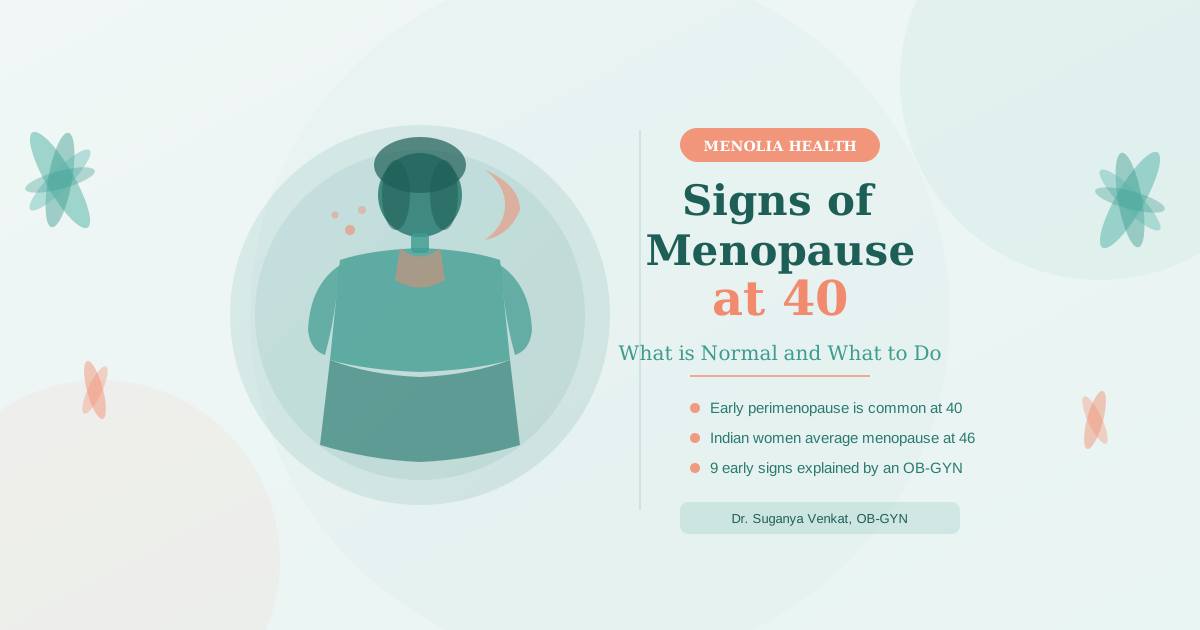
Here is the honest answer. At 40, you are likely not in menopause yet. But you may be in perimenopause, the transition phase that precedes it, and in India, that transition often begins earlier than most women expect.
This post explains what signs at 40 actually mean, which are consistent with early perimenopause, and what you can do to feel better right now.
Why 40 Is Significant for Indian Women
In Western medicine, menopause is often discussed as a “50-something” event. The average age of natural menopause in the United States is around 51. For Indian women, the picture is different.
A PAN India survey published in the Journal of Mid-Life Health (Ahuja, 2016) found the mean age of natural menopause in Indian women to be 46.2 years, approximately 4 to 5 years earlier than the Western average of around 51. This finding has been replicated across diverse Indian populations in subsequent studies.
If the average menopause in India happens at around 46, then perimenopause, the transition that precedes the final period by anywhere from 4 to 8 years, can legitimately begin in the early 40s or even late 30s for many Indian women.
So if you are 40 and noticing changes, you are not imagining it. You are also not unusual. You may simply be at the earlier end of a normal Indian timeline.
It is worth distinguishing perimenopause from premature menopause, however. If you are under 40 and your periods have stopped entirely, or nearly so, that warrants prompt investigation. You can read more in our guide to premature menopause. At 40 and above, early perimenopause is the far more likely explanation.
9 Early Signs to Recognise at 40
These signs can appear before your periods even begin to change. Many women find the non-cycle symptoms the most confusing, precisely because they seem so unrelated to reproduction.
1. Sleep Disruption
Waking in the night, difficulty falling asleep, or waking earlier than intended are among the most commonly reported early perimenopause symptoms. Oestrogen plays a role in thermoregulation and the quality of sleep cycles. When it begins to fluctuate, sleep becomes lighter, more fragmented, and less restorative. Many women notice this before any change to their period.
Our post on menopause sleep problems covers what the evidence actually supports for improving sleep during this phase.
2. Mood Changes Without a Clear Cause
Increased irritability, a shorter fuse, a sense of flatness or low mood that comes and goes, or a feeling of being overwhelmed by things that used to feel manageable. These are often oestrogen-related. Oestrogen influences serotonin and other mood-regulating neurotransmitters. When it fluctuates, so does emotional regulation. Many women describe feeling unlike themselves without being able to say why.
3. Irregular Periods
This is typically the first menstrual sign of perimenopause. Cycles that were once predictable may start arriving a few days early or late. Flow may change: heavier in some months, lighter in others. Over time, the gap between periods may lengthen. Any persistent change in your cycle after years of regularity is worth noting and worth mentioning to your doctor.
If you are experiencing unusually heavy bleeding alongside irregularity, our guide on heavy bleeding during perimenopause covers what is normal and what needs investigation.
4. Hot Flashes or Night Sweats
Not everyone gets these early, and at 40, they may be milder than the descriptions you have heard. You might notice warmth spreading up from your chest, a sudden flush that passes in minutes, or waking with damp clothing at night. Even subtle versions are worth tracking, as they often become more frequent or more intense later in the transition.
For relief strategies backed by evidence and specific Indian foods that help, see our post on 9 Indian foods that fight hot flashes.
5. Brain Fog
Forgetting words. Losing your train of thought mid-meeting. Walking into a room and not knowing why. Feeling mentally slower than you usually are. This is one of the more disorienting signs because women understandably worry about what it means. In most cases, hormonal fluctuation during perimenopause is the cause, and it does improve. Our post on menopause brain fog explains why it happens and what specifically helps.
6. Changes in Libido
A drop in interest in sex or physical sensation can begin during early perimenopause. Testosterone, not just oestrogen, declines during this period, and both hormones play a role in desire and arousal. Vaginal changes, including reduced lubrication, may also make sex uncomfortable, which can further reduce interest. This is a common and underreported symptom, and it is worth discussing with a doctor rather than accepting quietly.
7. Fatigue That Rest Does Not Fully Fix
You are sleeping (or trying to) and still exhausted. This is partly disrupted sleep quality, and partly the metabolic and hormonal changes occurring during perimenopause. Many women describe it as a different kind of tired: heavier, less responsive to a weekend of rest, and present even on days when nothing particularly demanding happened.
8. Headaches or Worsening Migraines
If you have always been prone to headaches, they may worsen or change pattern during early perimenopause. Oestrogen influences pain sensitivity and vascular tone. Women who had predictable menstrual migraines often find they become more erratic during the perimenopausal transition, arriving at unexpected times in the cycle.
For more on this, read our guide on Menopause Headaches & Migraines.
9. Digestive Changes
Bloating, increased sensitivity to certain foods, or a more unsettled gut. Oestrogen receptors exist throughout the gastrointestinal tract, so hormonal fluctuation affects digestion too. Many women find that foods they tolerated easily in their 30s start causing discomfort in their early 40s. Our post on menopause and gut health covers this connection in more detail.
What Is Actually Happening Hormonally
The ovaries begin producing less oestrogen and progesterone, but not in a clean, linear decline. In early perimenopause, oestrogen can actually spike higher than usual before it starts to fall. This is why symptoms feel erratic: one week completely fine, the next week three things happening at once.
The pituitary gland tries to compensate for declining ovarian responsiveness by producing more FSH (follicle-stimulating hormone). A rising FSH, especially when combined with symptoms, is one clinical marker doctors look for.
This hormonal turbulence, rather than a simple steady decline, is what makes early perimenopause feel so unpredictable. It is also why symptoms can come and go for months or even years before the transition progresses.
For a full list of all the symptoms that can appear during this transition, see our guide to perimenopause symptoms. For a deeper picture of how to track what is happening and when hormonal testing adds value, see our guide to perimenopause testing.
Are you noticing some of these changes and not sure what they mean for your body specifically?
Dr. Suganya Venkat is an OB-GYN with 15+ years of clinical experience who sees women specifically navigating perimenopause and menopause. A personalised consultation gives you clarity on what is happening and a practical starting point.
Start a WhatsApp conversation with Dr. Suganya
What a Doctor Workup at 40 Might Include
Your gynaecologist may recommend:
Hormonal panel. FSH, LH, oestradiol, and AMH (anti-Mullerian hormone). AMH reflects remaining ovarian reserve. These tests are most informative when taken on day 2 or 3 of your menstrual cycle.
Thyroid function tests. TSH, free T3, and free T4. Thyroid disorders are very common in women over 40 and share significant symptom overlap with perimenopause, including fatigue, brain fog, mood changes, and menstrual irregularity. Ruling out thyroid dysfunction is an important first step. Our post on thyroid changes during menopause explains the overlap clearly.
Complete blood count. To check for anaemia, particularly if your periods have been heavier.
One important note: a single hormone test does not diagnose perimenopause. Hormones fluctuate widely cycle to cycle during this phase. A raised FSH on one test may be normal on the next. This is why a good gynaecologist will interpret numbers in the context of your symptoms and history, not use them alone.
What Is Normal and What Needs Medical Attention
At 40, the following are consistent with early perimenopause and while they deserve attention, they do not usually require urgent intervention:
- Cycles that are a few days shorter or longer than before
- Mildly heavier or lighter flow than your usual
- Occasional hot flashes, particularly at night
- Disrupted sleep without an obvious other cause
- Mood fluctuations or increased irritability
- Brain fog or word-finding difficulties
See your doctor promptly if you notice:
- Periods arriving less than 21 days apart, or not arriving for 90 or more days
- Soaking through protection in an hour or less
- Bleeding between periods or after sex
- Any bleeding after a period of 12 or more months without one
- Severe depression or anxiety affecting daily functioning
These may still turn out to have benign explanations, but they need investigation to rule out other conditions including fibroids, polyps, endometrial changes, or thyroid dysfunction.
What You Can Do Starting Now
Perimenopause is a transition, not a condition. There is a significant amount within your control.
Track your cycle and symptoms. Use an app or a simple diary. Note cycle length, flow, sleep quality, mood, and any other symptoms. A pattern over 2 to 3 months is more useful to your doctor than a single episode.
Prioritise sleep as a genuine health priority. Not a luxury item on a busy schedule. Cooler room temperatures, consistent sleep and wake times, and reducing screen exposure an hour before bed all support the disrupted sleep mechanisms of perimenopause. Our sleep guide covers the evidence-based approaches in detail.
Shift your nutrition toward bone and metabolic support. After 40, bone density requires active protection. Ragi (finger millet) is one of the richest plant-based calcium sources available in India: far easier to build into daily cooking than calcium supplements. Dahi, sesame seeds (til), drumstick leaves, and small fish with bones are also excellent everyday sources. Turmeric (haldi) with a small amount of black pepper daily supports the inflammation management that becomes more relevant during this transition. Reducing refined carbohydrates helps counter the insulin resistance that tends to worsen with declining oestrogen.
Protect muscle mass with resistance exercise. Oestrogen supported muscle maintenance passively. As it declines, muscle loss accelerates unless countered deliberately. Two to three sessions per week of body-weight or resistance training makes a meaningful difference, not only for weight management but for bone health, mood stability, and metabolic rate. Our guide on exercise during menopause covers what the research supports.
Take mood changes seriously. If you are significantly more irritable, anxious, or low in mood, that is likely hormonal, not a character shift. Breathwork, yoga (our yoga for menopause guide has evidence-based poses specifically for this transition), and, where needed, professional psychological support can make a meaningful difference. You do not have to push through it alone.
Get a baseline workup done. Even if you are confident the cause is perimenopause, a blood test gives you data to work from. It rules out thyroid dysfunction, provides a hormonal baseline for future comparison, and allows you to have an informed conversation with your doctor rather than guessing.
Perimenopause vs Premature Menopause: Understanding the Difference
This distinction matters and sometimes causes confusion.
Perimenopause at 40 means the transition is beginning within a normal range for Indian women. You still have ovarian function. Periods may be irregular but have not stopped. Hormones fluctuate rather than decline steadily. This is the typical situation for women in their early 40s noticing changes.
Premature ovarian insufficiency (POI) refers to the ovaries losing normal function before age 40. Periods stop or become very rare. FSH is consistently elevated on multiple tests. Fertility is significantly affected. This is a distinct medical situation requiring its own investigation and management.
If you are 40 and your periods have not stopped, and you are experiencing the variable symptoms described in this post, early perimenopause is the more likely explanation. Your gynaecologist can confirm with a workup.
How Long Does This Phase Last?
The perimenopausal transition averages 4 to 8 years before the final menstrual period, though individual variation is wide. Some women have a shorter, more intense transition. Others have a longer, more gradual one.
How you manage these years, nutritionally, physically, and emotionally, genuinely influences how you experience them. Women who begin paying attention early, tracking symptoms, adjusting lifestyle, and getting appropriate guidance, tend to move through the transition with significantly more ease than those who wait until symptoms become severe.
You do not need to wait until you are struggling to start taking care of yourself in this new phase.
Every woman’s perimenopause is different. What helps one woman may not be the right starting point for another.
If you are in your 40s and want to understand what is specifically happening in your body and what to do about it, Dr. Suganya Venkat offers personalised perimenopause consultations. You bring your symptoms and questions; she brings the clinical picture.
WhatsApp Dr. Suganya to book a consultation
Frequently Asked Questions
Is it normal to have menopause-related symptoms at 40?
Yes. Perimenopause, the transition phase before menopause, commonly begins in the early-to-mid 40s, and even in the late 30s for some Indian women. The average age of natural menopause in India is around 46, which means perimenopause often starts in the early 40s. Experiencing symptoms at 40 is within the normal range for Indian women and does not indicate something is wrong.
What is the difference between perimenopause and menopause?
Menopause is a specific point in time: 12 consecutive months without a menstrual period. Perimenopause is the transition phase leading up to that point, often lasting 4 to 8 years. During perimenopause, hormones fluctuate, periods become irregular, and symptoms appear. Most women in their early-to-mid 40s who notice changes are in perimenopause, not menopause itself.
Can I still have regular periods during early perimenopause?
Yes. Many women have mostly regular periods in the earliest stage of perimenopause while experiencing symptoms like sleep disruption, mood changes, or brain fog. Menstrual irregularity typically appears later in the transition. Regular periods do not rule out perimenopause.
What blood tests should I ask for at 40 if I suspect perimenopause?
A useful starting workup includes FSH, LH, oestradiol, and AMH (anti-Mullerian hormone), ideally taken on day 2 or 3 of your cycle. A thyroid panel (TSH, free T3, free T4) is also important, as thyroid disorders are common in women over 40 and overlap significantly with perimenopausal symptoms. These results, interpreted alongside your symptoms, help your doctor assess where you are in the transition.
Does starting perimenopause at 40 mean I will reach menopause unusually early?
Not necessarily. Some women begin perimenopause earlier and have a longer, more gradual transition. Others have a shorter, more compressed transition. Starting to notice signs in your early 40s does not automatically mean you will reach your final period much earlier than the Indian average of around 46, though it is worth discussing your specific picture with your gynaecologist.
Can lifestyle changes genuinely help at this stage?
Yes, significantly. The perimenopausal phase is the ideal time to invest in bone health through calcium-rich foods like ragi and dahi, protect muscle mass through resistance training, improve sleep hygiene, and manage stress actively. Women who address these early tend to experience a smoother transition than those who wait until symptoms are severe before seeking help.
Should I see a gynaecologist even if my periods are still regular but I have other symptoms?
Yes. Regular periods do not mean you should wait. If you are experiencing significant sleep disruption, mood changes, fatigue, or other symptoms that are affecting your quality of life, these deserve attention now. A gynaecologist can assess your hormone levels, rule out thyroid and other causes, and give you a clear picture of what is happening and what your options are.