You’re exhausted even after sleeping eight hours. Your weight is creeping up despite eating carefully. Your hair is thinning. Your mood swings between flat and irritable. Your skin feels dry no matter how much cream you apply.
You assume it’s menopause. Your family assumes it’s menopause. Even your doctor might assume it’s menopause.
For more on this, read our guide on Menopause Breast Tenderness. But what if it’s your thyroid?
This is one of the most common missed diagnoses I see in women over 40. The overlap between thyroid symptoms and menopause symptoms is so significant that thyroid problems frequently go undetected for years, right when they’re most likely to develop.
Let me explain why this happens and what you can do about it.
Can Hypothyroidism or Hashimoto’s Be Mistaken for Menopause?
If you searched “can hypothyroidism cause menopause symptoms,” “hashimoto and menopause,” or “graves disease and menopause,” the short answer is yes, frequently, and it is one of the most common diagnostic mix-ups in women over 40.
Here is the practical reality:
- Hypothyroidism (an underactive thyroid) causes fatigue, weight gain, hair thinning, low mood, dry skin, and brain fog. So does perimenopause. The symptom overlap is so high that the only reliable way to tell them apart is a blood test (TSH plus Free T4).
- Hashimoto’s thyroiditis (autoimmune hypothyroidism) is the most common cause of hypothyroidism in adult women, and its prevalence rises sharply during the menopausal transition. The decline in oestrogen weakens the immune-modulating effect that protected you in your reproductive years, allowing previously dormant autoimmune tendencies to surface.
- Graves’ disease (autoimmune hyperthyroidism) also becomes more common in midlife, though it is much rarer than Hashimoto’s. Graves can cause heat intolerance and sweating that women often mistake for hot flashes, leading to delayed diagnosis.
- Both conditions can coexist with menopause. A woman in her late 40s can be perimenopausal and developing Hashimoto’s at the same time. Treating one without recognising the other leaves her still feeling unwell, which is why a thyroid panel should be part of any thorough perimenopausal workup.
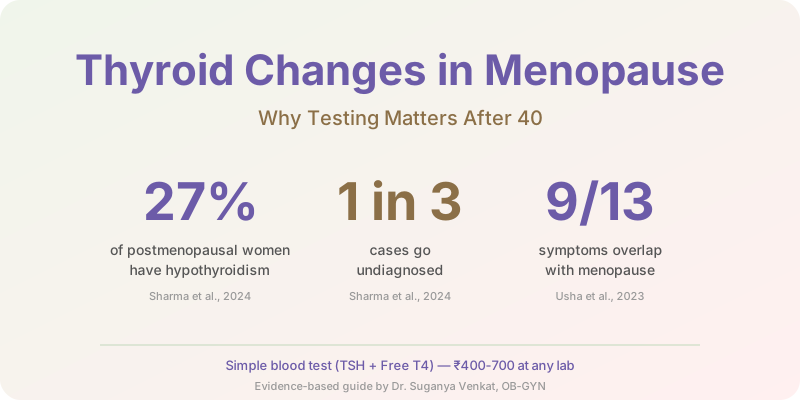
The good news: distinguishing them is inexpensive, fast, and accessible. A TSH and Free T4 blood test costs ₹400 to ₹700 at most Indian labs, takes one morning to do, and gives you a clear answer. If the result is borderline or positive, an Anti-TPO antibody test confirms whether it’s Hashimoto’s. The rest of this article explains why menopause raises thyroid risk, exactly which tests to ask for, and what each result means.
Why Thyroid Problems Increase During Menopause
Your thyroid and your reproductive hormones don’t operate in isolation. They’re in constant conversation. When one changes dramatically (as oestrogen does during perimenopause and menopause) the other is affected.
The Oestrogen–Thyroid Connection
Oestrogen influences your thyroid in several important ways:
1. Oestrogen affects thyroid-binding globulin (TBG) TBG is a protein in your blood that carries thyroid hormones. When oestrogen levels are stable, TBG levels are stable. When oestrogen drops during menopause, TBG levels can change, altering how much free (active) thyroid hormone is available in your body (Santin & Furlanetto, 2011).
2. Oestrogen has protective effects against autoimmunity This is a significant finding. Oestrogen appears to have a moderating effect on the immune system. When oestrogen declines during menopause, the risk of autoimmune thyroid conditions (particularly Hashimoto’s thyroiditis) can increase (Teng et al., 2024).
3. Oestrogen affects TSH levels The decline in oestrogen can subtly shift TSH (thyroid-stimulating hormone) levels, sometimes pushing women who were on the borderline into clinical hypothyroidism (Frank-Raue & Raue, 2023).
The Numbers Are Striking
- 27.3% of postmenopausal women have hypothyroidism, according to Sharma et al. (2024), and nearly one-third of those cases were previously undiagnosed
- Yadav et al. (2023) found that among perimenopausal and postmenopausal women, 13.3% had overt hypothyroidism and 23.3% had subclinical hypothyroidism
- Women are 5-8 times more likely than men to develop thyroid disorders, and the risk peaks after 40
In India, where routine thyroid screening is not always part of standard care, many women live with undiagnosed thyroid issues for years, attributing everything to “just menopause.” Understanding when menopause typically starts in India helps you know when to be vigilant about thyroid screening.
The Overlap: Why It’s So Easy to Miss
This is the critical challenge. Look at how the symptoms line up:
| Symptom | Menopause | Hypothyroidism | Both |
|---|---|---|---|
| Fatigue | ✓ | ✓ | ✓ |
| Weight gain | ✓ | ✓ | ✓ |
| Hair thinning/loss | ✓ | ✓ | ✓ |
| Mood changes / low mood | ✓ | ✓ | ✓ |
| Dry skin | ✓ | ✓ | ✓ |
| Brain fog / poor concentration | ✓ | ✓ | ✓ |
| Irregular periods | ✓ | ✓ | ✓ |
| Joint pain | ✓ | ✓ | ✓ |
| Sleep disturbances | ✓ | ✓ | ✓ |
| Feeling cold | Less common | ✓ | , |
| Hot flashes | ✓ | Rare | , |
| Constipation | Less common | ✓ | , |
| Puffy face / swelling | Less common | ✓ | , |
9 out of 13 symptoms are shared. This is why thyroid disease researcher Usha et al. (2023) specifically noted that “signs and symptoms of thyroid disorders simulate those of menopausal features which may go unnoticed.”
When to Suspect It’s More Than Menopause
While no symptom is definitive on its own, there are patterns that suggest thyroid involvement:
- Fatigue that doesn’t improve with rest. Menopause-related tiredness often improves with better sleep. Thyroid fatigue feels bone-deep and persistent.
- Weight gain despite genuinely eating less. Menopausal weight redistribution is common, but unexplained weight gain that defies calorie reduction suggests thyroid involvement.
- Feeling unusually cold. Sensitivity to cold (needing a shawl in a room where everyone else is comfortable) is more thyroid than menopause.
- Constipation that’s new for you. If your digestion has slowed noticeably, thyroid function is worth checking.
- Puffy face, especially in the morning. Facial puffiness (myxoedema) is characteristic of hypothyroidism, not menopause.
- Unusually slow heart rate. While menopause can cause palpitations, a slow resting heart rate (below 60 bpm) points toward thyroid.
💬 Not sure if your symptoms are menopause, thyroid, or both? Talk to Dr. Suganya on WhatsApp. She can help you figure out the right tests to ask for.
The Tests You Need
The good news: distinguishing thyroid problems from menopause is straightforward with the right blood tests.
Essential Tests (Every Woman Over 40)
1. TSH (Thyroid-Stimulating Hormone) This is the primary screening test. TSH is produced by your pituitary gland and tells your thyroid to produce hormones. When your thyroid is underactive, TSH rises as your body tries harder to stimulate it.
- Normal range: 0.4 – 4.0 mIU/L (but many endocrinologists now consider 0.5-2.5 optimal)
- Subclinical hypothyroidism: TSH 4.0-10.0 with normal Free T4
- Overt hypothyroidism: TSH above 10.0 or TSH 4.0-10.0 with low Free T4
2. Free T4 (Free Thyroxine) This measures the actual active thyroid hormone available in your blood. It’s important to check alongside TSH, not just TSH alone.
- Normal range: 0.8 – 1.8 ng/dL
Additional Tests (If Initial Results Are Borderline or Positive)
3. Anti-TPO Antibodies (Thyroid Peroxidase) This test checks for autoimmune thyroid disease (Hashimoto’s). If positive, it confirms that your thyroid issue is autoimmune, which affects long-term management.
4. Free T3 Usually not needed for screening but helpful if you’re on thyroid medication and still symptomatic.
5. Thyroid ultrasound If nodules are suspected or if your thyroid feels enlarged during examination.
How Often to Test
| Age / Situation | Recommendation |
|---|---|
| All women over 40 | TSH + Free T4 at least once a year |
| Perimenopausal with symptoms | TSH + Free T4 + Anti-TPO |
| Already on thyroid medication | TSH every 6 months (oestrogen changes can alter dosing needs) |
| Family history of thyroid disease | Start annual screening from age 35 |
Test Costs in India
Thyroid testing is widely available and affordable:
- TSH alone: ₹200-400 at most labs
- TSH + Free T4: ₹400-700
- Full thyroid panel (TSH, Free T3, Free T4, Anti-TPO): ₹800-1,500
- Available at Thyrocare, SRL, Lal Path Labs, and local diagnostic centres
Hashimoto’s Thyroiditis. The Autoimmune Connection
Hashimoto’s thyroiditis is the most common cause of hypothyroidism, and its prevalence increases during and after menopause. Understanding this connection matters.
What Happens
In Hashimoto’s, your immune system mistakenly attacks your thyroid gland. Over time, this damages the thyroid’s ability to produce hormones, leading to hypothyroidism.
Why Menopause Increases the Risk
- Oestrogen decline reduces immune modulation: the protective effect of oestrogen on autoimmunity weakens
- Immune system shifts during menopause can activate previously dormant autoimmune tendencies
- Stress: a known autoimmune trigger, often increases during the menopause transition
- Genetic predisposition becomes more likely to manifest as the hormonal environment changes
The Indian Context
Autoimmune thyroid disease is common in India but often underdiagnosed. A study in Tamil Nadu found that anti-TPO antibodies were positive in a significant proportion of women presenting with “menopause symptoms”, suggesting that what was being attributed to menopause was at least partly thyroid-related.
If you have a family history of thyroid disease (mother, sister, grandmother), your risk is considerably higher, and proactive testing is especially important.
Managing Thyroid Issues During Menopause
If testing confirms you have a thyroid problem, the management is usually straightforward.
For Hypothyroidism
Levothyroxine (brand names: Thyronorm, Eltroxin) is the standard treatment. It replaces the thyroid hormone your body isn’t making enough of.
Key points for menopausal women:
- Take it on an empty stomach, 30-60 minutes before breakfast. Tea and coffee should wait.
- Oestrogen changes during menopause can affect dosing. Your TSH should be monitored more frequently during the perimenopause transition. Frank-Raue & Raue (2023) emphasise this point, dosing may need adjustment as oestrogen levels fluctuate.
- If you start HRT (hormone replacement therapy), your thyroid medication dose may need to be rechecked. HRT affects TBG levels and can alter thyroid hormone availability.
- Don’t take calcium or iron supplements within 4 hours of thyroid medication. They interfere with absorption. This is particularly relevant for menopausal women who are often taking calcium for bone health.
Nutrition for Thyroid and Menopause
Many foods that support thyroid health also benefit menopausal women. Focus on:
Include:
- Iodine-rich foods: iodised salt (most Indian households already use this), curd, milk
- Selenium-rich foods: Brazil nuts, eggs, garlic, mushrooms
- Zinc-rich foods: pumpkin seeds, sesame seeds, chickpeas, rajma
- Anti-inflammatory foods: turmeric (haldi), ginger (adrak), amla, green leafy vegetables
Be cautious with:
- Raw cruciferous vegetables in large amounts (cabbage, cauliflower, broccoli). These contain goitrogens that can interfere with thyroid function when eaten raw and in excess. Cooking significantly reduces goitrogen content. Normal cooking amounts in sambar, curry, or stir-fry are perfectly fine.
- Soy in excess: moderate amounts of soy (a cup of soy milk, some tofu) are fine, but very high soy intake may interfere with thyroid medication absorption
Lifestyle Factors
- Stress management is doubly important. Cortisol (the stress hormone) directly affects both thyroid function and menopause symptoms. Practices like walking, yoga, or pranayama benefit both conditions.
- Sleep quality matters. Both thyroid issues and menopause disrupt sleep, creating a vicious cycle. Prioritise sleep hygiene, consistent bedtime, dark room, no screens 30 minutes before bed.
- Regular movement: walking 30-40 minutes daily improves thyroid function, bone health, weight management, and mood. It’s one of the most effective interventions for both conditions simultaneously.
What I Want You to Take Away
If you’re a woman over 40 and you’re experiencing fatigue, weight gain, mood changes, hair loss, or brain fog, please don’t automatically attribute everything to menopause.
Get your thyroid checked. It’s a simple blood test that costs a few hundred rupees. The treatment, if needed, is a single daily tablet that most women tolerate well.
Here’s what troubles me: Sharma et al. (2024) found that nearly one-third of hypothyroid postmenopausal women didn’t know they had a thyroid problem. These are women who may have been struggling with symptoms for years, thinking it was “just menopause” or “just ageing.”
You deserve better than that. You deserve to know exactly what’s happening in your body so you can get the right support.
Frequently Asked Questions
Can menopause cause thyroid problems, or is it just coincidence?
It’s not coincidence. The decline in oestrogen during menopause directly affects thyroid function and increases autoimmune risk. While correlation isn’t always causation, the biological mechanisms are well-documented (Teng et al., 2024).
I’m already on thyroid medication. Will menopause affect my dose?
Possibly. As oestrogen levels change during perimenopause, your thyroid medication needs may shift. Ask your doctor to check TSH every 6 months during the transition, rather than the usual annual check.
Can thyroid problems cause hot flashes?
Hyperthyroidism (overactive thyroid) can cause heat intolerance and sweating that mimics hot flashes. Hypothyroidism doesn’t typically cause hot flashes, but if you have both hypothyroidism and menopause, you may experience hot flashes from menopause while also feeling unusually cold from thyroid issues, a confusing combination.
Should I see a gynaecologist or endocrinologist?
For initial screening and mild cases, your gynaecologist or general physician can manage both. If your thyroid condition is complex (Hashimoto’s with fluctuating levels, thyroid nodules, or difficulty achieving stable TSH), an endocrinologist is recommended. Many women benefit from a collaborative approach.
Are there natural ways to support thyroid function during menopause?
Nutrition (selenium, zinc, iodine), stress management, adequate sleep, and regular exercise all support thyroid health. However, if you have clinical hypothyroidism, these measures complement (they don’t replace) thyroid medication.
Can HRT affect my thyroid?
Yes. Oral oestrogen (HRT) can increase thyroid-binding globulin levels, which may reduce the amount of free thyroid hormone available. If you start HRT and are on thyroid medication, your TSH should be rechecked after 6-8 weeks. Transdermal oestrogen (patches) has less effect on TBG than oral forms.
How do I find a good lab for thyroid testing?
Major chains like Thyrocare, SRL Diagnostics, and Dr. Lal PathLabs are available across India with standardised testing. Many offer home collection. Look for NABL-accredited labs for reliable results.
The Bottom Line
Menopause and thyroid disorders are deeply interconnected, and their symptoms overlap in ways that make misdiagnosis almost inevitable unless you test specifically.
If you’re over 40, get a thyroid panel done annually. If you’re experiencing perimenopause symptoms and your doctor says “it’s just menopause,” ask for the blood test anyway. You have the right to know.
And if it turns out you have both a thyroid issue AND menopause (which is quite common) knowing about both means you can address both, instead of wondering why menopause management alone isn’t making you feel better.
💜 Navigating menopause and not sure what’s causing your symptoms? Dr. Suganya’s 90-day menopause program includes thorough assessment, personalised nutrition, and ongoing support, so you get answers, not guesses. Start a conversation on WhatsApp, we’re here to help.
References
- Sharma P et al. (2024). Prevalence of hypothyroidism among postmenopausal women. J Midlife Health. PMC.
- Yadav M et al. (2023). Frequency of Thyroid Disorder in Pre- and Postmenopausal Women. J Midlife Health. PMC.
- Frank-Raue K & Raue F (2023). Thyroid Dysfunction in Peri- and Postmenopausal Women. Dtsch Arztebl Int. PMC.
- Teng W et al. (2024). Thyroid autoimmunity and its association with menopause. Thyroid Research. PMC.
- Usha SMR et al. (2023). Thyroid Dysfunction: An Alternate Plausibility in Menopause. J Midlife Health. PMC.
- Santin AP & Furlanetto TW (2011). Role of Estrogen in Thyroid Function and Growth Regulation. J Thyroid Res. PMC.