You’re Not Imagining It
You walk into a room and forget why you’re there. You search for a word that’s right on the tip of your tongue. You read a paragraph three times and still can’t retain it. You miss appointments you’ve never missed before.
If this sounds like you (and you’re in your 40s or 50s, the typical perimenopause window for Indian women) you’re probably experiencing menopause-related brain fog. And no, you’re not losing your mind.
Up to 60% of women report cognitive difficulties during the menopause transition. It’s one of the most distressing symptoms because it affects your confidence, your work, and your sense of self.
What Exactly Is “Brain Fog”?
Brain fog isn’t a medical diagnosis. It’s a collection of cognitive symptoms:
- Word-finding difficulty: you know the word but can’t retrieve it
- Poor concentration: difficulty focusing on tasks, especially complex ones
- Memory lapses: forgetting names, appointments, where you put things
- Mental slowness: processing information takes longer
- Difficulty multitasking: something you used to do easily now feels overwhelming
Why Does Menopause Cause Brain Fog?
Estrogen and Your Brain
Estrogen isn’t just a reproductive hormone. It’s a brain hormone. It plays critical roles in:
- Brain energy metabolism: estrogen helps brain cells use glucose efficiently
- Neurotransmitter production: it influences serotonin, dopamine, and acetylcholine (the memory neurotransmitter)
- Blood flow to the brain: estrogen promotes cerebral circulation
- Neuroplasticity: it supports the brain’s ability to form new connections
When estrogen fluctuates wildly during perimenopause, all of these functions are disrupted. Your brain is essentially adjusting to a new hormonal environment.
Sleep Deprivation Compounds It
Poor sleep (caused by night sweats, insomnia, or anxiety) directly impairs:
- Memory consolidation (memories are stored during deep sleep)
- Attention and focus
- Executive function (planning, decision-making)
Many women attribute their cognitive symptoms to menopause when sleep deprivation is the primary culprit. Fix the sleep, and the brain fog often lifts significantly.
Stress and Mood Changes
Elevated cortisol (from chronic stress) literally shrinks the hippocampus, the brain’s memory centre. Anxiety and depression, which are common during perimenopause, also impair concentration and memory.
The Good News: It’s Usually Temporary
Research consistently shows that menopause-related cognitive changes are typically temporary. The brain adapts to the new hormonal environment. Most women report that their cognitive function returns to baseline (or even improves) after the menopause transition.
For more on this, read our guide on Menopause & Depression. This is NOT early dementia. Studies show no link between normal menopause brain fog and increased dementia risk.
Important caveat: If your cognitive symptoms are severe, progressive, or accompanied by personality changes or getting lost in familiar places, see your doctor. These could indicate something else.
Brain fog making daily life harder? Dr. Suganya addresses it holistically, hormones, sleep, nutrition, and stress. A whole-picture approach gets results.
Evidence-Based Strategies for Brain Fog
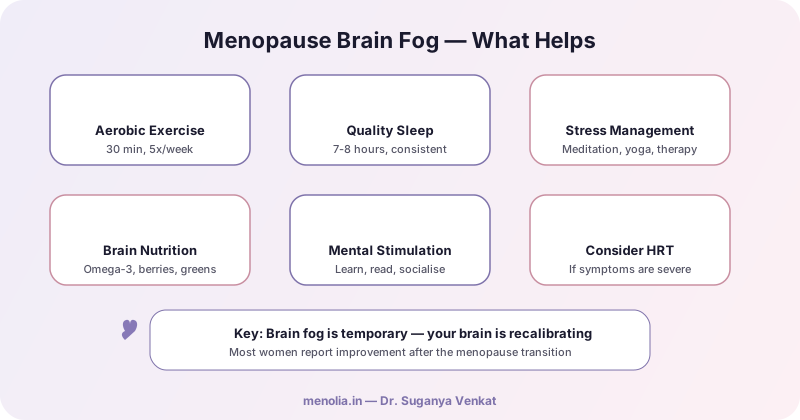
1. Aerobic Exercise (Most Evidence)
This is the strongest intervention we have. Regular aerobic exercise:
- Increases blood flow to the brain
- Promotes growth of new brain cells (neurogenesis)
- Improves memory and executive function
- Reduces inflammation
- Improves sleep quality
What to do: 30 minutes of moderate aerobic exercise, 5 days a week. Brisk walking, swimming, cycling, or dancing. The key is consistency.
2. Prioritise Sleep
You cannot think clearly on poor sleep. Period.
- Treat night sweats (lifestyle changes or HRT)
- Maintain consistent sleep/wake times
- No screens 1 hour before bed
- Cool, dark bedroom (18-20°C)
- Consider magnesium glycinate (200-400mg) before bed
3. Manage Stress
Chronic stress is toxic to your brain.
- Daily mindfulness or meditation (even 10 minutes helps)
- Regular yoga or tai chi
- Therapy (CBT is proven effective)
- Set boundaries. This isn’t optional, it’s brain health
4. Brain-Healthy Nutrition
Feed your brain:
- Omega-3 fatty acids: fatty fish, walnuts, flaxseeds
- Antioxidant-rich foods: berries, dark leafy greens, colourful vegetables
- Mediterranean diet pattern: associated with better cognitive function
- Adequate hydration: dehydration impairs concentration
- Limit alcohol: even moderate alcohol worsens brain fog
- Adequate protein: amino acids are neurotransmitter precursors
5. Cognitive Engagement
Use it or lose it:
- Learn a new skill or language
- Do puzzles, crosswords, or brain training games
- Read challenging material
- Social interaction (conversation is one of the most cognitively demanding activities)
6. Consider HRT
HRT can improve cognitive symptoms, especially when:
- Brain fog is linked to poor sleep from night sweats (certain Indian foods can help reduce night sweats naturally)
- You’re in early perimenopause or early menopause
- Other symptoms (hot flashes, mood) are also present
HRT is not a “brain pill”, but by improving sleep, mood, and vasomotor symptoms, it often leads to significant cognitive improvement.
Practical Tips for Daily Life
While you work on the root causes, these practical strategies help:
- Write everything down: use a notes app or physical notebook
- Create routines: keys always go in the same place
- Use calendar reminders aggressively
- Do one thing at a time: multitasking is harder now, and that’s okay
- Be patient with yourself: frustration and self-criticism make it worse
- Tell people: “I’m going through perimenopause and my memory is temporarily affected” is perfectly acceptable
When to See a Doctor
See your doctor if:
- Cognitive symptoms are getting progressively worse (not fluctuating)
- You’re getting lost in familiar places
- You can’t manage daily tasks you’ve always done
- Family or friends are expressing concern
- You have a family history of early-onset dementia
These could indicate something other than menopause, and it’s important to rule out thyroid disorders, vitamin B12 deficiency, depression, and other causes.
The Bottom Line
Menopause brain fog is real, common, and almost always temporary. Your brain is adapting to a new hormonal reality, and with the right support (exercise, sleep, nutrition, stress management), it will adapt well.
For more on this, read our guide on Menopause Fatigue. At Menolia, Dr. Suganya Venkat Venkat addresses brain fog as part of the whole picture, because it’s rarely just one thing. Sleep, hormones, stress, nutrition, and exercise all interconnect. Fix the system, and the fog lifts.
You haven’t lost yourself. Your brain is just recalibrating.
Brain fog often improves dramatically when sleep and mood are addressed. Good nutrition also plays a key role.
Frequently Asked Questions
Is menopause brain fog permanent?
No. Research shows cognitive function typically returns to pre-menopause levels after the transition. The worst brain fog usually occurs during perimenopause when hormones are fluctuating most.
Does HRT help with brain fog?
Some women report significant improvement on HRT, especially if started early. The evidence is promising. Discuss with your doctor if brain fog is significantly impacting your quality of life.
What foods help brain fog?
Omega-3 rich foods (fish, walnuts, flaxseed), antioxidant-rich berries and greens, and adequate protein. Avoid blood sugar crashes by eating regular meals with protein and complex carbs.
Can exercise really help my brain?
Yes, even 30 minutes of walking improves cognitive function measurably. Exercise increases blood flow to the brain and promotes neuroplasticity.
Could my brain fog be something else?
If severe, sudden, or with other neurological symptoms, see your doctor to rule out thyroid disorders, B12 deficiency, or depression. Menopause brain fog is a diagnosis of exclusion.
Get Your Clarity Back
₹399 consultation · Holistic assessment · Personalised plan