You have been in this transition for what feels like a long time. The unpredictable periods, the nights that are too warm, the moods that arrive without warning. At some point, a natural question begins forming: is this almost over?
It is a completely reasonable thing to wonder. Perimenopause is, by its nature, open-ended. It starts quietly, builds in ways that can feel relentless, and does not announce its ending with any obvious ceremony. Most women go through months of not quite knowing whether they are still in it or have crossed over.
This post is a clear, clinical answer to that question. What are the actual signs that perimenopause is ending? What does the final phase look and feel like? And what comes next, on the other side?
Here is what this post covers:
- The exact clinical definition of when perimenopause ends
- The physical signs that signal late perimenopause
- How symptoms shift in the final stretch
- What post-menopause feels like in the first year and beyond
- Practical steps to support yourself through the transition
What Actually Marks the End of Perimenopause
There is one clinically precise definition, and it is worth knowing exactly: perimenopause ends when you have gone 12 consecutive months without a period.
That day, the 12-month mark, is technically menopause itself, rather than the years of symptoms leading up to it. Menopause, by the international STRAW+10 framework used by gynaecologists worldwide, is a single retrospective point in time (Harlow SD et al., Journal of Clinical Endocrinology and Metabolism, 2012, PMID 22344196). You only know you have reached it after the fact.
Everything before that 12-month mark is perimenopause. Everything after it is post-menopause.
This matters because many women feel confused when their doctor says they are “still technically in perimenopause” even when periods have been absent for eight or nine months. That is the clinical definition rather than dismissiveness, and it exists because one missed period, or even several, does not mean menstruation will not return. In late perimenopause, it can. Until the 12-month window closes, the ovaries retain some capacity to produce oestrogen and trigger an occasional bleed.
In a pan-India survey by the Indian Menopause Society, the average age at natural menopause was 46.2 years, around four to five years earlier than Western averages (Ahuja M, Journal of Midlife Health, 2016, PMID 27721640). This means many Indian women are completing this 12-month countdown in their mid to late 40s, sometimes as early as 44 or 45 in cases of early natural menopause.
Signs You Are in Late Perimenopause
Late perimenopause is the final substage before the 12-month clock runs out. It tends to be the most intense part of the transition for many women, and it has a recognisable shape.
Periods Are Becoming Rare
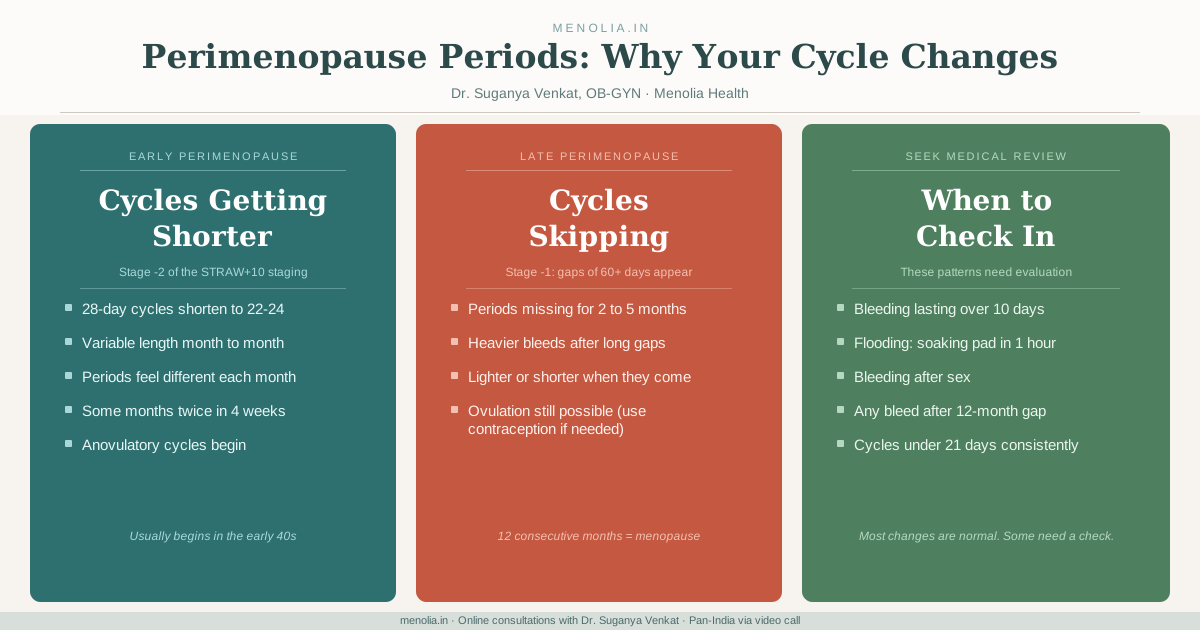
The defining hormonal feature of late perimenopause is a significant drop in oestrogen, and the most direct signal of this is menstrual frequency. In early perimenopause, periods become irregular but still arrive. In late perimenopause, the gaps between periods lengthen considerably.
The STRAW+10 criteria mark the late menopausal transition by the occurrence of amenorrhoea of 60 days or longer (Harlow SD et al., 2012, PMID 22344196). If your last three bleeds were in January, March, and then June, you are in this phase. Periods may now come every two, three, or even four months. When they do arrive, they can be lighter and shorter than they used to be, though some women experience the opposite, heavier bleeds as the lining sheds after a long gap.
Hot Flashes and Night Sweats Do Not Taper Off Yet
Many women find it counterintuitive that these symptoms do not simply fade out as perimenopause nears its end. The SWAN study (Study of Women’s Health Across the Nation) followed women through the menopausal transition and found that frequent hot flashes and night sweats typically last for years, and persist well past the final menstrual period rather than stopping with it (Avis NE et al., JAMA Internal Medicine, 2015, PMID 25686030). Women who already had frequent symptoms while still premenopausal or in early perimenopause had the longest course of all.
This happens because oestrogen is now falling in a more sustained way rather than fluctuating erratically as it did in early perimenopause. The hypothalamus, which regulates body temperature, is highly sensitive to oestrogen changes. As levels fall more steeply, temperature dysregulation becomes more pronounced.
If you find yourself thinking “these seem worse than before,” that is a common experience at this stage, and it does not mean the transition is going backwards.
Sleep Becomes More Broken
Sleep problems affect women approaching and passing through menopause at higher rates than at most other stages of life, and in studies where sleep was physiologically measured, those problems tended to travel together with hot flashes and sweats. Self-report evidence on how directly the hormonal changes themselves drive poor sleep is mixed (Shaver JL and Zenk SN, Journal of Women’s Health and Gender-Based Medicine, 2000, PMID 10746514).
Broken sleep is common at this stage. The guide to menopause sleep problems covers the specific strategies that help most.
Vaginal Dryness Increases
In early perimenopause, many women notice only occasional dryness. In late perimenopause, as oestrogen falls more consistently, the vaginal tissue begins to thin and lose moisture more noticeably. This is the beginning of what clinicians call the genitourinary syndrome of menopause. It does not affect every woman to the same degree, but if you are noticing more discomfort, this is a physiological change, and there are effective options to address it.
Mood Changes Are More Noticeable
Across ten years of SWAN data, Bromberger JT and Kravitz HM found that the risk of high depressive symptoms and of depressive disorder is greater during, and possibly after, the menopausal transition, while noting that other factors also contribute to that risk (Obstetrics and Gynecology Clinics of North America, 2011, PMID 21961723). The late phase, when hormonal variability is highest, coincides with the period most commonly associated with mood changes, and the symptoms of perimenopause overlap heavily with it.
This is not “just hormones” in a dismissive sense. Naming these changes clearly makes them easier to manage. The guide to menopause mood and anxiety explains what helps.
The Final Months Before the 12-Month Mark
Women sometimes describe the last few months before reaching the 12-month milestone as a strange in-between place. The body is clearly winding down, but the countdown clock creates its own uncertainty.
A few things to understand about this phase:
FSH rises significantly. Follicle-stimulating hormone (FSH), the signal the brain sends to the ovaries to produce oestrogen, climbs steeply in late perimenopause as the ovaries respond less and less. An FSH reading above 40 IU/L is consistent with post-menopausal levels, though a single blood test cannot confirm the end of perimenopause on its own.
AMH drops to near zero. Anti-Mullerian hormone, which reflects ovarian reserve, is essentially undetectable by late perimenopause. If you have had an AMH test, a result close to zero alongside symptoms supports a late perimenopausal picture.
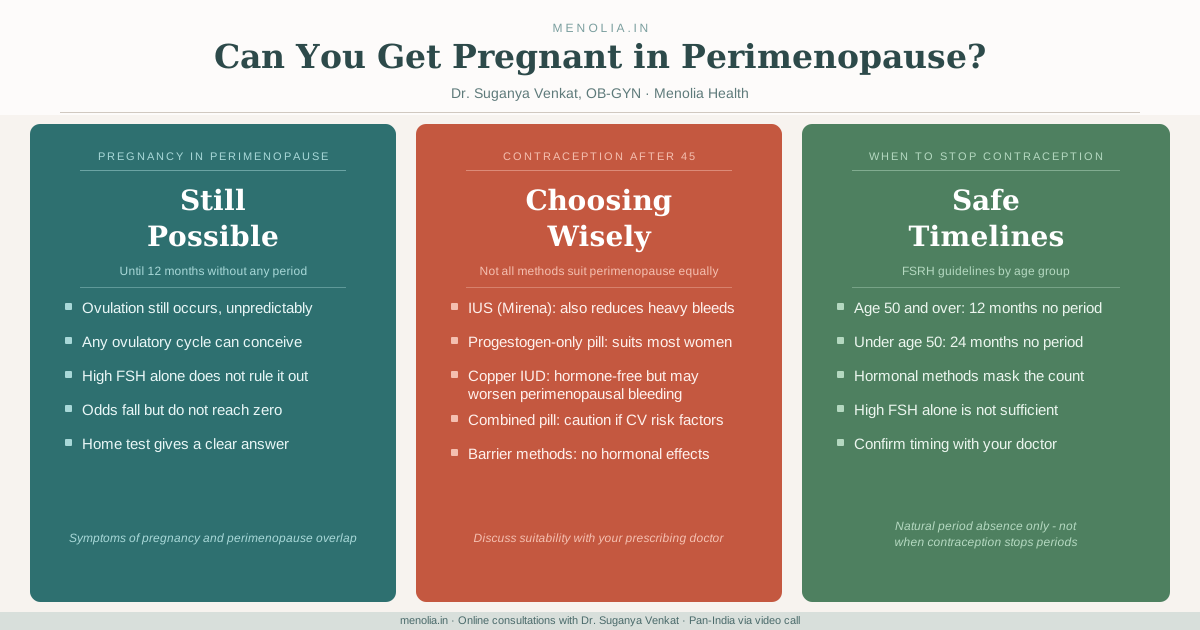
Pregnancy is still technically possible. This is important. Until the 12-month mark has been reached and confirmed, pregnancy, though unlikely, remains biologically possible. Contraception advice from your gynaecologist should continue until you have formally reached menopause. Do not discontinue contraception based on symptoms alone.
The occasional period can still arrive. It feels disorienting when a period returns at month nine of what felt like the final stretch. This is common and is not a sign of going backwards. The ovaries can briefly rally and produce enough oestrogen for one more cycle. It simply resets the 12-month clock. This is one of the most frustrating aspects of late perimenopause, and it is worth knowing in advance.
Ready to Understand Where You Are in the Transition?
If you are unsure whether you are in late perimenopause or have already crossed into post-menopause, a brief conversation can make it much clearer. Dr. Suganya Venkat, OB-GYN with 15+ years of clinical experience, can review your cycle history, symptoms, and any test results you have, and tell you exactly where you are and what to focus on next.
WhatsApp Dr. Suganya directly with a brief note: “I think my perimenopause is ending and I’d like to understand what comes next.”
What Post-Menopause Actually Feels Like
Once the 12-month mark is reached, you are officially post-menopausal. For many women, there is no single day that feels dramatically different. What changes is that the uncertainty of perimenopause gives way to a more predictable hormonal baseline.
Research and clinical experience point to a few consistent patterns in the early post-menopausal years.
Vasomotor Symptoms Often Continue for a While
The persistent finding from the SWAN study is that hot flashes do not stop abruptly on the day menopause is confirmed (Avis NE et al., JAMA Internal Medicine, 2015, PMID 25686030). For women who had frequent vasomotor symptoms in late perimenopause, these can continue for years into post-menopause, and the women who started earliest tend to carry them longest.
That variation between women reflects how long the thermoregulatory system takes to recalibrate. Strategies that help include regular aerobic exercise, layered cotton clothing, and keeping the bedroom cool. For women whose symptoms are severe and persistent, a conversation with a gynaecologist about local or systemic options is appropriate.
Sleep Often Improves Somewhat
Once the erratic hormonal fluctuations of perimenopause stabilise, many women find their sleep gradually improves. This does not mean deep sleep returns fully to what it was at 35. But the middle-of-the-night waking pattern often lessens as oestrogen levels reach a stable (though lower) baseline.
Good sleep habits matter more in post-menopause than at any previous life stage. A consistent sleep and wake time, limiting screen exposure after 9 PM, and light physical activity in the evening all support the restorative sleep that the post-menopausal body needs.
Genitourinary Changes Continue and Need Attention
Unlike hot flashes, vaginal dryness and related urinary changes do not typically improve on their own without intervention. Oestrogen receptors in the vaginal and urethral tissue need oestrogen to maintain thickness, lubrication, and elasticity. Without it, these tissues thin progressively. This affects comfort during daily activities, urinary urgency, and susceptibility to urinary tract infections, which is why UTIs become more frequent in post-menopause (as covered in the menopause and UTIs guide).
The important message here: effective options exist for this. Vaginal moisturisers (non-hormonal), pelvic floor exercises, and locally applied low-dose oestrogen (which has minimal systemic absorption) are all validated approaches. This does not need to be silently managed. Raising it with your gynaecologist is the right move.
Bone Density Becomes the Central Health Priority
In the first three to five years after menopause, bone density loss accelerates. Oestrogen plays a direct role in maintaining bone mineral density, and its absence accelerates the remodelling cycle toward net bone loss.
Two practical pillars: calcium and vitamin D through diet first, and weight-bearing activity. Ragi (finger millet) is one of the best calcium sources available in Indian kitchens, with around 364 mg of calcium per 100 g. A daily bowl of ragi porridge with haldi and jaggery is functional nutrition in post-menopause. Combined with walking, yoga, or resistance work three to four times per week, this directly supports bone maintenance.
For a full guide to what to eat in post-menopause, see Menopause Diet: What to Eat After 45.
Cardiovascular Risk Rises and Responds to Lifestyle
Oestrogen has a protective effect on blood vessel elasticity, lipid profiles, and blood pressure. After menopause, these protections diminish and cardiovascular risk rises. Because the average age at natural menopause in India is 46.2 years, four to five years earlier than in Western populations, the cardiovascular system is exposed to the post-menopausal hormonal environment from a younger age (Ahuja M, Journal of Midlife Health, 2016, PMID 27721640).
This is a reason to act rather than to worry. The same lifestyle pillars that help during perimenopause (regular movement, an anti-inflammatory diet rich in dal, seasonal vegetables, and fermented foods like dahi) become non-negotiable habits in post-menopause. For a detailed evidence-based overview, see the guide to menopause and heart health.
Practical Steps for the Final Perimenopause Phase
If you are in late perimenopause right now, here is what you can do.
Keep a simple cycle diary. Note the first day of each bleed. This is the only way to track the 12-month countdown accurately. A note in your phone calendar takes ten seconds.
Get a baseline bone density scan (DEXA scan) around the time of your last period. This gives you a starting number to compare against in future years, and it allows early intervention if needed.
Talk to your gynaecologist before your last period, not after. The year leading into post-menopause is the best time to discuss bone health, cardiovascular risk, genitourinary symptoms, and whether any specific investigations are appropriate for you.
Focus on protein and calcium in your diet. Post-menopausal muscle mass and bone density both depend on adequate protein intake. A meal pattern that includes dahi, moong dal, eggs, or paneer daily, alongside ragi or sesame seeds for calcium, supports this without requiring supplements as the primary strategy.
Pelvic floor exercises, starting now. Kegel exercises are easy to do and significantly reduce the risk of stress incontinence and pelvic organ prolapse, which both increase in post-menopause. Five minutes a day is enough to make a difference.
Build or maintain a social support network. Women who keep close friendships and regular social engagement through this phase tend to describe it as considerably more manageable. It is worth protecting the time for it.
FAQ: Signs Perimenopause Is Ending
How do I know if my perimenopause is ending? The clinical definition of the end of perimenopause is 12 consecutive months without a period. Before reaching that milestone, the signs that you are in the final phase include periods spaced 60 or more days apart, intensifying hot flashes and night sweats, increased vaginal dryness, and FSH levels rising above 40 IU/L. These signs together point to late perimenopause.
Can perimenopause end suddenly? For most women, the transition is gradual. Periods become progressively less frequent over months or years before stopping entirely. Abrupt cessation of periods before 45 without an obvious cause (illness, stress, significant weight change) should be discussed with a gynaecologist to rule out premature ovarian insufficiency.
How long does late perimenopause last? Late perimenopause, defined by cycles more than 60 days apart, typically lasts one to three years before reaching the 12-month milestone. However, the range is wide. Some women complete this phase in under a year; others may have intermittent bleeds for four or five years.
Do hot flashes get worse right before menopause? They vary a great deal from woman to woman, so there is no single pattern. What the SWAN study does establish is that frequent hot flashes and night sweats persist for years and carry on past the final period rather than stopping with it (Avis NE et al., JAMA Internal Medicine, 2015, PMID 25686030). If your symptoms do intensify in the final months, that does not mean the transition is stalling.
Will my symptoms stop when perimenopause ends? Some symptoms improve gradually after the hormonal fluctuations of perimenopause stabilise. Mood instability and sleep disruption often ease over one to two years post-menopause. Vasomotor symptoms may continue for years after the final period (Avis NE et al., JAMA Internal Medicine, 2015, PMID 25686030). Vaginal dryness tends to persist and worsen without active management. Each symptom has its own trajectory, and addressing them specifically with your doctor is more useful than waiting.
Is it normal to still have periods at 50? Yes. Some women in India experience their final period in their early 50s. The pan-India average of 46.2 years is an average, not a rule. A gynaecologist should evaluate any bleeding after the age of 52 to ensure it is truly perimenopausal rather than from another cause.
What should I do to prepare for post-menopause? The most useful things to do in the final phase of perimenopause are: establish a cycle diary so you know when the 12-month clock starts, get a baseline DEXA scan, discuss pelvic floor and genitourinary care with your gynaecologist, and build the nutrition and movement habits that support bone, cardiovascular, and metabolic health going forward. Starting these habits before menopause rather than after makes the transition significantly smoother.
You Are Closer Than You Think
If you have been in perimenopause for a while, the end of this phase is a real milestone. Health concerns do not disappear, but the most unpredictable part of the hormonal transition does end: the erratic swings, the unexpected bleeds, and the constant sense of not quite knowing where you are.
Post-menopause, with the right knowledge and support, is manageable. Many women find that the relative predictability of this phase brings its own kind of relief.
If you are in late perimenopause now and want to understand your specific picture, the right time to have that conversation is not after your final period. It is now, while there is still time to prepare.
WhatsApp Dr. Suganya Venkat to start that conversation. She offers focused consultations for women in the final stages of the perimenopause transition, and she can help you understand where you are and what to do next.
For more on this, read our guide on Stages of Menopause. Dr. Suganya Venkat, OB-GYN with 15+ years of clinical experience. DNB OB-GYN (GKNM, Coimbatore) · MD Pathology (CMC Vellore) · MBBS with 5 Gold Medals (SRMC).