Here’s a number that should concern every woman reading this: 1 in 3 women over 50 will experience an osteoporotic fracture in her lifetime. That’s more common than breast cancer, heart attack, and stroke combined.
And here’s the part that makes it personal: Indian women are at significantly higher risk than women in many other countries. A combination of widespread vitamin D deficiency, lower calcium intake, smaller bone structure, earlier menopause, and limited awareness of bone health screening means that millions of Indian women are walking around with fragile bones and don’t know it.
The good news? Bone loss is not inevitable. And even if it’s already started, it can be slowed, stopped, and in some cases partially reversed, if you know what to do.
What Happens to Your Bones During Menopause
Your bones are not static structures. They’re living tissue, constantly being broken down (by cells called osteoclasts) and rebuilt (by cells called osteoblasts). This process is called bone remodelling, and when you’re young, the building outpaces the breaking.
Oestrogen is the master regulator of this balance. It restrains the osteoclasts, the cells that break bone down. When oestrogen levels drop during perimenopause and menopause, those cells go into overdrive. The result:
- In the first 5-7 years after menopause, women can lose 2-3% of bone density per year
- This adds up to 10-20% total bone loss in the critical early menopausal years
- After this rapid phase, loss continues at about 1% per year
This is why a woman can go from perfectly normal bones at 45 to osteopenia (thinning bones) at 55 to osteoporosis (fragile bones) at 60, without feeling a single symptom until she fractures.
Osteoporosis is called a “silent disease” for a reason. There’s no pain, no warning sign. The first symptom is often a fracture, a broken wrist from a minor fall, a vertebral fracture from bending to pick something up, or a hip fracture that changes everything.
Why Indian Women Are Especially Vulnerable
1. Epidemic Vitamin D Deficiency
Despite living in one of the sunniest countries on earth, 70-90% of Indians are vitamin D deficient. This is one of the biggest paradoxes in Indian public health.
Why? Because modern Indian life has moved indoors. Air-conditioned offices, covered vehicles, sunscreen use, darker skin (which needs more sun exposure to produce vitamin D), and cultural practices of covering up all contribute.
Vitamin D is essential for calcium absorption. Without adequate vitamin D, you could eat all the calcium in the world and your body simply wouldn’t absorb it. Studies from AIIMS show that even in Delhi, with its abundant sunlight, over 80% of women have vitamin D levels below the recommended range.
2. Low Calcium Intake
The recommended calcium intake for menopausal women is 1,200 mg per day. The average Indian woman consumes roughly 400-500 mg per day: less than half of what she needs.
This is partly because Indian diets, while rich in many nutrients, are often low in dairy. And even among those who consume dairy, the quantities are typically small, a cup of chai with milk is not the same as a glass of milk.
3. Earlier Menopause
The average age of menopause in Indian women is 46-47 years, compared to 51 years in Western countries. This means Indian women start losing bone earlier and for longer.
4. Smaller Frame Size
Indian women generally have a smaller skeletal frame, which means less bone mass to start with. When you have less in the “bone bank,” every percentage of loss matters more.
5. Lifestyle Factors
- Sedentary lifestyles (especially among urban women)
- Limited weight-bearing exercise
- High consumption of tea and coffee (which can reduce calcium absorption)
- Low protein intake in many vegetarian diets
- Increasing rates of diabetes and thyroid disease (both affect bone health)
The DEXA Scan: Your Bone Health Report Card
A DEXA scan (Dual-Energy X-ray Absorptiometry) is a painless, low-radiation scan that measures your bone mineral density. It takes about 10-15 minutes and gives you a T-score:
- T-score above -1.0: Normal bone density
- T-score between -1.0 and -2.5: Osteopenia (low bone mass, a warning zone)
- T-score below -2.5: Osteoporosis
When to Get a DEXA Scan
- All women by age 50 (or at menopause, whichever comes first)
- Earlier if you have risk factors: early menopause (before 45), family history of osteoporosis, low body weight, thyroid disease, long-term steroid use, history of fractures, or prolonged amenorrhea (missed periods)
- Repeat every 2 years if your results show osteopenia or osteoporosis
For more on this, read our guide on Menopause & Depression.
The scan is widely available in Indian cities and costs between ₹1,500-3,500. It’s one of the most important health investments a menopausal woman can make, and it’s tragically underused.
Nutrition for Bone Health: The Indian Kitchen Advantage
The good news is that Indian cuisine has some of the best bone-building foods in the world. You don’t need expensive supplements if you eat strategically.
Calcium-Rich Indian Foods
Dairy (if you consume it):
- 1 cup of curd (dahi): ~300 mg calcium
- 1 glass of milk: ~300 mg calcium
- 100g paneer: ~200 mg calcium
- 1 cup buttermilk (chaas): ~150 mg calcium
Non-dairy powerhouses:
- Ragi (finger millet): 344 mg calcium per 100g. This is extraordinary. One ragi dosa or ragi porridge gives you as much calcium as a glass of milk
- Sesame seeds (til): 975 mg per 100g, the richest common food source of calcium. A tablespoon in your chutney adds ~90 mg
- Amaranth (rajgira): 159 mg per 100g, excellent in rotis, porridge, or laddoos
- Drumstick leaves (moringa): 185 mg per 100g, add to sambhar, dal, or rice
- Dried figs (anjeer): 162 mg per 100g, 3-4 figs as a snack
- Almonds: 264 mg per 100g, 10-12 soaked almonds daily
- Curry leaves: Often overlooked, these are calcium-rich. Use them liberally in tempering
- Nachni (ragi) laddoos with jaggery: A traditional snack that’s essentially a calcium supplement
A Bone-Building Day of Eating
Morning: Ragi porridge with milk and jaggery (calcium: ~500 mg)
Mid-morning: A handful of almonds + 2 dried figs (calcium: ~120 mg)
Lunch: Rice + sambhar with drumstick + curd + a side of sesame chutney (calcium: ~400 mg)
Evening: A glass of buttermilk + til laddoo (calcium: ~200 mg)
Dinner: Amaranth roti + palak paneer + dal (calcium: ~300 mg)
Total: ~1,500 mg: well above the recommended 1,200 mg, entirely from food.
Vitamin D: The Absorption Key
Without vitamin D, calcium can’t get into your bones. Here’s how to optimise:
Sunlight: 15-20 minutes of direct sunlight on arms and face, between 10 AM and 2 PM, without sunscreen, at least 4-5 times a week. This is the most natural and effective source.
Food sources: Egg yolks, fatty fish (sardines, mackerel, salmon), fortified milk and cereals. But food alone rarely provides enough, most Indian women need supplementation.
Supplementation: Get your vitamin D level tested (a simple blood test, costs ₹500-800). If deficient (below 30 ng/mL, which most Indian women are), your doctor will prescribe a loading dose followed by maintenance. Vitamin D3 is the preferred form, and it’s best absorbed with a fat-containing meal.
Other Key Nutrients
- Protein: Essential for bone matrix. Include dal, paneer, curd, eggs, or fish at every meal. Aim for 1g per kg of body weight.
- Magnesium: Found in nuts, seeds, whole grains, and dark leafy greens. Magnesium helps with calcium metabolism and bone formation.
- Vitamin K2: Found in fermented foods (dahi, idli batter, pickles). K2 directs calcium to bones and away from arteries.
- Omega-3 fatty acids: Walnuts, flaxseeds, fatty fish. They reduce inflammation-related bone loss.
What to Limit
- Excess salt: High sodium increases calcium excretion through urine
- Excess caffeine: More than 3 cups of tea/coffee daily can reduce calcium absorption. Have your chai, but space it away from calcium-rich meals
- Soft drinks and colas: Phosphoric acid in colas actively leaches calcium from bones
- Excess alcohol: Interferes with calcium absorption and bone cell activity
Worried about your bone health? Dr. Suganya can review your DEXA scan results and create a personalised plan, diet, exercise, and supplements tailored to you.
Exercise: The Most Underrated Bone Medicine
This might surprise you: exercise is as important as calcium for bone health. Bones respond to mechanical stress by getting stronger, just like muscles. Without stress, they weaken, no matter how much calcium you consume.
The evidence favours gentle, consistent movement over heroic workouts, especially if you have existing joint issues or inflammation. Lalitha, 60, with rheumatoid arthritis, regained mobility and lost 6.3 kg through exactly this approach: simple strengthening customised to her joint tolerance, gentle walking introduced progressively. No heroics.
What Works for Bones
1. Weight-bearing exercise (most important) Activities where your body works against gravity while you’re on your feet:
- Brisk walking (not strolling. You need to move with purpose)
- Jogging, if your joints allow
- Stair climbing
- Dancing
- Tennis, badminton
2. Resistance/strength training (equally important) This is where most Indian women fall short. Using weights, resistance bands, or your own body weight to stress muscles, which in turn stress bones:
- Squats (bodyweight to start, then with dumbbells)
- Lunges
- Wall push-ups progressing to floor push-ups
- Deadlifts (with proper form)
- Resistance band exercises
Aim for 2-3 sessions per week. You don’t need a gym. A pair of dumbbells at home is enough.
3. Balance exercises (fracture prevention) Falls cause fractures. Better balance = fewer falls:
- Standing on one leg (30 seconds each side, while brushing teeth)
- Heel-to-toe walking
- Tai chi or yoga
- Step-ups on a low step
What Doesn’t Work Much for Bones
- Swimming (no gravitational stress)
- Cycling (same reason)
- Gentle stretching alone
These are excellent for cardiovascular health and flexibility, but they don’t build bone density. You need impact and resistance.
The Minimum Effective Dose
If you do nothing else, do this:
- 30 minutes of brisk walking, 5 days a week
- 20 minutes of strength training (squats, lunges, push-ups), 2-3 days a week
- Balance exercises, 5 minutes daily
This combination, done consistently, can reduce fracture risk by 40-50%.
When Lifestyle Isn’t Enough: Medical Options
Sometimes nutrition and exercise alone aren’t sufficient, especially if you already have osteoporosis or significant risk factors. Medical options include:
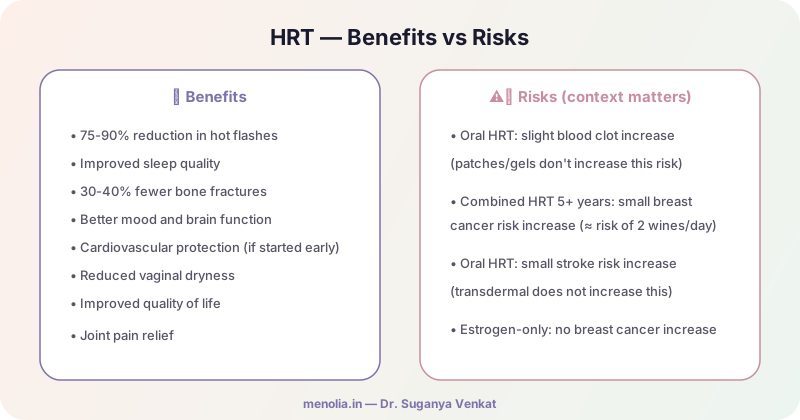
Hormone Replacement Therapy (HRT): Oestrogen therapy is one of the most effective treatments for preventing bone loss. It’s particularly beneficial when started within 10 years of menopause. Discuss the benefits and risks with your doctor.
Bisphosphonates: Medications like alendronate (Fosamax) that slow bone breakdown. Usually prescribed for diagnosed osteoporosis.
Calcium and Vitamin D supplements: When dietary intake is insufficient. Your doctor will guide dosing based on your levels.
The key point: Medical treatment works best in combination with nutrition and exercise, not as a replacement for them.
Your Bone Health Action Plan
Here’s a simple, practical plan you can start today:
This week:
- Schedule a vitamin D blood test
- Schedule a DEXA scan if you’re 50+ or have risk factors
- Buy ragi flour, sesame seeds, and almonds
This month:
- Add one calcium-rich food to each meal
- Start taking 15 minutes of morning sunlight daily
- Begin bodyweight squats (10 per day, work up to 20)
- Start standing on one leg while brushing teeth
This quarter:
- Establish a twice-weekly strength training routine
- Get vitamin D levels to 40-60 ng/mL (with supplementation if needed)
- Reduce excess salt, caffeine, and cola consumption
Every year:
- Repeat vitamin D test
- DEXA scan if indicated
- Review bone health with your doctor
A Note From Dr. Suganya Venkat
I see too many women in my practice who come to me after a fracture, after years of silent bone loss that could have been caught and treated early. The tragedy of osteoporosis is that it’s almost entirely preventable and treatable, yet it’s rarely discussed until something breaks.
The conversation about menopause in India focuses heavily on hot flashes and mood changes (which are important) but bone health is arguably the most consequential long-term effect of oestrogen decline. A hip fracture after 65 is not just an inconvenience. It can lead to loss of independence, prolonged bed rest, complications, and in some cases, it can be life-threatening.
You have decades of strong, active life ahead of you. Protect the foundation that holds it all up, your bones.
If you’d like personalised guidance on bone health, nutrition planning, or exercise routines during menopause, our Menolia programs are designed for exactly this. We work with you to create a sustainable plan that fits your life, your kitchen, and your body.
For more on nutrition, read our menopause diet guide. Considering HRT for bone protection? Our HRT guide covers the evidence.
Frequently Asked Questions
At what age should I get a DEXA scan?
All women should get a baseline DEXA scan at menopause (around age 50). If you have risk factors (family history, low body weight, early menopause), get one earlier. Repeat every 2 years if results show osteopenia.
Is milk enough for calcium?
No. One glass of milk provides about 300mg. You need 1,200mg daily after menopause. Add ragi (344mg per cup), sesame seeds, dahi, paneer, and leafy greens. Most women need a combination of food sources.
Does walking help bone health?
Yes. walking is weight-bearing exercise that stimulates bone formation. For best results, add strength training 2-3 times per week. Stair climbing is especially beneficial.
Can I rebuild bone after menopause?
You can slow bone loss significantly and sometimes improve density with calcium, vitamin D, weight-bearing exercise, and medication if needed. The earlier you start, the better.
Should I take calcium supplements?
If dietary intake is below 800mg daily, a 500mg supplement can help. Take with vitamin D, split into two doses. Don’t exceed 1,200mg total from food + supplements.
Protect Your Bones, Start Today
₹399 consultation · Bone health assessment · Personalised nutrition plan
Dr. Suganya Venkat is an OB-GYN with 15+ years of clinical experience. She founded Menolia to provide evidence-based menopause support for Indian women.