What Is HRT?
Hormone Replacement Therapy (HRT) (also called Menopausal Hormone Therapy (MHT)) involves taking hormones to replace the estrogen and progesterone your body produces less of during menopause.
It comes in many forms: tablets, patches, gels, creams, sprays, and vaginal preparations. The right type depends on your symptoms, health history, and personal preference.
Why Consider HRT?
Symptom Relief
HRT is the most effective treatment for:
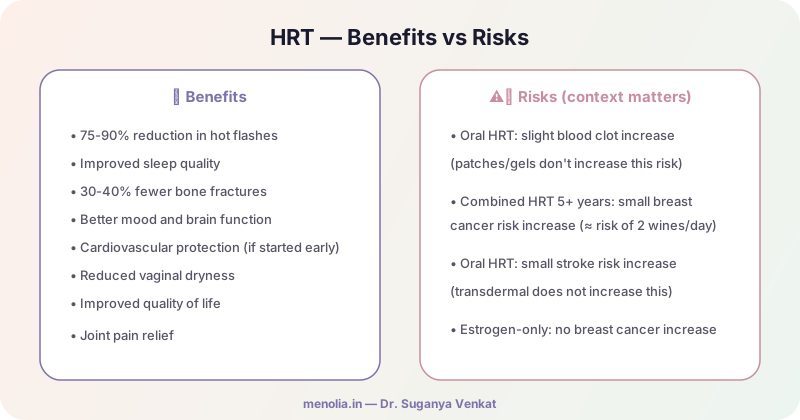
- Hot flashes and night sweats (reduces frequency by 75-90%)
- Sleep disruption related to night sweats
- Vaginal dryness and discomfort during intercourse
- Mood changes and irritability
- Joint aches associated with estrogen decline
Most women notice significant improvement within 2-4 weeks.
Long-Term Health Benefits
Beyond symptom relief, HRT has proven benefits for:
Bone Health
- Reduces bone loss and fracture risk by 30-40%
- The most effective prevention for postmenopausal osteoporosis
- Particularly important for women with early menopause
Cardiovascular Health
- When started within 10 years of menopause (the “window of opportunity”), HRT may reduce cardiovascular risk
- Estrogen has beneficial effects on blood vessel function and cholesterol
Brain Health
- May reduce risk of dementia when started early in menopause
- Improves brain fog and cognitive symptoms during the transition
For more on this, read our guide on Menopause Brain Fog.
Types of HRT
Estrogen-Only HRT
For women who have had a hysterectomy (uterus removed). Since there’s no uterine lining to protect, estrogen alone is sufficient.
Combined HRT (Estrogen + Progesterone)
For women with an intact uterus. Progesterone is added to protect the uterine lining from thickening (which estrogen alone would cause).
Two patterns:
- Continuous combined: take both hormones every day (no periods)
- Sequential/cyclical: estrogen daily + progesterone for 12-14 days per month (monthly withdrawal bleed)
Delivery Methods
| Method | Pros | Cons |
|---|---|---|
| Transdermal patch | Steady hormone levels, bypasses liver, lower clot risk | May irritate skin, visible |
| Gel | Easy to apply, adjustable dose, low clot risk | Takes time to dry, can transfer to others |
| Tablet | Convenient, well-studied | Slightly higher clot risk, passes through liver |
| Vaginal (local) | Targets vaginal/urinary symptoms specifically | Doesn’t help hot flashes or bone health |
| Spray | Quick drying, easy application | Less studied than patches/gels |
Dr. Suganya Venkat’s approach: I generally prefer transdermal (patch or gel) delivery for most women, it provides steady hormone levels with the lowest risk profile. But the best method is the one that works for YOUR lifestyle.
Have questions about HRT? Dr. Suganya can help you understand the benefits and risks for your specific situation, no pressure, just evidence-based guidance.
The Risks. Honest and Evidence-Based
Blood Clots
- Oral HRT (tablets) slightly increases the risk of venous thromboembolism (blood clots)
- Transdermal HRT (patches, gels) does NOT increase clot risk. This is a major advantage
- Risk is higher in women who are obese, smoke, or have a history of clots
Breast Cancer
This is the concern that worries most women, so let’s be precise:
- Estrogen-only HRT: Does NOT increase breast cancer risk. Some studies show a slight decrease
- Combined HRT (estrogen + synthetic progestogen): Small increase in risk with long-term use (5+ years)
- The increased risk is small, roughly equivalent to the risk from drinking 2 glasses of wine per day or being obese
- Risk returns to baseline within 5 years of stopping
- Body-identical progesterone (micronised progesterone) appears to carry less breast cancer risk than synthetic progestogens
Perspective: The absolute risk increase is small. For most women, the benefits of HRT significantly outweigh this risk, especially when using transdermal estrogen with body-identical progesterone.
Stroke
- Small increased risk with oral HRT
- Transdermal HRT at standard doses does not appear to increase stroke risk
Who Should NOT Take HRT?
HRT is generally not recommended for women with:
- History of breast cancer
- Active or recent blood clots (DVT, pulmonary embolism)
- Active liver disease
- Undiagnosed vaginal bleeding
- History of stroke or heart attack (case-by-case evaluation)
Who Benefits Most from HRT?
- Women with moderate to severe hot flashes and night sweats
- Women who reached menopause before age 45 (early menopause. HRT recommended at least until age 51)
- Women at high risk of osteoporosis
- Women with significant quality of life impact from menopause symptoms
How to Start HRT
- Comprehensive assessment: symptoms, health history, family history, blood tests, breast screening
- Discussion of options: type, dose, delivery method, expected benefits, and personalised risk assessment
- Start low and adjust: begin with a low dose and increase if needed
- Review at 3 months: assess symptom improvement and any side effects
- Annual review: ongoing assessment of whether to continue, adjust, or stop
How Long Can You Take HRT?
There’s no fixed time limit. Current guidelines say:
- Use the lowest effective dose for the shortest duration needed
- But there’s no mandatory stopping point, the decision to continue should be reviewed annually
- For women who started HRT for early menopause, it should continue at least until the natural age of menopause (around 51)
- Many women safely use HRT for 10+ years
Non-Hormonal Alternatives
If HRT isn’t right for you:
- Cognitive Behavioural Therapy (CBT): proven effective for hot flashes, mood, and sleep
- SSRIs/SNRIs (certain antidepressants), reduce hot flashes by 50-60%
- Gabapentin: helps with hot flashes and sleep
- Clonidine: can reduce hot flashes
- Lifestyle modifications: exercise, nutrition, stress management, sleep hygiene
The Bottom Line
HRT is not the villain it was made out to be after the 2002 WHI study. Two decades of research since then have given us a much clearer picture:
For most symptomatic women under 60, the benefits of HRT clearly outweigh the risks: especially when using transdermal estrogen with body-identical progesterone.
But the decision is deeply personal. It should be yours, made with complete information, not fear-based headlines from 20 years ago.
At Menolia, Dr. Suganya Venkat takes the time to understand your symptoms, evaluate your risks, discuss all options (hormonal and non-hormonal), and help you make an informed decision. No pressure, no judgment, just evidence-based guidance.
For more on managing symptoms, explore our guides on sleep problems, mood changes, and bone health.
Frequently Asked Questions
Is HRT safe?
For most women under 60, starting HRT within 10 years of menopause, the benefits outweigh the risks. Modern HRT uses lower doses and safer formulations than what was studied in 2002. Discuss your individual risk profile with your doctor.
How quickly does HRT work?
Most women notice improvement in hot flashes and sleep within 2-4 weeks. Full benefits for mood, bone protection, and vaginal health take 2-3 months. Give it at least 3 months before deciding it’s not working.
Are there natural alternatives to HRT?
Phytoestrogens (soy, flaxseed), lifestyle changes (exercise, diet, stress management) can help mild symptoms. For moderate to severe symptoms, HRT remains the most effective treatment. Many women use a combination.
How long can I take HRT?
There’s no fixed time limit. Current guidelines recommend using the lowest effective dose and reassessing annually. Some women take HRT for 5 years, others for 10+. The decision should be based on ongoing symptom relief vs risk assessment.
Will I gain weight on HRT?
HRT doesn’t cause weight gain, menopause does. HRT may actually help prevent the shift to abdominal fat. Women on HRT tend to have better body composition than those without.
Not Sure If HRT Is Right for You?
₹399 consultation · Personalised risk assessment · No pressure