“My periods have been irregular for two years. Could this be menopause? I’m only 43.”
This is one of the most common messages I receive from women across India. And the answer (which surprises many of them) is: yes, it could be. For Indian women, 43 is not early to be experiencing the first signs of this transition.
Understanding when menopause starts (and what the journey actually looks like) can make an enormous difference. Not to cause alarm, but because knowing your timeline changes how you respond. When you understand what your body is doing, you stop wondering if something is wrong with you and start responding with clarity and intention.
Let’s walk through everything you need to know about menopause age in India: what’s typical, what affects your personal timeline, and what you can do at every stage.
First: What Exactly Is Menopause?
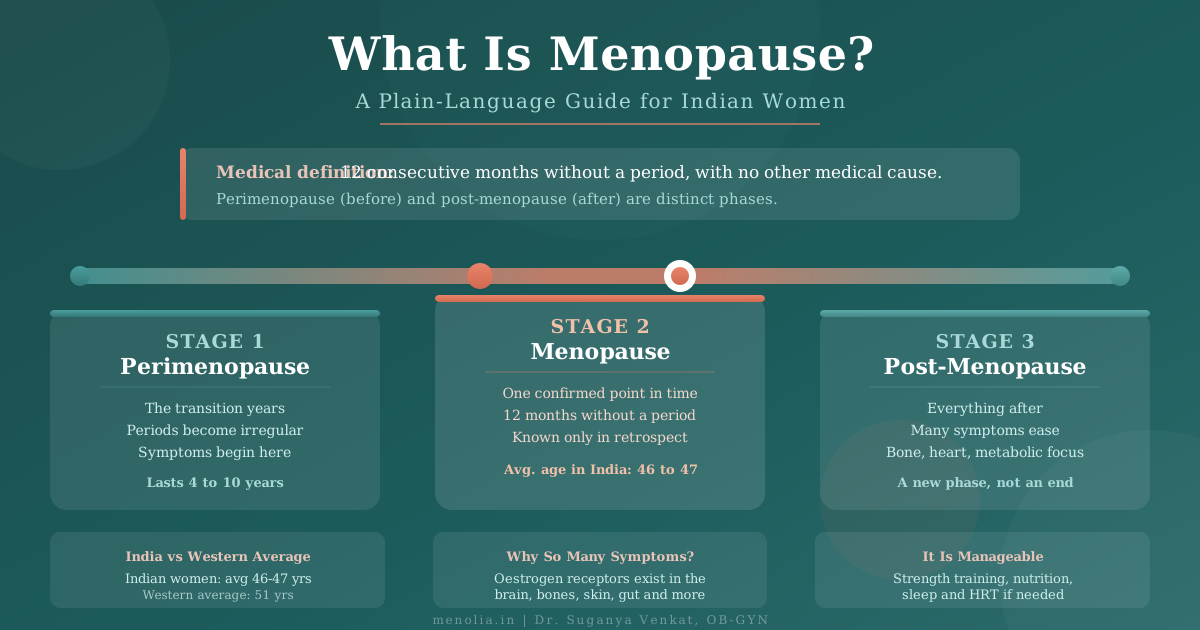
Menopause is a natural biological event, not a disease. It is officially confirmed when you have gone 12 consecutive months without a period: no spotting, no exceptions. That one day (the 12-month mark) is technically “menopause day.” Everything before it is perimenopause; everything after is post-menopause.
The confusion arises because the word “menopause” is used loosely to describe the entire transition, which can span a decade or more. When most women say “I’m going through menopause,” they are usually in perimenopause (the transition phase) not yet at menopause itself.
Three stages to know:
- Perimenopause: Hormones begin fluctuating; periods become irregular. This phase starts years before your last period.
- Menopause: Confirmed only after 12 consecutive period-free months.
- Post-menopause: The rest of your life after that point. Symptoms often continue for 2–5 years, then gradually ease for most women.
Average Menopause Age in India: What the Research Shows
This is where the numbers matter, and where many women are surprised.
The global average age at menopause is approximately 51 years (Gold EB, Obstet Gynecol Clin North Am, 2011). But Indian women reach menopause significantly earlier.
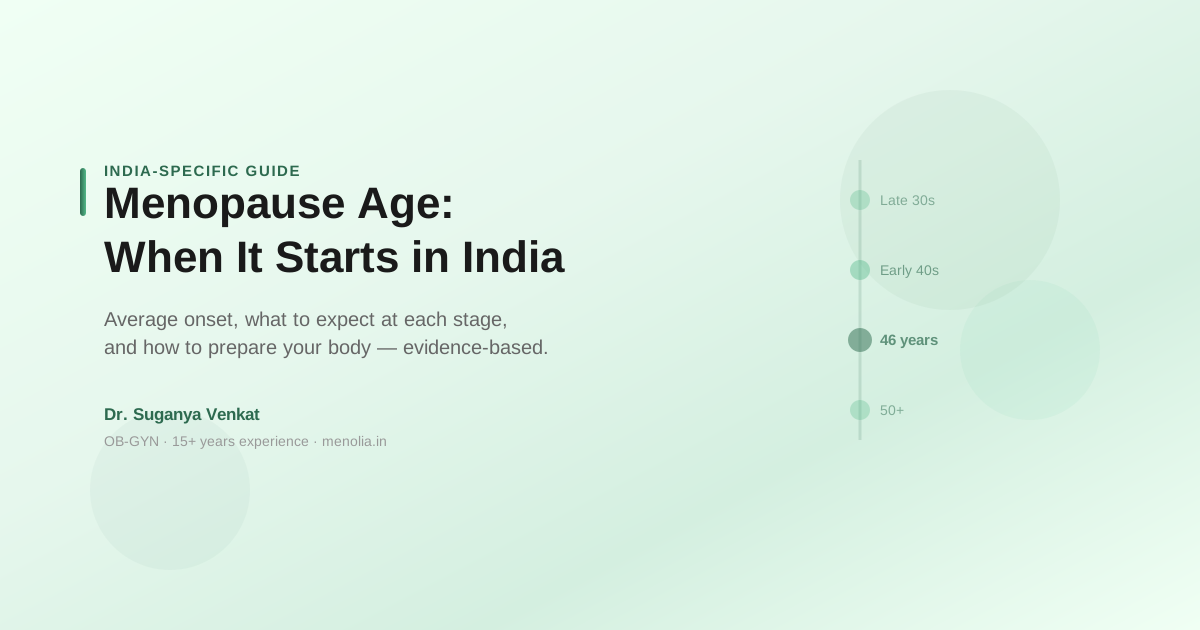
A landmark PAN India survey by the Indian Menopause Society found the mean age of menopause in India is 46.2 years: nearly five years earlier than the global average (Ahuja M, J Midlife Health, 2016). This is not an anomaly. Earlier studies from northern India reported similar findings, with mean menopause ages between 44.8 and 47.5 years (Kriplani A & Banerjee K, Maturitas, 1990).
International comparisons confirm this pattern. A multi-country study by Palacios et al. (Climacteric, 2010) found that South Asian women, including Indian women, consistently experienced menopause earlier than European or North American counterparts.
What this means practically:
- Irregular periods in your early-to-mid 40s fall within the normal range for Indian women, not necessarily cause for alarm
- A family history of menopause at 46 or 47 is common in India, not a sign of “early” menopause
- The benchmark of 51 that you read in international health articles does not reflect your biology
Why do Indian women experience menopause earlier? The full picture is still being studied, but contributing factors include nutritional status (particularly protein and micronutrient intake over a lifetime), body composition, genetic background, and potentially environmental influences. Research by Thomas et al. (Human Biology, 2001) highlights how nutrition and socioeconomic factors are among the strongest cross-cultural determinants of menopause timing.
Perimenopause Age: When Does the Transition Begin?
If the average menopause age in India is ~46–47, then perimenopause (the transition phase) typically begins in the late 30s to early 40s for many Indian women.
Perimenopause can last 4 to 10 years, though most women experience 4 to 6 years of transition. The hormonal fluctuations that define perimenopause (rising and falling oestrogen, declining progesterone) begin long before periods actually stop.
A typical perimenopause timeline for Indian women:
| Stage | Approximate Age (India) | What’s Happening |
|---|---|---|
| Early perimenopause | Late 30s to early 40s | Cycles may shorten or lengthen slightly; PMS can intensify |
| Mid perimenopause | Early to mid 40s | Irregular cycles; hot flashes may begin; sleep starts to fragment |
| Late perimenopause | Mid to late 40s | Cycles increasingly unpredictable; symptoms often at their peak |
| Menopause | ~46–47 on average | 12 consecutive months without a period |
| Post-menopause | After menopause day | Symptoms continue but typically ease over 2–5 years |
This is why a 38-year-old with worsening PMS, a 41-year-old with sudden anxiety and disrupted sleep, and a 44-year-old with irregular cycles may all be in perimenopause, and all be within a completely normal range.
For a detailed look at all the documented symptoms of this phase, read our complete guide to perimenopause symptoms.
At What Age Do Periods Stop?
There is no single age when periods stop. This is one of the most important things to understand.
Periods do not stop suddenly. They change gradually, over years:
- Cycle length shifts: Periods may come every 21 days or every 45 days instead of the usual 28–35
- Flow changes: Heavier or lighter than you’re used to; sometimes unpredictably so
- Skipped cycles: You might miss a month, have two the next, then skip three months
- Lengthening gaps: As you approach menopause, the intervals between periods get progressively longer
The journey from “irregular periods” to “no periods for 12 months” typically takes 2 to 5 years. For Indian women, this tends to unfold between the ages of 43 and 50, with the last period occurring around 46–47 on average.
One important point that many women miss: irregular periods do not mean you cannot conceive. Until you’ve had 12 consecutive period-free months, ovulation can still occur, unpredictably. Many women assume that irregular cycles mean infertility and stop using contraception, only to have an unplanned pregnancy. Contraception remains relevant until your doctor confirms menopause.
Signs You’re Approaching Menopause
Beyond irregular cycles, what else signals that the transition has begun? These are the most commonly reported early signs among Indian women:
Physical signs:
- Hot flashes, sudden waves of heat, often starting in the chest and spreading to the face and neck (certain Indian foods can help reduce hot flash frequency)
- Night sweats that disrupt sleep
- New joint stiffness, especially on waking
- Breast tenderness (separate from your usual PMS pattern)
- Bloating or digestive changes
Cognitive and emotional signs:
- Difficulty concentrating or forgetting mid-sentence what you wanted to say
- New anxiety or a low-level sense of dread that doesn’t have an obvious cause
- Mood swings that feel out of proportion to what’s happening around you
- Low mood or unexplained sadness
Cycle changes:
- Periods arriving more frequently (every 21–24 days)
- Or less frequently (every 45–60+ days)
- Significantly heavier or lighter flow
If several of these feel familiar, you’re not imagining them. Many women describe feeling like “something shifted” internally. They just couldn’t name it. Now you can.
For the cognitive symptoms specifically (the forgetfulness, the difficulty concentrating) our article on menopause brain fog explains the exact mechanisms at work and what actually helps.
What Affects Your Menopause Age?
Your menopause timing isn’t entirely predetermined. Several factors influence when your transition begins and how it progresses.
Factors associated with earlier menopause:
- Smoking: Women who smoke reach menopause 1–2 years earlier than non-smokers, a finding replicated across multiple large cohort studies (Pokoradi AJ et al., Am J Obstet Gynecol, 2011)
- Family history: The age your mother and maternal grandmother experienced menopause is one of the strongest predictors of your own timeline
- Nutritional deficiencies: Chronic deficiencies in protein, vitamin D, zinc, and iron over many years may contribute to earlier ovarian ageing
- Low body weight: Adipose tissue stores some oestrogen; very low body weight reduces this reserve
- Autoimmune conditions: Thyroid disorders, rheumatoid arthritis, and Type 1 diabetes are associated with earlier menopause
- Cancer treatment: Chemotherapy and pelvic radiation can induce temporary or permanent early menopause
Factors associated with later menopause:
- Higher BMI (more adipose tissue stores more oestrogen)
- More lifetime pregnancies
- Better nutritional status across adulthood
- Higher education and socioeconomic status, which correlates with better healthcare access and nutrition
This matters because some of these factors are within your influence. Adequate protein intake, vitamin D sufficiency, managing thyroid health, not smoking. These aren’t guarantees, but they are meaningful inputs into your hormonal trajectory.
What About Early Menopause?
Early menopause is defined as menopause occurring before age 45. Premature ovarian insufficiency (POI) (previously called premature menopause) refers to the cessation of ovarian function before age 40.
For Indian women, given that the average menopause age is ~46–47, the threshold for concern is slightly different from the global norm. Still, menopause before 43 warrants evaluation, because:
- It is associated with greater cardiovascular risk, since oestrogen’s protective effect on the heart is lost earlier
- Bone density losses are more significant when oestrogen declines at a younger age
- It may indicate an underlying condition (thyroid disorder, autoimmune condition, chromosomal variation)
If you have not had a period for 3+ months and are under 43, speak to your gynaecologist. A simple FSH and oestradiol blood test can clarify where you are in the transition.
One important diagnostic complication: thyroid conditions can closely mimic perimenopause, missed periods, fatigue, weight changes, mood shifts, and brain fog can all come from either condition. Since thyroid disorders are more common in women and increase in prevalence during the 40s, ruling out thyroid issues is often the first step in any investigation. Our article on thyroid changes during menopause explains how to tell the two apart, and why many women have both happening simultaneously.
You Don’t Have to Navigate This Alone
One of the most consistent things I’ve observed in 15+ years of clinical practice is how often women reach perimenopause feeling completely unprepared. Our mothers didn’t talk about it. Our culture treats it as something to endure quietly. And most clinical appointments are too short to explain what is actually happening.
That’s exactly why Menolia exists, to give Indian women the information and the support structure they deserve during this transition.
If you’ve read this far and are wondering whether what you’re experiencing is perimenopause, I’m happy to help you make sense of it.
Have questions about your own timeline?
👉 Chat with Dr. Suganya on WhatsApp, no referral needed, no pressure, just clarity.
What You Can Do Right Now
Understanding your timeline is step one. Here is what genuinely helps during the perimenopause-to-menopause transition:
Nutrition: Your Indian Kitchen Is Better Equipped Than You Think
Your nutritional needs shift significantly during this transition, and traditional Indian food, when used intentionally, is remarkably well suited to meeting them.
- Ragi (finger millet): One of the richest plant sources of calcium: approximately 344 mg per cooked cup. As oestrogen declines, bone density protection becomes critical. Ragi porridge, ragi roti, or ragi dosas are practical daily additions.
- Sesame seeds (til): Lignans in sesame seeds have mild phytoestrogenic properties. They are also calcium-dense (roughly 176 mg per two tablespoons). Til-gur (sesame and jaggery) combinations are traditional for good reason, calcium, iron, and slow-release energy in one.
- Dahi (curd): Probiotic-rich and calcium-dense. The live cultures support gut health, which influences oestrogen metabolism and, through the gut-brain axis, affects mood as well.
- Haldi (turmeric): Curcumin has documented anti-inflammatory properties (Chainani-Wu N, J Altern Complement Med, 2003), relevant for the joint pain and low-grade inflammation that often accompany declining oestrogen.
- Jaggery: A better choice than refined sugar during this phase. It provides iron, which matters given the heavier periods many women experience in perimenopause, alongside some B vitamins and minerals absent from white sugar.
For a full meal-by-meal approach, our menopause diet guide for women over 45 covers all six nutritional pillars in detail.
Movement: More Important Now Than at Any Earlier Stage
Exercise during perimenopause and menopause does far more than manage weight. Strength training protects bone density that would otherwise decline rapidly in the first five years after menopause. Yoga and breathwork regulate cortisol, which affects both sleep quality and the intensity of hot flashes. Walking supports cardiovascular health, which becomes more important as oestrogen’s protective effect on the heart declines.
The right exercise prescription is individual, but the principle is consistent: movement is one of the most effective lifestyle interventions we have for this phase. Read our exercise during menopause guide for specifics on what types of exercise help most and how to start.
Sleep: Treat It as a Medical Priority
Night sweats and elevated anxiety disrupt sleep, and poor sleep amplifies every other symptom. Brain fog, mood instability, weight gain, joint pain, and hot flash intensity are all worsened by insufficient sleep. This phase often requires actively restructuring your sleep environment: keeping your bedroom cooler than usual, limiting screens and heavy meals close to bedtime, and having a cooling cloth nearby for night sweats. For a complete guide to what actually works, read our article on menopause sleep problems and solutions.
Frequently Asked Questions
What is the average menopause age in India?
The average age of menopause for Indian women is approximately 46–47 years, based on a PAN India survey by the Indian Menopause Society (Ahuja M, J Midlife Health, 2016). This is 4–5 years earlier than the global average of 51 years. If your periods stop in your mid-to-late 40s, this is within the completely normal range for Indian women, not “early menopause.”
At what age do periods typically start becoming irregular?
For most Indian women, cycles begin to change in the early to mid-40s: this is the onset of perimenopause. Some women notice subtle changes (shorter cycles, worse PMS, or occasional skipped months) as early as their late 30s. These changes are driven by hormonal fluctuation, not by anything going wrong with your body.
What is the difference between perimenopause and menopause?
Perimenopause is the multi-year transition during which hormones fluctuate and periods become irregular. It can last 4–10 years and ends at menopause. Menopause itself is a single confirmed point in time: the day you have completed 12 consecutive months without any period. Everything after that is post-menopause. Most women are in perimenopause when they think they are “in menopause.”
For more on this, read our guide on Post-Menopause.
Can I still get pregnant during perimenopause?
Yes. Irregular periods do not mean you cannot conceive. Until you have had 12 consecutive months without a period, ovulation can still occur, even if infrequently and unpredictably. If you do not wish to become pregnant, continue using contraception until your doctor formally confirms menopause through symptoms and, if needed, hormone testing.
What causes early menopause in Indian women?
Early menopause (before 45) in Indian women is associated with several factors: smoking, a family history of early menopause, autoimmune conditions (especially thyroid disorders), significant nutritional deficiencies over many years, and previous exposure to chemotherapy or pelvic radiation. A blood test measuring FSH and oestradiol can clarify whether early menopause is occurring. If you are under 43 and have not had a period for 3+ months, this warrants medical evaluation.
How do I tell if my symptoms are perimenopause or a thyroid problem?
This is genuinely difficult because the symptoms overlap significantly. Fatigue, weight changes, mood shifts, irregular periods, and brain fog can all arise from either perimenopause or thyroid dysfunction, and many women have both simultaneously. Blood tests are the only reliable way to distinguish them: FSH and oestradiol for perimenopause staging; TSH and thyroid antibodies (anti-TPO) for thyroid assessment. Ask your doctor to test both together. For a full breakdown, read our guide on thyroid changes during menopause.
The Bottom Line
Menopause is not a crisis. It is a transition, one that Indian women typically begin navigating in their early 40s and complete by their late 40s, earlier than global averages suggest.
Understanding your personal timeline (and the factors that shape it) puts you in the driver’s seat. You can support your body through this transition with the right nutrition, consistent movement, and targeted support. You can identify symptoms that need medical evaluation versus those that respond well to lifestyle adjustment. And you can stop measuring yourself against a global benchmark that was never calibrated for Indian women’s biology.
Your timeline is your own. Your body is doing exactly what it’s meant to.
Wondering where you are in your own transition?
👉 Start a conversation with Dr. Suganya on WhatsApp, she’ll help you make sense of what you’re experiencing and what steps, if any, make sense for you.
Dr. Suganya Venkat, OB-GYN · 15+ years experience