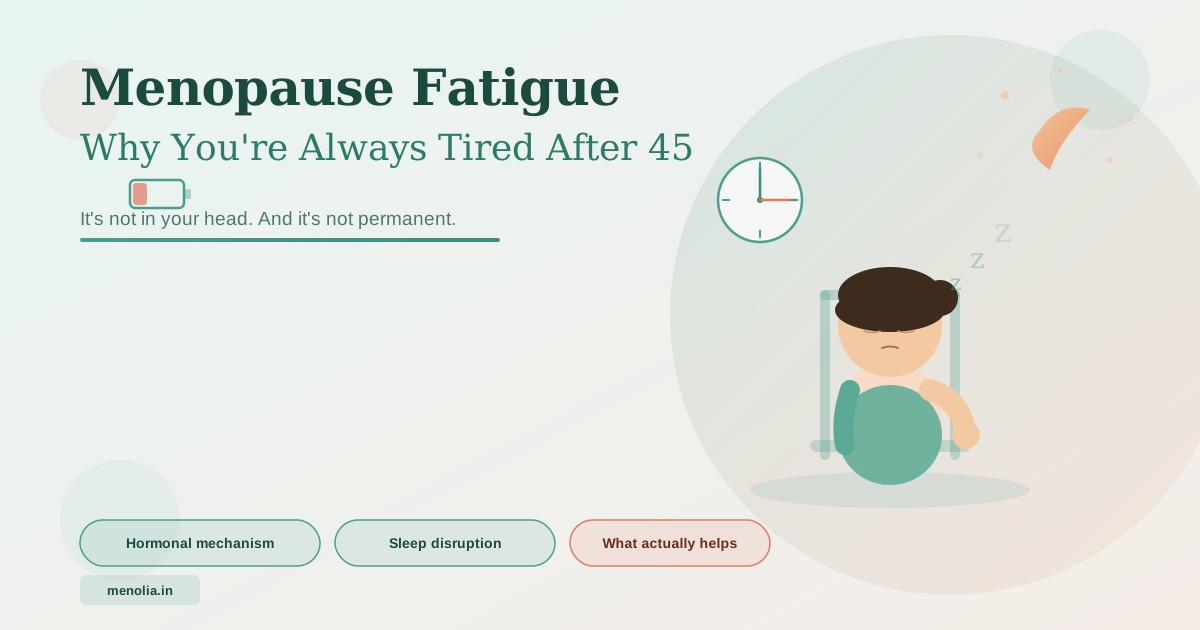
You Are Not Imagining It
You used to run a household, manage work, show up for everyone, and still have something left at the end of the day. Now, by 3 PM, your body is asking to stop. You wake up after eight hours of sleep and still feel like you have not rested. A short errand feels like a full day’s effort.
And somewhere in the back of your mind sits a quiet, uncomfortable thought: is something seriously wrong? Or worse: is this just who I am now?
Neither is true. What you are feeling has a name, a mechanism, and a pathway forward. Fatigue is one of the most consistently reported symptoms of the menopausal transition, documented across large population studies including the Study of Women’s Health Across the Nation (SWAN), which followed over 3,000 women across multiple countries and tracked this exact complaint throughout the perimenopause years (Gold et al., 2000, Annals of Internal Medicine).
For more on this, read our guide on Perimenopause Symptoms. This post explains what is actually happening in your body, what makes it worse, and what you can do about it.
Why Menopause Makes You This Tired
1. Oestrogen and Your Cellular Energy System
Most people think of oestrogen as a reproductive hormone. It is, but that is not all it does. Oestrogen receptors are present in the mitochondria, the structures inside every cell that generate energy in the form of adenosine triphosphate (ATP). Research by Klinge (2008, Biology of Sex Differences) demonstrated that oestrogen directly regulates mitochondrial gene expression and membrane function.
When oestrogen declines during perimenopause, mitochondrial efficiency drops. Your cells produce less energy per unit of effort. This is not metaphorical tiredness. It is a measurable reduction in cellular energy output. Your muscles, your brain, and your organs are literally running on a less efficient engine.
This is why menopausal fatigue feels different from the tiredness of a busy week. A busy week’s tiredness resolves after a good night’s sleep. Hormonal fatigue does not, because the underlying cellular mechanism is not corrected by rest alone.
2. Sleep Disruption: The Hidden Driver
Night sweats and hot flashes do not just disturb the nights when you fully wake up drenched. Research published in the Journal of Women’s Health (Kravitz et al., 2008) showed that even sub-awakening thermal events, those that do not bring you to full consciousness, repeatedly interrupt the deeper stages of sleep. You may not remember waking. You may not feel especially hot in the morning. But your sleep architecture was fragmented throughout the night.
Fragmented sleep is, by several measures, more damaging to daytime cognitive function and energy than simply getting fewer hours. During deep, slow-wave sleep, your body consolidates memory, clears cellular waste products from the brain, and restores muscle tissue. Repeated interruption of this phase, night after night, creates a cumulative sleep debt that ordinary rest cannot clear.
This means the fatigue many women experience at menopause is not purely about how many hours they sleep. It is about the quality of those hours, which is being silently degraded by hormonal sleep disruption.
If you notice that your fatigue worsened around the same time that your sleep changed, even subtly, this is almost certainly a significant driver. The Menolia guide on menopause sleep problems covers evidence-based strategies for this specifically.
3. The HPA Axis and Cortisol Dysregulation
Your stress response is managed by the hypothalamic-pituitary-adrenal (HPA) axis. Oestrogen plays a moderating role in how this system responds to stressors. As oestrogen declines, the HPA axis can become dysregulated, leading to flattened or disrupted cortisol rhythms (Genazzani et al., 2006, Gynecological Endocrinology).
A healthy cortisol rhythm looks like a steep morning rise (which creates alertness) followed by a gradual decline through the day. When this rhythm is disrupted, the morning spike that provides natural energy does not occur clearly, and afternoon cortisol can be higher than it should be, which interferes with sleep onset. The result is a woman who cannot fully wake up in the morning and cannot fully switch off at night.
This is also why brain fog and fatigue so often appear together. They share the same hormonal disruption upstream.
Other Factors That Compound the Fatigue
Thyroid Function Shifts
The thyroid gland regulates your metabolic rate, and thyroid disease is more common in women over 40 than at any other life stage. Hypothyroidism (underactive thyroid) produces fatigue, weight gain, cold intolerance, and low mood, all of which overlap significantly with menopause symptoms.
What makes this complicated is that the menopausal transition and subclinical hypothyroidism can develop simultaneously. A woman may assume all of her tiredness is hormonal when, in fact, her thyroid is also changing. The link between thyroid and menopause explains how the two interact and why a TSH blood test is worth including in any workup for persistent fatigue.
If you have not had thyroid function tested in the past year and you are experiencing significant fatigue, ask your doctor for this specifically.
Anaemia From Heavy Perimenopausal Bleeding
Perimenopause often brings heavier, more irregular periods before they eventually stop. Sustained heavy bleeding can cause iron-deficiency anaemia over months, which produces profound fatigue, breathlessness with exertion, and pallor. This is a correctable cause of fatigue that can easily be missed when everything is attributed to hormones.
A basic blood count (CBC) will reveal this. If your periods have been heavier than usual in the past six to twelve months, mention this to your doctor alongside your fatigue.
Mood and the Fatigue Loop
Depression during menopause and anxiety are real clinical conditions with hormonal drivers. Both produce fatigue as a core symptom, not as a secondary complaint. The relationship runs in both directions: poor sleep and low energy worsen mood, and low mood worsens energy.
This is not a weakness or a psychological failing. It is a physiological loop. Addressing fatigue often requires addressing mood at the same time, not sequentially.
What You Can Do: Evidence-Based Strategies
Ready to talk this through with an OB-GYN? WhatsApp Dr. Suganya directly for a personalised assessment: wa.me/919940270499
Prioritise Sleep Quality Over Sleep Quantity
Eight hours of fragmented sleep is not the same as six hours of uninterrupted sleep. Strategies that specifically address perimenopausal sleep:
Keep the bedroom cool. Aim for a room temperature of 18-20 degrees Celsius. A light cotton bedsheet (not a synthetic one) traps less heat. Many women find that switching from a blanket to a single layer makes a measurable difference to night sweat frequency.
Limit spicy food, chai, and coffee after 2 PM. Capsaicin in spicy food and caffeine both raise core body temperature slightly, which can act as a trigger. This does not mean avoiding them entirely, just shifting them earlier in the day.
A consistent wake-up time matters more than a consistent bedtime. Your brain’s circadian rhythm is anchored to when you rise. Waking at the same time every day, including weekends, stabilises the cortisol morning peak that provides alertness.
Food as Energy Regulation
Eat breakfast with protein and complex carbohydrates within an hour of waking. Women who skip breakfast often experience a sharp cortisol spike mid-morning (the body’s response to low blood glucose), which is followed by an energy crash in the early afternoon. A breakfast of idli with sambar, or ragi porridge with a small amount of dahi and jaggery, provides both slow-release energy and protein.
Avoid large, high-carbohydrate lunches. A heavy rice meal at noon often creates a blood sugar peak followed by a 2-3 PM crash that makes the afternoon fatigue worse. Shifting towards smaller, more balanced meals, dal with a moderate rice portion plus vegetables, maintains steadier blood glucose.
Iron-rich foods if you have heavy periods. Drumstick leaves (moringa), horse gram (kulthi), sesame seeds (til), and dark leafy greens like methi are good Indian sources of non-haem iron. Pairing them with vitamin C sources (lemon, amla) improves absorption significantly. If dietary adjustment is not enough after two to three months of heavy bleeding, a haemoglobin test and supplementation under medical guidance may be needed.
Haldi and its role in inflammation. Chronic low-grade inflammation rises at menopause partly due to falling oestrogen, which had anti-inflammatory effects. Haldi (turmeric) contains curcumin, which has documented anti-inflammatory activity in human studies (Daily et al., 2016, Journal of Medicinal Food). Adding haldi to curries, warm milk, or rasam is a simple, evidence-consistent step. It will not reverse hormonal fatigue on its own, but it is a reasonable adjunct.
Movement: Counterintuitive but Effective
The impulse when exhausted is to rest. But moderate exercise, particularly strength training and brisk walking, consistently improves energy in menopausal women over a four-to-eight week period (Villaverde-Gutiérrez et al., 2006, Maturitas). The mechanism includes improved mitochondrial function (exercise stimulates mitochondrial biogenesis), better sleep quality, and reduced cortisol dysregulation.
The difficulty is starting when you are already depleted. A useful rule: begin with ten minutes of walking in the morning, specifically in the morning when cortisol is naturally higher. Morning movement reinforces the cortisol peak and anchors the circadian rhythm. Do not start with evening exercise, which interferes with sleep onset.
Yoga, particularly the restorative and pranayama practices that focus on the breath, has been shown in Indian women specifically to reduce the severity of climacteric symptoms (Chattha et al., 2008, Climacteric). The yoga for menopause guide includes specific poses that are both accessible and beneficial.
Managing the Mental Load
Women in their 40s and 50s in India are frequently part of what researchers call the sandwich generation: caring for aging parents while supporting children who are still in education or early careers. This caregiving load is real and it is not solved by lifestyle advice. What it does require is naming clearly: the emotional and physical labour of caregiving without adequate rest compounds hormonal fatigue significantly.
If the mental and emotional load is the dominant driver of your exhaustion, that is worth naming to your doctor specifically, not just mentioning in passing. It changes the support plan.
When to See a Doctor About Fatigue
Most perimenopausal fatigue responds to the strategies above over six to eight weeks. Seek a clinical assessment if:
- The fatigue is severe enough to affect your ability to work, manage daily tasks, or care for family
- You have unexplained weight gain alongside fatigue (thyroid or metabolic cause)
- You have palpitations, breathlessness, or pallor (anaemia or cardiac cause)
- You are sleeping adequately and fatigue persists unchanged after eight weeks of lifestyle adjustment
- You are experiencing low mood, loss of interest, or hopelessness alongside the fatigue (depression needs direct treatment)
A simple blood panel covering TSH, CBC, ferritin, vitamin D, and fasting blood glucose covers the most common correctable causes. Ask for these specifically rather than a general “check-up.”
Not sure where to start? Dr. Suganya can review your symptoms and suggest the right investigations. WhatsApp her directly: wa.me/919940270499
Frequently Asked Questions
Is it normal to feel this tired during perimenopause even when I am sleeping eight hours?
For more on this, read our guide on Perimenopause Mood Changes. Yes. Perimenopausal sleep is frequently fragmented by sub-awakening thermal events that do not bring you to full consciousness but do repeatedly interrupt slow-wave and REM sleep. Eight fragmented hours provide significantly less restorative value than six uninterrupted hours. The quantity of sleep is not the issue; the architecture is. This has been documented specifically in the SWAN study (Gold et al., 2000).
How do I know if my fatigue is menopause or thyroid?
You often cannot tell by symptoms alone because the overlap is significant. Both produce fatigue, weight changes, mood shifts, and cognitive difficulties. A TSH (thyroid-stimulating hormone) blood test is the standard first screen. If TSH is normal, the cause is more likely hormonal. If it is elevated, hypothyroidism is contributing and is directly treatable with medication alongside lifestyle support.
Will this fatigue pass once I reach full menopause?
For most women, yes. The perimenopause transition, the years of hormonal fluctuation before periods stop entirely, is typically when fatigue is most severe. Once oestrogen levels stabilise at a new (lower) baseline, many women report a gradual improvement in energy. However, this can take two to five years, and lifestyle strategies during that window significantly affect how well you function throughout it.
Can iron deficiency cause this kind of extreme tiredness?
Yes, and it is frequently underdiagnosed in perimenopausal women. If your periods have been heavier than usual, sustained blood loss reduces haemoglobin and ferritin (stored iron) over months. Even before haemoglobin drops to anaemic levels, low ferritin alone causes significant fatigue, poor concentration, and reduced exercise tolerance. Ask specifically for a ferritin test, not just haemoglobin, as ferritin reflects stores more sensitively.
Are there foods I should avoid when I am already exhausted?
Three categories make menopausal fatigue meaningfully worse: large high-carbohydrate meals (they spike blood sugar and cause a crash), caffeine after 2 PM (disrupts sleep quality), and highly processed, low-nutrient snacks (they provide short-term glucose but deplete energy reserves faster). Prioritise meals built around protein, complex carbohydrates, and healthy fat: dal, legumes, millets, curd, vegetables.
Is exercise actually safe when I feel this depleted?
Yes, with the right approach. Start small: ten minutes of morning walking, then build over four weeks. The goal in the first month is not fitness; it is resetting your circadian cortisol rhythm and improving mitochondrial efficiency. Several randomised controlled trials have shown that moderate-intensity exercise over eight weeks significantly reduces fatigue severity in menopausal women, even when participants started the trial exhausted.
Can I take supplements for energy during menopause?
Some supplements have evidence behind them and some do not. Vitamin D deficiency is extremely common in Indian women and directly causes fatigue when severe. Worth testing and correcting under medical guidance. Iron supplementation is appropriate if ferritin is low, but not otherwise (excess iron has its own risks). Magnesium glycinate has some evidence for improving sleep quality in this population. Adaptogens, energy blends, and “hormone-balancing” supplements sold online have very limited clinical evidence and some carry risks. Discuss any supplement with your doctor before starting.