You have not been to the gym. You did not sleep on a bad pillow. You have not been carrying anything heavy. But your legs feel like lead, your arms are sore to the touch, and your lower back aches like you spent the day digging. By mid-morning you want to sit down, not because you are tired, but because your body aches.
Women in perimenopause describe this in very specific ways. Some say it feels like the start of a fever that never fully arrives. Others say their legs are sore from the moment they wake up, that even walking to the kitchen takes effort. The most common description, across all ages and backgrounds, is simply: everything hurts. Not any one place. Everything.
If this sounds familiar, you are not imagining it. And it is almost certainly not fibromyalgia, early arthritis, or a vitamin deficiency (though well-meaning doctors often test for all three and find nothing). It is a predictable consequence of falling oestrogen. Once you understand the mechanism, the path forward becomes clearer.
This post explains what is happening in your muscles, why it is different from joint pain, which has its own distinct mechanism, and what the evidence shows actually helps.
Why Oestrogen Is the Root Cause
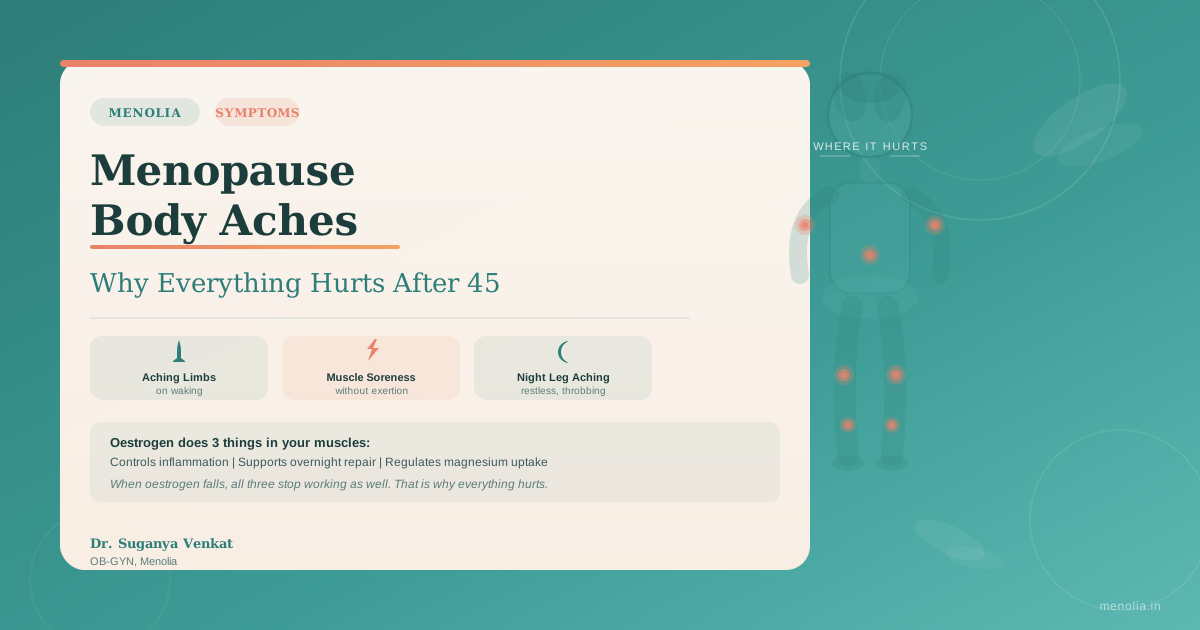
Oestrogen does far more than regulate your menstrual cycle. In your muscles, it plays three active roles that most women have never been told about.
It controls inflammation. Oestrogen acts as a natural anti-inflammatory agent, suppressing cytokines (the proteins that signal inflammation) in muscle tissue. When oestrogen drops, this suppression is removed and baseline inflammation in muscles rises. You feel this as diffuse aching, heaviness in the limbs, and muscles that stay sore longer after any physical activity.
It supports muscle repair. Muscle fibres sustain micro-tears during normal daily activity: sitting, walking, lifting grocery bags. Oestrogen supports satellite cells, the repair crew that fixes these tears overnight. Lower oestrogen means slower, less complete repair. You wake up feeling like your muscles did not fully recover from the previous day.
It regulates magnesium uptake. Oestrogen influences how efficiently muscle cells absorb and use magnesium, a mineral essential for muscle relaxation. As oestrogen falls, magnesium utilisation becomes less efficient. This contributes to muscle cramps, tightness, and that heavy feeling in the legs especially at night.
The result: your muscles are running with less anti-inflammatory cover, slower repair cycles, and less efficient mineral uptake, all at once. Studies on menopausal transition symptoms consistently show that diffuse muscle aching affects 50 to 70% of perimenopausal women, at rates significantly higher than same-age women not yet in the transition. The hormonal status, not age or BMI, is the differentiating factor.
This Is Not Joint Pain (The Difference Matters)
The body aches of menopause are frequently confused with joint pain, and the two can overlap. But they are different problems with different mechanisms, and this distinction matters for how you address them.
Joint pain (covered in the Menopause Joint Pain guide) is felt at specific, reproducible locations: knees when climbing stairs, fingers when opening a jar, hips after sitting. It tends to be localised and is driven primarily by cartilage changes and joint-space inflammation.
Muscle and body aches are diffuse. Women describe them as whole-limb heaviness rather than a specific point of pain, generalised soreness that moves around, and the “flu without a fever” sensation. The aching is in the muscle tissue itself, not at the joint surfaces.
Some women experience both, and it is possible to have joint-specific oestrogen-related stiffness alongside the diffuse muscle aching described here. If you have pain in both categories, they respond to somewhat different strategies and are worth distinguishing in a consultation.
Three Patterns Women Describe
In clinical practice, menopausal body aches tend to fall into one of three patterns, often appearing together:
Aching limbs on waking. Legs and arms feel heavy and sore first thing in the morning. This is the incomplete overnight repair pattern: your muscles did not fully recover because oestrogen is no longer efficiently running the repair process. It often improves somewhat as you move through the first hour of the day.
Soreness without exertion. You feel like you have done a strenuous workout, but you have not. A 20-minute walk leaves your legs aching for hours. Climbing one flight of stairs produces soreness that lasts the day. This is the reduced anti-inflammatory cover pattern: without oestrogen dampening post-activity inflammation, even minor activity produces a disproportionate soreness response.
Night leg aching. Your legs ache, throb, or feel restless at night, making it hard to fall asleep or causing you to wake up. This overlaps with the magnesium-related muscle tension pattern and is closely linked to the sleep disruption that many women in perimenopause already experience from other causes.
Menopause fatigue and body aches often travel together. The fatigue compounds the aching (a tired body is less able to buffer inflammation), and the aching disrupts the sleep that would otherwise reduce fatigue. If you are experiencing both, addressing sleep quality is a high-leverage starting point.
What Actually Helps
The evidence for managing menopausal myalgia points to a combination of dietary, movement, and supplementation strategies. Here is what the research supports, and what you can start this week.
Anti-Inflammatory Eating: Starting With Your Kitchen
The Indian kitchen is well-equipped for managing menopausal inflammation. These are not supplements or specialised health foods. They are everyday ingredients.
Haldi (turmeric). Curcumin, the active compound in haldi, has been studied extensively for its anti-inflammatory properties in muscle tissue. Consuming haldi with a fat (as in haldi milk with a teaspoon of ghee, or as part of a dal) significantly improves absorption. Daily haldi milk before bed addresses both the anti-inflammatory effect and the sleep disruption that compounds muscle aching. Adding a pinch of black pepper increases curcumin absorption markedly: piperine from pepper enhances bioavailability by a significant factor in published pharmacokinetic studies.
Ragi (finger millet). Ragi is high in both calcium and magnesium, the two minerals most directly relevant to muscle function during the menopausal transition. A ragi porridge in the morning or ragi rotis three to four times a week provides a meaningful dietary source of both without supplementation.
Methi (fenugreek seeds). Methi has a documented anti-inflammatory effect and is used traditionally in South Indian cooking for joint and muscle discomfort. A teaspoon soaked overnight and consumed in the morning, or added to dal and sabzi, is the practical everyday form.
Dahi (curd). Gut inflammation contributes to systemic inflammation throughout the body. Dahi as a daily dietary staple (not the sweetened packaged versions) supports gut health that indirectly reduces the overall inflammatory load on muscles.
Foods worth reducing. Refined sugar and maida spike inflammatory cytokines. Packaged snacks with seed oils (labelled “vegetable oil”) have a high omega-6 load that promotes inflammation. This does not mean eliminating them entirely. It means not making them daily when body aches are at their worst.
The 9 Indian foods that reduce hot flashes guide overlaps here: many of the phytoestrogen-rich and anti-inflammatory foods that reduce hot flashes also reduce menopausal muscle aching, because the underlying mechanism is the same (oestrogen-adjacent signalling and inflammation reduction).
If the aching is disrupting your daily routine, Dr. Suganya can assess what is driving it and put together a plan specific to your pattern.
Message Dr. Suganya on WhatsApp
Movement: The Counterintuitive Part
When everything aches, the instinct is to rest. For menopausal myalgia, rest alone makes it worse.
Oestrogen-depleted muscles lose mass faster than pre-menopausal muscles. Inactivity accelerates this loss, which means fewer muscle fibres doing the same work, which means more soreness per unit of activity. The cycle of “everything hurts so I stop moving and then everything hurts more” is genuinely easy to fall into and difficult to break.
Gentle daily movement, not strenuous exercise. A 20 to 30 minute walk every day, at a pace where you can hold a conversation, reduces circulating inflammatory cytokines and improves the overnight muscle repair cycle. You do not need a gym. You do not need to be sore afterwards. Consistency matters far more than intensity.
Strength training twice a week. Resistance exercise is among the most evidence-backed interventions for menopausal muscle health. It does not require heavy weights: resistance bands, bodyweight exercises, or even carrying grocery bags with intention counts. Two sessions of 20 to 30 minutes a week maintains the muscle mass that helps buffer soreness.
Yoga and stretching. Yoga has been studied specifically for menopausal symptoms and shows consistent benefit for muscle tension, sleep quality, and subjective pain perception. The yoga for menopause guide covers the poses and research relevant to this transition.
For a complete overview of what the research shows across exercise types, the exercise during menopause guide is the companion resource.
Magnesium
Dietary magnesium is often insufficient in Indian diets heavy on polished rice (which strips magnesium during processing) and light on ragi, whole dals, and seeds. A supplemental magnesium glycinate or magnesium citrate (not magnesium oxide, which is poorly absorbed) at 200 to 400 mg before bed addresses muscle relaxation and sleep quality together.
Discuss this with your doctor before starting. If body aches and night-time muscle tension are recurring complaints, asking specifically about magnesium is a reasonable and targeted question for your next consultation.
Sleep
The overnight muscle repair cycle runs during deep sleep. If your sleep is fragmented by night sweats, anxiety, or the leg aching itself, the repair cycle is interrupted and the soreness compounds over days. The menopause sleep guide covers what evidence supports for improving sleep quality during the transition specifically.
💜 Real proof this works. Lalitha, 60, came to us with rheumatoid arthritis, chronic joint stiffness, and severe fatigue. Three months later, her CRP (a key inflammation marker) had dropped from 57 to 5 mg/L, her cholesterol had normalised, and her mobility had returned. Read Lalitha’s full story →
When to See a Doctor
Most menopausal body aches are manageable with lifestyle strategies and do not need further investigation. Certain patterns do warrant a clinical review:
- Pain that is severe and localised to one area (not diffuse)
- Swelling around a joint or limb
- Pain accompanied by a fever, even low-grade
- Significant weakness in the legs or arms, beyond just heaviness
- Aching that does not improve at all with movement across several weeks
These patterns may indicate something other than menopausal myalgia. Fibromyalgia, autoimmune conditions, and hypothyroidism all produce muscle pain and fatigue that overlap with menopausal symptoms. Hypothyroidism in particular often presents alongside menopause and is extremely common in women over 40 in India. A simple TSH blood test rules it in or out quickly.
What You Can Do Starting This Week
-
Add haldi milk to your night routine. A cup of warm milk (cow’s, buffalo’s, or unsweetened plant-based) with half a teaspoon of haldi and a pinch of black pepper before bed. This addresses both inflammation and sleep quality in one step.
-
Switch one weekly grain to ragi. Ragi porridge in the morning or ragi rotis twice a week covers your magnesium and calcium intake in a form your body absorbs well.
-
Start a 20-minute morning walk. Not for fitness. Specifically to break the inactivity-inflammation cycle. The same time each day builds the habit faster than varying it.
-
Discuss magnesium with your doctor. If you are waking up with leg aches or cramps regularly, ask specifically about magnesium glycinate at your next appointment.
-
Track your pattern. Noting when the aching is worst (after poor sleep, after certain foods, after long periods of sitting) takes five minutes and helps significantly when you come in for a consultation, because it tells Dr. Suganya which mechanism is dominant.
Frequently Asked Questions
Is body aching a normal symptom of menopause?
Yes. Diffuse muscle pain and body aching affect approximately 50 to 70% of women during perimenopause and menopause. It is not the most discussed symptom (hot flashes and mood changes draw more attention), but it is one of the more physically disruptive ones. The mechanism is well understood: declining oestrogen reduces the natural anti-inflammatory cover in muscle tissue and slows overnight muscle repair.
For more on this, read our guide on Menopause Nausea. How is menopause body aching different from fibromyalgia?
Fibromyalgia is a chronic pain syndrome characterised by widespread musculoskeletal pain at specific tender points, significant fatigue, and often cognitive symptoms. Menopausal myalgia is hormonally driven, tends to improve with gentle movement (fibromyalgia often does not), and typically began at or near the perimenopause transition rather than earlier in life. If your doctor is considering fibromyalgia, specifically noting when the pain started and whether it correlates with other menopause symptoms helps distinguish the two, since the treatment approaches are different.
For more on this, read our guide on Can Menopause Cause Headaches & Migraines? A Doctor Explains. Will the aching get better once I am fully through menopause?
For many women, yes. The most intense body aching tends to coincide with perimenopause, when oestrogen is dropping most rapidly and erratically. Post-menopause, when oestrogen stabilises at a lower baseline, the inflammatory fluctuations reduce. However, the lower oestrogen level itself still means muscles receive less anti-inflammatory support than they did before the transition. The lifestyle strategies remain relevant indefinitely, not just during the acute phase.
Can the aching be caused by something other than menopause?
Yes, and it is worth ruling out. Vitamin D deficiency is extremely common in Indian women and causes muscle aching independently. Hypothyroidism, which becomes more prevalent after 40, also produces muscle pain and fatigue that look identical to menopausal myalgia. A basic blood panel (TSH, Vitamin D, calcium, CBC) rules out the most common alternatives and is a reasonable request at your next check-up.
Which foods make menopausal body aches worse?
Refined sugar, maida-heavy foods, and seed oils with high omega-6 content (most commercial “vegetable oils”) increase circulating inflammatory cytokines. Alcohol also promotes inflammation and disrupts the deep sleep that runs the overnight muscle repair process. These do not need to be eliminated completely, but reducing them during periods when aching is most disruptive makes a measurable difference for many women.
Does walking help or make body aches worse?
Walking helps, specifically gentle walking at a conversational pace. The key is avoiding both extremes: complete rest allows the aching inflammation cycle to compound, while high-intensity exercise without adequate recovery overwhelms the already-limited repair capacity of oestrogen-depleted muscles. Twenty to thirty minutes of daily walking at a moderate pace is consistently supported by evidence as one of the most effective interventions for menopausal myalgia.
Is it safe to take painkillers for ongoing body aches?
Over-the-counter painkillers provide short-term relief but do not address the underlying mechanism. Regular use of NSAIDs (ibuprofen, naproxen) is not recommended for an ongoing hormonal symptom because of the cumulative risks to the gut, kidneys, and cardiovascular system with daily use. If the aching is severe enough that you are considering regular painkiller use, that is a signal to discuss a clinical approach with Dr. Suganya. There are evidence-based options that address the root cause more directly.
If the all-over aching is affecting your daily life, Dr. Suganya can assess your hormone levels, rule out contributing conditions, and help you put together a plan that works with your specific pattern.