Nobody warns you about this part of menopause.
The hot flashes, the irregular periods, the weight gain, those get mentioned. But the way menopause quietly changes your closest relationship? The way you suddenly feel like a different person in your own marriage? The way you pull away without fully understanding why?
That part stays unspoken. Especially in Indian families, where menopause is already wrapped in silence, and discussing its effect on your marriage feels almost impossible.
But here’s what I’ve seen in 15 years of practice: the women who navigate menopause best are often the ones whose partners understand what’s happening. Not because they need someone to “fix” them, but because going through a massive physical and emotional transition while feeling alone in it is infinitely harder.
This article is for you, and also for the person sitting next to you on the sofa, wondering why things feel different.
What’s Actually Happening in Your Body (And Why It Affects Your Relationship)
Before we talk about relationships, let’s ground this in biology. Because when you understand why you feel the way you do, it becomes much easier to communicate it, and much harder to blame yourself.
The Hormonal Shifts
During perimenopause and menopause, your estrogen and progesterone levels don’t just decline. They fluctuate wildly before eventually settling at lower levels.
Estrogen affects:
- Mood regulation (it influences serotonin, your “feel-good” neurotransmitter)
- Sleep quality (disrupted sleep = irritability, brain fog, exhaustion)
- Vaginal lubrication and tissue health (affecting comfort during intimacy)
- Skin sensitivity and body temperature (hot flashes = disrupted nights)
Progesterone affects:
- Anxiety levels (it has a natural calming effect, when it drops, anxiety can spike)
- Sleep depth (progesterone promotes deep sleep)
- Emotional resilience (the ability to bounce back from stress)
Testosterone also declines gradually, affecting:
- Libido and desire
- Energy levels
- Confidence and assertiveness
When all three hormones are shifting simultaneously (sometimes within the same day) it’s no surprise that you might feel like a completely different person than you were five years ago.
The key message for your partner: These changes are biological, not personal. She hasn’t stopped caring about you. Her body is going through something fundamental, and what she needs most is understanding, not advice, not solutions, just understanding.
The Five Ways Menopause Can Affect Your Relationship
1. The Emotional Distance
You might find yourself withdrawing, not because you love your partner less, but because you’re overwhelmed by your own body. When you’re managing hot flashes at work, barely sleeping, and fighting brain fog, you don’t have emotional energy left for deep conversations at the end of the day.
Your partner sees: distance, silence, withdrawal. What’s actually happening: exhaustion, overwhelm, survival mode.
2. The Intimacy Gap
This is perhaps the most common and the least discussed. Research shows that menopause-related changes significantly impact intimate relationships (Bulut et al., 2024):
- Low libido: Declining estrogen and testosterone directly reduce desire. This is hormonal, not emotional.
- Physical discomfort: Vaginal dryness and tissue thinning can make intercourse painful. Many women avoid intimacy to avoid the discomfort, but don’t explain why.
- Body image changes: Weight gain, skin changes, and feeling “not like yourself” can make you feel unattractive, even when your partner doesn’t see you that way.
The result? Both partners feel rejected. She feels broken for not wanting intimacy. He feels unwanted. Nobody talks about it.
3. The Irritability Spiral
Fluctuating estrogen directly affects your stress response. Things that never bothered you before suddenly feel unbearable, the way he chews, the mess in the kitchen, the same question asked twice.
You snap. You feel guilty. You withdraw. He walks on eggshells. The spiral continues.
Important: If you’re experiencing rage, extreme irritability, or emotional responses that feel disproportionate to the situation, this is very likely hormonal, and it’s treatable. Don’t suffer in silence.
4. The Role Shift
For many Indian women, menopause coincides with other major life changes:
- Children leaving home (or getting married)
- Ageing parents needing care
- Career shifts or retirement decisions
- Identity questions (“Who am I outside of being a mother?”)
Your relationship was built around a certain structure, school runs, family dinners, children’s activities. When that structure changes, couples sometimes realise they’ve been co-parents more than partners. Menopause can bring this into sharp focus.
5. The Communication Breakdown
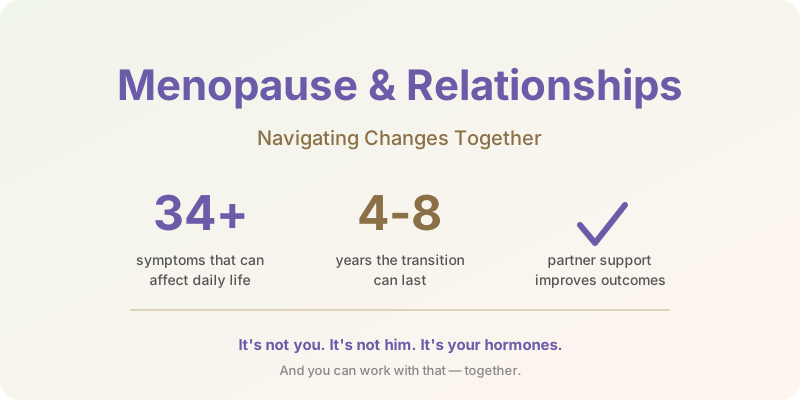
In many Indian households, discussing menopause with your husband is culturally uncomfortable. A study on Indian men’s awareness of menopause found that most men have very limited understanding of what menopause involves (Vijayan et al., 2025). He might know the word, but he probably doesn’t understand the 34+ symptoms, the hormonal biology, or the emotional weight.
If he doesn’t know what’s happening, he can’t support you. And if you can’t explain it (because you’re barely understanding it yourself), the gap widens.
Feeling overwhelmed by how menopause is affecting your life?
Dr. Suganya's 90-day program addresses the physical and emotional aspects of menopause, including its impact on your relationships. Start with a ₹399 consultation.
WhatsApp Dr. Suganya →How to Navigate This. Together
Here’s the good news: research consistently shows that partner support significantly improves quality of life during menopause (Ghazanfarpour et al., 2018). Couples who communicate through this transition often emerge stronger, with a deeper, more honest relationship than before.
Here’s how.
For You (The Woman Going Through Menopause)
1. Name what’s happening
You don’t have to give a medical lecture. Simple statements work:
- “I’m not angry at you. My hormones are making everything feel more intense right now.”
- “I want to be close to you, but my body is making intimacy uncomfortable. It’s not about you.”
- “I’m exhausted in a way I’ve never been before. I need you to know that.”
Naming it breaks the cycle of misunderstanding.
2. Don’t apologise for your biology
You’re not “too much.” You’re not being difficult. You’re going through a significant biological transition that affects every system in your body. You deserve the same compassion you’d give yourself if you had any other health condition.
3. Ask for what you need, specifically
“I need support” is vague. Try:
- “Can you handle dinner tonight? I’m completely drained.”
- “I need 20 minutes alone after work before we talk.”
- “Can we just sit together without talking? I don’t need solutions, just your presence.”
4. Stay connected to intimacy, differently
Intimacy isn’t just intercourse. During menopause, expanding your definition of intimacy can be transformative:
- Hand-holding, hugging, physical closeness
- Evening walks together
- Sharing a cup of chai and actually talking
- Massage (no expectations attached)
- Simply sleeping close to each other
5. Get professional help
If vaginal dryness or pain is affecting your intimate life, talk to your gynaecologist. There are effective treatments (vaginal estrogen, lubricants, moisturisers) that can make a significant difference. Don’t let a treatable symptom erode your relationship.
For the Partner
If you’re reading this as her husband or partner, first, thank you. The fact that you’re here means you care, and that matters more than you know.
1. Educate yourself
Menopause isn’t “just hot flashes.” It’s a whole-body transition involving:
- 34+ possible symptoms
- Changes in mood, sleep, energy, cognition, and desire
- A process that can last 4-8 years (perimenopause through postmenopause)
Understanding this changes everything. You stop taking things personally when you understand there’s a biological reason.
2. Don’t try to fix, just listen
When she says she’s exhausted, irritable, or sad, she doesn’t need you to suggest exercise, vitamins, or “thinking positive.” She needs you to say:
- “That sounds really hard. I’m here.”
- “What do you need from me right now?”
- “I may not fully understand, but I’m not going anywhere.”
3. Don’t withdraw when she does
Her pulling away isn’t rejection. It’s overwhelm. Stay gently present. A cup of chai brought without being asked. A shoulder squeeze in passing. These small acts say “I see you” without demanding anything.
4. Rethink intimacy
If she’s avoiding physical closeness, it’s almost certainly because something feels uncomfortable, not because she doesn’t want you. Ask her what feels good right now. Be open to intimacy looking different than it used to.
5. Be patient. This is temporary
Perimenopause is a transition, not a permanent state. The most intense symptoms (the mood swings, the hot flashes, the disrupted sleep) do ease over time, especially with proper management. Your marriage is a 30-40 year journey. This is one chapter.
Practical Strategies for Couples
The Weekly Check-In
Set aside 20 minutes once a week, no phones, no TV. Take turns sharing:
- “This week was hard because…”
- “What I need more of is…”
- “Something you did that really helped was…”
This creates a regular space for honesty without waiting for things to reach a breaking point.
The Symptom Signal
Some couples find it helpful to have a simple signal (a word, a gesture) that means “I’m having a rough hormonal day.” It’s shorthand for “please be patient with me” without having to explain everything every time.
The Separate Sleep Conversation
If hot flashes and night sweats are disrupting both your sleep, it’s okay to discuss sleeping arrangements, a lighter blanket on her side, a fan, or even separate blankets. This isn’t about distance. It’s about both of you getting the rest you need to be good partners to each other.
The Intimacy Reset
If your physical relationship has stalled, try this:
- Start with two weeks of physical affection with no expectation of intercourse
- Hold hands, hug, give a shoulder rub before bed
- Let closeness rebuild naturally, without pressure
- After two weeks, have an honest conversation about what felt good and what you’d like
When to Seek Help
See Your Doctor If:
- Mood changes are severe enough to affect your daily functioning
- You’re experiencing anxiety or depression that feels new or overwhelming
- Vaginal dryness or pain is preventing intimacy despite wanting it
- Sleep disruption is chronic (weeks, not days)
- You feel like you’ve lost yourself
Consider Couples Counselling If:
- Communication has broken down despite both trying
- Resentment is building on either side
- The relationship felt strong before menopause but is now struggling
- You’re considering separation and menopause might be a factor
A note on this: Seeking counselling isn’t a sign that your marriage is failing. It’s a sign that you value it enough to invest in it during a challenging time.
Need help managing menopause, physically and emotionally?
Dr. Suganya's 90-day program includes nutritional support, lifestyle guidance, and access to a psychologist, because menopause affects more than just your body.
WhatsApp Dr. Suganya →What I Tell My Patients
In my clinic, when a woman tells me menopause is affecting her marriage, I always say the same thing:
“It’s not you. It’s not him. It’s your hormones, and we can work with that.”
The physical symptoms. We manage with nutrition, lifestyle, supplements, and when needed, medical intervention. The emotional symptoms. We address with our psychologist and with practical strategies. But the relationship part? That needs both of you showing up, being honest, and being willing to learn a new way of being together.
Menopause doesn’t have to be the thing that pulls you apart. With understanding, communication, and the right support, it can actually deepen your connection. You’re not the same couple you were at 25, and that’s not a loss. It’s an evolution.
Frequently Asked Questions
Is it normal to feel like I don’t love my partner during menopause?
Yes, and it’s almost certainly hormonal, not real. Fluctuating estrogen affects your emotional bonding mechanisms. Many women describe feeling emotionally “flat” or disconnected. This doesn’t mean your love has disappeared. It means your neurotransmitters are disrupted. As hormones stabilise, these feelings typically resolve.
My husband thinks menopause is just hot flashes. How do I explain it?
Share this article with him. It’s written for both of you. Or try this: “Imagine you suddenly couldn’t sleep properly for months, felt anxious for no reason, had your body change shape, and lost your confidence, all at once. That’s closer to what menopause actually feels like.”
Should I tell my husband about my menopause symptoms?
Yes. Research consistently shows that couples who communicate openly about menopause have better relationship outcomes and the woman has better quality of life (Ghazanfarpour et al., 2018). You don’t have to share everything, but sharing the basics (what you’re experiencing and what you need) makes a significant difference.
Can menopause cause divorce?
Menopause itself doesn’t cause divorce, but the misunderstandings and communication breakdowns that come with it can strain an already-challenged relationship. If your marriage was strong before perimenopause and is now struggling, it’s very likely that addressing the menopause symptoms and improving communication will help.
Is low libido during menopause permanent?
Not necessarily. Libido often fluctuates during perimenopause and may settle at a different level postmenopause. Treatments exist, addressing vaginal dryness, managing fatigue, hormone therapy where appropriate, and rebuilding intimacy gradually can all help. Many women find their desire returns, sometimes in a different form than before.
How can I talk to my mother-in-law about menopause?
In Indian families, this can be tricky. If she’s going through it herself, starting with your own experience can open the door: “I’ve been reading about perimenopause and realising that many of the things I’m experiencing are normal hormonal changes.” If she’s your support system, her understanding can be invaluable.
My partner wants intimacy but I feel nothing. What do I do?
First, know that this is incredibly common and not your fault. Then, have an honest conversation: “My desire has changed, and it’s because of my hormones, not because of you. I still want to be close to you, can we explore what feels good for both of us right now?” Consider seeing your gynaecologist about treatable causes like vaginal dryness or hormonal imbalances.
Dr. Suganya Venkat is an OB-GYN with 15+ years of experience. Her 90-day menopause program includes nutrition, lifestyle, and psychological support, because menopause affects your whole life, not just your body. Start a conversation.