You’re in the middle of a client presentation when the heat starts. Not the room temperature, your temperature. A flush rises from your chest to your face, sweat beads along your hairline, and you’re suddenly intensely aware that everyone in the room might notice. You push through, finish the slide, and excuse yourself to the washroom.
You splash water on your face, wait for the wave to pass, and walk back like nothing happened.
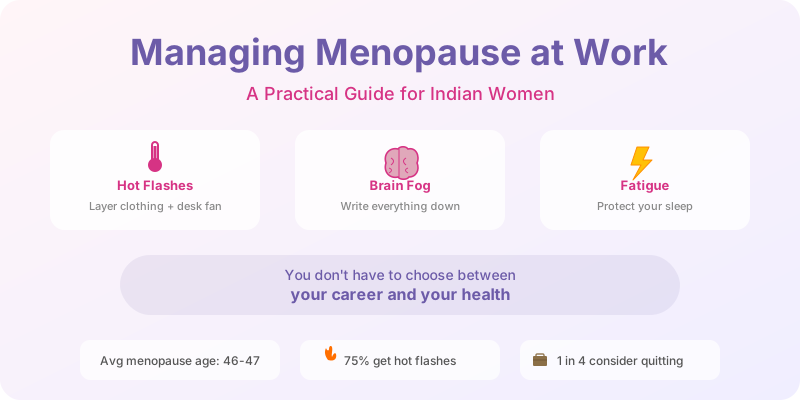
If this sounds familiar, you’re not alone. Nearly 75% of women experience hot flashes during menopause (Avis et al., 2015), and for women who work (which is most women in India’s growing workforce) these symptoms don’t politely wait for evenings and weekends.
Yet menopause at work remains one of the most under-discussed challenges women face. A 2019 UK survey found that nearly 1 in 4 women considered leaving their job because of menopause symptoms (CIPD/Bupa, 2019). In India, where menopause still carries cultural stigma and is rarely discussed openly, the silence is even deeper.
This guide is for every woman who’s trying to do her job well while her body is going through one of its biggest transitions.
The Symptoms That Hit Hardest at Work
Not all menopause symptoms affect work equally. Based on what our patients at Menolia report most frequently, these are the ones that create the biggest challenges in a professional setting:
Hot Flashes and Night Sweats
Hot flashes typically last 1-5 minutes but can feel much longer when you’re in a meeting or dealing with a customer. Night sweats disrupt sleep, which means you arrive at work already exhausted.
At-work impact: Difficulty concentrating during a flash, visible sweating, anxiety about being noticed, need to step away frequently.
Brain Fog
Difficulty finding the right word. Forgetting what you walked into a room for. Losing track of a conversation mid-sentence. Oestrogen plays a key role in cognitive function, and as levels fluctuate during perimenopause, many women experience what researchers call “subjective cognitive complaints” (Weber et al., 2014).
At-work impact: Slower processing, missing details in emails, forgetting meeting points, reduced confidence in your own competence. This is often the most distressing symptom because it makes women question their professional ability.
Anxiety and Mood Changes
Fluctuating oestrogen affects serotonin and GABA, your brain’s calming neurotransmitters. This can trigger anxiety that feels different from anything you’ve experienced before: a sudden sense of dread before a routine meeting, or disproportionate worry about a small deadline.
At-work impact: Avoidance of presentations or difficult conversations, irritability with colleagues, emotional responses that feel out of character.
Fatigue
Not just “I’m tired” fatigue, the bone-deep exhaustion that comes from disrupted sleep, hormonal shifts, and the sheer energy your body spends regulating itself through this transition.
At-work impact: Afternoon energy crashes, difficulty with tasks that require sustained focus, relying on caffeine (which can worsen hot flashes).
Joint and Muscle Pain
Oestrogen has anti-inflammatory properties. As levels drop, many women experience new joint stiffness, especially in the morning. A study in Maturitas found that musculoskeletal symptoms affect up to 70% of menopausal women (Lu et al., 2020).
At-work impact: Difficulty sitting for long periods, stiffness after meetings, pain in hands and wrists (especially for women who type all day).
Practical Strategies That Actually Help
You can’t control your hormones at work, but you can control your environment and your approach. Here’s what our patients find most effective:
Managing Hot Flashes at Work
Layer your clothing. Wear light, breathable inner layers (cotton or moisture-wicking fabric) under a jacket or dupatta that you can remove quickly. Avoid silk and synthetic blends close to your skin. They trap heat.
Keep a small desk fan. A USB-powered fan at your desk makes a bigger difference than you’d expect. If you’re in a shared office, a handheld fan works too, and most colleagues won’t think twice about it.
Cold water is your ally. Keep a steel water bottle with cold water at your desk. Drinking cold water can help regulate your body temperature. Some women also keep a small spray bottle of water (or rose water) for a quick face mist.
Identify your triggers. Common hot flash triggers include spicy food, hot beverages, caffeine, alcohol, and stress. Track which ones affect you and adjust your work-day habits accordingly. Many women find that switching from hot chai to lukewarm or iced chai makes a noticeable difference.
Choose your seat strategically. If possible, sit near a window, an AC vent, or away from direct sunlight. In meetings, choose an aisle seat near the door so you can step out if needed without disrupting others.
💜 Struggling with menopause symptoms that affect your daily life? Dr. Suganya’s 90-day program helps women manage the transition with personalised nutrition, lifestyle changes, and medical guidance. Start a conversation on WhatsApp. We understand what you’re going through.
Managing Brain Fog at Work
Write everything down. This isn’t a sign of weakness. It’s a smart adaptation. Keep a dedicated notebook or use your phone’s notes app for every meeting, call, and task. Many successful professionals do this regardless of menopause.
Use task management tools. If you’re not already using one, start with simple to-do lists with deadlines. Apps like Google Tasks or even a physical planner can reduce the cognitive load of remembering everything.
Schedule demanding tasks for your peak hours. Most women find their brain fog is worse in the afternoon. If possible, schedule complex work (writing, analysis, presentations) for the morning when your mind is sharper. Leave routine tasks like email replies for the foggy afternoon hours.
Break large tasks into smaller steps. Instead of “Complete the quarterly report,” break it into: “Pull data,” “Draft section 1,” “Review numbers.” Smaller tasks are easier for a foggy brain to process and give you a sense of progress.
Be honest when you need a moment. If you lose your train of thought in a meeting, a simple “Let me check my notes on that” or “I want to give you the right number, let me get back to you” is completely professional. Everyone has these moments. Yours may just be happening more frequently right now.
Managing Energy and Fatigue
Protect your sleep. This is the single most important thing you can do. Keep your bedroom cool (use a fan even in winter if you have night sweats), maintain a consistent sleep schedule, and avoid screens for 30 minutes before bed. A 2019 study showed that sleep hygiene interventions reduced menopause-related insomnia by 40% (McCurry et al., 2016).
Move during the day. A 10-minute walk after lunch, stretching at your desk, or taking stairs instead of the lift, movement improves circulation, reduces joint stiffness, and boosts energy. Research shows that regular physical activity reduces hot flash frequency by 50-60% in some women (Daley et al., 2014).
Eat for sustained energy. Replace the quick sugar fix (biscuits with chai) with foods that provide sustained energy: a handful of roasted makhana, mixed nuts, a small ragi ladoo, or fruit with a few almonds. These prevent the blood sugar crashes that compound menopause fatigue.
Stay hydrated. Dehydration worsens fatigue, brain fog, and headaches. Keep water at your desk and aim for 8-10 glasses throughout the day. Add nimbu (lemon) or cucumber for flavour if plain water feels boring.
Managing Anxiety at Work
Breathing exercises. When anxiety hits before a meeting or presentation, try box breathing: inhale for 4 counts, hold for 4, exhale for 4, hold for 4. Repeat 3-4 times. This activates your parasympathetic nervous system and can reduce the acute anxiety response within 60 seconds.
Prepare more than usual. If anxiety is making you less confident, compensate by over-preparing. Write detailed notes for meetings, rehearse presentations one extra time, and keep backup data readily available. The preparation gives your anxious brain fewer things to worry about.
Name it to tame it. Research in neuroscience shows that simply labelling an emotion (“I’m feeling anxious because my oestrogen is fluctuating, not because something is actually wrong”) reduces the amygdala’s fear response (Lieberman et al., 2007). Remind yourself: this is biochemistry, not incompetence.
The Conversation You Might Need to Have
You don’t have to tell anyone at work about your menopause. It’s entirely your choice. But if your symptoms are significantly affecting your work, having a conversation with a trusted manager or HR colleague can open doors to practical support.
In India, there’s no menopause-specific workplace policy in most organisations (unlike the UK, which is increasingly implementing them). But many of the adjustments you might need, flexible timing, a desk near a window, the ability to step out for 5 minutes, fall under reasonable workplace accommodations that any good manager would support.
If you decide to talk to your manager:
- Frame it as a health matter, not a complaint
- Be specific about what would help: “I sometimes need to step out for 5 minutes” rather than “I’m going through menopause and it’s hard”
- Focus on solutions, not symptoms
- Suggest a trial period for any adjustments
If you’d rather not disclose:
- That’s completely valid
- Implement the self-management strategies above
- Use leave or flex time when symptoms are particularly difficult
- Remember that you’re not obligated to explain why you need a break
What Your Workplace Should Know (But Probably Doesn’t)
The average age of menopause in Indian women is 46-47 years (Ahuja, 2016), often earlier than the global average of 51. This means Indian women are navigating menopause at what is often the peak of their careers: senior management roles, business ownership, or positions of significant responsibility.
The economic impact is significant. A 2023 study estimated that menopause-related productivity loss costs the global economy $150 billion annually (Mayo Clinic, 2023). In India, where women’s workforce participation is already challenged by cultural and structural barriers, menopause becoming another reason women leave work is something no one can afford.
The solution isn’t complicated. It’s awareness, flexibility, and basic human understanding. Most women don’t need special treatment. They need the absence of judgment and the space to manage a normal biological transition.
Your Menopause Self-Care Kit for Work
Keep these at your desk or in your bag:
- Small USB fan or handheld fan
- Cold water bottle (steel, keeps water cold for hours)
- Light scarf or stole (to add/remove layers quickly)
- Notebook and pen (for brain fog days, writing helps memory)
- Healthy snacks: roasted makhana, mixed nuts, a few dates
- Face mist or rose water spray (cooling and refreshing)
- Comfortable shoes (joint pain is worse in heels)
- A trusted colleague who knows what you’re going through, having even one person who understands makes an enormous difference
Frequently Asked Questions
Should I tell my boss about my menopause?
This is entirely your decision. There’s no obligation to disclose. If your symptoms are significantly affecting your work and you need specific adjustments (flexible timing, temperature control, brief breaks), a conversation with a trusted manager or HR person can help. Frame it around what you need, not the diagnosis.
Can menopause affect my career progression?
It shouldn’t, and it doesn’t have to. Many women navigate menopause while leading organisations, running businesses, and advancing in their careers. The key is managing symptoms proactively (through lifestyle, and medical support if needed) rather than suffering silently until it affects your performance.
What if I can’t concentrate at work because of brain fog?
Brain fog during perimenopause is real and common, research confirms it’s linked to oestrogen fluctuations, not ageing or declining ability (Weber et al., 2014). Use compensating strategies: write everything down, schedule demanding tasks for your sharp hours, break large projects into smaller pieces. Most women find the fog improves over time, especially with proper sleep, exercise, and nutrition.
Is it normal to feel anxious at work during menopause?
Yes. Anxiety is one of the most common perimenopause symptoms, driven by hormonal effects on serotonin and GABA. If it’s significantly affecting your work, talk to your doctor, there are effective treatments, including both lifestyle approaches and medication when needed.
At what age should I expect menopause symptoms to start?
Perimenopause (the transition phase) can start as early as your late 30s, though most women notice symptoms between 42-48. The average age of menopause in India is 46-47 years. If you’re experiencing symptoms like irregular periods, hot flashes, or mood changes in your 40s, this could be perimenopause.
💜 Going through menopause and want personalised guidance? Dr. Suganya’s team helps women navigate perimenopause and menopause with evidence-based nutrition, lifestyle changes, and medical support. Message us on WhatsApp. You don’t have to figure this out alone.
Related Reading
- Perimenopause Symptoms: 34 Signs to Know
- Menopause Brain Fog: Why It Happens & Fixes
- Exercise During Menopause: What Actually Helps
- Menopause & Anxiety: It’s Not in Your Head
References
- Avis NE et al. (2015). Duration of menopausal vasomotor symptoms over the menopause transition. JAMA Internal Medicine. 175(4):531-539.
- CIPD/Bupa (2019). Menopause and the Workplace Survey. Chartered Institute of Personnel and Development.
- Weber MT et al. (2014). Cognition and mood in perimenopause: a systematic review. J Steroid Biochem Mol Biol. 142:90-98.
- Lu CB et al. (2020). Musculoskeletal pain during the menopausal transition. Maturitas. 140:62-70.
- McCurry SM et al. (2016). Telephone-based cognitive behavioral therapy for insomnia in perimenopausal and postmenopausal women. JAMA Internal Medicine. 176(7):913-920.
- Daley A et al. (2014). Exercise for vasomotor menopausal symptoms. Cochrane Database Syst Rev. CD006108.
- Lieberman MD et al. (2007). Putting feelings into words: affect labeling disrupts amygdala activity. Psychological Science. 18(5):421-428.
- Ahuja M (2016). Age of menopause and determinants of menopause age: a PAN India survey by IMS. J Midlife Health. 7(3):126-131.
- Faubion SS et al. (2023). The menopause penalty and its economic impact. Mayo Clinic Proceedings. 98(1):142-156.