“I Don’t Recognise the Person I’ve Become”
She told me she had screamed at her teenage daughter over a wet towel on the bathroom floor. Not a sharp word. A scream. She walked out, stood in the kitchen, and shook. Not because she was still angry. Because she had no idea where that came from.
She was 44, still having regular periods, and had spent the past six months becoming someone she did not recognise. The rage came without warning. A traffic jam, a missed call, a family member repeating the same question: any of these could trigger a wave of anger so intense it felt physical. And then, half an hour later, she was herself again, bewildered and ashamed.
This is a composite drawn from many women I have sat with; the details are changed, but the pattern is exact.
This is perimenopause rage. It is not a mood disorder. It is not a character flaw. And it is not simply a matter of stress.
It is a specific neurological event driven by hormonal changes, and understanding what is causing it changes how you work with it.
Rage Is Different from Irritability
If you have already read our post on perimenopause mood changes, you will have recognised the general picture of irritability and emotional volatility in this hormonal transition. Rage is a more specific and more alarming version of that experience.
General irritability during perimenopause feels like a shortened fuse: a chronic low-level intolerance, a tendency to snap at things that used to roll off you, a reduced capacity to absorb stress. It is uncomfortable but recognisable.
Rage is different. It arrives suddenly. The intensity is disproportionate to the trigger in a way that even the woman herself can identify in the moment. It often involves a physical component: heart pounding, voice rising, things being slammed or thrown. And it is followed almost immediately by an acute sense of shame, because the woman knows, at some level, that what just happened was not her.
That “not me” experience is the clinical signal that matters. When a woman in her 40s describes episodes of explosive, sudden anger that feel alien to her usual self, and that resolve just as quickly as they arrived, perimenopause is the first framework to consider, even if her periods are still coming.
The Oestrogen-Serotonin Connection
To understand why this is happening, you need to understand what oestrogen does in the brain.
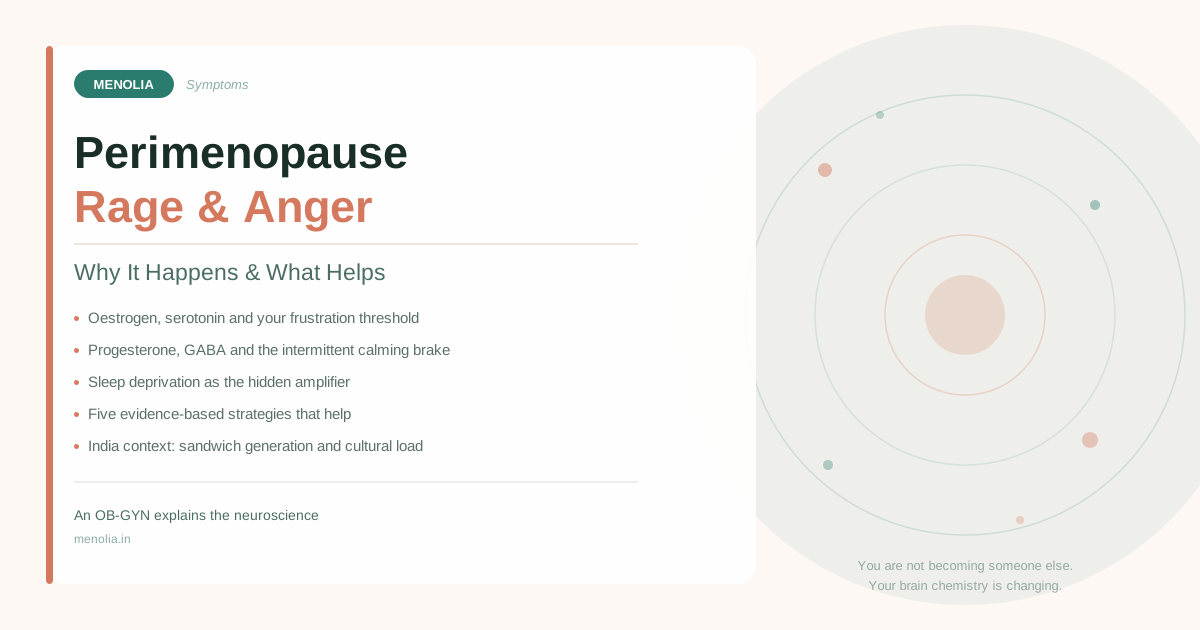
Oestrogen is not only a reproductive hormone. Its receptors are densely expressed in limbic structures such as the amygdala and hippocampus, and in the prefrontal cortex, where oestrogen influences serotonin synthesis and receptor expression (Amin, Canli & Epperson, Behav Cogn Neurosci Rev, 2005, PMID 15886402).
Serotonin plays a critical role in anger regulation. It provides the inhibitory input that the prefrontal cortex uses to put a brake on the amygdala’s threat response. When serotonin signalling is stable, there is a measurable delay between stimulus and reaction. That delay is the space where reason operates, where “this is not worth fighting over” lives.
When oestrogen is stable, the serotonergic system functions smoothly. When oestrogen swings erratically, as it does in perimenopause (not a simple decline, but an unpredictable up-and-down before the eventual fall), serotonin signalling becomes inconsistent. The prefrontal brake weakens. The amygdala fires more easily and with less inhibition. The result is that the gap between trigger and response shrinks to almost nothing.
This is why the woman snapped before she thought. She is not choosing to react this way. The biological system that would have allowed her to choose a different response has temporarily misfired.
An important distinction from post-menopause: after oestrogen has settled at a new stable (lower) baseline, many women find their emotional reactivity actually decreases. The problem is the erratic transition, not simply the lower level.
If you are trying to place these changes within your own timeline, my guide to the stages of menopause explains what usually changes at each stage.
This pattern connects to the broader picture of oestrogen’s effects on the body. Our guide on low oestrogen symptoms explains the full range of changes that falling and fluctuating oestrogen drives.
Progesterone and the GABA Brake
The second biological mechanism is equally important, and it explains something specific about perimenopause rage: why it can strike on days when the woman felt completely fine that morning.
Progesterone, in the second half of each menstrual cycle, is converted in the brain to a neurosteroid called allopregnanolone. Allopregnanolone is a potent positive modulator of GABA-A receptors. GABA is the brain’s primary inhibitory neurotransmitter, and GABA-A receptors are the same receptors targeted by calming medications such as benzodiazepines. Allopregnanolone, in effect, is the body’s own built-in calming system.
Research by Backstrom and colleagues (Bäckström et al., Prog Neurobiol, 2014, PMID 23978486) has detailed how disruptions in allopregnanolone production directly impair emotion regulation. During perimenopause, progesterone production becomes erratic. Some cycles still produce adequate progesterone and therefore adequate allopregnanolone. Others produce very little. Unlike post-menopause, where progesterone has declined consistently, perimenopause creates intermittent losses of this GABAergic support.
The consequence is unpredictability. A woman may feel relatively calm for several days, then experience a day or two of dramatically reduced tolerance. She has not become a more stressful person. Her internal calming system has temporarily lost its chemical support.
This same mechanism partly explains why women with a history of severe PMS, PMDD, or postpartum mood disruption are more likely to experience pronounced rage in perimenopause: their limbic systems are more sensitive to fluctuations in allopregnanolone levels, and perimenopause is a sustained period of such fluctuation.
Sleep Deprivation: The Hidden Amplifier
For many women in their 40s, perimenopause rage does not arise from hormonal biology alone. It arises from hormonal biology operating on a brain that is already sleep-deprived.
Perimenopause frequently disrupts sleep through night sweats, early morning waking, difficulty re-entering deep sleep, and the kind of racing-thought awakening that accompanies the cortisol changes described in our cortisol and perimenopause guide. Even one night of significantly disrupted sleep raises amygdala reactivity measurably, while simultaneously reducing the prefrontal cortex’s capacity to regulate it (Yoo, Gujar, Hu, Jolesz & Walker, Curr Biol, 2007, PMID 17956744).
When the underlying hormonal vulnerability is already lowering the threshold for rage, and sleep deprivation removes another layer of buffering, the combined effect is often what tips a woman from “shorter fuse” into “I don’t recognise myself.”
Addressing sleep is therefore not secondary to managing rage: for many women, it is the most direct intervention. Our guide on perimenopause sleep problems covers the specific sleep architecture changes in this phase and what helps.
The Indian Family Context: Why This Is Harder Here
Perimenopause rage does not happen in a vacuum. For most Indian women in their 40s, it happens inside a family system with a particular structure and set of expectations.
The multi-generational household is still common. A woman at 44 or 47 may be managing her children’s education and emotional needs, her husband’s expectations, her aging in-laws’ health and daily care, and in many cases a full professional life alongside all of this. This is the “sandwich generation” reality: squeezed from both ends, with very little being given back.
Cultural expectation compounds this. The role of the Indian daughter-in-law, wife, and mother centres on absorption: taking in others’ stress, managing others’ emotions, being the stable anchor of the household. Anger in women is socially coded as embarrassing and unwomanly. She has learned to manage, not to express.
When the biological brake slips during perimenopause, there is nowhere for that accumulated load to go except in episodes of explosive release. And then, the shame. “Itna gussa kyun aata hai.” Why so much anger. The question is posed as an indictment.
Understanding the biology does not excuse the episode. But it does change the frame. She is not becoming a more selfish or difficult person. She is experiencing a physiological event on top of an already over-loaded system, without the biological tools she previously had to manage it.
Five Evidence-Based Strategies That Help
1. Exercise: The Strongest Biological Lever
Both aerobic exercise (brisk walking, cycling, swimming) and resistance training are among the most consistently supported non-drug ways to steady mood and stress reactivity during the menopause transition.
You do not need a gym membership. In my experience, many women who walk 30 to 40 minutes on most days notice a real difference in how much they can absorb before snapping within about two to three weeks. On days when rage is building, a walk is not a retreat. It is a direct physiological intervention that changes the neurochemical state driving the problem.
Strength training twice a week adds another layer: it stabilises blood sugar (which, when fluctuating, amplifies irritability), reduces cortisol reactivity, and has independent benefits for sleep quality.
For more on the evidence base, read our guide on menopause and strength training.
2. Treat Sleep as Medicine, Not a Luxury
If the rage episodes are worst on days following poor sleep, that is data. Sleep hygiene for perimenopause rage means prioritising the sleep environment: a cooler room (or a lightweight cotton duvet that can be shed during a night sweat), a consistent wake time even on weekends, avoiding caffeine after noon, and not lying in bed trying to force sleep when the mind is active.
For women whose sleep disruption is primarily from night sweats or hot flashes, addressing the vasomotor symptom directly (through lifestyle adjustments or, if needed, medical options) reduces the rage risk by restoring the sleep quality that acts as a buffer.
3. Build a Two-Second Window
This is not about anger suppression. Suppression does not work and adds to the pressure. This is about creating a small enough pause for the prefrontal cortex to have a chance to engage.
The STOP technique from dialectical behaviour therapy is simple: Stop (physically pause what you are doing), Take one slow breath, Observe (scan quickly: am I hungry? have I slept poorly? am I already overwhelmed before this trigger arrived?), Proceed with awareness. The purpose of the “Observe” step is not self-analysis in the moment. It is recognising that the trigger may be small while the internal state is already loaded. That recognition alone can change the response.
This is a skill that improves with practice on low-stakes days, so it becomes available on high-stakes ones.
4. Pranayama Before Predictably Stressful Situations
If you know that certain times of day or certain situations reliably amplify your reactivity (school pickup traffic, the evening hour when everyone arrives home hungry, a family gathering with difficult dynamics), five minutes of Bhramari pranayama (humming bee breath) beforehand reduces sympathetic nervous system activation.
Bhramari specifically: close the eyes, block the ears gently with the thumbs, and hum steadily on the out-breath for 5 to 8 breath cycles. The humming is thought to stimulate vagal afferents. Slow, controlled breathing like this reduces sympathetic (‘fight or flight’) activation and shifts the body toward a calmer parasympathetic state, usually within minutes (Zaccaro et al., Front Hum Neurosci, 2018, PMID 30245619).
Sheetali (cooling breath, where you inhale through a rolled tongue) is traditionally used for heat symptoms, and is low-risk to try when a rage episode brings a wave of physical heat with it.
5. Have an Honest Conversation with Your OB-GYN
If the rage episodes are significantly affecting your relationships, your sense of yourself, or your daily quality of life, that is clinical information that deserves a clinical response. This is not a failure of willpower.
When a 44-year-old with regular cycles comes to me with new rage, I do not begin by attributing every symptom to hormones. I first check TSH, ferritin and haemoglobin, vitamin B12, and vitamin D. Iron deficiency is very common among Indian women, and thyroid dysfunction and these deficiencies can mimic and worsen the same symptoms. These tests are inexpensive and widely available across India, so they are worth ruling out before deciding what role perimenopause is playing.
Some women benefit from hormonal support: menopausal hormone therapy (MHT) stabilises the erratic oestrogen and progesterone fluctuations that are driving the episodes. For women where MHT is not indicated or not preferred, SSRIs and SNRIs work on the serotonin system more directly and can meaningfully reduce the intensity and frequency of rage episodes. Low-dose preparations are often used in this context.
If rage is arriving alongside persistent low mood, loss of interest, or withdrawal, my guide to menopause and depression can help you recognise when the picture needs a closer clinical look.
Your OB-GYN can assess where you are in the perimenopause transition, which hormonal pattern may be contributing, and what options suit your specific situation. For a broader overview of what is available, our guide on perimenopause treatment covers the full range.
If these rage episodes are making you feel unlike yourself, you do not have to work out the pattern alone. WhatsApp Dr. Suganya on +91 99402 70499. I can look at your symptoms, cycle changes, sleep, and health history in an online consultation over a video call, available pan-India. If ongoing support would help, you can also read about Menolia’s Perimenopause Program.
Supporting the Brain Through Food
Indian kitchens already contain most of what the brain needs to support serotonin and GABA function during perimenopause. These are not treatments for rage, but they reduce the nutritional vulnerability that makes the hormonal disruption more pronounced.
Tryptophan-rich foods (serotonin precursor): dahi, rajma, chana, moong dal, paneer, eggs. Including a protein source at each meal keeps up the steady supply of the amino acid serotonin is built from.
Magnesium-rich foods (supports GABA function): ragi, kaddu ke beej (pumpkin seeds), til (sesame), aakhrot (walnuts). Ragi is particularly practical as a daily staple: a bowl of ragi kanji or ragi roti at breakfast sets a good foundation.
Vitamin B6 (serotonin cofactor): chana, rajma, banana. B6 is essential for the conversion of tryptophan to serotonin.
Reduce caffeine after noon. Chai and coffee are a significant part of Indian social life, but afternoon caffeine delays sleep onset and worsens the sleep disruption that amplifies rage the following day. Switching to jeera water, coriander water, or chamomile tea after lunch is a practical adjustment.
These nutritional supports work most effectively when combined with the behavioural strategies above. A meal plan alone will not resolve perimenopause rage. But it removes one layer of biological vulnerability.
Frequently Asked Questions
Is perimenopause rage real, or am I just under too much stress? Perimenopause rage is real: hormonal fluctuations can lower the brain’s threshold for anger, while stress can intensify the response. The two often interact, so reducing controllable stressors still helps.
Why does my anger feel so out of proportion to the trigger? Because the trigger is small but the biological state is already loaded. Disrupted sleep, cortisol reactivity, and reduced serotonin buffering all lower the threshold before the trigger even arrives. The trigger is the last straw, not the cause. This is why women often describe feeling “primed” for rage before anything has happened.
Is this different from the general mood changes in perimenopause? Yes. General irritability, discussed in our perimenopause mood changes guide, is a persistently shorter fuse, while rage is a sudden, intense episode that often returns quickly to baseline.
How long does a perimenopause rage episode usually last, and what can I say to my family in the moment? Most episodes crest and pass within roughly 20 to 30 minutes. I usually suggest a short line your household already understands, such as “I need ten minutes,” followed by physically stepping away so nobody escalates the moment by reacting to it. Agree on that line when everyone is calm, because naming the need in advance works far better than trying to explain yourself mid-episode.
Can perimenopause rage damage my relationships? The episodes themselves can. More damaging, however, is the shame cycle that follows: the woman withdraws, over-apologises, becomes hypervigilant, and then feels the rage building again. Breaking the shame cycle with understanding of the biology, and communicating that understanding to close family members, is often more protective of relationships than any single management strategy.
Will the rage stop once menopause is complete? For most women, yes. Post-menopause brings a new hormonal baseline that, while lower, is more stable. The erratic fluctuations that drive the most severe episodes diminish as oestrogen and progesterone settle. Many women find that their emotional reactivity actually becomes more predictable after the transition is complete. The perimenopause years are typically the hardest.
Is HRT an option for rage and emotional dysregulation? It can be. Menopausal hormone therapy stabilises the hormonal fluctuations that are the primary driver. If the rage is specifically hormonal in pattern (worse in the premenstrual week, variable with cycle timing), MHT is often particularly effective. Non-hormonal options including SSRIs work on the serotonin pathway more directly and are another evidence-based approach. This is a conversation to have with your OB-GYN, who can assess your specific hormonal pattern and health history.
When should I see a doctor? When the rage episodes are affecting your relationships or your quality of life. When you are frightened by your own reactions. When you are withdrawing from people or activities you used to enjoy in order to avoid situations that might trigger an episode. These are functional impacts, and functional impacts are clinical indications. You do not need to manage this alone.
Perimenopause rage is one of the most disorienting experiences of this phase precisely because it feels so personal. It arrives wearing your own face and using your own voice, and then it leaves you standing in your kitchen asking what just happened.
What happened has a biology. And biology can be addressed.
If rage and emotional reactivity are making daily life feel unfamiliar, I am here to help you make sense of the pattern.
WhatsApp Dr. Suganya on +91 99402 70499. I will listen to what has been changing and help you work through the next step in an online consultation over a video call, available pan-India.