You notice a small bloodstain after more than a year without periods. Or your heart races during a hot flush and you wonder whether to wait for it to pass. The difficult question is often not what to call the symptom, but where to go and how soon.
My advice is to separate symptoms needing emergency care from those needing a booked examination. Menopause can be part of the history without explaining everything. You can ask for help without first proving that a symptom is serious.
First, Check the Urgency
| What is happening? | What to do |
|---|---|
| Chest pain with breathlessness, or ongoing palpitations with chest pain, breathlessness or fainting | Seek emergency care now. In India, call 112; do not drive yourself. |
| You may act on thoughts of self-harm, have already harmed yourself or cannot stay safe | Call 112 or go to the nearest emergency department now. Ask someone you trust to stay with you. |
| Severe hip pain after a fall or inability to bear weight | Seek emergency care now; do not try to walk it off. |
| Bleeding after menopause or a new breast lump | Contact a local doctor promptly to arrange examination. These usually need an appointment, not an ambulance, unless you are also acutely unwell. |
| Continuing weight loss without trying | Arrange medical review, sooner if there are other symptoms. |
| Bladder leaks affecting your life | Book a routine treatment appointment; longstanding leaks alone are not an emergency. |
| New one-sided leg pain or swelling, especially while using HRT | Seek urgent medical advice now; chest pain or breathlessness means emergency care. |
| Sudden trouble speaking, facial droop or difficulty moving an arm or leg | Call 112 now, whether or not you use HRT. |
These distinctions draw on the NHS palpitations guidance, hip-fracture guidance and the Government of India’s suicide-prevention guidance. Details for the other symptoms follow below. This is not an exhaustive emergency checklist. If you feel acutely unwell, seek local urgent care rather than waiting for an online reply.
The clot and stroke warning signs above are also listed in the NHS oestrogen-medicine safety guidance. Bring your medicines to the assessment.
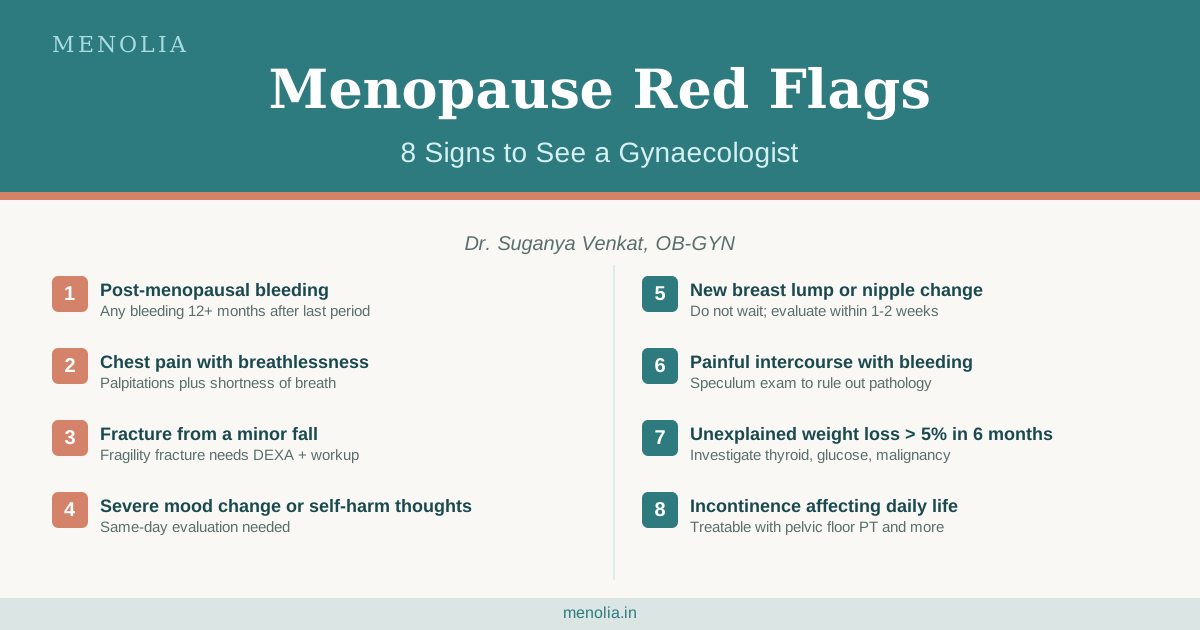
Eight Reasons to Seek Care, With Different Urgency
The word “red flag” should not make every symptom sound like an emergency. The list includes urgent warning signs and, at number 8, a quality-of-life problem worth treating.
1. Any bleeding 12 months after your last period
Bleeding after 12 consecutive period-free months is called postmenopausal bleeding. Spotting, pink or brown discharge, and a single small episode all count. Contact a local gynaecologist or general physician promptly; do not wait for it to happen again (NHS postmenopausal bleeding guidance).
There are several possible causes, including thinning vaginal or womb-lining tissue and polyps. Most women with this symptom do not have cancer. In a systematic review, the pooled risk of endometrial cancer among women with postmenopausal bleeding was 9% (95% confidence interval 8% to 11%), with variation between settings (Clarke et al., JAMA Internal Medicine, 2018, PMID 30083701). That supports checking every episode, rather than assuming either cancer or harmless dryness.
An assessment may include a vaginal and cervical examination, transvaginal ultrasound and sampling of the womb lining. Ask whether ultrasound alone is sufficient in your case. ACOG’s April 2026 update recommends both ultrasound and endometrial tissue sampling for most patients with postmenopausal bleeding. “Most” does not mean every patient must have a biopsy. This is US guidance, not an Indian national protocol; your gynaecologist should explain whether sampling is needed in your situation, the alternatives and your preferences. The update is indexed as PMID 41990335.
Tell the doctor about HRT, blood-thinning medicines and previous scan or biopsy results. If bleeding continues or returns after an assessment, contact the doctor again rather than relying on the earlier scan.
Act: I would prioritise booking the examination over buying a menopause blood-test package. At a hospital, ask for the gynaecology OPD for postmenopausal bleeding, and say when it happened even if it has stopped. For the symptom itself, see our postmenopausal bleeding guide; the 2026 investigation advice above is important when discussing a scan result.
2. Chest symptoms or palpitations with breathlessness or fainting
Palpitations can occur during menopause, but other causes include anaemia, thyroid overactivity and heart-rhythm problems. A hot flush happening at the same time does not establish the cause.
Act now: If palpitations are ongoing or accompanied by chest pain, shortness of breath or fainting, seek emergency care. Chest pain with breathlessness needs the same response. Call 112 in India rather than waiting until evening or sending a routine WhatsApp message. Do not drive yourself. If these warning symptoms have stopped, seek urgent medical advice rather than dismissing the episode (NHS palpitations guidance).
If you feel well but palpitations keep recurring, become more frequent or last more than a few minutes, book a medical assessment. A clinician may arrange an ECG and other tests based on the history. A general physician or emergency team is the right first contact for concerning heart symptoms; you do not need to wait for a gynaecologist.
Our menopause heart-palpitations guide has more background, but the emergency instructions above take priority.
3. A fracture after a minor fall or impact
A fall from standing height or less can cause a fragility fracture. The immediate injury needs treatment first. Severe hip pain after a fall or inability to stand or bear weight needs emergency assessment, as described in the NHS broken-hip guidance.
After the injury is treated, ask about bone-health assessment. A cast or operation addresses the break; the follow-up should also consider why it happened and how to prevent another one. A fracture history, medicines, nutrition, falls risk and bone density may all matter. A hip or vertebral fracture can justify osteoporosis treatment regardless of the bone-density result (LeBoff et al., BHOF clinician’s guide, 2022, PMID 35478046). You should not have to wait for a DXA result before the fracture itself is treated.
Act: My priority here is the injury first, bone-health follow-up second. Ask the treating orthopaedic team who will organise that follow-up before you leave. Take any previous scans or fracture records. Our osteoporosis prevention guide explains the separate bone-health plan.
4. Thoughts of self-harm or feeling unable to stay safe
You deserve support with distress, whatever role menopause may be playing. You do not need to decide whether the feelings are hormonal before seeking help.
If you might act on thoughts of self-harm, have already harmed yourself or cannot stay safe, call 112 or go to the nearest emergency department now. Ask a trusted person to stay with you and help put distance between you and anything you could use to hurt yourself.
For mental-health support in India, Tele-MANAS is available free, 24 hours a day, on 14416 or 1800-891-4416. The Government of India’s suicide-prevention resource, page 8, confirms these numbers and distinguishes support from immediate-danger care.
Act: Reach out now if you have self-harm thoughts, even without a plan. Persistent low mood, withdrawal or hopelessness also deserves a mental-health appointment. A psychiatrist and gynaecologist can work together; emergency support should not wait for a menopause consultation. Our menopause and low-mood guide is background reading, not a crisis service.
5. A new breast lump or nipple change
A new breast or armpit lump, skin dimpling, a nipple newly turning inward or unexplained nipple discharge needs examination. You cannot reliably decide what a lump is by whether it hurts or feels soft.
Most breast lumps are harmless, but assessment may include examination, mammography or ultrasound and, if needed, a biopsy (NHS breast-lump guidance). India’s National Cancer Grid breast guideline (2019), page 4, describes a “triple test”: clinical examination, appropriate breast imaging and tissue assessment. Its pathway distinguishes simple cysts, which may be observed, from solid or suspicious lesions needing biopsy.
Act: Contact a local doctor or breast clinic promptly to arrange assessment. Do not wait for your next screening mammogram. When booking, say that you have a new breast symptom, so the service understands this is a diagnostic appointment rather than routine screening. If your district hospital has no separate breast clinic, ask the registration desk which surgery OPD handles breast lumps. A general physician can help arrange referral if the necessary imaging or biopsy is unavailable locally. Ask who will review all the results together.
6. Bleeding during or after intercourse
Dry, thin vaginal tissue can bleed, but bleeding should not automatically be attributed to dryness. The cervix and womb lining may also need assessment. The ACOG abnormal-bleeding guidance includes bleeding after sex among patterns that need attention.
A speculum examination lets the clinician inspect the vagina and cervix. Further tests depend on what is found and whether you are postmenopausal. Cervical screening checks cells from the cervix, not the womb lining. A recent normal screening result is not a substitute for the examination of new symptoms described in the NHS symptom guidance.
Act: Arrange a local gynaecology examination. If you are postmenopausal, follow the prompt assessment advice in section 1. Ask about comfort measures, a chaperone and the option to pause the examination. There is no need to continue intercourse that hurts while awaiting help.
For the dryness-and-pain part of the problem, read painful intercourse after menopause. Bleeding still needs its own evaluation.
7. Continuing weight loss without trying
If your weight keeps falling without an intentional change in food or exercise, book a medical review. Stress, appetite changes, medicines, thyroid problems and digestive conditions are among the possible explanations. Sometimes the cause needs further investigation (NHS unintentional weight-loss guidance).
You do not need to wait until you have lost a particular percentage or until six months have passed. Take dated weights if available, note changes in appetite or swallowing, and bring your medicine list. Even if you have been stressed or eating less, continuing loss deserves discussion.
Act: Arrange an assessment; seek advice sooner if weight loss comes with other symptoms. A general physician is a useful first contact because the possible causes extend beyond gynaecology. Tests should follow the history and examination rather than a self-ordered package.
8. Bladder leaks: a routine treatment need, not usually a red flag
If you plan outings around toilets, avoid exercise because of leaks or rely on pads every day, it is reasonable to ask for treatment. You can also seek help for milder leaks; there is no minimum severity you must tolerate first.
Urinary incontinence has different forms. Leaking with a cough or sneeze differs from leakage with sudden urgency, and some women have both. The NHS incontinence guidance recommends assessment for any type and explains options including pelvic-floor exercises, bladder training, medicines and selected procedures.
A Cochrane review supports pelvic-floor muscle training as a first-line conservative option, with the strongest evidence for stress incontinence (Dumoulin et al., 2018, PMID 30288727). The exercise plan should fit the diagnosis rather than assuming every leak means you need more squeezing exercises.
Act: Book a routine appointment with a gynaecologist, general physician or urogynaecology service. Ask whether pelvic-floor physiotherapy is appropriate. A diary of drinks, toilet trips and leaks can help the consultation. Our bladder-leaks guide explains the symptom patterns.
Another symptom pattern to mention: persistent new bloating
New, frequent bloating, a swollen abdomen, feeling full unusually quickly or persistent pelvic discomfort also deserves assessment. These symptoms have many possible causes, including ovarian disease; they should not simply be attributed to menopause. The NHS ovarian-symptom guidance advises review and reassessment if symptoms persist or become more frequent. Note when they started and bring that pattern to your doctor.
For non-emergency menopause symptoms after arranging any needed local assessment, message Dr. Suganya about an online consultation. Please use urgent local care for the warning signs above rather than waiting for a reply.
How to Prepare for the Appointment
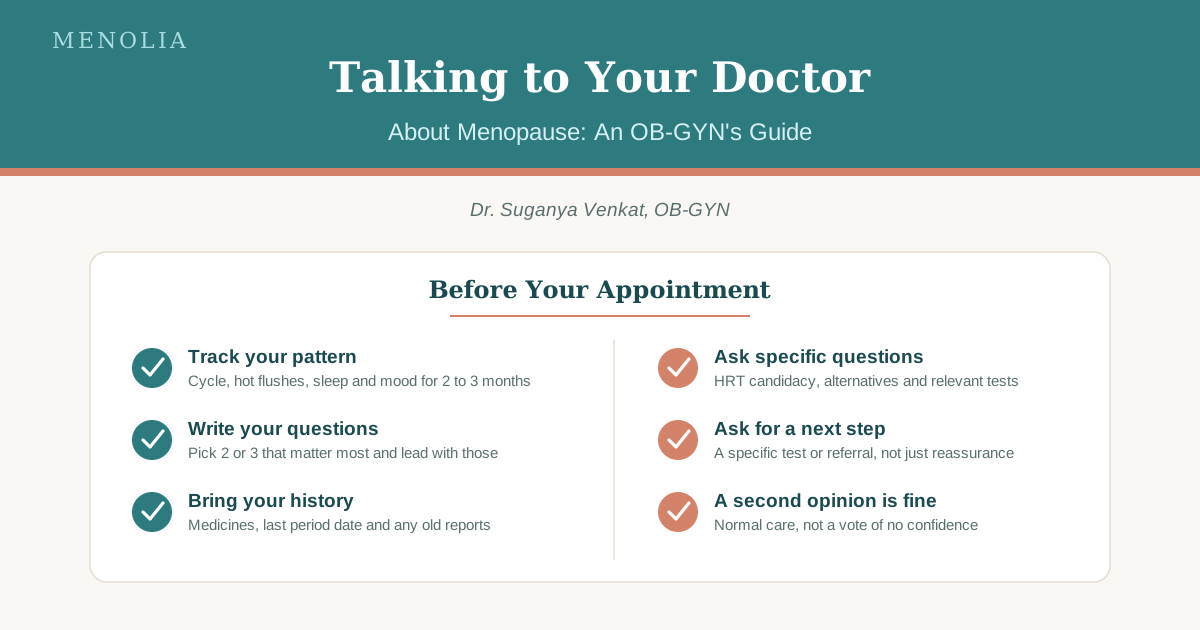
Write down four things: what happened, when it began, whether it is changing, and what you want help with. “One episode of spotting after 14 months without periods” is useful detail. You do not need medical terminology.
I suggest keeping the notes and reports in one folder, so you can use the same information at an online consultation and a local hospital visit. Bring current medicines, including HRT and supplements, previous reports and the date of your last period if known. Ask:
- What are the likely explanations, and what needs ruling out?
- Do I need a physical examination or test, and what will it change?
- Who will give me the result, and by when?
- What should make me seek help sooner?
If symptoms persist after a reassuring assessment, return with an update. You can ask for a second opinion without assuming the first clinician was dismissive or wrong.
In India, you can contact a local government hospital OPD, general physician or appropriate specialist service. Call the hospital to check its booking and referral process. Before paying for tests, ask for an itemised estimate: consultation, ultrasound or mammogram, sampling procedure and the laboratory examination of the sample may be separate charges. Ask which are needed now and which depend on an earlier result. For emergencies, go to casualty or the emergency department instead of waiting for an OPD slot.
Routine Screening Is a Separate Conversation
A new lump or bleeding needs diagnostic assessment, even if screening is up to date. For someone without symptoms, screening is planned around age, history, previous results and risk factors. Menopause alone is not a reason to buy a universal package of DXA, thyroid, vitamin and other blood tests.
For example, the BHOF bone-health guide, PMID 35478046, recommends bone-density testing from age 65 in women, or earlier after menopause according to risk, rather than automatically at the last period. Ask your clinician which checks apply to you and why.
Frequently Asked Questions
I had spotting once, 14 months after my last period. Should I still be checked?
Yes. Contact a local doctor promptly even if it stopped. Spotting counts as postmenopausal bleeding. Ask about the full evaluation, not just whether a scan measurement looks thin.
My heart races with hot flushes. Can I assume it is menopause?
No. If palpitations are ongoing or occur with chest pain, breathlessness or fainting, seek emergency help. If you feel well but episodes keep recurring, arrange medical review.
I am still having periods. Can heavy or irregular bleeding be dismissed as perimenopause?
Cycle changes can occur during the transition, but heavy bleeding, bleeding between periods or after sex, and prolonged bleeding deserve review. The ACOG abnormal-bleeding guidance advises emergency care if you are changing a pad or tampon every hour for more than two hours and also have chest pain, shortness of breath, light-headedness or dizziness. You need not wait for 12 period-free months to ask about abnormal bleeding.
Can I use WhatsApp to decide whether this is an emergency?
Please follow the emergency instructions above instead of waiting for a reply. Menolia’s online consultations can support non-emergency menopause care, but cannot replace a local breast or pelvic examination, injury assessment or emergency service.
What support is available after an urgent cause has been assessed?
Dr. Suganya offers online consultations, pan-India, for ongoing menopause symptoms and care planning. You can discuss a one-off consultation or continuing support through the Menolia menopause program. This works alongside local examinations and specialist treatment when needed.
Message Dr. Suganya about a non-emergency menopause consultation
The next step need not be the same for every symptom. Emergency care now, a prompt examination or a routine treatment appointment can each be the right choice. Use the symptom and how you feel, rather than the word “menopause”, to guide that decision.