She came in at the end of a busy clinic afternoon, last on the list. She had written “routine check” on the appointment form.
Fifteen minutes into the consultation, I asked if there was anything else she wanted to mention. She hesitated, then said she had noticed some bleeding. It had started three weeks ago. Light, she said. Probably nothing. She had waited to see if it would stop on its own.
She was 52. Her last period had been two years earlier.
She had waited three weeks not because she did not know something was off, but because she was afraid of what it might mean. This is one of the most common patterns I see with post-menopausal bleeding in my clinic: women who know something is wrong and postpone coming in because the knowing is frightening.
For more on this, read our guide on Discharge After Menopause. The good news is that the vast majority of post-menopausal bleeding has a benign cause. Atrophy of the vaginal or endometrial lining, small polyps, or hormonal medication effects account for most cases. But the same symptom can, in a smaller number of cases, be the first and only sign of endometrial cancer. That is exactly why it must always be investigated, even when it seems mild or brief.
This post explains what post-menopausal bleeding is, what the most common causes are, which investigations your doctor will recommend, and what you should do first.
For more on this, read our guide on Abnormal & Heavy Bleeding in Perimenopause.
What This Post Covers
This post explains the definition of post-menopausal bleeding, the most common causes ranked from most to least frequent, when to seek medical attention and when to act immediately, what investigations to expect, and how to prepare for your appointment. If you are currently experiencing any bleeding after menopause, please read the section on when to see a doctor before anything else.
For more on this, read our guide on Menopause Breast Tenderness.
What Post-Menopausal Bleeding Actually Means
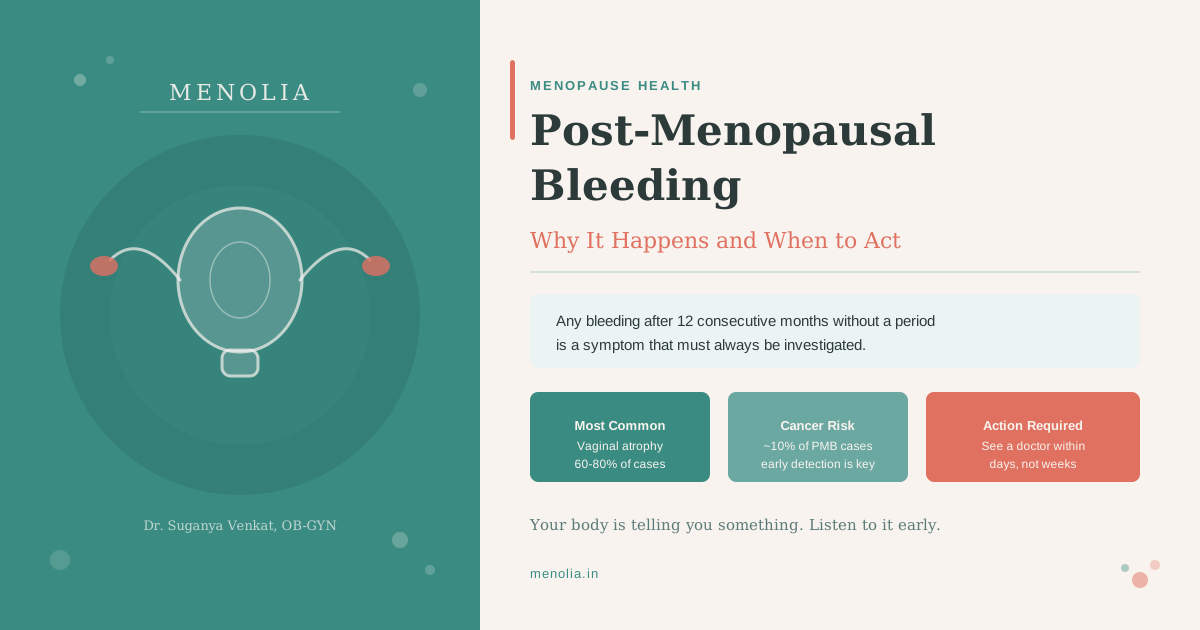
Menopause is confirmed when you have gone twelve consecutive months without a period. Any bleeding that occurs after that twelve-month mark is called post-menopausal bleeding. This includes:
- Fresh red bleeding, even a small amount
- Brown or dark spotting
- Pinkish discharge that is clearly blood-tinged
It does not matter how light the bleeding is, how brief it was, or whether it has already stopped. Once you have reached that twelve-month point, any bleeding is a symptom that needs a medical evaluation.
This is different from perimenopause spotting, which is the irregular, often unpredictable bleeding that occurs while you are still in the menopausal transition. If you are still within the transition and experiencing irregular cycles, our post on perimenopause spotting: what’s normal and when to worry covers that phase specifically.
In India, the average age of menopause is 46 to 48 years (Ahuja M, J Midlife Health 2016, PMID 27721640). This means many Indian women reach this milestone earlier than their counterparts in Western countries. If you had your last period in your mid to late 40s and are now experiencing bleeding in your 50s, the twelve-month definition still applies from the date of your last period.
The Most Common Causes
Most post-menopausal bleeding has a benign cause. Here are the main possibilities, starting with the most common.
Vaginal and endometrial atrophy (the most frequent cause)
When oestrogen levels fall, the tissues lining the vagina and uterus become thinner, less elastic, and more fragile. Minor friction (from a vaginal examination, a bowel movement, or sometimes nothing obvious at all) can cause this thinned tissue to bleed. This is called atrophy, and it accounts for the majority of post-menopausal bleeding cases in clinical series, with estimates placing it at 60 to 80 percent of presentations.
The bleeding from atrophy is typically light. It may appear as pinkish spotting or a small amount of fresh blood. It often settles on its own, but it does not disappear permanently without treatment. If left unaddressed, the atrophic changes continue to progress. Our post on vaginal dryness after menopause explains the underlying mechanism and available treatments in detail.
Endometrial and cervical polyps
Polyps are soft, non-cancerous growths that form on the inner lining of the uterus (endometrial polyps) or on the cervix (cervical polyps). They are common in post-menopausal women and typically cause light, intermittent bleeding. The vast majority are benign, but all polyps need to be assessed because a small percentage can contain areas of abnormal cells. Polyps are usually identified on a transvaginal ultrasound and removed under a brief procedure called a hysteroscopy.
Endometrial hyperplasia
This is an overgrowth of the uterine lining. It falls into a spectrum: some forms are benign and resolve with treatment, while others carry a risk of progressing to cancer if not managed. Hyperplasia is associated with prolonged oestrogen exposure without progesterone balance. Women who are overweight, who have a history of PCOS, or who are on oestrogen-only hormone therapy may have a higher background risk, though it can occur across a range of profiles.
Hormone replacement therapy (HRT)
Women taking combined (oestrogen plus progesterone) HRT, particularly in cyclic regimens, may experience scheduled withdrawal bleeds. This is not post-menopausal bleeding in the concerning sense; it is a predictable response to the medication regimen and should be discussed with your prescribing doctor. Unexpected or unscheduled bleeding while on HRT, however, always warrants investigation regardless of the regimen.
Uterine fibroids
Fibroids are non-cancerous muscle growths in the uterine wall. They are more common before menopause and often shrink significantly after the oestrogen fall. However, fibroids that persist into post-menopause can occasionally cause bleeding, particularly if they project into the uterine cavity. These need to be assessed to rule out concurrent pathology.
Endometrial cancer
This is the cause women are most concerned about, and it is important to state the risk accurately. About 9 percent of women who report post-menopausal bleeding are found to have endometrial cancer on investigation (Clarke et al., JAMA Internal Medicine, 2018, PMID 30083701). This means 90 percent of cases are benign. But it also means that endometrial cancer is not rare in this presentation, and that it is the gynaecological cancer post-menopausal bleeding is most often investigated for. It is worth correcting a common impression here: in India the most common gynaecological cancer is cervical cancer by a wide margin, not endometrial (National Cancer Registry Programme, ICMR: cervix uteri around 10.6 percent of cancers in women versus corpus uteri around 3.7 percent). That does not make this symptom less important. It means bleeding after menopause needs looking at whatever the cause turns out to be.
Endometrial cancer is also one of the most treatable cancers when caught early. Early-stage disease (which is most commonly detected because a woman reported bleeding promptly) has excellent outcomes. The risk of a poor outcome rises significantly when investigation is delayed.
This asymmetry is why every post-menopausal bleed must be investigated: most cases are reassuring, and for the small percentage that are not, early detection is the single most important factor in treatment outcome.
If you are currently experiencing post-menopausal bleeding and have not yet spoken to a doctor, message Dr. Suganya on WhatsApp to discuss your symptoms and arrange an evaluation.
When to See a Doctor: Act Now vs. Act Quickly
All post-menopausal bleeding requires a medical appointment. The question is how soon.
See a doctor within a few days (do not wait weeks):
- Any amount of fresh red bleeding after twelve months without a period
- Light spotting or pinkish discharge, even if it has already stopped
- Recurrent episodes of brief bleeding
Seek urgent same-day or emergency care if any of the following apply:
- Heavy bleeding (soaking a pad within an hour or less)
- Bleeding accompanied by significant pelvic pain or cramping
- Bleeding with fever
- Bleeding accompanied by feeling faint or lightheaded
In India, access to a gynaecologist varies between urban and rural settings. If you are in a city with good healthcare access, do not delay your appointment past a week. If there is a travel barrier, a teleconsultation with an OB-GYN is a reasonable first step to discuss urgency and next steps.
One pattern I see frequently: women who know the bleeding is not normal but delay telling anyone in the family, or delay the clinic visit, because they do not want to worry their relatives or because they assume the news will be bad. Both of these reasons work against your health. Early investigation is almost always reassuring. When it is not reassuring, the earlier you know, the better your options.
What Investigations to Expect
Your doctor will take a full history and will ask about the bleeding itself: when it started, how much, what colour, whether it was associated with any pain or activity, and what medications you are currently taking (including HRT, blood thinners such as aspirin, and any supplements).
The main investigations are:
Transvaginal ultrasound (TVUS)
This is typically the first investigation. The ultrasound measures the thickness of the endometrium (the uterine lining). In post-menopausal women who are not on HRT, an endometrial thickness of less than 4 millimetres is strongly reassuring: research by Karlsson et al. (1995, Lancet) established that this threshold carries a negative predictive value of over 99 percent for endometrial cancer. If the endometrium is thicker than 4 millimetres, or if the measurement is unclear, further investigation is needed.
For more on this, read our guide on Endometrial Thickness After Menopause. The scan also checks the ovaries and the cervix, and can identify polyps or fibroids that may explain the bleeding.
Endometrial biopsy or sampling
If the ultrasound shows a thickened or irregular endometrium, or if bleeding recurs after a normal ultrasound, a tissue sample from the endometrium is taken. This can be done in clinic using a thin sampling device (pipelle biopsy) without anaesthesia, or under a hysteroscopy. The sample is sent to pathology to check for abnormal cells.
Hysteroscopy
A hysteroscopy allows the inside of the uterus to be viewed directly using a thin camera. It is the most accurate way to identify and remove polyps and to take targeted biopsies of any areas that appear abnormal. It can often be done as a day procedure.
Cervical smear (if overdue)
Your doctor will check whether your cervical smear is up to date and will take one if needed. Bleeding can occasionally originate from the cervix rather than the endometrium, and an up-to-date smear is a basic part of the workup.
The Atrophy Connection: What Happens After a Benign Result
If investigations confirm that the bleeding is from vaginal or endometrial atrophy, this is good news in the sense that there is no sinister underlying cause. It is not a signal to do nothing, because atrophy is progressive and manageable with treatment (not something to leave unaddressed).
Local oestrogen therapy (in the form of a vaginal cream, ring, or pessary) is the most effective treatment for atrophic bleeding. It works by restoring some oestrogen to the local tissue without significant systemic absorption. Most women find it significantly reduces bleeding and also improves the vaginal dryness, discomfort, and recurrent urinary tract infections that often accompany atrophy.
Our post on menopause and UTIs covers the connection between atrophy and bladder symptoms in more detail. If you want to understand the full picture of what changes in the post-menopausal years, our post on post-menopause: what to expect covers the broader changes across all body systems.
Understanding the hormonal root of all these changes is also useful: our post on low oestrogen symptoms explains what oestrogen deficiency does across different tissues and why the fall triggers such a wide range of symptoms.
What You Can Do While Waiting for Your Appointment
If you have booked a gynaecology appointment and are waiting for your slot, a few practical things are helpful.
Keep a brief bleeding diary. Note the dates any bleeding occurred, roughly how much (a few drops on tissue paper vs. soaking a pad), whether it was associated with anything (physical activity, bowel movement, or sexual intercourse), and the colour. This history is valuable to your doctor and helps distinguish a one-time episode from a pattern.
Note any other symptoms alongside the bleeding. Pelvic pain, pressure, swelling, or urinary changes alongside bleeding are all worth mentioning at your appointment. Bleeding after sexual intercourse is a specific symptom to flag: while it can occur with atrophy, it also warrants cervical assessment.
Do not avoid the appointment. The fear of a bad result is understandable, but a delayed result is almost always a worse result than an early one. Endometrial cancer caught at Stage 1 has excellent survival outcomes. The same disease caught at Stage 3 or 4 (often after months of delayed presentation) does not.
Eat to support your body while you wait. The low-oestrogen environment of post-menopause affects general cellular resilience. Foods high in phytoestrogens (alsi/flaxseeds, til/sesame seeds, dahi/curd) provide gentle plant-based oestrogen analogues. Haldi (turmeric) is a well-studied anti-inflammatory. Amla (Indian gooseberry) supports vitamin C status, which matters for tissue repair. These are supportive dietary choices, not treatments for bleeding, but they support overall health during the investigation period.
Action Steps
- If you have had post-menopausal bleeding and have not yet seen a doctor: book a gynaecology appointment this week.
- If the bleeding is heavy, or accompanied by pain or fever: seek same-day care.
- If you are taking HRT: contact your prescribing doctor to discuss whether the bleeding pattern is expected or requires investigation.
- Bring your full medication list to your appointment, including supplements and over-the-counter medications.
- Keep a brief diary of the bleeding pattern from today until your appointment.
Have questions about post-menopausal bleeding, or want to arrange an evaluation with Dr. Suganya? Send a message on WhatsApp for personalised guidance.
Frequently Asked Questions
Is any post-menopausal bleeding normal?
No. Any bleeding after twelve consecutive months without a period is not a normal part of menopause and must be investigated. It may have a benign cause, and many investigations come back completely reassuring. But there is no threshold below which post-menopausal bleeding can safely be ignored. Light spotting that stops quickly requires the same evaluation as heavier bleeding.
What is the most common cause of post-menopausal bleeding?
Vaginal and endometrial atrophy is the most common cause, accounting for the majority of post-menopausal bleeding cases. The tissues of the vagina and the lining of the uterus both thin significantly after the oestrogen fall of menopause, and minor friction or pressure can cause these thinned tissues to bleed. This is a treatable and manageable condition. However, a benign cause cannot be assumed: investigation is needed to confirm it.
How soon do I need to see a doctor?
Within a few days to a week for most cases of light spotting. If the bleeding is heavy, associated with pelvic pain, or accompanied by fever or faintness, seek same-day or emergency care. Do not wait several weeks to see if it resolves on its own. Early investigation is far more useful than watchful waiting in this context.
What will the doctor do at my first appointment?
Your doctor will take a detailed history and is likely to arrange a transvaginal ultrasound as the first investigation. This scan measures the thickness of the endometrium and can identify polyps or fibroids. Depending on the findings, an endometrial biopsy or hysteroscopy may follow. Your cervical smear status will also be checked.
I am on HRT and had some bleeding. Is that normal?
Women on cyclic (sequential) HRT often have scheduled withdrawal bleeds as part of their regimen. These are expected and are not the same as pathological post-menopausal bleeding. However, any unscheduled or unexpected bleeding while on HRT (bleeding that does not match the pattern your doctor described when prescribing) should be reported and investigated. If you are on continuous combined HRT, any bleeding beyond the first three to six months warrants assessment.
My bleeding stopped on its own after two days. Do I still need to see a doctor?
Yes. The fact that bleeding resolved on its own does not mean the underlying cause has resolved. Atrophy will bleed again. Polyps will bleed again. And if the cause is endometrial pathology, early investigation while any abnormality is at an early and treatable stage is the most important factor in outcomes. A one-time brief episode still requires evaluation.
Can post-menopausal bleeding be prevented?
Atrophic bleeding can often be reduced or prevented with local oestrogen therapy, which restores some oestrogen to the vaginal and endometrial tissues. Maintaining a healthy body weight is also relevant: adipose (fat) tissue produces oestrogen from androgens, and women with higher body weight tend to have higher circulating oestrogen, which is associated with a higher risk of endometrial hyperplasia. This does not mean excess body weight causes bleeding directly; it means body weight is one of the factors that influences the hormonal environment of the endometrium. Regular gynaecological follow-up after menopause is the most reliable safeguard against delayed diagnosis of any cause.