You asked your doctor for a blood test. The report came back and now you are sitting with numbers on a page.
FSH: 47 IU/L. LH: 33 IU/L. Oestradiol: 14 pg/mL. Maybe an AMH value too, somewhere near zero. And alongside all of that, a TSH, a B12, a vitamin D. Or perhaps the hormone panel came back alone.
What does it all mean?
This post is a practical guide to reading those numbers in the context of menopause. It covers what each marker tells you, what it does not tell you, and which tests matter for your health going forward. It is written for the woman who already has a report in hand, not for the woman still trying to work out whether perimenopause has started. If that earlier question is where you are, Perimenopause Test: How to Know If It’s Starting addresses it directly.
One framing note before we go any further: blood tests in menopause are a supporting tool, not a verdict. A single number rarely gives you the whole story, and I will explain why as we go through each one.
What This Post Covers
- FSH: the most-referenced marker, and why it needs careful interpretation
- LH and oestradiol: what they add to the picture
- AMH: its limited role in the menopause conversation
- The tests that matter as much or more: thyroid, B12, vitamin D, ferritin
- When testing genuinely helps vs when a clinical assessment is enough
- What to do with your results
FSH: The Most-Referenced Number
FSH stands for follicle-stimulating hormone. Your pituitary gland produces it, and its job is to stimulate your ovaries to develop follicles (the small fluid-filled sacs that contain eggs). As your ovaries produce less oestrogen with age, the pituitary compensates by releasing more FSH, working harder to prompt a response. This is why FSH rises during perimenopause and remains elevated after menopause.
What the numbers mean in practice
A single FSH value is difficult to interpret in isolation, particularly during perimenopause. Your FSH can read 8 one month and 55 the next, depending on where you are in your cycle, whether a follicle happened to respond, and other variables. This variability is not a measurement error. It is the hormonal picture of the perimenopausal transition.
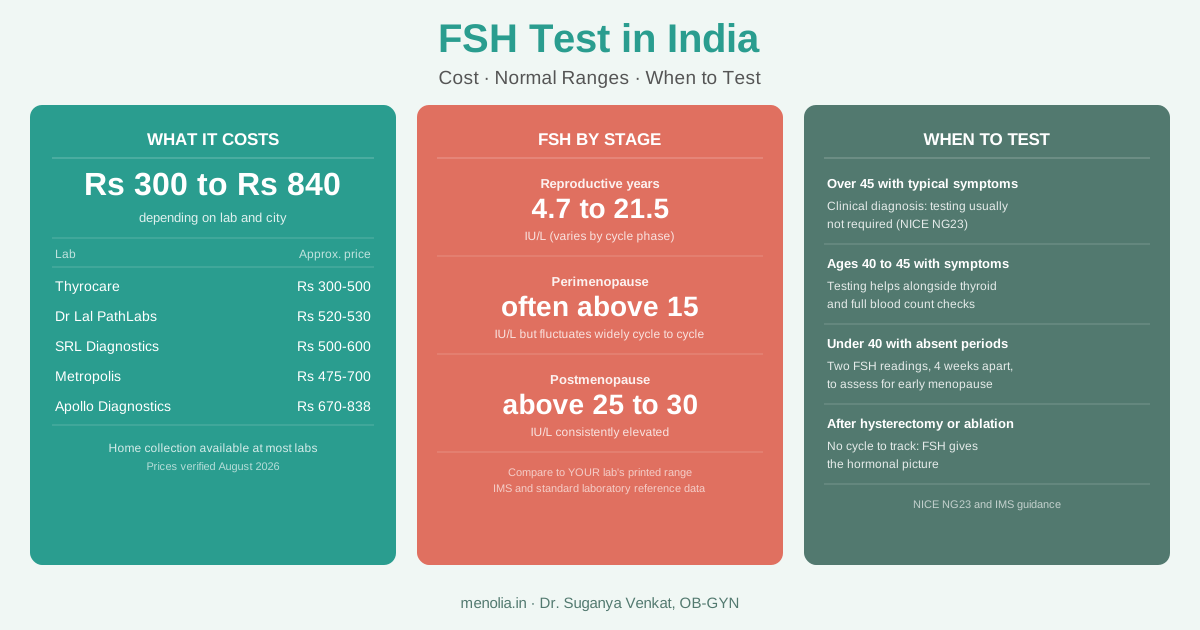
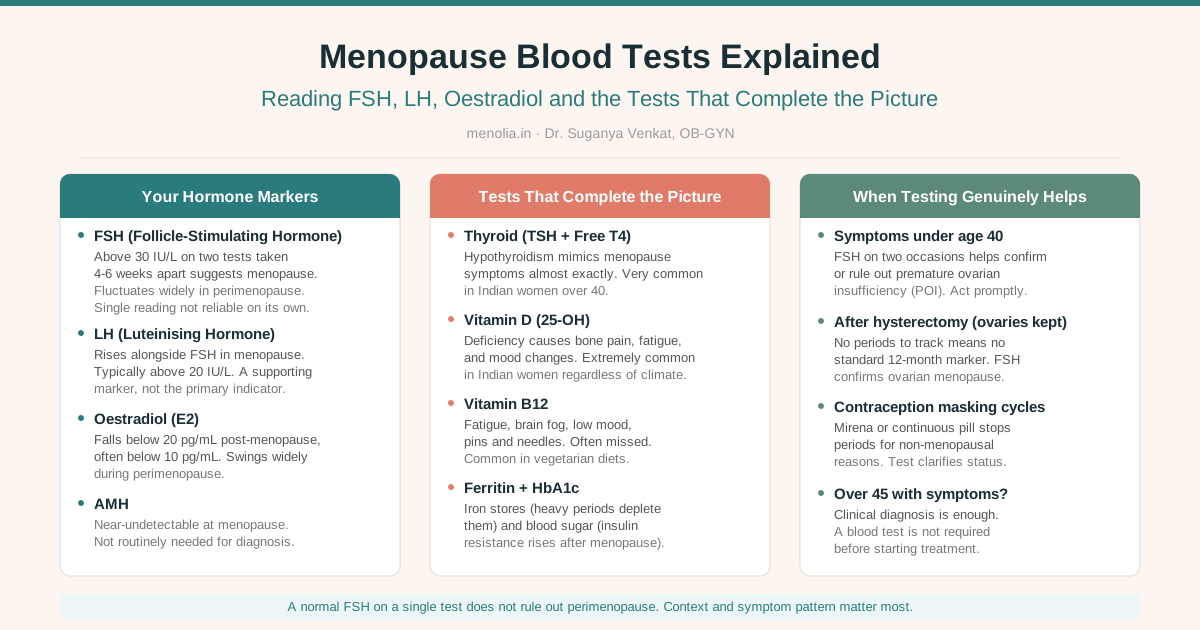
The threshold most guidelines use: an FSH above 30 IU/L on two separate tests taken at least 4 to 6 weeks apart is consistent with menopause. NICE (the National Institute for Health and Care Excellence) uses this threshold in its menopause guideline (NICE NG23, 2015, updated 2019) for women who need formal confirmation of menopausal status.
For women over 45 who have symptoms such as irregular periods, hot flashes, poor sleep, or mood changes, the clinical picture alone is usually enough for a diagnosis. A blood test is not required to begin treatment. The specific situations where testing is useful are covered below.
The key limitation to understand
FSH fluctuates significantly during perimenopause. A single FSH reading that falls within the normal range does not rule out perimenopause if you have symptoms and a changing cycle. Conversely, a high FSH on one occasion does not confirm permanent menopause if you are in your early 40s and still having some periods. Context and timing matter more than the number in isolation.
For the most reliable interpretation, FSH is ideally tested on day 2 to 5 of the menstrual cycle if you are still having periods. A mid-cycle sample will give a spuriously elevated reading because of the LH surge around ovulation.
LH: A Supporting Marker
LH (luteinising hormone) is a second pituitary hormone that, like FSH, rises as the ovaries respond less to hormonal signalling. In menopause, LH levels are elevated and remain so alongside FSH.
LH tends not to be the headline number on a menopause report, but it moves with FSH. An elevated LH (typically above 20 IU/L) alongside an elevated FSH strengthens the picture. On its own, LH does not change clinical decisions the way FSH does.
Some Indian labs include the LH:FSH ratio on the report. That ratio is more relevant for PCOS investigations than for menopause. If your LH is slightly higher or lower than your FSH on a menopause panel, it is not a cause for concern. The meaningful signal is that both are elevated.
Oestradiol: The Declining Hormone
Oestradiol (also called estradiol, or E2) is the primary form of oestrogen your ovaries produce during your reproductive years. In menopause, the ovaries dramatically reduce oestradiol production.
Post-menopause, oestradiol levels typically fall below 20 pg/mL (approximately 73 pmol/L) and often drop below 10 pg/mL. During perimenopause, oestradiol can swing widely. Some months it spikes higher than levels typical of your 30s; other months it falls sharply. This is what produces the unpredictable quality of perimenopausal symptoms.
A low oestradiol alongside elevated FSH and consistent symptoms confirms the picture. A single oestradiol reading that comes back in a normal range during perimenopause does not mean oestrogen production is stable, because the swings are that wide.
The symptoms most women associate with falling oestrogen (hot flashes, poor sleep, vaginal dryness, mood shifts, joint aches) are actually the most reliable indicator that oestrogen has dropped below what your body was used to. If you want to understand those symptoms in more detail, Low Oestrogen Symptoms: What Happens When Hormones Drop covers this directly.
AMH: What It Can and Cannot Tell You
AMH (anti-Müllerian hormone) is produced by the granulosa cells of your ovarian follicles. As your follicle pool shrinks with age, AMH declines steadily. By the time menopause arrives, AMH is near-undetectable, generally below 0.1 ng/mL (Broer SL et al., Human Reproduction Update, 2014).
AMH is primarily useful for assessing ovarian reserve in women who are trying to conceive, as a way of estimating the remaining follicle pool. In the menopause context, its role is limited. If your AMH is undetectable at 52 and you have had no periods for 14 months, the AMH adds nothing to what the FSH and your symptom picture already tell you. If your AMH is undetectable at 38 and your periods have stopped or become very irregular, that is different and more urgent information, discussed below under premature ovarian insufficiency.
AMH is not on routine menopause panels for most women. If it appears on your report at a very low level, it is consistent with reduced or absent ovarian activity. It does not tell you how you will feel or what treatment you need.
If you are working through a blood report and would like to understand what it means for your situation specifically, WhatsApp Dr. Suganya. She offers online consultations for women across India and can walk you through your numbers in the context of your symptoms.
The Tests That Matter as Much as the Hormone Panel
Here is what is often not communicated clearly at the time of testing: the FSH, LH, and oestradiol panel tells you about your hormonal status. It does not tell you why you are persistently fatigued, why your hair is thinning, why you keep feeling cold, or why your mood has been low for months.
Several conditions mimic menopause symptoms or run alongside them, and they will not show up on a hormone panel alone.
Thyroid function (TSH, Free T4, anti-TPO antibodies)
Hypothyroidism causes fatigue, weight gain, brain fog, mood changes, and dry skin that overlap almost completely with perimenopausal symptoms. The two conditions frequently coexist in women over 40. India has a high prevalence of thyroid disease, and missing it means attributing treatable symptoms to menopause and leaving them unmanaged. If your thyroid has not been tested recently, it belongs on the list. For more on the overlap, see Hypothyroidism, Hashimoto’s & Menopause: A Doctor’s Guide.
Vitamin D (25-hydroxyvitamin D)
Deficiency is extremely common in Indian women regardless of the climate, because pigmentation, clothing coverage, and indoor lifestyles reduce cutaneous synthesis. Vitamin D deficiency causes bone pain, fatigue, mood changes, and muscle weakness, all of which are easily attributed to menopause. A 25-OH Vitamin D level below 20 ng/mL is deficient and correctable. This matters especially because bone loss accelerates after menopause, and vitamin D is central to calcium absorption. More on this at Menopause & Bone Health: Why Indian Women Are at Risk.
Vitamin B12
B12 deficiency causes fatigue, memory difficulty, low mood, and pins and needles. Vegetarian diets are a contributing factor, and deficiency becomes more common with age as absorption decreases. These are symptoms women frequently attribute to menopause. If your B12 has not been checked, it should be. See Menopause & B12 Deficiency: Why It Rises After 40.
Ferritin (iron stores)
If you have had heavy periods during perimenopause (which is very common), you may have depleted your iron stores even if your haemoglobin reads acceptable. Ferritin below 30 mcg/L causes fatigue and breathlessness that can be entirely mistaken for menopause. Haemoglobin alone is not enough to check iron status. Ask specifically for ferritin.
Fasting blood sugar or HbA1c
Insulin resistance increases after menopause, and the risk of type 2 diabetes rises significantly. If you have not had a fasting blood glucose or HbA1c in the past year, it is worth including. This is part of the routine post-menopause health review covered in Post-Menopause Health Checklist: Tests Every Woman Needs.
When Testing Genuinely Helps
For most women over 45 with clear symptoms, a clinical assessment is enough for diagnosis. Testing is most useful in the following situations.
When you are under 45 and your periods have changed or stopped
If you are in your late 30s or early 40s with irregular or absent periods alongside symptoms, blood tests are important. FSH on two occasions 4 to 6 weeks apart, combined with AMH and oestradiol, helps confirm whether premature ovarian insufficiency (POI) is present. POI before age 40 has significant implications for bone health, cardiovascular health, and fertility, and requires prompt medical attention. See Premature Menopause: Causes, Signs & What to Do.
After a hysterectomy where your ovaries were retained
If your uterus was removed but your ovaries were kept, you have no periods to track, so the usual definition of menopause (12 consecutive months without a period) does not apply. FSH and oestradiol can confirm whether your ovaries have entered menopause. See Menopause After Hysterectomy: Ovaries In or Out for the difference this makes clinically.
When contraception is masking your cycle
If you use the hormonal coil (Mirena) or continuous oral contraceptive pills, your periods may have stopped for reasons unrelated to ovarian status. A blood test can clarify whether your ovaries have declined into menopause or are still cycling.
Before starting HRT, to establish a baseline
NICE NG23 does not require hormone levels before prescribing HRT. However, some doctors check them to establish a starting point, particularly for younger women or when the clinical picture is unclear. The more important baseline before HRT is blood pressure and a review of personal and family history, which your doctor should assess regardless.
When Testing Is Not Required
If you are over 45 and have a combination of cycle changes (heavier periods, lighter periods, longer gaps, shorter cycles), vasomotor symptoms (hot flashes, night sweats), sleep disruption, or mood changes that feel new, your doctor can make a clinical diagnosis without blood tests.
This matters because women are sometimes told “your FSH is normal” and sent away without support, when their FSH simply happened to be in its low phase on the day of the test. A single normal FSH does not rule out perimenopause, and NICE NG23 is explicit: do not routinely use FSH to diagnose perimenopause in women over 45 with menopausal symptoms.
If this has happened to you and your symptoms remain unexplained, the conversation to have is a clinical one, not another blood test.
What to Do With Your Report
A few practical steps when you have results in hand.
Note when in your cycle the sample was taken. FSH is best interpreted from a day 2 to 5 sample. A mid-cycle or luteal-phase FSH reading will be less reliable.
Check what was included on the panel. If thyroid function, B12, ferritin, and vitamin D were not tested alongside the hormone panel, ask your doctor to add them at the next appointment. These are the markers most likely to reveal a cause for symptoms that have been attributed entirely to menopause.
If your FSH is elevated on a single test, do not treat this as a final answer on its own. Repeat testing 4 to 6 weeks later (ideally at the same point in your cycle) gives a more reliable picture, particularly if you are under 45 or if the result surprises you.
If you want to understand what your results suggest about starting HRT, or whether lifestyle adjustments alone may be enough for now, that is a conversation worth having with a menopause doctor. For a clear overview of what HRT involves and who it suits, see HRT in India: What an OB-GYN Actually Recommends.
If you are navigating this with a report in hand and want someone to walk through it with you, WhatsApp Dr. Suganya to arrange an online consultation. She sees women from across India via video call.
Frequently Asked Questions
What FSH level confirms menopause?
An FSH above 30 IU/L on two separate tests taken 4 to 6 weeks apart is generally taken as consistent with menopause (NICE NG23). For women over 45 with clear menopausal symptoms, most guidelines say routine FSH testing is not required for diagnosis. The clinical picture, including your cycle history and symptom pattern, carries more weight than a single number.
Can my FSH be normal and I still be in perimenopause?
Yes. During perimenopause, FSH fluctuates widely. It can read within the premenopausal range one month and significantly elevated the next. A single normal FSH does not rule out perimenopause if you have a changing cycle and characteristic symptoms. This is why one-off testing is not a reliable tool for ruling out the transition.
What does a low oestradiol mean on my blood report?
An oestradiol below 20 pg/mL, particularly below 10 pg/mL, is typical of post-menopause. Low oestradiol is what causes many of the symptoms women experience in the menopausal years. It is also what HRT addresses. In perimenopause, oestradiol swings widely, so a single reading in the normal range does not mean production is stable.
Should I test AMH to confirm menopause?
Not routinely. AMH is near-undetectable in menopause, but this does not add clinical information beyond what FSH and symptoms already indicate. AMH is most useful for ovarian reserve testing when you are trying to conceive. If you are over 45 with confirmed menopausal symptoms, AMH is not needed to make or confirm the diagnosis.
My blood test came back normal but I still have symptoms. What does that mean?
A “normal” hormone test does not mean your symptoms are not real. First, check whether thyroid function, B12, ferritin, and vitamin D were tested, as deficiencies in all of these can produce symptoms identical to menopause. Second, a single FSH within the normal range can occur during perimenopause when the test happened to catch a low phase. A clinical assessment by a menopause doctor, looking at your full symptom pattern and cycle history, gives more useful information than a single blood panel.
Which blood tests should I have alongside the hormone panel?
At minimum: thyroid function (TSH and Free T4, with anti-TPO antibodies if there is a family history of thyroid disease), vitamin D (25-hydroxyvitamin D), vitamin B12, ferritin, fasting blood sugar or HbA1c, and a lipid profile. These tests catch the conditions most commonly mistaken for or compounding menopause symptoms, and they give your doctor a complete metabolic picture for managing your health in this phase.
I am 38 and my FSH came back high. What should I do?
A significantly elevated FSH before 40 needs prompt attention. Premature ovarian insufficiency (POI) is a distinct condition from typical menopause, with implications for bone health, cardiovascular health, and fertility. Do not wait on this. See Premature Menopause: Causes, Signs & What to Do and speak with your doctor as soon as possible. If you are uncertain about the next step, WhatsApp Dr. Suganya for an online consultation.