You may recognise some of this. The winter cough that used to clear in a week now lingers for a month. Climbing the stairs to the terrace to dry clothes leaves you stopping halfway. There is phlegm in the mornings that was not there five years ago. You put it down to age, to “menopause weakness,” to the dust in the air this season.
For many Indian women in their late forties and fifties, those changes have an ordinary explanation that passes with time. For some, they are early signs of chronic obstructive pulmonary disease, or COPD, a long-term lung condition that is far more common in non-smoking Indian women than most people assume. It is often picked up late, partly because nobody thinks to look for it in a woman who has never touched a cigarette.
I’m Dr. Suganya Venkat, an OB-GYN with more than fifteen years of clinical experience, and Menolia’s online consultations are built for women in exactly this stage of life. A pulmonologist (chest physician) diagnoses and treats COPD. My aim in this post is to explain why menopause is a sensible moment to think about your lungs, and what to ask for.
What This Post Covers
- What COPD is, and how it differs from asthma
- Why so many Indian women develop it without ever having smoked
- What the research shows about lung function around menopause, and what it does not show
- How doctors separate COPD from the other causes of breathlessness after 45
- What helps, from stopping smoke exposure to pulmonary rehabilitation
- Where HRT fits, and where it does not
- Questions to take to your chest physician
What COPD Is
COPD is a long-term condition in which the airways and air sacs of the lungs are damaged, so that air flows out of the lungs more slowly than it should. The main symptoms are breathlessness (especially on exertion), a cough that keeps coming back, phlegm, and chest infections that seem to happen more often or take longer to settle.
The diagnosis is made with spirometry, a simple breathing test in which you blow hard into a tube. The GOLD 2023 report, the international guidance on COPD (Agustí A et al., Am J Respir Crit Care Med, 2023, PMID 36856433), states that a ratio of FEV1 to FVC below 0.7, measured after a bronchodilator inhaler has been given, is needed to establish the diagnosis. FEV1 is how much air you can blow out in the first second. FVC is the total amount you can blow out.
COPD tends to develop slowly over many years. Picked up early, a great deal can be done to keep you active and to reduce flare-ups.
Why Indian Women Develop COPD Without Smoking
When most people picture COPD, they picture an elderly man who smoked for forty years. That picture leaves out a large share of the women who have it.
Smoke from the kitchen
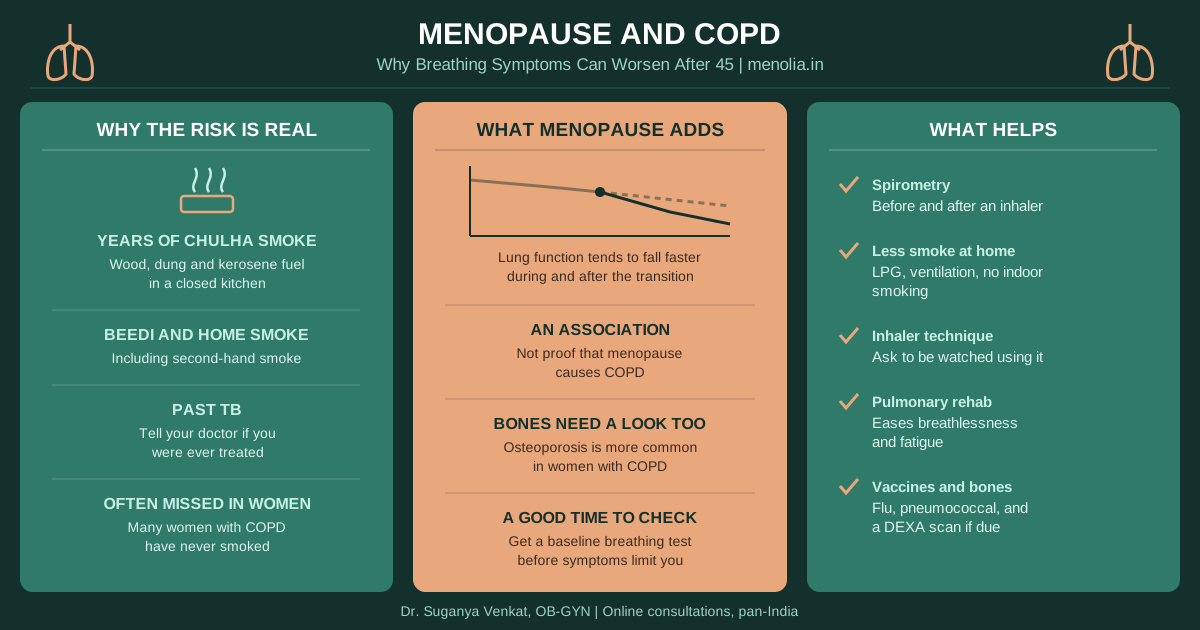
Many women now in their forties and fifties spent years, sometimes decades, cooking on a wood chulha, with cow dung cakes or crop waste as fuel, or on a kerosene stove, often in a small kitchen with poor ventilation. Some still heat bath water on a firewood stove even after the family moved to LPG for cooking.
That smoke matters to the lungs. A systematic review and meta-analysis of studies on solid fuel use (Kurmi OP et al., Thorax, 2010, PMID 20335290) found that exposure to solid-fuel smoke was associated with almost three times the odds of COPD (odds ratio 2.80) and higher odds of chronic bronchitis (odds ratio 2.32). Wood smoke inhaled while doing household work carried a greater risk than other fuels.
A review of COPD in non-smokers (Salvi SS et al., Lancet, 2009, PMID 19716966) estimated that 25% to 45% of people with COPD have never smoked. It noted that about 3 billion people worldwide are exposed to smoke from biomass fuel, compared with about 1.01 billion who smoke tobacco, and suggested that biomass smoke may be the biggest risk factor for COPD globally. The GOLD 2023 summary (Agustí A et al., Am J Respir Crit Care Med, 2023, PMID 36856433) states that in low- and middle-income countries, COPD in non-smokers may account for up to 60% to 70% of cases.
The scale in India
The India State-Level Disease Burden Initiative (India State-Level Disease Burden Initiative CRD Collaborators, Lancet Glob Health, 2018, PMID 30219316) estimated that the number of people with COPD in India rose from 28.1 million in 1990 to 55.3 million in 2016. Of the health loss from COPD in India in 2016, 53.7% was attributed to air pollution and 25.4% to tobacco use. Air pollution in that analysis includes both household smoke and outdoor air.
Other risk factors that are common here
- Tobacco in other forms. Some women smoke beedis, and many have lived for years with a husband or father-in-law who smoked indoors. Our post on smoking and early menopause covers beedi and second-hand smoke in Indian homes.
- A past episode of tuberculosis. The GOLD 2023 summary (Agustí A et al., Am J Respir Crit Care Med, 2023, PMID 36856433) names tuberculosis as an important risk factor for COPD in many parts of the world. If you were treated for TB at any age, tell your doctor.
- Outdoor air pollution, and work with dust or fumes, such as in agriculture, textile mills or construction.
Why it is missed in women
A review of sex differences in COPD (Aryal S et al., Int J Chron Obstruct Pulmon Dis, 2014, PMID 25342899) notes that non-smokers with COPD are more likely to be women, and that a sex bias among care providers leads to underdiagnosis and delayed diagnosis of COPD in women. The same review notes that women with COPD more often have a chronic bronchitis pattern (cough and phlegm), and more often have depression and osteoporosis alongside it.
What Menopause Adds to the Picture
This is the part of the story that is newer and less settled, so I want to be precise about what the studies show.
A European study of 1,274 women aged 45 to 56 who were not taking hormones (Real FG et al., J Allergy Clin Immunol, 2008, PMID 18028993) found that women whose periods had stopped for at least six months had lower lung function than women still menstruating regularly, with FEV1 about 120 mL lower. They were also more likely to report respiratory symptoms (odds ratio 1.82). The results were similar among women who had never smoked, and the link was stronger in leaner women.
A later study from the same European survey followed 1,438 women across three study waves (Triebner K et al., Am J Respir Crit Care Med, 2017, PMID 27907454). Lung function fell faster in women going through the menopausal transition and in post-menopausal women than in women with regular periods, beyond the decline expected with age. FVC fell by about 10.2 mL a year more in transitional women and 12.5 mL a year more in post-menopausal women. FEV1 fell by about 3.8 mL and 5.2 mL a year more. The authors suggest that changes in sex hormones, which affect immunity, inflammation and bone, may be part of the reason.
Three points keep these findings in proportion:
- They are associations from observational studies. They show that lung function tends to fall faster around menopause. They do not prove that falling oestrogen is the cause.
- They studied women in the general population, not women with COPD. On COPD itself, the evidence is thinner. An analysis of 8,731 participants in a US national survey (Li T et al., BMC Pulm Med, 2025, PMID 41390390) found that a later age at menopause was associated with a lower risk of COPD, and that smoking accounted for about 38% of that link. A 2026 narrative review (Aktoz F et al., Climacteric, 2026, PMID 42852718) concluded that the evidence linking menopause to COPD remains inconclusive.
- In the longer follow-up study, the larger effect was on FVC. FEV1 fell faster too, but by less.
What they do suggest is practical. If you already have COPD, or decades of chulha or tobacco smoke behind you, the menopause years may be a time when two separate pressures on your lungs overlap. That makes it a sensible time to get a baseline spirometry test, rather than waiting until breathlessness limits your day.
If your breathing has changed around menopause and you are not sure what to ask for, a video consultation with Dr. Suganya Venkat can help you put the full history together before you see a chest physician. Message on WhatsApp. Online, pan-India.
COPD, Asthma or Menopause Breathlessness: How Doctors Tell Them Apart
New breathlessness after 45 has several possible causes, and more than one can be present at once. Sorting them out is the job of your doctors, but knowing the possibilities helps you give the right history.
COPD. Symptoms usually come on gradually over years, with breathlessness on exertion, a regular cough, phlegm, and a history of smoke exposure. On spirometry, the narrowing of the airways persists after a bronchodilator.
Asthma. Symptoms tend to come and go, with wheeze, chest tightness and triggers such as cold air, dust or allergens. The airway narrowing often improves noticeably after a bronchodilator. Asthma can also appear or worsen around menopause, which our post on menopause and asthma explains in detail. The two can overlap: the GOLD 2023 summary (Agustí A et al., Am J Respir Crit Care Med, 2023, PMID 36856433) notes that airflow obstruction that does not fully reverse is not specific to COPD and can also be found in asthma, so the history and risk factors matter too.
Anaemia. Heavy perimenopausal bleeding can lead to iron-deficiency anaemia, which causes breathlessness on exertion and tiredness. Our post on menopause fatigue covers how heavy bleeding feeds into this.
Vitamin B12 deficiency. This becomes more common after 40 and can also cause breathlessness and fatigue. Menopause and B12 deficiency explains which tests to ask for.
Thyroid problems. An underactive thyroid can cause tiredness, weight gain and breathlessness that overlap with menopause. See our guide to thyroid changes during menopause.
The heart. Heart disease becomes more common after menopause, and in women it can show up as breathlessness on walking or climbing stairs rather than classic chest pain. Any new exertional breathlessness needs a heart check as well as a lung check.
Hot flashes and anxiety. A hot flash can bring a racing heart and a feeling of not getting enough air. Anxiety and panic can do the same. These episodes come and go and do not cause a long-term cough or phlegm.
Tests worth asking about
- Spirometry before and after a bronchodilator, at a chest physician’s clinic or a hospital pulmonology department
- A complete blood count, for anaemia
- Vitamin B12 and TSH (thyroid), if fatigue is part of the picture
- An ECG, and further heart tests if your doctor advises
- A chest X-ray, if your doctor wants to look for other lung causes, including old TB changes
What Helps If You Have COPD
Treatment is led by your pulmonologist, who chooses the inhalers and decides how often to review you. These are the parts of care where you can play an active role.
Reducing smoke exposure
The GOLD 2023 summary (Agustí A et al., Am J Respir Crit Care Med, 2023, PMID 36856433) notes that continuing to smoke has a negative impact on the progression of COPD, and that all patients who still smoke should be offered help and treatment to quit. That applies to beedis as much as cigarettes. Kurmi and colleagues (Kurmi OP et al., Thorax, 2010, PMID 20335290) recommend cleaner fuels or cleaner cooking technology to reduce exposure to solid-fuel smoke.
At home, that can mean:
- Using LPG or induction for cooking wherever possible, and moving bath-water heating off firewood if you can
- Running a kitchen exhaust fan or keeping a window open during cooking, especially during tadka and deep frying
- Not burning dried leaves or rubbish near the house
- Burning agarbatti, dhoop or mosquito coils less often, or near an open window
- Asking family members not to smoke indoors
Using inhalers well
Inhalers only help if the medicine reaches the lungs. Many people use them with the wrong technique without knowing it. Ask your doctor or pharmacist to watch you use yours, and ask whether a spacer would help.
Pulmonary rehabilitation
Pulmonary rehabilitation is a supervised programme of exercise training, often combined with education. A Cochrane review of 65 randomised trials involving 3,822 people with COPD (McCarthy B et al., Cochrane Database Syst Rev, 2015, PMID 25705944) found that it relieved breathlessness and fatigue, improved emotional function and helped people feel more in control of their condition. The authors described these improvements as moderately large and clinically significant. Most programmes ran for eight or twelve weeks. Ask your pulmonologist whether a programme is available near you, or whether they can guide a home-based plan. For the wider benefits of staying active at this age, see our post on exercise during menopause.
Vaccinations
The GOLD 2023 summary (Agustí A et al., Am J Respir Crit Care Med, 2023, PMID 36856433) advises that, depending on local guidelines, people with COPD be offered vaccines against influenza, pneumococcus, COVID-19, pertussis and herpes zoster if they have not already had them. Our guide to vaccines for women after 50 in India covers each of these.
Protecting your bones
This is where COPD and menopause meet most directly. Bone density falls after menopause. The GOLD 2023 summary (Agustí A et al., Am J Respir Crit Care Med, 2023, PMID 36856433) notes that osteoporosis in COPD is often underdiagnosed, and that repeated courses of systemic corticosteroids (steroid tablets or injections, often given for flare-ups) increase the risk of osteoporosis. Aryal and colleagues (Aryal S et al., Int J Chron Obstruct Pulmon Dis, 2014, PMID 25342899) note that osteoporosis is more common in women with COPD.
If you have COPD and are past menopause, or have needed several steroid courses, ask whether a DEXA bone scan is due. Our post on menopause and bone health explains what the scan shows and how to look after your bones.
Where HRT Fits
Some women read that oestrogen may affect lung function and wonder whether HRT would protect their lungs.
One observational analysis from the European survey (Triebner K et al., Maturitas, 2019, PMID 30583761) compared 275 women taking oral HRT with 383 non-users. Lung function declined less rapidly in women who had used oral HRT for more than five years, and the difference grew with longer use. The authors concluded that this may mean female sex hormones are important for lung ageing.
That is an interesting finding, but it comes from an observational study, which cannot prove that HRT caused the difference. A 2026 review of hormone therapy and lung disease (Hipólito Rodrigues MA et al., Climacteric, 2026, PMID 42234514) described the data on COPD as limited and inconsistent, and advised that hormone therapy in women with or at risk of lung disease be individualised. HRT is not a treatment for COPD and is not prescribed to protect the lungs. The decision about HRT rests on your menopausal symptoms, bone health, heart and breast risk, and personal history. If you have COPD and troublesome menopausal symptoms, make sure your gynaecologist and your chest physician both know about each other’s involvement in your care. For the wider picture, read HRT for menopause in India: benefits, risks and when to start.
What COPD and Breathlessness Are Called in Other Indian Languages
| Language | Breathlessness | Lungs | Wood-burning stove |
|---|---|---|---|
| Hindi | Saans lene mein takleef (सांस लेने में तकलीफ), saans phoolna (Roman) | Phephde (Roman) | Chulha (Roman) |
| Tamil | Moochu thinaral (Roman) | Nuraiyeeral (Roman) | Viragu aduppu (Roman) |
Native script for the Roman entries is still to be confirmed. COPD itself is usually called by its English name across India, or described as “saans ki bimari” in Hindi. If you have been searching in your own language and finding only pages about asthma, this post is meant for you.
Questions to Take to Your Chest Physician
- Do my symptoms and history make spirometry worthwhile, with a test before and after a bronchodilator?
- Could my years of cooking on a chulha or kerosene stove be relevant?
- I was treated for TB in the past. Does that change anything?
- Is my inhaler technique right, and would a spacer help?
- Is pulmonary rehabilitation available for me?
- Which vaccines should I have?
- I have needed steroid courses for flare-ups. Should my bone density be checked?
Bring a note of when your symptoms began, whether they change with your cycle or with hot flashes, and any past chest X-rays or spirometry reports.
Frequently Asked Questions
Can menopause cause COPD?
Menopause has not been shown to cause COPD. Lung function tends to fall faster during and after the menopausal transition, and one US study linked earlier menopause with a higher risk of COPD, partly explained by smoking, but reviews describe the evidence as inconclusive. COPD itself is mainly caused by long-term exposure to smoke, from tobacco or from cooking fuels, along with factors such as past TB and air pollution. Menopause can be a time when these effects become noticeable.
Can a woman who never smoked get COPD?
Yes. A Lancet review estimated that 25% to 45% of people with COPD have never smoked, and the GOLD 2023 summary states that in low- and middle-income countries non-smokers may make up 60% to 70% of cases. In India, long-term exposure to smoke from wood, dung or kerosene fuel in the kitchen is an important cause in women.
Chulhe ke dhuen se saans ki bimari ho sakti hai kya?
Yes, it can. A meta-analysis found that exposure to smoke from solid fuels such as wood and dung was associated with almost three times the odds of COPD. Wood smoke inhaled during household work carried the greater risk. If you cooked on a chulha for years and now have a lasting cough or breathlessness, ask your doctor about a spirometry test.
How is COPD different from asthma?
COPD usually develops slowly, causes breathlessness on exertion with a regular cough and phlegm, and the airway narrowing persists after a bronchodilator. Asthma symptoms tend to come and go with triggers, and the narrowing often improves noticeably after a bronchodilator. The pattern is not always clear-cut, because some people with asthma also have narrowing that does not fully reverse, so a chest physician reads spirometry together with your history and smoke exposure.
Does HRT help COPD?
HRT is not a treatment for COPD. One observational study found slower decline in lung function among women who used oral HRT for more than five years, but that kind of study cannot prove cause and effect, and a 2026 review described the data on hormone therapy and COPD as limited and inconsistent. Decisions about HRT are based on menopausal symptoms and your overall health, made with your gynaecologist, and your chest physician should know if you are taking it.
Why should I think about my bones if I have COPD?
Bone density falls after menopause, osteoporosis is more common in women with COPD, and repeated courses of steroid tablets or injections for flare-ups increase the risk further. If you are past menopause and have COPD, ask whether a DEXA bone scan is due.
What can I do at home to protect my lungs?
Avoid tobacco smoke, including second-hand smoke and beedis, use LPG or induction rather than wood or kerosene where you can, keep the kitchen ventilated while cooking, and burn agarbatti or mosquito coils less often. Stay active, keep up with your vaccines, and ask your chest physician about pulmonary rehabilitation if you have COPD.
If your breathing has changed and you want help working out what to ask your doctors, message Dr. Suganya Venkat on WhatsApp. She consults online, pan-India, via video call.
This post is for information and context. New or worsening breathlessness needs a medical evaluation. Please see your doctor, and seek urgent care if you are breathless at rest or have chest pain.