The Symptom List That Belongs to Both
A woman in her late forties described her last two years like this on a video consultation: bloating that arrives by evening no matter what she eats, bowels that have stopped being predictable, tiredness that sleep does not fix, and a haemoglobin that her physician keeps treating with iron tablets that work for a while and then stop working. Every one of those has been put down to menopause. Some of it probably is menopause.
But that exact list is also how coeliac disease presents in an adult woman. It is an autoimmune condition where eating gluten, the protein in wheat, barley and rye, triggers the immune system to damage the lining of the small intestine, so nutrients stop being absorbed properly. And because the digestive symptoms of perimenopause are real and common, a woman who already has an explanation for her bloating is less likely to be offered a test for anything else.
This post is not about worrying that your bloating is something serious. Most menopausal digestive change is exactly what it looks like. It is about the smaller group of women in whom something else has been sitting underneath, and about what is worth raising with a doctor rather than filing away permanently.
What This Post Covers
- Why menopause is a point in life when previously undiagnosed coeliac disease can surface or get harder to spot
- How the overlapping symptoms differ, and which patterns are worth taking further
- Why bone density matters more in this specific combination, and what to do about it
- Gluten-free eating for Indian women, in practical terms, including the ingredients that surprise people
- Whether coeliac disease changes anything about HRT
Why Menopause Is a Point Where Coeliac Disease Gets Missed
Coeliac disease is often thought of as a childhood diagnosis, and it frequently is. But it is diagnosed in adults too, including in midlife, and by then a woman has usually accumulated other plausible explanations for her symptoms.
Menopause supplies a very plausible one. Digestive complaints, including bloating and changed bowel habit, are commonly reported during the menopause transition, and oestrogen does influence gut function. That said, a symptom appearing in your forties or fifties is not proof that hormones caused it, and a new food intolerance in particular deserves assessment rather than an assumption. I have written separately about why IBS and digestive symptoms flare after 45, and that post covers the more familiar situation. The difficulty is that a genuine, correct explanation for a symptom can end the search before a second condition is considered.
In India there is a second reason this gets missed, which is a widespread assumption that coeliac disease is rare here. The best national data says something more specific than rare. In a screening study of 23,331 healthy adults across three regions, the age-adjusted prevalence of coeliac autoantibodies was 1.23 percent in northern India, 0.87 percent in the northeast and 0.10 percent in the south, and confirmed coeliac disease worked out to roughly 8.5 per 1,000 adults in the north, 4.7 per 1,000 in the northeast and 0.11 per 1,000 in the south (Ramakrishna BS et al., Am J Gastroenterol, 2016, PMID 26729543). The same study found the genes that permit coeliac disease were similarly common across all three regions, at 31 to 38 percent of the population, while mean daily wheat intake was 455 g in the north against 37 g in the northeast and 25 g in the south. The pattern tracked wheat consumption, not genetics.
The practical reading for a woman in Punjab, Haryana, Delhi or western Uttar Pradesh is that this is not a rare disease where you live. In Tamil Nadu or Kerala it is genuinely uncommon, though not absent, and dietary patterns are shifting as wheat becomes more common in southern kitchens.
Telling the Two Apart
There is no single symptom that separates them, and nobody should try to self-diagnose from a list. What is useful is the pattern, because a few features do point more towards investigating further.
Iron deficiency that keeps coming back. Low haemoglobin is extremely common in Indian women and heavy perimenopausal bleeding is a frequent cause of it. But iron deficiency that does not correct with adequate oral iron, or that returns each time supplements stop, raises the question of whether iron is being absorbed at all. Coeliac disease damages the part of the small intestine where iron is absorbed, and unexplained iron deficiency anaemia is one of the recognised ways it presents in adults.
Symptoms that predate perimenopause. If the bloating, loose stools or fatigue were there in your thirties and menopause simply gave them a name, the timeline does not fit a hormonal cause.
Weight loss you did not intend. Most women gain weight through the menopause transition rather than losing it. Unintentional weight loss is worth a doctor’s attention regardless of the cause.
Symptoms outside the gut. Persistent mouth ulcers, an itchy blistering rash, unexplained low vitamin D or B12, abnormal liver enzymes, or osteoporosis found at an age when it is early are all recognised presentations, and some women with coeliac disease have very little in the way of digestive symptoms at all.
A first-degree relative with coeliac disease. The risk in siblings and children of someone diagnosed is substantially higher than in the general population, and this is the single easiest thing to check and the most often overlooked.
If you also have thyroid disease or type 1 diabetes. Autoimmune conditions cluster. If you are already on levothyroxine, thyroid changes during menopause covers that overlap on its own terms. The same clustering is why menopause and autoimmune flares in RA and lupus sits alongside this post: having one autoimmune diagnosis slightly raises the odds of another.
If bloating, fatigue and stubborn low iron have all persisted through perimenopause and nothing has helped for long, WhatsApp Dr. Suganya at wa.me/919940270499. Over a video consultation we work out which parts are likely hormonal, which need a gastroenterologist’s input, and what is worth testing first, so you are not cycling through iron tablets indefinitely.
The One Rule About Testing
This is the part that changes outcomes, and it is easy to get wrong with good intentions.
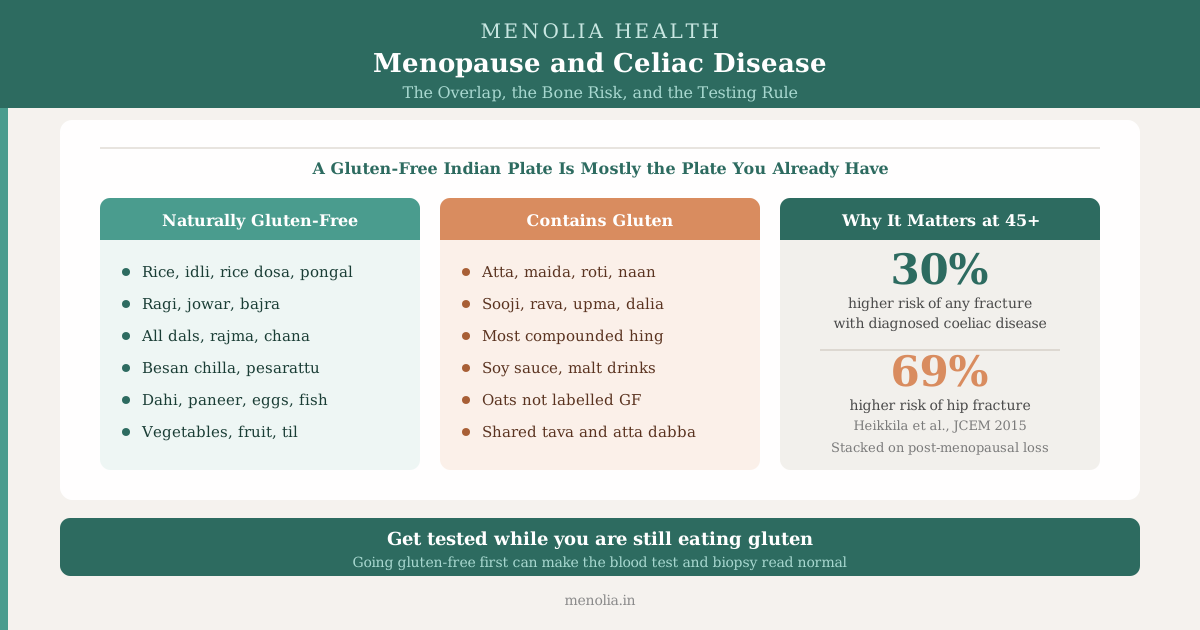
Do not go gluten-free before you are tested. Coeliac testing begins with a blood test for coeliac-specific antibodies, such as tissue transglutaminase, and in most patients a confirmed diagnosis needs an intestinal biopsy (Rubio-Tapia A et al., Am J Gastroenterol, 2023, PMID 36602836, the American College of Gastroenterology guideline update). Your doctor decides which antibody tests to order and in what order. Both the antibodies and the intestinal changes depend on gluten actually being in your diet. Remove it for a few weeks first and the tests can come back normal in someone who genuinely has the condition, which leaves you with a lifelong restrictive diet and no diagnosis to justify it, plus no basis for the bone monitoring and family screening that a real diagnosis triggers.
So the order is: if you suspect it, see a doctor first, keep eating normally until the testing is done, and then change the diet if the answer comes back positive. The total IgA level is usually checked alongside, because a woman who is IgA deficient can have a falsely normal result on the standard test.
Your gynaecologist can raise the suspicion and start the conversation. The diagnosis and the ongoing management belong with a gastroenterologist, and in my practice I refer for exactly that rather than attempting to manage it alongside menopause care.
Why Bones Need Closer Attention Here
This is the overlap that matters most clinically, and the reason I think this combination is worth writing about at all.
Menopause itself accelerates bone loss, which is covered in detail in menopause and bone health for Indian women. Coeliac disease affects bone independently, because a damaged small intestine absorbs calcium and vitamin D poorly, and that has been linked to low bone mineral density in adults even when digestive symptoms are mild.
The harder outcome has been studied too. A systematic review and meta-analysis found that in prospective studies, clinically diagnosed coeliac disease at baseline was associated with a 30 percent increase in the risk of any fracture (95% CI 1.14 to 1.50) and a 69 percent increase in the risk of hip fracture (95% CI 1.10 to 2.59) (Heikkila K et al., J Clin Endocrinol Metab, 2015, PMID 25279497). In case-control and cross-sectional studies pooled in the same review, fractures were close to twice as common in people with diagnosed coeliac disease.
Those figures are relative increases applied to your own baseline risk, which is mostly set by age, body weight, family history and how much bone you built in your twenties. A 69 percent increase on a small baseline is still a small number, so this is not a reason for alarm. Stacked on top of the ordinary post-menopausal decline, though, it is a sound reason to ask about a DEXA scan rather than assume your bones are fine.
What helps is not exotic. A strict gluten-free diet allows the intestinal lining to recover in most adults, and improvement in bone density over the following years has been reported once absorption is restored. Alongside that, the ordinary measures matter more here, not less: enough dietary calcium, checked and corrected vitamin D, weight-bearing movement, and no smoking.
Gluten-Free Eating in an Indian Kitchen
There is good news in the Indian context that women are rarely told, and it is worth stating plainly before the list of restrictions.
India’s own food regulations define gluten-free food as food made from ingredients including rice, millets, ragi, pulses or legumes, and set the labelling threshold at gluten below 20 mg/kg on analysis (Food Safety and Standards (Food Products Standards and Food Additives) Regulations, 2011, Regulation 2.14, fssai.gov.in). In other words, a very large part of the traditional Indian plate is already gluten-free by regulation, not by adaptation.
Naturally gluten-free and already in most kitchens: rice in all its forms, ragi, jowar, bajra, all dals and legumes, besan (gram flour), rajma and chana, all vegetables and fruit, dahi, milk and paneer, eggs, fish, meat, all the usual spices in whole form, jaggery, groundnuts and til. Idli, appam, pongal, khichdi made with rice, ragi mudde, jowar bhakri, besan chilla and pesarattu are gluten-free when they are made the traditional way, with the usual caveats below about shared equipment and shop-bought ingredients. Plain rice dosa qualifies too, but note that rava dosa is made with wheat semolina, so dosa as a category is not automatically safe.
The wheat that is obvious: atta and maida, so roti, chapati, phulka, naan, paratha, bhatura, puri, biscuits, bread, most bakery items, and semolina items like upma, rava dosa, rava idli, halwa and khichu.
The ones that catch people out, and these are the practical difference between a diet that works and one that quietly does not:
- Hing (asafoetida) is very commonly blended with wheat flour as a bulking agent. Compounded hing is the standard supermarket product. Check the label, or use a pure or rice-flour-blended version.
- Dalia and sooji or rava are wheat. So is seviyan unless it is specifically rice seviyan.
- Soy sauce in Indo-Chinese cooking is usually brewed with wheat, which quietly affects a lot of restaurant food.
- Oats are naturally gluten-free but are very often processed and packed on the same lines as wheat, so only oats labelled gluten-free are reliable.
- Ready masala mixes, instant soups, packaged gravies and some papads can use wheat flour as a thickener or binder.
- Malt drinks such as barley-based health drinks contain gluten, and so do communion wafers.
- Medicines and supplements occasionally use wheat-derived excipients in coatings or binders, and this is product-specific rather than true of any whole category. Do not stop or skip a prescribed medicine over this. Ask your pharmacist or the manufacturer to check the specific brand you take, and ask your doctor about an alternative if one is needed.
- Shared kitchen surfaces matter more than people expect. A tava used for chapati, a common atta dabba, a shared toaster or a spoon moved between dishes can transfer enough to matter for someone with coeliac disease.
In a joint family kitchen the practical answer is usually separate storage, a dedicated tava and separate serving spoons rather than a separate kitchen. For a woman managing this at the same time as hot flushes and disturbed sleep, the load is real, and it is worth being direct with the family about why it is not fussiness.
Does Coeliac Disease Change Anything About HRT?
For most women, coeliac disease is not a reason to avoid hormone therapy, and the decision is made on the usual grounds, symptoms, personal and family history, and what you want from treatment.
Two points are worth raising with your doctor. The first is that HRT comes as tablets, patches and gels, and if absorption is a live question because of untreated intestinal damage, the transdermal routes bypass the gut entirely. HRT patch, gel or pill covers how that choice is usually made. The second is that if bone protection is part of why you are considering HRT, the coeliac diagnosis is relevant information for that conversation rather than an obstacle to it.
The management of the coeliac disease itself stays with the gastroenterologist. This is a genuinely shared-care situation, and it works best when each doctor knows what the other is doing, so tell your gynaecologist about the coeliac diagnosis and tell your gastroenterologist if you start HRT.
What to Do With This
- If your symptoms fit the pattern, ask for the test before you change your diet. That order is the single most useful thing in this post.
- Take recurrent iron deficiency seriously as a question, not just a prescription. Iron that does not hold is information.
- If you have a confirmed coeliac diagnosis, ask about a bone density scan and about your vitamin D level, particularly around and after menopause.
- If a first-degree relative has coeliac disease, mention it, even if you feel well.
- Keep both doctors informed of each other. Menopause care and coeliac care are separate treatments for the same person.
Frequently Asked Questions
Can menopause cause coeliac disease? No. Coeliac disease is an autoimmune condition that requires a genetic predisposition and exposure to gluten. Menopause does not cause it. What can happen is that symptoms become more noticeable, or that digestive changes get attributed to menopause so a coeliac diagnosis is delayed.
Can menopause make existing coeliac disease worse? Symptoms can feel worse, particularly bloating, fatigue and disturbed sleep, because menopausal changes are layered on top. The underlying coeliac disease is driven by gluten intake and diet adherence, not by hormone levels. If symptoms worsen on a strict gluten-free diet, that is worth investigating rather than attributing to menopause.
Should I just go gluten-free and see if I feel better? Not before testing. Going gluten-free first can make both the blood test and the biopsy come back normal even in someone who has coeliac disease, leaving you on a lifelong restricted diet with no diagnosis, and without the bone monitoring and family screening a confirmed diagnosis brings. Get tested while still eating gluten, then change the diet.
Is coeliac disease common in India? It varies a great deal by region. A screening study of 23,331 adults found confirmed coeliac disease in roughly 8.5 per 1,000 adults in northern India, 4.7 per 1,000 in the northeast and 0.11 per 1,000 in the south, tracking regional wheat intake rather than genetic differences (Ramakrishna BS et al., Am J Gastroenterol, 2016, PMID 26729543). It is meaningfully present in the north and uncommon, though not absent, in the south.
I have coeliac disease. Can I take HRT? In most cases yes. Coeliac disease is not in itself a contraindication. Discuss the route with your doctor, since patches and gels bypass the gut, and make sure both your gynaecologist and gastroenterologist know the full picture.
Will my bone density improve if I go gluten-free? A strict gluten-free diet allows the intestinal lining to heal in most adults, and bone density has been shown to improve over the following years once absorption recovers. It works alongside the usual measures rather than replacing them: adequate calcium, corrected vitamin D, weight-bearing activity, and not smoking.
Does gluten sensitivity without coeliac disease matter here? Some people get digestive symptoms from wheat without having coeliac disease, and that is a real experience. It does not carry the same intestinal damage, nor the same fracture and nutrient-absorption implications, so it does not change bone monitoring. The distinction still matters, because coeliac disease requires strict lifelong exclusion and family screening. There is no single blood test that confirms non-coeliac gluten sensitivity. Testing while you are still eating gluten is what allows a doctor to diagnose or rule out coeliac disease and wheat allergy, and gluten sensitivity is considered afterwards, once those have been excluded and your symptoms have been assessed.
The Question Worth Asking
Bloating and fatigue after 45 often do turn out to be part of the menopause transition, and for many women that is the whole story. But both symptoms are nonspecific, and anaemia, thyroid disease, digestive conditions and medication effects can produce the same picture. The point of this post is not to unsettle anyone, it is that “menopause” should be a conclusion you arrive at rather than the first answer that stops the questions.
At Menolia, part of what Dr. Suganya Venkat, an OB-GYN with over 15 years of clinical experience, does in consultations is exactly this sorting: which symptoms fit the hormonal picture, which do not quite fit, and which deserve a referral to a gastroenterologist or another specialist rather than another round of guessing. If the pattern in this post sounds like the last two years of your life, WhatsApp Dr. Suganya at wa.me/919940270499 and we can work out where to start.